






Executive Overview
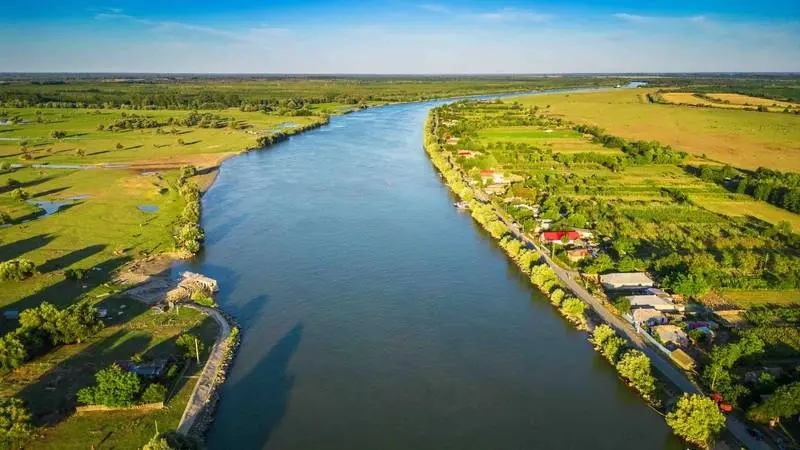
A critical maritime bottleneck has formed at the mouth of the Danube River, threatening to further destabilize global food supply chains and inflict severe financial losses on agricultural traders. Up to 70 cargo vessels are currently stranded near Romania’s Sulina Canal—the vital maritime gateway connecting the Danube to the Black Sea—waiting to access Ukrainian river ports to load grain.
Following the systematic bombardment and blockade of Ukraine’s deep-water Black Sea ports, which historically managed over 90% of the nation’s agricultural exports, Kyiv has been forced to reroute millions of tons of grain through the Danube river system. However, this emergency trade corridor is buckling under the pressure. A severe shortage of specialized river pilots, the prioritization of strategic imports such as fuel, and frequent operational shutdowns triggered by Russian air raid alerts have converged to create a massive maritime gridlock.
[Black Sea Blockade] ──> [Pivot to Danube Ports] ──> [Sulina Canal Bottleneck]
                                                               │
    ┌───────────────────────────┬──────────────────────────────┴─────────────────────────────┐
    ▼                           ▼                              ▼                             ▼
[Pilot Shortage]      [Priority Cargo (Fuel)]       [Air Raid Disruptions]         [Weather Closures]
With daily demurrage costs climbing to $8,000 per vessel, the delays are inflating already high global freight rates. Because Ukraine remains a cornerstone of the global grain market, these persistent logistical failures risk triggering renewed volatility in international food prices, disproportionately affecting import-dependent nations in the Middle East, Africa, and parts of Asia.
Detailed Chronology
The current crisis at the Sulina Canal is the culmination of a multi-month shift in Black Sea geopolitics and maritime logistics. To understand the gridlock, one must trace the transition of Ukraine’s export strategy from deep-sea shipping to inland waterways.
+-----------------------------------------------------------------------------------------+
|                                  CHRONOLOGY OF THE CRISIS                               |
+----------------------------------+------------------------------------------------------+
| Phase 1: Black Sea Blockade      | Russia blocks deep-water ports; 90% of grain exports  |
|                                  | are halted, forcing an emergency pivot to the Danube.|
+----------------------------------+------------------------------------------------------+
| Phase 2: The Danube Surge        | Danube ports scale up to a peak of 2.5 million tons  |
|                                  | per month, stretching river infrastructure to limit. |
+----------------------------------+------------------------------------------------------+
| Phase 3: The Summer Gridlock     | August rail shipments spike 11-fold; Sulina Canal    |
|                                  | capacity drops as 70 vessels stall in queue.         |
+----------------------------------+------------------------------------------------------+
| Phase 4: Environmental & Military| Looming autumn storms threaten complete closure;     |
|          Disruption              | ongoing drone strikes force frequent port shutdowns. |
+----------------------------------+------------------------------------------------------+
Phase 1: The Blockade and the Emergency Pivot
In the early stages of the conflict, the blockade of Ukraine’s primary Black Sea ports—including Odesa, Chornomorsk, and Pivdennyi—instantly severed Ukraine’s primary economic artery. In response, Ukrainian authorities, the European Union, and international partners established the "Solidarity Lanes," designating the Danube ports of Izmail, Reni, and Kiliia as primary alternative export hubs.
Phase 2: The Infrastructure Strain (2022–2023)
Throughout late 2022 and into 2023, the volume of grain funneled through the Danube rose dramatically, peaking at approximately 2.5 million metric tons per month. However, the Danube river infrastructure was never designed to handle the volume of a major global maritime corridor. The Sulina Canal, managed by Romania, became a critical chokepoint. To navigate the narrow, shallow waters of the canal safely, merchant vessels require highly trained Romanian Danube pilots. The sudden influx of hundreds of ships quickly exhausted the available pool of pilots, leading to the initial accumulation of backlogs.
Phase 3: The Summer Gridlock and Cargo Prioritization
By mid-August, the backlog escalated into a full-scale crisis. While the canal was processing a modest five to seven vessels per day toward Ukrainian ports earlier in the month, a surge in incoming vessels quickly overwhelmed the canal’s administration.

Furthermore, the Ukrainian and Romanian port authorities began prioritizing vessels carrying critical military and domestic imports, such as fuel, over bulk agricultural carriers. This policy shift left grain vessels anchored for weeks. Compounding the delays, Russian drone and missile strikes targeting Ukrainian port infrastructure along the Danube prompted frequent air raid alerts. Under standard operating procedures, these alerts force the immediate evacuation of dockworkers and the suspension of all loading operations, turning what should be a 24-hour loading cycle into a multi-day ordeal.
Phase 4: Environmental and Weather Complications
By late August, the backlog reached its peak of approximately 70 vessels. The crisis was further exacerbated by a shift in seasonal weather patterns. Maritime agencies warned of an approaching low-pressure system over the Black Sea, threatening high winds and rough seas that would require a complete suspension of pilotage services, effectively closing the canal and freezing all vessel movements.
Supporting Context & Metrics
The economic and logistical dimensions of the Danube crisis are illustrated by a comparison of historical export capacities, current throughput rates, and the mounting financial penalties borne by the shipping industry.
       MONTHLY GRAIN EXPORTS: AUGUST COMPARISON (IN MILLIONS OF TONS)

  August (Historical Peak)  [████████████████████████████████████████] 1.73M

  August (Current Period)   [██████████] 0.539M
The Export Deficit
The agricultural export figures released by Ukraine’s Ministry of Agriculture underscore the severity of the bottleneck:
- August 1–21 Export Volume: 539,000 metric tons.
- Prior Year Comparison (Same Period): 1.73 million metric tons.
- Net Reduction: A drop of approximately 68.8% year-over-year.
This deficit is not due to a lack of grain; Ukrainian silos are well-stocked following recent harvests. Instead, the decline reflects a physical inability to move the commodity from land to water.
The Intermodal Disconnect
The gridlock is particularly frustrating for operators because land-based logistics have successfully adapted. Ukraine’s state railway operator, Ukrzaliznytsia, reported that grain transport volumes destined for Danube river ports in August surged 11 times higher than those recorded in July.
+-----------------------------------------------------------------------+
|                      SULINA CANAL PERFORMANCE METRICS                 |
+----------------------------------+------------------------------------+
| Active Vessels in Queue          | ~70 vessels                        |
| Standard Daily Throughput        | 5 to 7 vessels per day             |
| Reduced Capacity (Late August)   | 2 to 3 vessels per day             |
| Average Daily Demurrage Cost     | $8,000 per vessel                  |
| Estimated Daily Fleet Loss       | $560,000 (across 70 vessels)       |
+----------------------------------+------------------------------------+
This massive influx of railcars carrying grain arrived at the river terminals only to find a complete lack of available shipping capacity. The grain became trapped in railcars and port silos because the vessels scheduled to receive it were stuck miles away at the Sulina anchorage.
The Microeconomics of the Delay
For shipowners and charterers, the Sulina bottleneck is an expensive operational failure. ASAP Agri, an agricultural consultancy, noted that daily demurrage fees—the penalty paid by a charterer to a shipowner for failing to load or discharge a vessel within the agreed time—have reached up to $8,000 per day.
With 70 vessels waiting, the collective cost of the delay approaches $560,000 per day. These losses are ultimately factored into the final price of Ukrainian grain, reducing its competitiveness on the global market and driving up the cost of food insurance and maritime freight across the entire Black Sea region.
Official Statements & Industry Perspectives
Industry analysts, operations managers, and logistics experts have voiced serious concerns regarding the systemic nature of the bottleneck and the lack of immediate solutions.
The Consultancy View: ASAP Agri
In a briefing distributed via Telegram, agricultural consultancy ASAP Agri highlighted the fragility of the current corridor:
"As of August 25, more than 50 vessels were waiting to pass through the Sulina Channel, while only five to seven vessels per day were moving towards Ukraine’s Danube ports. Each day of delay can cost up to $8,000, adding to already high freight rates. The situation could worsen significantly if weather conditions deteriorate in the coming days."
The Maritime Operator Perspective: Avalon Shipping
Katerina Kononenko, the operations manager at the maritime logistics firm Avalon Shipping, provided a detailed look at the operational constraints on the ground. She emphasized that physical and environmental factors are severely limiting the channel’s actual capacity:
"The Sulina Canal is expected to be closed for about two days because of poor weather. For the current situation, this is really a serious setback. Today, about 70 vessels are waiting at Sulina road. At the moment, the real traffic capacity of the Sulina Channel for vessels going to Ukrainian ports is only two to three vessels per day. This is very low."
Kononenko’s assessment reveals a critical gap between the theoretical capacity of the canal and its actual performance under adverse conditions. A capacity of two to three vessels per day means that, even without new arrivals, it would take nearly a month to clear the existing backlog of 70 ships.
Future Outlook
The medium-term viability of the Danube export route depends on resolving several complex logistical, political, and environmental challenges.
                  CRITICAL PATH FOR DANUBE EXPORT VIABILITY

          STABILIZE                           EXPAND
   [Address Pilot Shortage] ─────────► [24/7 Canal Navigation]
              │                                  │
              ▼                                  ▼
   [Secure Air Defense]     ─────────► [Dredge & Deepen Channels]
           PROTECT                            INVEST
Resolving the Pilot Shortage
The primary operational constraint remains the shortage of qualified Danube pilots. Romania and Ukraine have held bilateral discussions to streamline pilot licensing and permit Ukrainian pilots to guide vessels through certain sectors of the river. However, training requirements and regulatory hurdles mean these measures will take time to yield results. Until the pool of pilots is expanded, the Sulina Canal will remain a chronic bottleneck.
Upgrading Canal Infrastructure
To prevent future backlogs, Romania’s Lower Danube River Administration (AFDJ) is exploring plans to transition the Sulina Canal to 24-hour navigation. Currently, night navigation is heavily restricted due to a lack of lighted buoys and modern tracking systems. Implementing round-the-clock operations could theoretically double the canal’s daily transit capacity, but this requires capital investment and technical upgrades that are still in the planning stages.
The Security Threat
The security situation along the Danube remains highly volatile. As long as Russian forces continue targeting Izmail and Reni with drone strikes, operations will face unpredictable shutdowns. International insurance syndicates are closely monitoring these security risks; any escalation in attacks could lead to a withdrawal of war-risk cover for vessels entering the Danube, which would halt trade regardless of canal capacity.
Conclusion and Global Implications
The crisis at the Sulina Canal demonstrates that alternative trade routes cannot easily replace deep-water ports. While the Danube river system has served as a vital temporary link, its physical limits are clear.
With grain exports down nearly 70% compared to last year, the international community faces a prolonged period of high food prices and supply chain uncertainty. Resolving the gridlock at Sulina will require coordinated action from Romania, Ukraine, and the European Union to modernize infrastructure, train pilots, and secure the region’s airspace. Until these steps are taken, the Danube will remain a constrained and expensive route for global food trade.