










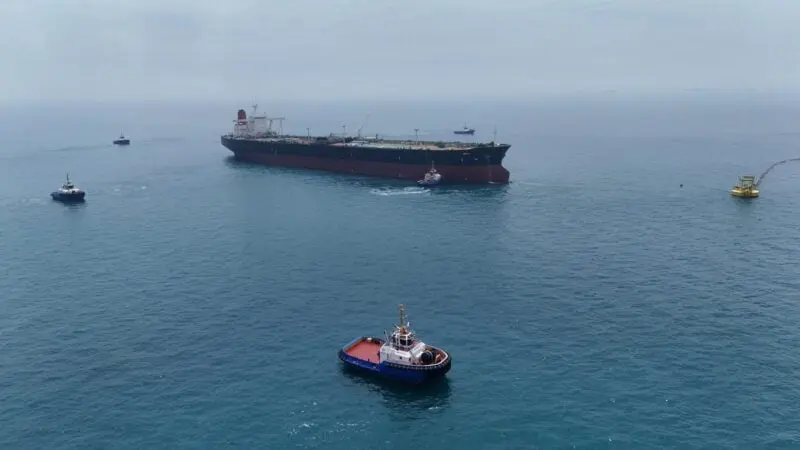
Executive Overview
In a significant escalation of its campaign to control the strategic waters of the Middle East, Iran has transitioned from physical harassment to institutionalized regulatory coercion. The Persian Gulf Shipping Administration (PGSA), an entity backed by the Islamic Revolutionary Guard Corps (IRGC), has published a "Non-Compliant Vessels List" targeting 46 international merchant ships. This blacklist warns shipowners, charterers, and cargo interests that the designated vessels face severe penalties—including hefty fines, prolonged detention, physical seizure, or outright confiscation—should they attempt future transits through the Strait of Hormuz.
This move marks a sophisticated shift in Tehran’s maritime strategy. By codifying its targets into a formal registry, Iran is attempting to establish a pseudo-legal framework for its maritime interventions. Furthermore, the PGSA has extended its enforcement reach through a "guilt-by-association" clause: any vessel conducting ship-to-ship (STS) transfers, transshipments, or standard commercial operations with a blacklisted ship risks being added to the registry itself.
This bureaucratic escalation places global shipping companies in an extraordinary geopolitical "catch-22." In May, the United States Department of the Treasury’s Office of Foreign Assets Control (OFAC) sanctioned the PGSA, designating it as an IRGC-run extortion scheme. Under U.S. law, complying with PGSA demands—such as paying transit fees or disclosing sensitive voyage data—exposes maritime companies to severe secondary sanctions. Conversely, defying these demands now risks the physical arrest of vessels by Iranian naval forces. As commercial operators scramble to screen their fleets, the Strait of Hormuz—through which roughly 20% of the world’s petroleum liquid consumption passes—has become a legal and physical minefield.
Detailed Chronology of the Maritime Escalation
The publication of the PGSA blacklist is the culmination of a months-long cycle of kinetic attacks, regulatory posturing, and international sanctions.
[May] US Sanctions PGSA for Extortion
       │
       ▼
[July] Kinetic Attacks on 'Al Bahyah' & 'Mombasa B'
       │
       ▼
[Aug 18] Lethal Strike on 'Minoan Dignity' in Hormuz
       │
       ▼
[Current] PGSA Publishes 46-Vessel Blacklist
May: The U.S. Sanctions the PGSA
The geopolitical battle lines were formally drawn when the U.S. Department of the Treasury’s Office of Foreign Assets Control (OFAC) sanctioned the PGSA. Washington accused the administration of operating under the direct influence of the IRGC to run a sophisticated extortion racket. According to U.S. intelligence, the PGSA systematically targeted commercial vessels transiting the Strait of Hormuz, demanding illicit payments and sensitive cargo and crew information under the guise of "transit fees" and "safety inspections." OFAC issued a stern warning to the global maritime industry: any cooperation with the PGSA would be viewed as material support to a designated terrorist organization, triggering immediate U.S. sanctions exposure.
July: Kinetic Operations in Omani Waters
As commercial operators began resisting PGSA demands to avoid U.S. sanctions, physical retaliation followed. In July, two vessels—the container ship AL BAHYAH (IMO 9937799) and the bulk carrier MOMBASA B (IMO 9739501)—were attacked while transiting Omani waters near the entrance to the Persian Gulf. These incidents, characterized by suspected drone strikes and close-quarters harassment by fast-attack craft, signaled that Iran was willing to project force beyond its immediate territorial waters to punish non-compliance.
August 18: The Lethal Strike on the Minoan Dignity
The escalation reached a critical flashpoint when the bulk carrier MINOAN DIGNITY (IMO 9294484) was struck while outbound through the Strait of Hormuz. The vessel suffered severe engine-room damage, disabling its propulsion systems in one of the world’s busiest shipping lanes. More critically, the attack resulted in a crew casualty, demonstrating a reckless disregard for civilian seafarer lives. The kinetic strike on the Minoan Dignity served as a stark warning of the physical consequences of defying Iranian maritime oversight.
Present Day: Codification into the Blacklist
Rather than continuing with ad-hoc kinetic strikes, Iran has now codified these actions. The publication of the 46-vessel list by the PGSA transforms individual acts of maritime aggression into a systematic, documented enforcement regime. The inclusion of the Minoan Dignity, Al Bahyah, and Mombasa B on this list indicates that prior physical attacks are now being used as retroactive justification for permanent blacklisting.
Supporting Context, Profiles, and Metrics
The PGSA blacklist is not a random assortment of vessels; it is a highly targeted document designed to pressure specific geopolitical actors and economic sectors.
Targeted Fleet Demographics
An analysis of the 46 vessels on the list reveals a calculated distribution of targets. According to maritime risk analysts, the designations are heavily concentrated within specific fleet segments and ownership structures:
| Targeted Metric | Strategic Significance |
|---|---|
| Greek-Managed Tonnage | Greece controls over 20% of the global merchant fleet. Historically, Iran has targeted Greek-managed tankers in retaliatory moves (such as the 2022 seizure of the Prudent Warrior and Delta Poseidon) to exert pressure on European Union policy. |
| UAE State-Linked Vessels | The United Arab Emirates, located directly across the Strait of Hormuz, has maintained a delicate diplomatic balancing act with Iran. Targeting UAE-linked tonnage serves as a direct lever of regional influence, punishing Abu Dhabi for its alignment with Western maritime security coalitions. |
| Indian-Linked Tonnage | India is a major importer of Middle Eastern crude and a key player in regional trade. By blacklisting Indian-linked vessels and endangering Indian seafarers (who make up a vast portion of the global maritime workforce), Tehran is pressuring New Delhi to maintain its traditional non-aligned stance. |
| Gas Carriers (LNG/LPG) | The heavy representation of liquefied gas carriers on the list is a direct threat to global energy supply chains. Unlike crude oil, which can occasionally be rerouted or stockpiled, LNG and LPG supply chains are highly time-sensitive and reliant on specialized vessels, making them high-leverage targets for economic coercion. |
PGSA Blacklist Target Distribution (46 Vessels Total)
┌────────────────────────────────────────────────────────┐
│  ██████████████  Greek-Managed (35%)                    │
│  ██████████      UAE State-Linked (25%)                 │
│  ████████        Indian-Linked (20%)                    │
│  ████████        Gas Carriers & Others (20%)            │
└────────────────────────────────────────────────────────┘
The Strait of Hormuz: A Critical Global Chokepoint
To understand the gravity of this blacklist, one must look at the sheer scale of maritime traffic passing through the Strait of Hormuz.
- Volume: Approximately 20.5 million barrels of petroleum liquids per day pass through the Strait, accounting for roughly one-fifth of global consumption.
- LNG Dominance: Over 20% of the world’s liquefied natural gas (LNG) transits the waterway annually, primarily originating from Qatar and the UAE.
- Geographical Constraints: The shipping lanes through the Strait are remarkably narrow, consisting of a two-mile-wide inbound lane, a two-mile-wide outbound lane, and a two-mile-wide buffer zone. Because these lanes lie within the territorial waters of Oman and Iran, vessels rely on the right of "transit passage" under international law—a right that Iran is actively attempting to restrict.
The Compliance Paradox (U.S. OFAC vs. Iranian PGSA)
The publication of this list locks shipowners into an impossible regulatory conflict:
                  ┌──────────────────────────────┐
                  │      Global Shipowner        │
                  └──────────────┬───────────────┘
                                 │
         ┌───────────────────────┴───────────────────────┐
         ▼                                               ▼
┌────────────────────────────────┐              ┌────────────────────────────────┐
│      U.S. OFAC REGULATION      │              │      IRANIAN PGSA MANDATE      │
├────────────────────────────────┤              ├────────────────────────────────┤
│ • Do NOT pay transit fees      │              │ • Submit voyage data to PGSA   │
│ • Do NOT share vessel data     │              │ • Pay demanded transit fees    │
│ • Do NOT cooperate with PGSA   │              │ • Comply with local controls   │
├────────────────────────────────┤              ├────────────────────────────────┤
│ CONSEQUENCE OF NON-COMPLIANCE: │              │ CONSEQUENCE OF NON-COMPLIANCE: │
│ • Severe secondary sanctions   │              │ • Asset seizure & detention    │
│ • Loss of US dollar system     │              │ • Kinetic military attacks     │
└────────────────────────────────┘              └────────────────────────────────┘
Official Statements and Expert Analysis
The international maritime community has reacted with deep concern to the PGSA’s announcement, recognizing it as a major escalation in "gray-zone" maritime warfare.
Industry Advisory Response
Martin Kelly, Head of Advisory at the global maritime risk management firm EOS Risk Group, emphasized that this development introduces an unprecedented layer of complexity for compliance officers and ship operations:
"The PGSA’s publication of a Non-Compliant Vessels list naming 46 vessels, combined with warnings of fines, detention, seizure, and confiscation, represents a systemic shift in how Iran enforces its maritime claims. This is no longer just about random harassment; it is an organized, legalistic campaign targeting specific segments of the global fleet."
Kelly noted that the inclusion of vessels already struck in the Strait—such as the Minoan Dignity—demonstrates a clear link between kinetic actions and bureaucratic designations. He urged immediate operational reviews:
"The list is heavily weighted towards UAE state-linked, Greek-managed, and Indian-linked tonnage, with gas carriers notably represented. Owners, charterers, and cargo interests must immediately screen their fleets, historical voyages, and forward fixtures against the 46 IMO numbers identified by Iran. The threat is not confined to the listed vessels themselves; the secondary threat to any vessel conducting ship-to-ship transfers or cargo operations with these designated ships effectively extends Iran’s enforcement regime across the entire Persian Gulf."
The U.S. Position on the PGSA
In its original sanctions designation, the U.S. Department of the Treasury made it clear that the PGSA is not a legitimate administrative body, but rather a tool of state-sponsored crime. The Treasury’s statement from May highlighted the coercive nature of the organization:
"The Persian Gulf Shipping Administration operates as a front for the IRGC Navy, utilizing intimidation and unlawful demands to extort commercial shipping. By demanding sensitive operational data and levying arbitrary fees, this entity seeks to fund destabilizing activities in the region while compromising the safety of international navigation."
Future Outlook and Strategic Implications
The introduction of the PGSA blacklist will have profound, long-term consequences for global shipping, international maritime law, and regional security dynamics.
1. Spiking War Risk Insurance Premiums
The formalization of the blacklist is expected to trigger an immediate rise in War Risk Insurance premiums for vessels operating in the Persian Gulf. Underwriters will likely demand higher premiums for Greek-managed, UAE-linked, or Indian-crewed vessels, given their high-risk status on the PGSA registry. Furthermore, the "guilt-by-association" clause for ship-to-ship transfers will make insurers extremely cautious about underwriting any multi-vessel operations in the Gulf of Oman or the Arabian Sea.
2. Legal Challenges to UNCLOS and Transit Passage
Iran’s actions represent a direct challenge to the United Nations Convention on the Law of the Sea (UNCLOS). Under UNCLOS, international merchant vessels enjoy the right of "transit passage" through straits used for international navigation, such as the Strait of Hormuz. This right cannot be suspended or hampered by coastal states. By imposing arbitrary "compliance" standards and threatening seizure for non-compliance, Iran is attempting to rewrite customary international law, asserting sovereign control over a vital global waterway.
       UNCLOS Customary Law                 Iran's PGSA Revisionism
┌─────────────────────────────────┐   ┌─────────────────────────────────┐
│ • Unimpeded transit passage     │   │ • Conditional transit passage   │
│ • No arbitrary coastal control  │   │ • Mandatory data disclosure     │
│ • Sovereign immunity of lanes   │   │ • Right of seizure for "non-   │
│                                 │   │   compliance"                   │
└─────────────────────────────────┘   └─────────────────────────────────┘
3. Expansion of Naval Escort Operations
To counter the threat of arbitrary seizures, Western and regional maritime coalitions will likely need to expand their escort operations. Organizations such as the International Maritime Security Construct (IMSC) and its operational arm, Coalition Task Force (CTF) Sentinel, may be forced to provide direct naval escorts for blacklisted vessels transiting the Strait. This increases the risk of direct military confrontation between Western naval assets and the IRGC Navy.
4. Supply Chain Disruptions and Rerouting
For some shipowners, the risks of transiting the Strait of Hormuz under the threat of the PGSA blacklist will simply be too high. While crude oil carriers have limited options for bypassing the Strait (with the East-West Pipeline across Saudi Arabia being one of the few alternatives), other merchant vessels may choose to bypass Persian Gulf ports altogether. This could lead to cargo backlogs, increased reliance on overland transport networks, and higher consumer costs for goods throughout the Middle East.
Conclusion: A New Era of Bureaucratic Warfare
The PGSA’s 46-vessel blacklist represents a chilling evolution in maritime conflict. By blending the threat of kinetic violence with a formal bureaucratic structure, Iran has created a highly effective tool of economic and geopolitical leverage. As the maritime industry grapples with the conflicting demands of Washington and Tehran, the Strait of Hormuz remains a precarious flashpoint, where a single administrative designation can instantly transform a commercial merchant ship into a target for military seizure.