










By Editorial Staff
Published: August 21, 2026
Executive Overview
The global travel industry has officially crossed the threshold from experimental curiosity to hard-nosed economic reality regarding artificial intelligence (AI). For years, travel technology conferences, boardrooms, and pitch decks were dominated by speculative visions of generative AI seamlessly planning dream vacations, hyper-personalized customer service agents, and automated booking ecosystems. Today, however, the narrative has shifted dramatically. The industry is experiencing a profound "AI reckoning"—a period defined by rigorous evaluations of Return on Investment (ROI), a surging premium on proprietary data, and a stark divide between operational hype and tangible implementation.
Recent disclosures from major industry players underscore this transformation. Most notably, a revelation that Google invested $10 million to acquire Spirit Airlines’ proprietary operational and customer data highlights a foundational truth of the current AI boom: artificial intelligence is only as powerful as the data that feeds it. Meanwhile, consumer-facing giants are offering a sobering glimpse into adoption rates. While disruptors like Airbnb are demonstrating genuine, measurable AI-driven cost savings and operational efficiencies, traditional heavyweights like Booking.com report that artificial intelligence still accounts for less than 1% of total completed room nights.
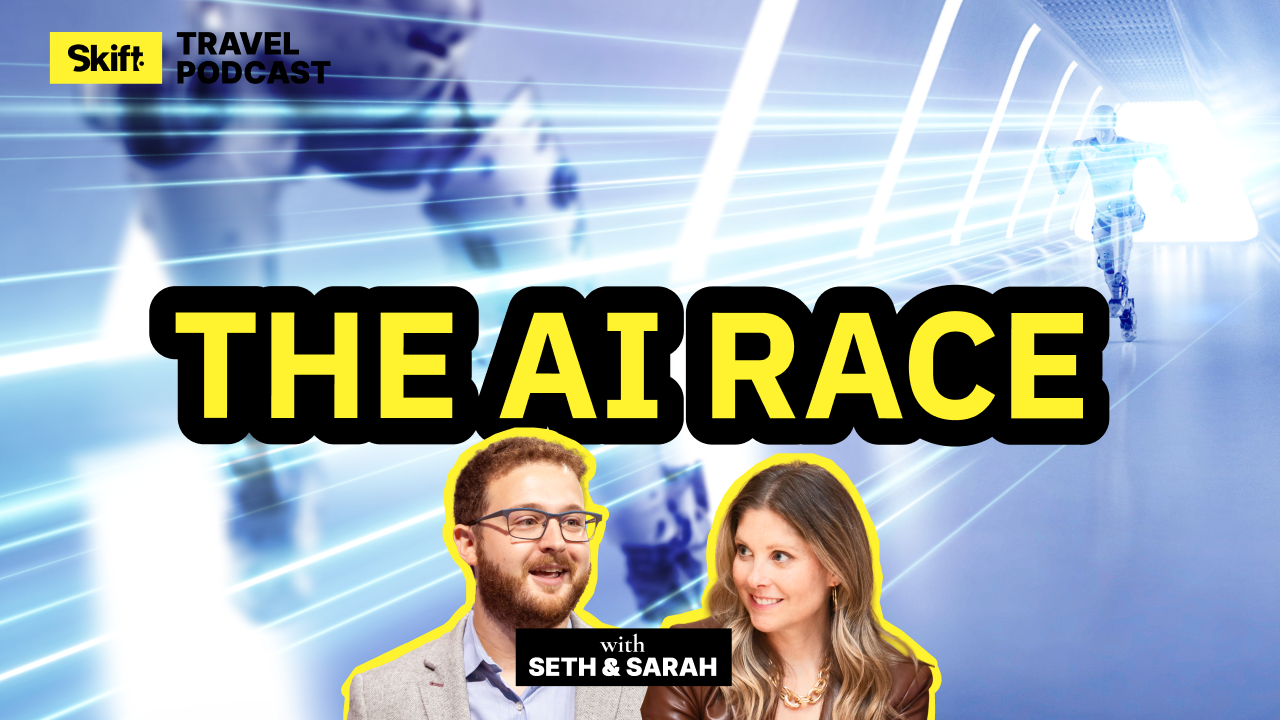
In a comprehensive deep-dive discussion, industry analysts Seth Borko and Sarah Kopit dissected these divergent trends, exploring what is truly paying off in the travel tech sector, what remains deep in the experimental lab, and why foundational pillars like data ownership, brand trust, and cold hard ROI are rapidly eclipsing AI hype. This article explores the current landscape of travel’s AI race, analyzing how the convergence of big tech, aviation, and hospitality is reshaping the future of global mobility.
Detailed Chronology of the AI Evolution in Travel
To understand where the travel industry stands in late 2026, it is vital to trace how artificial intelligence has evolved within the sector over the past several years, moving from basic predictive algorithms to advanced generative models and, ultimately, to today’s data-driven consolidation phase.
Phase 1: The Predictive Era and Early Automation (Pre-2023)
Long before large language models (LLMs) captured the public imagination, travel companies relied heavily on narrow AI. Airlines and hotels utilized machine learning for dynamic pricing algorithms, yield management, and fraud detection. Customer service interactions were largely dominated by rigid, rules-based chatbots that frequently frustrated users rather than resolving inquiries. During this period, AI was viewed primarily as a back-end tool for efficiency rather than a transformative front-end consumer experience.
Phase 2: The Generative AI Gold Rush (2023–2024)
The public launch of OpenAI’s ChatGPT in late 2022 sent shockwaves through the travel industry. Almost overnight, every online travel agency (OTA), hotel chain, and airline rushed to announce proprietary "AI trip planners." Venture capital and corporate innovation budgets poured into natural language interfaces designed to help users discover destinations through conversational text. However, many of these early implementations proved to be expensive wrappers built on top of foundational models, suffering from high latency, hallucinations, and—crucially—low conversion rates. Consumers enjoyed playing with the technology, but few were actually booking entire multi-destination itineraries through conversational bots.

Phase 3: The Reality Check and Infrastructure Pivot (2025–Mid-2026)
As the novelty of conversational chatbots wore off, travel executives faced mounting pressure from shareholders to demonstrate concrete financial returns on their AI expenditures. Companies began scaling back surface-level consumer gimmicks and redirecting capital toward high-utility, back-end operational improvements: automating customer support workflows, optimizing supply chain logistics, and streamlining internal coding processes.

Simultaneously, Big Tech platforms and data aggregators recognized that foundational models were becoming commoditized. The true competitive moat shifted away from the AI algorithms themselves and toward the proprietary, structured data required to train and fine-tune those models. This dynamic culminated in landmark data acquisitions, setting the stage for the current market structure.
Supporting Context and Metrics: Where the Money Goes
The financial and operational metrics shaping the travel sector in 2026 reveal a nuanced picture of adoption. The market is no longer driven by broad enthusiasm; it is driven by hard numbers.
The $10 Million Data Play: Google and Spirit Airlines
One of the most telling indicators of how value is shifting in the travel AI ecosystem is Google’s $10 million acquisition of Spirit Airlines’ operational data. In an era where algorithms can be replicated or open-sourced relatively easily, proprietary datasets—particularly those encompassing complex, real-time logistical constraints, pricing nuances, passenger behavior, and routing complexities—have become multi-million-dollar assets.
For tech giants like Google, acquiring rich datasets from established carriers provides the granular training ground needed to refine predictive travel tools, flight delay estimations, and dynamic packaging systems. For airlines, monetizing legacy operational data represents a lucrative new revenue stream, transforming historical information into strategic capital. This transaction signals that the AI race is fundamentally a data race; companies that control unique, high-frequency travel data hold the ultimate leverage.
Airbnb’s Efficiency Gains vs. Booking.com’s 1% Reality
On the consumer-facing front, the ROI metrics tell a story of bifurcated adoption:
- Airbnb and Operational Savings: Disruptors like Airbnb have successfully integrated AI into internal workflows, customer support routing, and trust-and-safety mechanisms. By deploying machine learning to detect fraudulent listings, streamline host onboarding, and automate tier-one customer service inquiries, Airbnb has demonstrated real, bottom-line cost savings. Their AI strategy focuses heavily on empowering employees and safeguarding marketplace integrity, translating directly into margin expansion.
- Booking.com and the Sub-1% Booking Reality: Conversely, traditional OTA giant Booking.com has offered a sobering reality check regarding consumer behavior. Despite heavy investments in conversational interfaces and AI-assisted discovery tools, Booking.com reports that artificial intelligence still accounts for less than 1% of total room nights booked. This metric illustrates a profound friction point in travel tech: while travelers are increasingly willing to research or gather inspiration using AI, they overwhelmingly prefer traditional, high-certainty booking funnels when entering their credit card information and committing financial resources.
Official Insights and Analysis: The Borko & Kopit Breakdown
In their recent evaluation, Seth Borko and Sarah Kopit unpacked these disparate metrics to explain why the travel industry’s AI journey is proving to be a marathon rather than a sprint.
The Illusion of Universal AI Disruption
Borko and Kopit emphasized that the market has suffered from a generalized "AI hype cycle" that failed to distinguish between distinct business models. Travel is not a monolith; an OTA aggregator operates on fundamentally different economic principles than a low-cost carrier, a short-term rental marketplace, or a global hotel brand. Consequently, an AI strategy that yields strong efficiency gains for back-office operations at Airbnb will not necessarily translate into immediate gross booking value for a transactional giant like Booking.com.
Trust, Friction, and the Psychology of Booking
A core theme of their analysis centers on consumer trust. Booking a travel itinerary involves high financial stakes and emotional investment. If a flight is canceled or a hotel reservation is botched, the consequences are immediate and stressful. Borko and Kopit argue that consumers remain fundamentally hesitant to trust a black-box conversational algorithm with end-to-end transaction execution. Until AI interfaces can provide ironclad guarantees, transparent conflict resolution, and seamless multi-vendor coordination, the sub-1% transaction threshold reported by legacy players is likely to climb only gradually.

The Rise of Pragmatic ROI
The era of speculative "moonshot" AI funding has formally closed. Travel executives are now demanding strict accountability, evaluating AI initiatives through traditional financial lenses:
- Cost Reduction: How many customer service hours does an automated workflow eliminate?
- Conversion Lift: Does an AI-driven recommendation engine measurably increase Average Order Value (AOV)?
- Data Monetization: Can internal operational telemetry be packaged, protected, and leveraged as a strategic asset?
Future Outlook: Navigating the Next Era of Travel Technology
As the travel industry looks toward the remainder of the decade, the trajectory of artificial intelligence will be defined by maturation, consolidation, and pragmatic integration. Several key trends will dictate who wins and who loses in travel’s AI race:
1. The Consolidation of Proprietary Data Monopolies
As demonstrated by the Google-Spirit transaction, smaller carriers and independent hospitality groups will increasingly recognize the value of their data assets. We can expect to see stricter data governance frameworks, where travel providers monetize their operational telemetry rather than giving it away for free to third-party aggregators. Companies that successfully aggregate and clean their proprietary data will hold immense bargaining power in negotiations with AI developers.
2. Transition from Chatbots to Invisible Infrastructure
The flashy, standalone "AI trip planning chatbot" is rapidly giving way to invisible, ambient intelligence. Rather than forcing users to chat with a generic bot, future travel applications will embed AI quietly into the background—predicting flight delays before they happen, automatically adjusting hotel itineraries based on real-time weather and traffic anomalies, and dynamically tailoring loyalty rewards without requiring explicit user prompts.
3. Bridging the Trust Gap for Transactions
To push AI-driven bookings past the current single-digit percentages, tech providers must build deeper trust layers. This will likely involve hybrid models where AI handles the inspiration and itinerary drafting phases, but seamlessly hands off the user to verified human customer success teams or trusted, transparent checkout gateways when financial commitments are made.
4. Regulatory Pressures and Ethical AI
As artificial intelligence becomes more deeply embedded in dynamic pricing, personalized marketing, and biometric security across airports and hotels, regulatory scrutiny will intensify. Travel companies will need to navigate complex global frameworks concerning data privacy (such as GDPR and emerging AI acts), algorithmic bias in pricing, and consumer transparency.
Conclusion
Travel’s AI reckoning is neither a dystopian failure nor an overnight utopia; it is a profound market correction. The initial wave of unbridled hype has washed away, leaving behind a more disciplined, value-driven industry. As Seth Borko and Sarah Kopit aptly highlighted, the winners of this technological race will not be those with the loudest marketing campaigns or the flashiest chat interfaces. Instead, victory will belong to the enterprises that master the fundamentals: securing proprietary data, building unbreakable consumer trust, and ruthlessly demanding measurable return on investment in an increasingly competitive global marketplace.