





Executive Overview
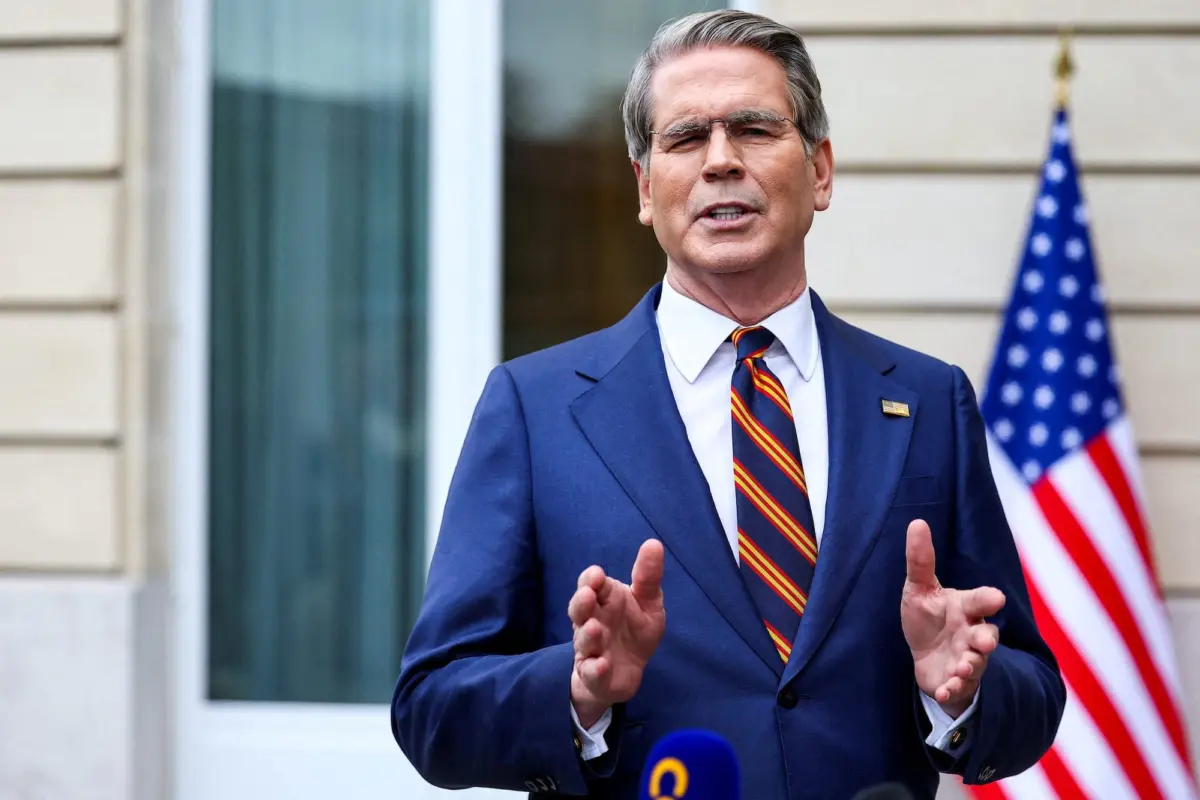
In a dramatic escalation of economic statecraft, the United States has announced its intention to levy "the toughest sanctions in history" against the Islamic Republic of Iran. The declaration, delivered by U.S. Treasury Secretary Scott Bessent, marks a pivotal shift in the Trump administration’s strategy to resolve a devastating six-month-old regional conflict. By deploying unprecedented financial penalties and reinforcing a maritime blockade, Washington aims to cripple Tehran’s economy and force an end to hostilities without embroiling the U.S. military in another major ground or air campaign in the Middle East.
This aggressive economic pivot follows a series of blunt warnings from President Donald Trump, who promised "Economic Warfare and Isolation on an unprecedented scale" for Iran and warned of "tremendous economic consequences" for any nation attempting to throw the country a financial lifeline.
The announcement has sent shockwaves through global energy markets, driving crude oil prices to a three-week high. The conflict has already severely disrupted trade through the Strait of Hormuz—a vital maritime choke point through which approximately 20% of the world’s petroleum flows. While the U.S. administration expresses confidence that economic strangulation will bring about the collapse of the Iranian regime, foreign policy analysts and international allies warn of severe collateral damage. The aggressive strategy risks fracturing relations with key diplomatic mediators like Oman, triggering economic retaliation from China, and worsening a humanitarian crisis for millions of ordinary Iranians.
Detailed Chronology of the Conflict
The current crisis is the culmination of a rapidly deteriorating security environment in the Persian Gulf over the past half-year. Understanding the path to this economic showdown requires tracing the events that brought the region to the brink of total war.
+-----------------------------------------------------------------------------------+
|                                 CRISIS TIMELINE                                   |
+-----------------------------------------------------------------------------------+
|                                                                                   |
|  [February]  --> Conflict erupts; Iran restricts access to the Strait of Hormuz.  |
|                  Global energy supply chains face immediate disruption.           |
|                                                                                   |
|  [April]     --> First ceasefire attempt fails. U.S. Navy enforces a strict       |
|                  maritime blockade on Iranian ports.                              |
|                                                                                   |
|  [Mid-June]  --> Second ceasefire collapses. U.S. temporarily pauses naval        |
|                  blockade to facilitate short-lived diplomatic talks.             |
|                                                                                   |
|  [August 19] --> President Trump threatens global partners with "Economic          |
|                  Warfare" if they provide any economic lifelines to Tehran.       |
|                                                                                   |
|  [August 20] --> Treasury Secretary Bessent announces "toughest sanctions in       |
|                  history" to avert a large-scale military ("kinetic") restart.    |
|                                                                                   |
+-----------------------------------------------------------------------------------+
The Outbreak and Early Escalation (February – March)
The conflict erupted in February, drawing in several Gulf nations and immediately threatening international shipping lanes. Leveraging its strategic position along the Persian Gulf, Iran demonstrated its capability to restrict and harass commercial maritime traffic through the Strait of Hormuz. Within weeks, millions of barrels of Middle Eastern crude oil were stranded, unable to transit safely out of the Gulf. Freight insurance rates skyrocketed, and international shipping conglomerates began rerouting vessels around the Cape of Good Hope, adding massive delays and costs to global supply chains.
The First Ceasefire Attempt and Naval Blockade (April)
By April, international pressure led to the negotiation of a ceasefire agreement brokered by regional intermediaries. The deal was designed to restore the unhindered flow of commercial shipping through the Strait of Hormuz. However, the agreement crumbled within days amid mutual recriminations and renewed maritime skirmishes.
In response to the collapse of the April agreement, the United States deployed naval assets to establish a strict blockade on Iranian ports. The blockade aimed to halt all outbound shipments of Iranian crude and prevent the import of dual-use goods and military hardware.

The Second Ceasefire and the June Pause (June – July)
A second window for diplomacy opened in June. In a bid to show good faith and incentivize a permanent resolution, the United States temporarily paused its naval blockade. This pause allowed a brief resumption of shipping, and negotiators worked feverishly to draft a framework for long-term peace.
Unfortunately, like its predecessor, the June agreement collapsed under the weight of deep-seated geopolitical mistrust. The failure of this second diplomatic push left the Trump administration frustrated and determined to pursue a more coercive, non-military approach.
The August Pivot to "Economic Warfare"
By mid-August, the administration’s patience had worn thin. On Wednesday, August 19, President Trump took to social media to issue an ultimatum, threatening any country, business, or financial institution aiding Iran with devastating economic penalties.
The following day, Thursday, August 20, Treasury Secretary Scott Bessent formalized this stance, announcing the impending rollout of historically severe sanctions. The announcement immediately impacted commodity markets, sending oil prices climbing as traders braced for a protracted period of geopolitical instability.
Supporting Context & Energy Metrics
The confrontation between Washington and Tehran is playing out against a backdrop of complex global energy dynamics and intricate trade relationships. The administration’s reliance on economic warfare faces several structural hurdles, particularly concerning China and the physical realities of global oil transit.
                    GLOBAL ENERGY & TRADE DEPENDENCIES

        [GULF REGION]                         [IRANIAN OIL]
     Produces 50% of the                   80% of exports flow
    energy consumed by China                   directly to China
              │                                      │
              ▼                                      ▼
     ┌─────────────────┐                    ┌─────────────────┐
     │  PEOPLE'S REP.  │◄───────────────────┤   ISLAMIC REP.  │
     │    OF CHINA     │   Secondary        │     OF IRAN     │
     └────────┬────────┘   Sanctions?       └─────────────────┘
              │
              ▼
     ┌─────────────────┐
     │  UNITED STATES  │ (Risk of retaliation via rare-earth
     │   OF AMERICA    │  mineral export curbs & supply chain disruptions)
     └─────────────────┘
The Strait of Hormuz: A Global Choke Point
The Strait of Hormuz is widely considered the world’s most critical maritime oil transit channel. Prior to the outbreak of hostilities in February, the waterway carried approximately 20 to 21 million barrels of oil per day—equivalent to roughly one-fifth of global petroleum consumption.
The six-month conflict has effectively choked this artery, leaving millions of barrels of oil stranded in the Gulf and forcing global markets to rely on depleted inventories and alternative, more expensive supply routes.
The China Factor: The Weak Link in the Sanctions Chain
The primary challenge to any U.S. sanctions regime is the economic relationship between Iran and China. According to 2025 shipping and trade data from the analytics firm Kpler, China purchases more than 80% of Iran’s total crude oil exports. This oil is frequently transported via a "dark fleet" of unflagged or flag-of-convenience tankers that employ deceptive shipping practices, such as turning off automatic identification system (AIS) transponders to evade detection.
When questioned about the potential for the U.S. to impose secondary sanctions on Beijing for its continued purchase of Iranian oil, Treasury Secretary Bessent chose his words carefully, indicating that some diplomatic conversations are best held behind closed doors. However, he pointedly reminded Beijing of its broader vulnerabilities:
"Keep in mind that the Chinese get 50% of their energy from inside the Gulf. So it would do them a big service to get with the program."
| Metric / Indicator | Value / Proportion | Impact / Significance |
|---|---|---|
| Pre-Conflict Hormuz Oil Transit | ~20% of globally traded oil | Critical choke point for global energy security |
| Chinese Share of Iranian Oil Exports | >80% (Source: Kpler) | Primary financial lifeline for the Iranian regime |
| Chinese Energy Sourced from Persian Gulf | ~50% of total energy imports | Vulnerability leverage point cited by Secretary Bessent |
| Duration of Current Conflict | Approximately 6 months | Prolonged shipping disruptions and high insurance premiums |
| U.S.-Iran Sanctions History | Nearly 50 years (since 1979) | Established Iranian sanctions-evasion infrastructure |
Imposing secondary sanctions on Chinese entities carries immense risk for the United States. China remains a primary exporter of consumer goods, industrial machinery, and critical raw materials—including rare-earth minerals vital for the U.S. defense, technology, and automotive sectors—to the United States. Initiating a full-scale economic war with Beijing over Iranian oil could trigger retaliatory export bans, severely damaging the U.S. economy.
Official Statements and Geopolitical Reactions
The rhetoric emanating from Washington, Tehran, and regional capitals highlights the starkly divergent views on the legitimacy and efficacy of economic sanctions as a tool of international diplomacy.

The U.S. Administration: Coercion as an Alternative to War
Treasury Secretary Scott Bessent defended the administration’s aggressive posture during an appearance on CNBC. He argued that maximum economic pressure is a peaceful alternative to military engagement:
"I’m not sure why oil has popped up on this. If we are doing the maximum economic pressure, then that means that likely there will not be a large-scale kinetic restart. It is a one-two punch. We have the blockade, and we are going to have the toughest sanctions in history. It is going to work in Iran and we are going to collapse this regime. It is time for our allies and the rest of the world to make a decision."
Bessent promised to hold a comprehensive press conference on Monday to lay out the precise operational details of the new sanctions regime.
This economic push aligns with President Trump’s social media declarations, where he warned:
"ANY country that allows its financial institutions, businesses, airports, or government entities to provide any type of lifeline to Iran will itself face TREMENDOUS Economic Consequences."
Iran: Condemnation of "Economic Terrorism"
In Tehran, government officials reacted with defiance and sharp criticism, characterizing the proposed measures as illegal and inhumane. Iranian Foreign Ministry spokespeople condemned the sanctions, labeling them a form of "economic terrorism" designed to target civilian populations rather than political elites, which they argued constitutes a crime against humanity.
Iranian Foreign Minister Abbas Araqchi dismissed President Trump’s threats as a political maneuver designed to distract the American electorate from domestic financial troubles, pointing to record-high U.S. national debt and elevated interest rates. Taking to the social media platform X, Araqchi stated:
"America’s economic terrorism threatens the global economy and the national sovereignty of countries around the world. Washington’s insistence on these failed policies will bring further failures and alienate the Iranian people."
The Regional Dilemma: The Threat to Oman
The administration’s aggressive unilateralism has also strained relationships with long-standing regional security partners. Iran has recently been negotiating a bilateral agreement to manage security and transit through the Strait of Hormuz with the Sultanate of Oman. In recent weeks, Iranian officials indicated that a deal was close.
President Trump responded to these diplomatic efforts with characteristic hostility, warning that the U.S. might target the Gulf state militarily if it "gets in the way" of American objectives.
Following a meeting with his Japanese counterpart, Omani Foreign Minister Badr Albusaidi implicitly rejected this coercive diplomacy, calling for calm and stating:
"Lasting security in the strait requires a permanent peace in the region. We reject further escalation and believe that unilateral threats only serve to destabilize the delicate security balance of the Gulf."
Future Outlook
As the international community awaits Treasury Secretary Bessent’s formal press conference on Monday, several key questions remain regarding the viability and potential consequences of the U.S. strategy.
Can Sanctions Force a Regime Collapse?
Historically, unilateral economic sanctions have a mixed record of achieving regime change or major policy concessions. Iran has weathered near-continuous economic isolation since the 1979 Islamic Revolution. Over five decades, Tehran has developed a highly sophisticated "resistance economy," characterized by domestic manufacturing substitution, black-market trading networks, and deep financial relationships with non-aligned nations.
While the "one-two punch" of a naval blockade and historic sanctions will undoubtedly strain Iran’s economy and exacerbate domestic inflation, it remains uncertain whether these measures will be sufficient to collapse the clerical regime or force it to dismantle its nuclear program and regional proxy networks.
The Threat of Regional Fragmentation
By threatening key allies like Oman and economic giants like China, the United States risks isolating itself diplomatically. Oman has long served as a vital backchannel mediator between Washington and Tehran, facilitating prisoner swaps and early-stage nuclear negotiations. Alienating Muscat could close off the few remaining diplomatic off-ramps, increasing the likelihood of miscalculation and accidental military conflict in the Gulf.
Implications for Global Energy Markets
The immediate future of global energy markets hangs in the balance. If the U.S. successfully deters international buyers from purchasing Iranian crude, the global supply of oil will tighten further, keeping prices elevated.
Conversely, if China and other emerging economies refuse to comply with Washington’s mandates, the U.S. will face a difficult choice: enforce secondary sanctions and risk a global trade war, or allow the sanctions regime to be exposed as toothless.
In either scenario, the coming weeks will test the limits of American economic hegemony and determine whether financial warfare can truly replace military force as a means of resolving deep-seated geopolitical conflicts.