











By the Streetsblog USA Editorial Desk
Published: October 12, 2026
Executive Overview
In the ongoing struggle over the future of American urban design, a growing faction of frustrated residents is opting for direct action over bureaucratic delay. Across major metropolitan areas—exemplified by the exploits of groups like Crosswalk Collective Los Angeles and media personalities such as Streetsblog’s own Editor-at-Large Gersh Kuntzman—civic impatience has boiled over into tactical urbanism. Armed with paint rollers, stencils, and reflective thermoplastic strips, these community activists are taking street safety into their own hands, painting unauthorized crosswalks in dangerous corridors where municipal transportation departments have failed to act.
This phenomenon of "criminal mischief" by well-meaning citizens highlights a profound fracture in modern urban governance. While local governments emphasize the importance of bureaucratic processes, comprehensive environmental impact reports, and structured budgetary rollouts, pedestrians and cyclists face immediate, daily threats of injury or death on poorly designed roadways. When citizens step into the vacuum to paint crosswalks overnight, they are met with a swift and contradictory municipal response: swift erasure.
This article explores the rising tide of tactical urbanism, examining the tactical, legal, and safety dimensions of citizen-led infrastructure. We investigate why communities are choosing civil disobedience to secure safe passage, how municipal authorities react to unauthorized striping, and what this dynamic reveals about the state of pedestrian safety in America.
Detailed Chronology: The Rise of Citizen-Led Striping
The modern incarnation of guerrilla street painting did not emerge in a vacuum. It is the culmination of years of mounting pedestrian fatalities, stagnant municipal bureaucracy, and a technological shift that allows grassroots groups to coordinate, document, and publicize their interventions instantly.

The Catalyst: Bureaucratic Inertia
For decades, urban residents petitioning for basic traffic calming measures—such as high-visibility crosswalks, pedestrian hybrid beacons, and curb extensions—have encountered a wall of red tape. Standard municipal processes often dictate that a location must accumulate a specific threshold of crashes, injuries, or fatalities before it qualifies for safety interventions. Activists point out the perverse incentive of this policy: the system requires blood on the asphalt before it is willing to invest in paint.
In Los Angeles and other sprawling car-centric cities, neighborhoods lacking sidewalks or crosswalks force vulnerable road users to navigate high-speed traffic lanes with zero protection. Frustrated by multi-year delays for simple municipal projects that cost a fraction of traditional road works, ad-hoc collectives began mobilizing under the cover of darkness.
The Emergence of Crosswalk Collectives
Groups like Crosswalk Collective Los Angeles transformed tactical urbanism from isolated acts of artistic vandalism into organized, systematic interventions. Operating with military precision, volunteers scout dangerous, un-signalized intersections near schools, parks, and transit stops. They prepare stencils, mix quick-drying traffic paint, and complete installations in a matter of minutes.
The visual impact is immediate. Streets that were once high-risk gauntlets transform overnight into legible, pedestrian-friendly corridors. Motorists naturally slow down when confronted with clear striping, and pedestrians regain a sense of dignity and safety in their neighborhoods. However, the legal reality is stark: because these installations are unauthorized, they are classified under municipal law as vandalism, setting the stage for a high-stakes cat-and-mouse game with city maintenance crews.
Supporting Context & Metrics: The Crisis on American Asphalt
To understand why citizens are willing to risk legal penalties to paint lines on a street, one must examine the staggering safety crisis unfolding across American roadways.

Pedestrian Fatality Statistics
According to data compiled by the Governors Highway Safety Association (GHSA) and the National Highway Traffic Safety Administration (NHTSA), pedestrian fatalities in the United States have surged to levels not seen in four decades. Thousands of pedestrians are killed annually, disproportionately affecting people of color, low-income communities, and older adults who rely on walking and public transit.
- Infrastructure Deficits: A vast percentage of pedestrian fatalities occur on wide, multi-lane arterial roads managed by local or state transportation departments that prioritize vehicle throughput over human life.
- The "Paint is Cheap" Fallacy: Activists frequently argue that while major capital reconstruction projects take years and millions of dollars, high-visibility striping, bollards, and concrete medians can be implemented rapidly and at minimal cost. The reluctance of cities to deploy low-cost interventions quickly is a core driver of grassroots frustration.
The Psychology of Traffic Calming
Traffic engineering studies consistently demonstrate that environmental cues dictate driver behavior. Wide, unobstructed lanes encourage higher driving speeds, whereas narrow lanes, visual friction, and clearly marked crosswalks signal to drivers that they are sharing space with humans. When guerrilla activists paint crosswalks, they leverage this psychological response, forcing motorists to acknowledge the presence of pedestrians long before the city’s official timeline would allow.
Official Statements and Municipal Paradoxes
The reaction of city governments to unauthorized crosswalks reveals a deep institutional anxiety. On one hand, municipal departments of transportation are legally obligated to maintain uniform traffic control devices in compliance with federal and state manuals (such as the Manual on Uniform Traffic Control Devices, or MUTCD). On the other hand, the aggressive erasure of citizen-painted crosswalks creates a public relations nightmare for administrations that claim to champion Vision Zero (the initiative to eliminate traffic fatalities).
The Liability Argument
Cities typically defend the rapid removal of guerrilla crosswalks by citing liability concerns. Municipal attorneys argue that unauthorized installations could confuse drivers, fail to meet engineering standards, or create a false sense of security that leads to accidents. If a pedestrian is struck in an unapproved crosswalk, the city fears catastrophic legal exposure—even if the city itself failed to provide safe infrastructure in the first place.
The Optics of Erasure
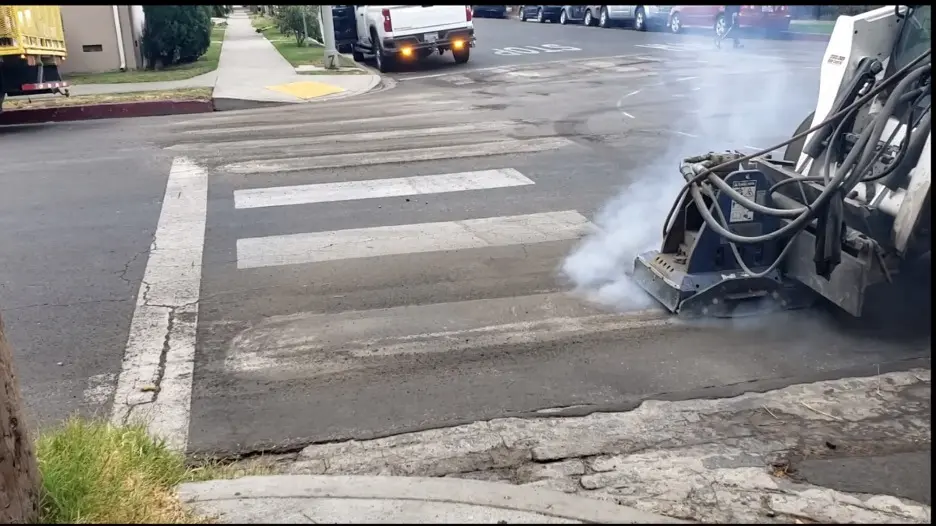
Critics of municipal policy argue that cities display misplaced priorities when they dispatch crews with high-powered pressure washers, grinding equipment, and chemical solvents to erase a crosswalk within 24 hours of its installation. Activists point out the grim irony: municipal budgets and maintenance crews are apparently flush with resources when it comes to removing safety paint, yet chronically underfunded and understaffed when it comes to installing it.

"When citizens paint a crosswalk, they aren’t committing vandalism; they are performing emergency life-saving triage on a bleeding infrastructure," notes one urban planning advocate. "When the city arrives the next morning to grind it away, they are actively choosing to make the street more dangerous."
Future Outlook: Where Do We Go From Here?
The clash between tactical urbanists and municipal departments is forcing a broader conversation about the democratization of public space. As cities face mounting pressure to address climate change, equity, and traffic safety, the traditional top-down approach to urban design is proving increasingly inadequate.
Toward Collaborative Urbanism
Some progressive cities are beginning to recognize the value of tactical urbanism, creating streamlined permitting processes that allow communities to pilot safety interventions before committing to permanent construction. Programs that embrace "quick-build" infrastructure acknowledge that local residents often possess the best insights into where traffic calming is most urgently needed.
However, in jurisdictions where bureaucratic resistance remains rigid, guerrilla crosswalks will likely persist. As long as vulnerable road users are treated as an afterthought in municipal planning, individuals will continue to pick up paint rollers and assert their right to safe passage.
Conclusion
The guerrilla crosswalk movement is more than a series of late-night pranks or acts of civil disobedience; it is a symptom of a systemic failure in American street design. By illuminating the gap between bureaucratic inaction and human survival, tactical urbanists have forced a national debate on who controls our public rights-of-way. Whether cities choose to persecute these civic artists or partner with them will define the safety, equity, and livability of our urban centers for decades to come.


