







Executive Overview
In the upper echelons of modern yachting, the definition of luxury has undergone a profound shift. Today’s discerning owners are no longer merely seeking floating penthouses for sun-drenched afternoon coastal hops; instead, they are demanding robust, self-reliant vessels capable of genuine blue-water exploration. They want to venture far beyond the beaten path, bridging the gap between high-end coastal cruising and transoceanic autonomy. Enter the Askari 65—a meticulously crafted, marine-grade aluminum cruiser built in Cape Town, South Africa, by Askari Yachts.
Designed by the renowned naval architecture firm Du Toit Yacht Design, the Askari 65 is a masterclass in purposeful engineering, custom craftsmanship, and ocean-going resilience. Measuring 65 feet in overall length, this long-range cruiser has been conceived from the keel up for extended living aboard, transoceanic passages, and absolute owner-specific customization. By leveraging the inherent structural advantages of marine-grade aluminum, Askari Yachts has bypassed the rigid limitations of traditional fiberglass production molds, offering a flexible platform where form follows function without compromise.
From its ingeniously laid-out indoor-outdoor living spaces and state-of-the-art solar integration to its commercial-grade machinery room and impressive 3,100-nautical-mile range, the Askari 65 represents a compelling proposition for the modern adventurer. Following its successful launch in the waters of Cape Town, this trailblazing vessel is preparing for its highly anticipated international debut at the United States powerboat scene, scheduled for the Annapolis Powerboat Show from October 8 to 11, 2026. This comprehensive review explores the genesis, design philosophy, engineering marvels, and future market outlook of a yacht poised to redefine long-range cruising.
Detailed Chronology: From Concept to Global Stage
The realization of the Askari 65 is the culmination of years of targeted naval architecture, rigorous engineering trials, and a clear-eyed vision of what a modern expedition cruiser should be. While the official public unveiling is set for the autumn of 2026, the journey of the first hull tells a story of meticulous dedication to quality and offshore capability.
The Genesis of the Askari Philosophy
Askari Yachts was founded on a simple yet demanding premise: to build vessels that combine the structural integrity of commercial workboats with the refined luxury and comfort of contemporary superyachts. Recognizing that standardized production yachts often fail to meet the complex, individual needs of serious cruisers, the shipyard partnered with Du Toit Yacht Design. Known for creating vessels capable of handling the notoriously treacherous waters off the southern tip of Africa, Du Toit brought a wealth of regional and international offshore expertise to the drawing board.
The design phase focused heavily on optimizing hull efficiency, weight distribution, and safety profiles. By choosing marine-grade aluminum over composite materials, the design team ensured that the Askari 65 would possess an exceptional strength-to-weight ratio, high impact resistance, and the structural flexibility required to accommodate bespoke interior layouts.
Construction and Launch in Cape Town
The physical manifestation of the Askari 65 took place in Cape Town, a city with a rich and storied maritime heritage deeply intertwined with boatbuilding excellence. South African shipyards have long earned a stellar global reputation for producing rugged, ocean-capable multihulls and monohulls designed to weather the roaring forties and southern storm tracks.
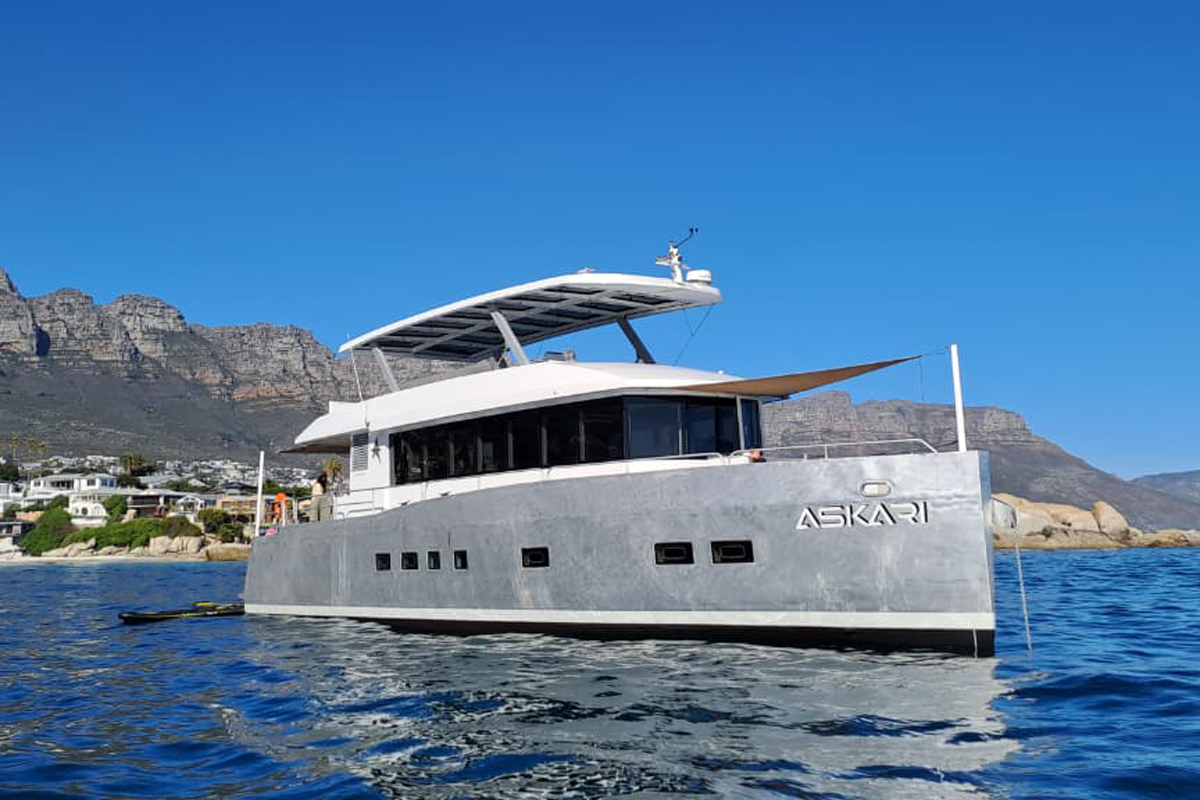
During construction, every frame, weld, and plate of the marine-grade aluminum structure was inspected to meet stringent commercial-grade standards. Aluminum construction allows for precise, custom modifications during the build process, enabling Askari to tailor the vessel’s interior volumes precisely to the first owner’s specifications. Following exhaustive dockside trials, systems commissioning, and sea trials in local South African waters—where the yacht was put through its paces in varied sea states—the Askari 65 officially touched the water, proving its sea-keeping pedigree from day one.
The Journey to the Global Spotlight
With sea trials successfully concluded and systems fully optimized, the yacht is currently embarking on its next major milestone. Following its christening and departure from Cape Town, the inaugural Askari 65 is scheduled to make its international premiere in North America. Its grand debut at the Annapolis Powerboat Show (October 8–11, 2026) marks a critical strategic inflection point for Askari Yachts, introducing the brand and its flagship model to the lucrative U.S. and international cruising markets.
Supporting Context & Metrics: Architecture, Engineering, and Specifications
A deep dive into the technical specifications and architectural layout of the Askari 65 reveals a vessel designed to maximize every square foot of its 65-foot footprint, balancing operational efficiency with lavish comfort.
Naval Architecture and Hull Construction
At the core of the Askari 65 is its marine-grade aluminum structure. Unlike fiberglass hulls that require expensive, fixed molds, aluminum allows for infinite customization of the superstructure and interior bulkheads without sacrificing structural integrity. This metal offers superior energy absorption upon impact, making it the material of choice for serious explorers navigating unfamiliar waters or high-latitude cruising grounds where floating debris or uncharted obstacles pose a risk.
The hull form, engineered by Du Toit Yacht Design, is optimized for displacement and semi-displacement speeds, ensuring a smooth, predictable motion in a seaway. The weight savings achieved through aluminum construction directly translate to increased payload capacity, allowing the yacht to carry substantial fuel, water, provisions, and toys without bogging down its performance metrics.
Deck Layout and Indoor-Outdoor Living
Modern yacht owners place a premium on seamless transitions between indoor and outdoor spaces, and the Askari 65 delivers this in abundance.
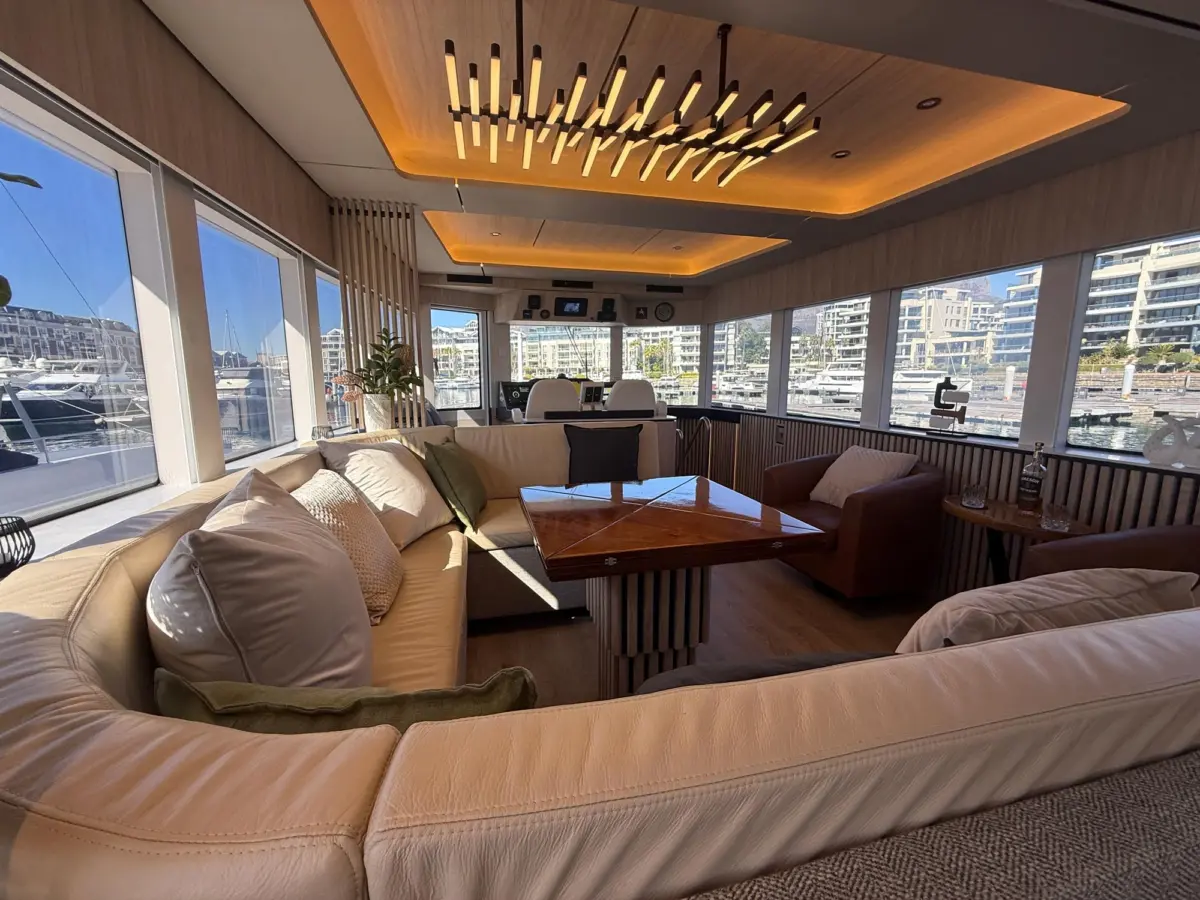
- The Aft Cockpit & Galley Integration: The main deck centers on a fluid indoor-outdoor living concept. The aft cockpit flows directly into the interior galley through a remarkably large, opening servery window. This architectural choice transforms the galley into an interactive social hub, whether guests are dining alfresco in the cockpit or relaxing inside the salon.
- Forward Cockpit & Foredeck Lounge: For those seeking privacy, shelter from the wind, or a dedicated vantage point while underway, a forward cockpit and foredeck lounge provide an additional outdoor retreat. It is an ideal spot for morning coffee or evening cocktails while at anchor in a secluded cove.
- The Flybridge & Innovative Hardtop: The flybridge adds another expansive upper-level living area complete with an upper helm station. A standout feature of this deck is the hydraulically folding hardtop. Not only does this mechanism allow the yacht to clear lower bridges or fit into specific dry-stack and shipping constraints by reducing the overall air draft, but it also integrates a massive 6,000-watt solar array. This renewable energy system significantly reduces reliance on diesel generators while at anchor, contributing to the vessel’s overall self-sufficiency.
Interior Accommodations and Customization
Flexibility is the hallmark of the Askari 65’s interior architecture. The inaugural hull features a luxurious four-double en suite stateroom layout, highlighted by a spacious aft master suite that offers panoramic views, private climate control, and exceptional tranquility.
Alternatively, the shipyard offers adaptable configurations, including a three-en-suite stateroom arrangement paired with dedicated crew accommodations. This adaptability makes the Askari 65 equally suited for an owner-operator couple looking for absolute privacy or an extended family cruising with professional crew support.
Engineering, Machinery, and Safety Systems
Below decks, the engineering spaces of the Askari 65 reflect a commercial-grade ethos.
- Engine Room & Safety: Positioned directly aft of the master stateroom is a full-standing-height engine room. Crucially, this high-machinery space is separated from the guest accommodations by a watertight, fire-resistant door, elevating safety standards to meet or exceed commercial shipping codes.
- Garage & Water Toys: Aft of the engine room, a hydraulic transom door opens to reveal a dedicated garage. This space is tailored to house water toys, diving gear, tenders, and essential cruising equipment, keeping the main decks clear and uncluttered.
Performance and Range Metrics
Powered by twin Yanmar 4LV170 diesel engines, the Askari 65 is designed for steady, economical, and reliable propulsion.
- Cruising Speed: 8.5 knots
- Maximum Speed: 14.5 knots
- Fuel Capacity: 1,228 gallons (4,648 liters)
- Estimated Range at Cruising Speed (8.5 knots): Approximately 2,300 nautical miles
- Extended Range at Economical Displacement Speeds: Up to 3,100 nautical miles
These metrics illustrate the vessel’s true blue-water capability. With a range exceeding 3,000 miles, owners can easily tackle major oceanic passages—such as trans-Atlantic crossings or extended island-hopping tours across the Pacific—without the constant anxiety of fuel stops.
Official Statements and Industry Insights
The launch of the Askari 65 has generated considerable discussion among marine industry analysts, naval architects, and seasoned cruisers alike. While the yacht speaks for itself through its physical attributes, the philosophy guiding its creation highlights a broader evolution in the yachting market.
Industry observers note that the demand for rugged, long-range explorer vessels under 80 feet has surged over the past five years. Owners are increasingly stepping away from delicate, high-maintenance white-plastic yachts in favor of metal-hulled vessels that offer peace of mind in remote regions. Askari Yachts anticipated this market shift by combining the indestructible nature of aluminum with the refined aesthetic touches normally reserved for high-end European custom builds.
Naval architecture partners at Du Toit Yacht Design have emphasized that the collaboration was built around the realities of real-world cruising. “An offshore cruiser must be safe, comfortable, and predictable,” notes design feedback from the development team. “By using marine-grade aluminum, we haven’t just built a hull; we’ve built a customizable canvas that gives owners the freedom to explore the planet on their own terms, without sacrificing the comforts of home.”
Furthermore, the integration of modern eco-conscious features—such as the 6,000-watt solar array atop the folding flybridge hardtop—reflects a growing industry-wide commitment to reducing carbon footprints at anchor. Owners increasingly expect silent, generator-free operation during overnight stays in pristine anchorages, and the Askari 65 answers this call decisively.
Future Outlook: Shaping the Future of Expedition Cruising
As the Askari 65 prepares for its high-profile North American premiere at the Annapolis Powerboat Show in October 2026, the maritime world will be watching closely. This vessel is more than just a single hull launch; it is a clear statement of intent from Askari Yachts and Du Toit Yacht Design regarding the future direction of boutique expedition yachting.
Market Positioning and Competitive Edge
In a crowded marketplace filled with mass-produced fiberglass cruisers, the Askari 65 carves out a unique niche. Its closest competitors are often custom, one-off metal builds that come with multi-year wait times and astronomical price tags, or semi-production expedition yachts that lack true interior layout flexibility. By utilizing an aluminum framework that permits bespoke customization while maintaining a streamlined construction process, Askari Yachts bridges this gap.
The yacht’s impressive transoceanic range (up to 3,100 nautical miles), commercial-grade engineering safety features (such as the watertight engine room bulkhead), and innovative indoor-outdoor living spaces position it as an ideal choice for the burgeoning demographic of "voyaging owners." These are individuals who view their yacht not as a weekend toy, but as a home capable of circumnavigating the globe.
Sustainability and Technological Integration
Looking ahead, the technologies showcased on the Askari 65—particularly its high-capacity solar generation and energy-efficient hull design—are expected to set a benchmark for future builds from the shipyard. As global cruising grounds enforce stricter environmental regulations and as owners increasingly value quiet, sustainable anchorages, the ability to harvest renewable energy directly through the vessel’s architecture will become an indispensable asset.
The Road Ahead
Following its debut in Annapolis, the inaugural Askari 65 is expected to embark on extended cruising itineraries along the East Coast of the United States and the Caribbean, providing a real-world showcase of its capabilities. For Askari Yachts, the success of this first hull will undoubtedly pave the way for future iterations and custom variants within the growing Askari lineup.
Ultimately, the Askari 65 proves that true luxury in yachting is no longer defined solely by polished marble or opulent upholstery. Instead, true luxury is autonomy, safety, the freedom to shape your environment, and the unbridled capability to chase the horizon wherever it may lead.