







Executive Overview
In what is arguably the most consequential hospitality and leisure transaction of the decade, the Royal Caribbean Group has officially announced a definitive agreement to acquire a 50% equity stake in the iconic Caribbean all-inclusive brands, Sandals Resorts and Beaches Resorts. Valuing the family-owned empire at approximately $6 billion, Royal Caribbean will shell out roughly $3 billion in cash for the half-ownership stake.
Disclosed initially via regulatory filings with the U.S. Securities and Exchange Commission (SEC) and subsequently confirmed by official statements from both corporate entities, the deal represents a seismic shift in the vacation ecosystem. For Royal Caribbean Group—long recognized as an undisputed titan of the cruise industry—this move marks its most aggressive and profound pivot from sea to land. By integrating Sandals’ adults-only luxury footprint and Beaches’ premier family-oriented properties into its corporate portfolio, Royal Caribbean is no longer merely a cruise line operator; it is rapidly transforming into a vertically integrated, multi-channel global vacation powerhouse.
The transaction, subject to customary regulatory approvals and closing conditions, is projected to officially close in early 2027. This comprehensive report breaks down the anatomy of the deal, its historical context, financial metrics, strategic implications for the travel sector, and what this means for millions of vacationers worldwide.

Detailed Chronology of the Mega-Deal
Rumors, Leaks, and Immediate Confirmations
The hospitality industry was sent into a frenzy early in the week when preliminary reports surfaced suggesting that a major corporate marriage was brewing between cruising royalty and Caribbean resort hospitality. Within twenty-four hours of these murmurs, both corporate HQs moved to quell speculation by releasing official confirmations.
The timeline of events highlights the lightning-fast speed at which modern mega-deals move once leaked to the public:
- Early Week (Days -2 to -1): Industry insiders leak whispers of clandestine talks between Royal Caribbean Group executives and representatives of the private, family-owned Sandals enterprise.
- Wednesday (Announcement Day): Royal Caribbean Group formally files documentation with the U.S. Securities and Exchange Commission (SEC), pulling back the curtain on the multi-billion-dollar transaction.
- Simultaneous Press Releases: Both Royal Caribbean Group and Sandals Resorts release coordinated corporate statements detailing the 50% equity acquisition valued at $6 billion total, with a $3 billion cash consideration.
- Early 2027 Target: Both organizations outline an expected closing horizon for the first quarter of 2027, pending standard international antitrust and regulatory clearances.
Navigating the Regulatory Landscape
While the handshake is complete, the journey to finalization is slated to take several months. Because both companies operate across multiple international jurisdictions—spanning the United States, various European nations, and numerous Caribbean sovereign states—the transaction must clear rigorous antitrust reviews. Analysts do not anticipate major roadblocks given that the operations are largely complementary rather than directly competing in the same asset class, but local tourism authorities in key destinations like Jamaica, Saint Lucia, and the Bahamas will maintain close oversight to protect local labor, tax contributions, and tourism infrastructure development.
Strategic Rationale: Why Sea and Land Are Merging
The Convergence of Cruising and All-Inclusive Resorts
For decades, the cruise industry and the land-based resort sector operated in polite silos. Cruise lines brought travelers to exotic ports for day-trips, while resort operators captured travelers looking to unpack once and stay put for a week. Over the last ten years, however, this dividing line has steadily blurred.

Cruise lines have increasingly invested in private islands—such as Royal Caribbean’s wildly successful Perfect Day at CocoCay in the Bahamas—to mimic the all-inclusive beach experience within a controlled, branded environment. Simultaneously, all-inclusive resorts have begun offering enhanced excursion packages, catamaran cruises, and island-hopping experiences.
By purchasing a 50% stake in Sandals and Beaches, Royal Caribbean is cutting out the middleman and securing direct access to premier, land-based paradise ecosystems. The synergy is clear: a consumer could theoretically book a comprehensive cruise and resort package, seamlessly transitioning from a Royal Caribbean ship to a Sandals luxury resort without ever leaving a unified booking platform, loyalty program, or ecosystem of excellence.
Expanding the Addressable Market
The post-pandemic travel boom demonstrated an insatiable consumer appetite for experiential, worry-free vacations. All-inclusive resorts and modern mega-ships share a common DNA: they promise predictable pricing, high-end culinary experiences, curated entertainment, and effortless relaxation.
By joining forces, Royal Caribbean and Sandals can cross-pollinate their massive loyal customer bases:
- The Crown & Anchor Society Meets Sandals Select Rewards: While explicit loyalty integration details have not yet been finalized, the financial and operational alignment opens the door for cross-brand perks, shared points economies, and tiered tier-matching.
- Demographic Diversification: While Royal Caribbean captures families, multi-generational groups, and active adventure-seekers, Sandals dominates the high-end couples and romance market, and Beaches commands the luxury family segment. Together, the combined entity covers nearly every conceivable demographic slice of the leisure travel market.
Supporting Context & Financial Metrics
Valuation and Deal Structure
To understand the gravity of the $3 billion cash outlay, one must examine the valuation metrics underpinning the agreement. Valuing Sandals Resorts and Beaches Resorts at $6 billion reflects the enduring strength and post-pandemic recovery speed of high-end Caribbean tourism.
- Acquisition Cost: ~$3 billion in cash.
- Ownership Breakdown: 50% equity stake acquired by Royal Caribbean Group; remaining 50% retained by the founding family interests.
- Financing: Royal Caribbean Group intends to leverage a combination of existing liquidity, cash flow generation from its booming cruise operations, and tailored debt financing facilities to fund the cash transaction without destabilizing its investment-grade balance sheet.
Footprint of the Empire: What Royal Caribbean Is Buying
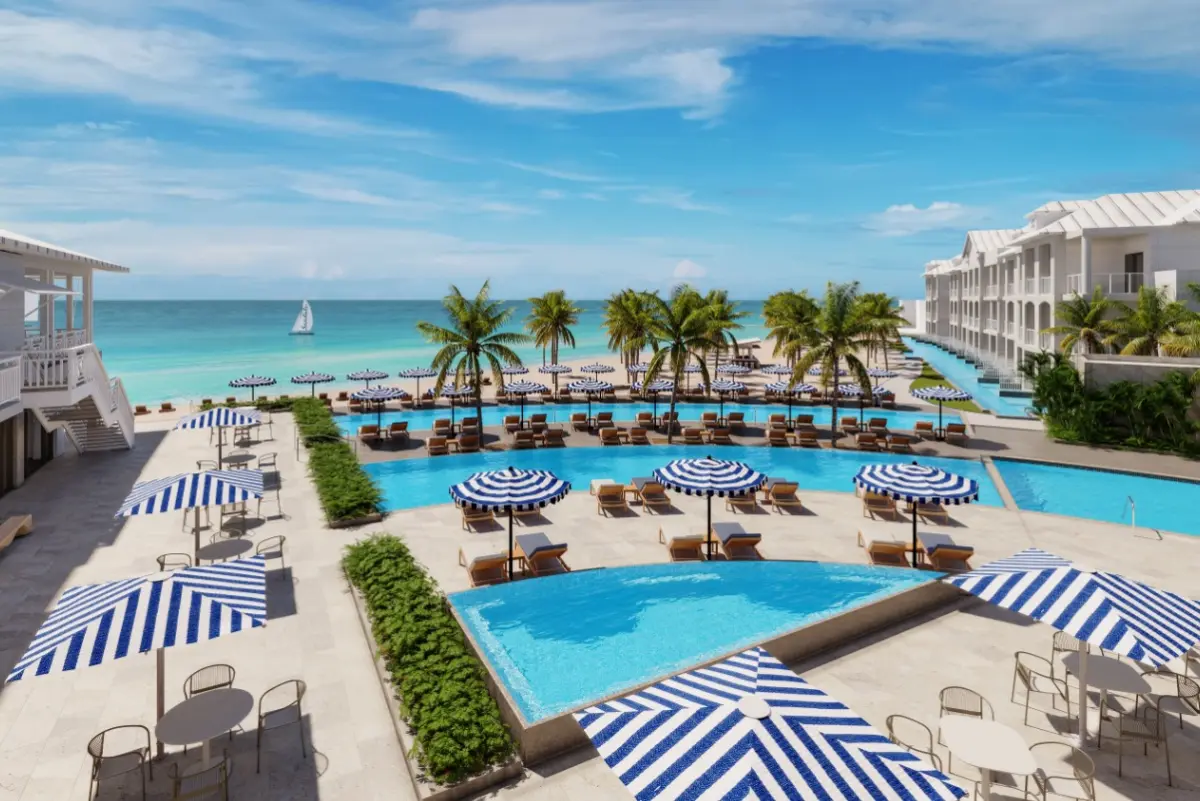
The scope of the assets included in the transaction is staggering. The deal covers Sandals’ expansive portfolio of adults-only, ultra-luxury resorts spread across some of the most coveted real estate in the Caribbean.
Key destinations included in the operational perimeter of the deal encompass:
- Jamaica: The historic heartland of the brand, featuring legendary properties across Montego Bay, Ocho Rios, Negril, and South Coast.
- Antigua: Home to world-class romantic hideaways boasting pristine pink-and-white sand beaches.
- Saint Lucia: Dramatically framed by the iconic Pitons, offering some of the most luxurious over-the-water bungalows in the western hemisphere.
- The Bahamas, Grenada, Barbados, and Curaçao: A sprawling constellation of beachfront resorts renowned for white-glove service, swim-up suites, and globally inspired gastronomy.
- Beaches Resorts: The premier family-focused iteration of the brand, featuring sprawling water parks, Sesame Street partnerships, and multi-bedroom villas in destinations like Turks & Caicos and Jamaica.
Official Statements and Executive Perspectives
The corporate leadership from both sides emphasized continuity, shared values, and a mutual vision for hyper-growth during the announcement.
Royal Caribbean Group’s Vision
In communications distributed to investors and media outlets, Royal Caribbean Group leadership highlighted that this venture is designed to supercharge the company’s mission of delivering the world’s best vacation experiences responsibly.
"Our guests are looking for more ways to explore the world, and they consistently tell us that they value consistency, premium quality, and effortless planning. By partnering with Sandals and Beaches—brands that are universally recognized as the gold standard of Caribbean hospitality—we are unlocking a new dimension of growth. This is not just an investment in bricks and mortar; it is an investment in unparalleled vacation memories."
— Spokesperson, Royal Caribbean Group
Industry analysts note that Royal Caribbean’s CEO, Jason Liberty, has consistently signaled a strategic openness to adjacent leisure markets, making this land-based expansion a natural evolution of the company’s long-term corporate master plan.
The Sandals Leadership Perspective
For Sandals, bringing in a multi-national publicly traded titan like Royal Caribbean as an equal partner provides unprecedented capital firepower, technological infrastructure, and global distribution muscle.
Founded by the late Gordon "Butch" Stewart, Sandals has remained fiercely independent while scaling into a Caribbean powerhouse. Leadership emphasized that the core ethos, legendary Jamaican warmth, and family-led spirit of the brand will remain entirely intact.
"For over four decades, our family has poured its heart into building the Sandals and Beaches names into symbols of Caribbean luxury and romance. Joining forces with Royal Caribbean Group—a company that shares our relentless commitment to guest satisfaction and operational excellence—allows us to accelerate our vision. We are preserving our soul while gaining the scale and technological prowess of the world’s premier vacation company."
— Executive Leadership, Sandals Resorts International
Management confirmed that day-to-day resort operations, resort-level staffing, local community initiatives, and the signature "Luxury Included®" standard will experience zero disruption.
Future Outlook: What Travelers and the Industry Can Expect
As the travel industry digests this historic realignment, analysts and consumers are already looking toward the horizon to predict how the Royal Caribbean-Sandals alliance will shape the future of tourism.
1. Technological Integration and Seamless Booking
One of the immediate operational opportunities lies in technology. Royal Caribbean is widely regarded as having some of the most advanced digital infrastructure in the cruise sector—from frictionless boarding apps to sophisticated onboard reservation systems. Integrating Sandals and Beaches into this ecosystem could soon allow travelers to book a cruise and a land-based resort stay through a single, unified digital dashboard, complete with unified loyalty point redemption.
2. Infrastructure Expansion and New Destinations
With $3 billion injected into the brand ecosystem, backed by Royal Caribbean’s deep financial reserves, expect aggressive capital expenditure (CapEx). This will likely manifest as:
- Extensive room renovations and the rollout of next-generation suite designs (such as expanded over-the-water villas).
- The potential development of brand-new resort locations across untapped Caribbean and Latin American coastal markets.
- Enhanced sustainability initiatives, aligning with Royal Caribbean’s aggressive environmental, social, and governance (ESG) targets.
3. Competitive Pressures Across the Travel Sector
This transaction throws down the gauntlet to other major travel conglomerates. Traditional competitors in both the cruise space (such as Carnival Corporation and Norwegian Cruise Line Holdings) and the land-based resort space (such as Marriott International, Hilton, and Hyatt) will be forced to watch closely. The blurring lines between cruising and all-inclusive land resorts may prompt other cruise lines to seek out strategic land-based acquisitions, setting off a wave of consolidation in the broader leisure market.
Conclusion
The acquisition of a 50% stake in Sandals and Beaches Resorts by Royal Caribbean Group for $3 billion is a watershed moment for the global travel industry. By bridging the world of luxury cruising with the pinnacle of Caribbean all-inclusive hospitality, the two entities have created a formidable alliance designed to capture the modern traveler’s growing appetite for seamless, high-end, and worry-free vacations. As the deal moves toward its anticipated closing in early 2027, travelers, investors, and industry watchers alike will be keeping a close eye on how this maritime-terrestrial marriage redefines the future of global leisure.