




Executive Overview
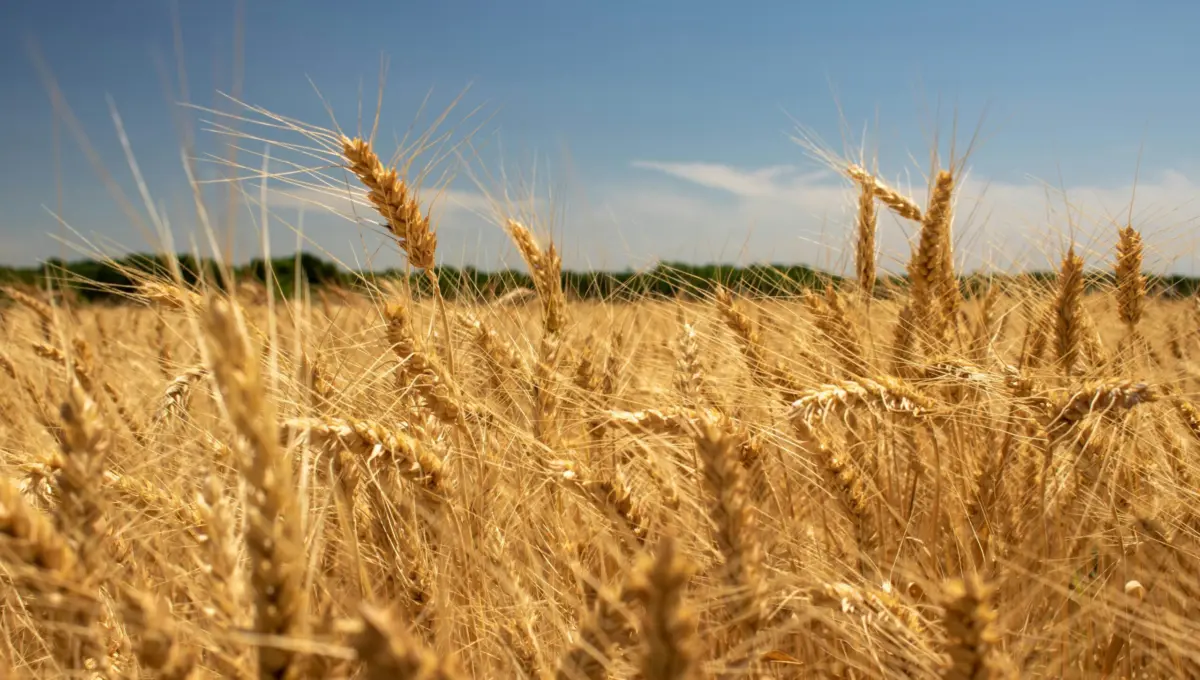
When Americans are asked to identify states inextricably linked to the global ocean, coastal powerhouses like California, Florida, and Maine invariably spring to mind. Mention Kansas—the quintessential "Sunflower State," characterized by sprawling golden wheat fields, flat horizons, and hundreds of miles of distance from the nearest saltwater coastline—and the ocean seems like an abstraction. To the casual observer, Kansas has no beaches, no commercial marine ports, and no tangible connection to the salty brine of the Atlantic or Pacific.
Yet, this geographic disconnect is an illusion. According to a compelling new report released by Ocean Conservancy, landlocked states like Kansas serve as powerful testaments to an ecological and meteorological reality long understood by scientists: the influence of the ocean does not stop at the shoreline.
Every single day, the lives, livelihoods, and safety of Kansans are profoundly shaped by oceanic dynamics. From the spring tornado warnings that drive families into storm cellars to the seasonal drought outlooks relied upon by cattle ranchers and grain farmers, the data driving these decisions originates thousands of miles away. At the center of this vital connection is the National Oceanic and Atmospheric Administration (NOAA). Often mischaracterized as a localized coastal agency or merely a federal weather-forecasting branch, NOAA functions as critical infrastructure for the entire American interior.
As climate patterns grow increasingly volatile and extreme weather events threaten inland economies, understanding the symbiotic relationship between the ocean and the Great Plains is more urgent than ever. This investigative report examines how marine data fuels inland survival, why federal funding for atmospheric and oceanic research is a non-partisan necessity, and how the fate of landlocked communities is permanently tethered to the health of our global waters.
Detailed Chronology: From Pacific Currents to Great Plains Weather Systems
To understand how the ocean dictates daily life in Kansas, one must trace the invisible atmospheric highways and oceanic conveyor belts that connect the middle of the American continent to distant marine environments.
The Marine Origins of Inland Weather
Kansas weather does not originate within its own borders. Instead, the meteorological conditions experienced across the Great Plains are heavily sculpted by two major marine bodies: the Gulf of Mexico and the Pacific Ocean.
- The Gulf Moisture Engine: During the spring and summer months, warm, moisture-laden air streams northward from the Gulf of Mexico. As this maritime moisture collides with cold, dry air masses descending from the Rocky Mountains and the Canadian Arctic, it creates the atmospheric instability necessary to fuel severe thunderstorms, squall lines, and the notorious tornadoes that sweep across Tornado Alley. Without the continuous thermal and moisture input from the Gulf, the climate of the American Midwest would be drastically drier and fundamentally different.
- Pacific Teleconnections: On a seasonal and multi-year scale, oceanic temperature patterns in the Pacific Ocean—specifically phenomena such as El Niño and La Niña—dictate precipitation and temperature trends across Kansas. These sea-surface temperature anomalies ripple through the atmosphere, altering jet stream pathways and determining whether the Great Plains will suffer devastating agricultural droughts or experience beneficial, crop-nourishing rainfall.
The Evolution of Predictive Meteorology
For decades, forecasting weather in the middle of the continent was a matter of localized observation and reactive measurement. However, the mid-to-late 20th century marked a technological revolution spearheaded by federal investments in remote sensing.
With the deployment of the first environmental satellites and the establishment of comprehensive ocean-buoy networks, meteorologists gained the ability to monitor atmospheric and oceanic changes globally in real time. By feeding marine data into complex supercomputing models, forecasters transitioned from guessing what weather was coming over the next hill to predicting system formations days in advance.
Today, this data-gathering apparatus forms a continuous, unbroken chain of information. Ocean sensors measure deep-water temperatures; orbiting satellites capture cloud formations and sea-surface heights; and land-based Doppler radar stations process these inputs to generate life-saving localized forecasts. For a Kansas farmer checking the morning radar or a municipal engineer designing stormwater drainage systems based on historical rainfall probabilities, they are utilizing downstream products of an intricate, ocean-driven global observation network.
Supporting Context & Metrics: The Stakes for the Sunflower State
To quantify the dependency of a landlocked state on marine science, one must examine the high-stakes sectors of Kansas’s economy and public safety infrastructure that rely on NOAA’s daily outputs.
Agriculture and the Economy
Agriculture is the lifeblood of the Kansas economy, contributing billions of dollars annually and supporting hundreds of thousands of jobs. Yet, farming and ranching are among the most weather-dependent enterprises on Earth.
- Drought Management: Cattle ranchers in western Kansas must make agonizing decisions regarding herd sizing well in advance of dry spells. Utilizing seasonal climate outlooks derived from Pacific and Atlantic ocean temperature monitoring allows these producers to manage grazing land sustainably and avoid catastrophic financial losses.
- Crop Yield Optimization: Wheat, corn, and sorghum farmers rely on precise precipitation forecasts to time planting, irrigation, and harvesting. A miscalculation based on flawed meteorological data can result in millions of dollars in spoiled crops or wasted water resources from the increasingly strained Ogallala Aquifer.
Severe Weather and Public Safety
Kansas experiences some of the most violent weather phenomena on the planet. Tornadoes, flash floods, straight-line winds, and severe hailstorms pose an annual threat to life and property.
- The Value of Lead Time: In severe weather events, every minute counts. Advanced warning systems can provide communities with crucial lead times, allowing families to seek shelter in basements, hospitals to secure emergency patients, and industrial operations to halt hazardous work.
- Infrastructure Resilience: Civil engineers across the state utilize long-term hydrological datasets—informed by NOAA climate models—to design roads, bridges, culverts, and urban drainage systems capable of handling extreme 100-year and 500-year flood events. Without accurate baseline data regarding shifting precipitation patterns, municipal infrastructure risks premature failure, endangering lives and costing taxpayers dearly.
| Sector Impacted | Primary NOAA / Ocean Input | Local Kansas Benefit |
|---|---|---|
| Agriculture | Pacific sea-surface temperatures & El Niño/La Niña models | Advanced drought forecasting, optimized irrigation, and livestock management |
| Emergency Management | Satellite tracking of Gulf moisture and atmospheric instability | Severe weather lead times for tornadoes, blizzards, and flash floods |
| Infrastructure & Civil Engineering | Historical precipitation data and long-term climate projections | Safe design of bridges, roads, and municipal stormwater systems |
| Aviation & Transportation | High-altitude atmospheric profiling and wind shear models | Safe flight planning for regional and commercial pilots traversing the Midwest |
Official Statements & Institutional Perspectives
The release of Ocean Conservancy’s report has sparked critical conversations among environmental advocates, policy analysts, and institutional leaders regarding the true scope of federal science agencies.
Jeff Watters, Vice President of External Affairs at Ocean Conservancy, emphasizes that the artificial divide between "coastal concerns" and "inland priorities" must be dismantled.
"If you asked most people in America which states depend on the ocean, Kansas would probably not top the list," Watters notes. "No beaches. No ports. No salt air. But that is exactly why Kansas is such a powerful reminder of something ocean lovers everywhere have long understood: The ocean does not stop mattering at the shoreline."
Industry experts and meteorologists echo this sentiment, warning that political debates surrounding federal research budgets often suffer from a severe lack of holistic vision. Critics of federal spending frequently target agencies like NOAA under the assumption that marine conservation and oceanographic research exclusively benefit coastal fishermen or beach tourism.
However, institutional defenders argue that stripping funding from upstream research capabilities—such as oceanic buoys, atmospheric satellites, and climate modeling supercomputers—creates a cascading failure downstream. When government agencies are forced to trim budgets, the specialized data collection apparatuses located thousands of miles away are often the first to feel the squeeze.
As Watters points out in the report: "The visible part of NOAA’s work is the downstream result. Upstream are the satellites, ocean observations, research programs, data systems and modeling capabilities that make accurate forecasts and useful warnings possible in the first place. If those upstream pieces are cut or weakened, the impacts do not stay neatly contained in some obscure government budget line. They show up in our everyday lives as less reliable guidance, less lead time and more uncertainty for communities that can least afford to guess."
Furthermore, advocacy groups emphasize that safeguarding the health of the ocean and maintaining robust funding for atmospheric science are inherently bipartisan endeavors. Extreme weather respects no political boundaries, and the economic fallout of inaccurate forecasting impacts rural agricultural districts just as severely as major metropolitan coastal hubs.
Future Outlook: Protecting the Science That Protects Us
As we look toward the future, the relationship between landlocked regions and global marine systems is projected to intensify. Global climate change is altering ocean circulation patterns, warming sea-surface temperatures, and loading the global atmosphere with additional moisture. For a state like Kansas, these shifts translate directly into increased volatility: more intense downpours, heightened flood risks, and more unpredictable drought cycles.
Navigating this uncertain horizon requires a fundamental shift in how the public and policymakers perceive federal science investments.
- Elevating Public Awareness: Educational initiatives must bridge the gap between marine ecosystems and inland communities. Citizens in the American heartland must be empowered to see themselves as stakeholders in ocean health, recognizing that protecting marine environments is synonymous with safeguarding their own local weather security.
- Defending Federal Infrastructure: Ensuring stable, long-term funding for NOAA and related scientific entities is a matter of national security and economic resilience. Policymakers must view these budgets not as discretionary line items subject to short-term political posturing, but as foundational safety nets for American infrastructure, agriculture, and commerce.
- Cross-Sector Collaboration: Agricultural associations, emergency management agencies, and conservation groups must forge stronger alliances to advocate for science-based policy. By presenting a unified front, these stakeholders can demonstrate that robust environmental monitoring is essential to the prosperity of every zip code in the nation.
Conclusion
Kansas may sit hundreds of miles from the crashing waves of the Pacific or the rolling swells of the Atlantic, but it is deeply and permanently connected to the global ocean. The safety of a family huddled in a Kansas basement during a spring twister, the financial survival of a rancher weathering a multi-year dry spell, and the structural integrity of a bridge spanning a prairie river all trace their origins back to the sea.
The message from Ocean Conservancy’s findings is clear: our ocean is not partisan, and its influence is not confined to the coast. By protecting our oceans and supporting the vital research infrastructure of agencies like NOAA, we are not merely preserving distant marine habitats—we are protecting the future of communities everywhere, from the deep blue sea to the golden wheat fields of the Sunflower State.