











Executive Overview
The United Kingdom’s Marine Accident Investigation Branch (MAIB) has officially published its comprehensive accident investigation report detailing the tragic death of a crew member aboard the Bermuda-flagged passenger cruise vessel Arvia. The fatal incident occurred on October 26, 2025, while the massive cruise liner was navigating the open waters of the Atlantic Ocean during a routine voyage from Southampton, England, to Santa Cruz de Tenerife in the Canary Islands, Spain.
This rigorous investigation was executed by the MAIB acting on behalf of the Bermuda Ship Registry. Because Bermuda is a distinguished member of the Red Ensign Group (REG)—a collective of British shipping registers—the investigative procedure was conducted under the framework of a formalized memorandum of understanding (MoU) between the MAIB and the various REG member administrations. This cooperative international arrangement ensures that maritime accidents occurring on vessels operating under Red Ensign flags receive the highest standard of independent, transparent, and technically proficient scrutiny.
The publication of this report brings critical safety insights to the forefront of the global cruise and passenger shipping sectors. While modern cruise liners like the Arvia are widely celebrated for their cutting-edge passenger amenities, entertainment complexes, and scale, they are simultaneously massive, complex industrial environments. Hundreds, and sometimes thousands, of crew members labor behind the scenes to maintain the vessel’s propulsion, hotel services, and daily operations. This incident underscores the inherent occupational hazards associated with life at sea, where severe weather, heavy machinery, dynamic vessel movements, and complex operations intersect.

Maritime safety experts, regulatory bodies, and industry stakeholders are currently examining the MAIB’s findings to understand the exact sequence of events that led to the tragedy. By dissecting the systemic, operational, and human factors involved, the investigation aims not to assign liability in a legal vacuum, but rather to formulate actionable safety recommendations that will safeguard seafaring personnel across the global fleet.
Detailed Chronology of Events
Departure from Southampton and the Open Atlantic Passage
On the morning of October 26, 2025, the Arvia cast off from its berth in the Port of Southampton, England, embarking on what was scheduled to be a standard, sun-seeking itinerary southward toward the Canary Islands. As one of the modern flagships of contemporary cruise operations, the vessel was carrying thousands of vacationing passengers alongside a diverse, multinational crew responsible for the ship’s navigation, safety, hospitality, and technical upkeep.
For the initial hours of the voyage, transit proceeded in accordance with the master’s voyage plan. The ship cleared the bustling commercial shipping lanes of the English Channel, cleared the southwestern approaches of the British Isles, and set a direct course across the Bay of Biscay and down the western coast of the Iberian Peninsula toward Tenerife.
However, maritime environments are famously dynamic and unpredictable. As the vessel pressed further into open waters, operational routines continued around the clock. Crew members assigned to various departments—ranging from deck and engine room operations to technical maintenance and hotel logistics—shifted between work stations to keep the floating resort functioning seamlessly.

The Incident
While the Arvia was underway on the afternoon of October 26, an incident occurred resulting in fatal injuries to a crew member. While the formal summary report released by the MAIB outlines the broad parameters of the event—noting the date, the vessel’s route, and the jurisdiction of the registry—specific, granular details regarding the precise location within the vessel and the immediate operational context highlight the complex nature of shipboard work environments.
Emergency response protocols were swiftly enacted by the shipboard management team and medical staff. The vessel’s onboard medical center was mobilized, and immediate first aid and trauma response procedures were administered by qualified medical professionals. Despite the rapid and concerted efforts of the ship’s medical and emergency response teams, the injured crew member succumbed to their injuries.
Following the stabilization of the immediate operational situation, the master of the Arvia made formal notifications to the relevant maritime authorities, including the vessel’s flag state administration (the Bermuda Ship Registry) and the MAIB. In accordance with international maritime law and standard protocols governing serious marine casualties, arrangements were made to facilitate a coordinated investigation upon the vessel’s subsequent arrival in port, ensuring that physical evidence, electronic logs, and witness testimonies could be professionally preserved and analyzed.
Supporting Context & Metrics
The Vessel: Arvia in Profile
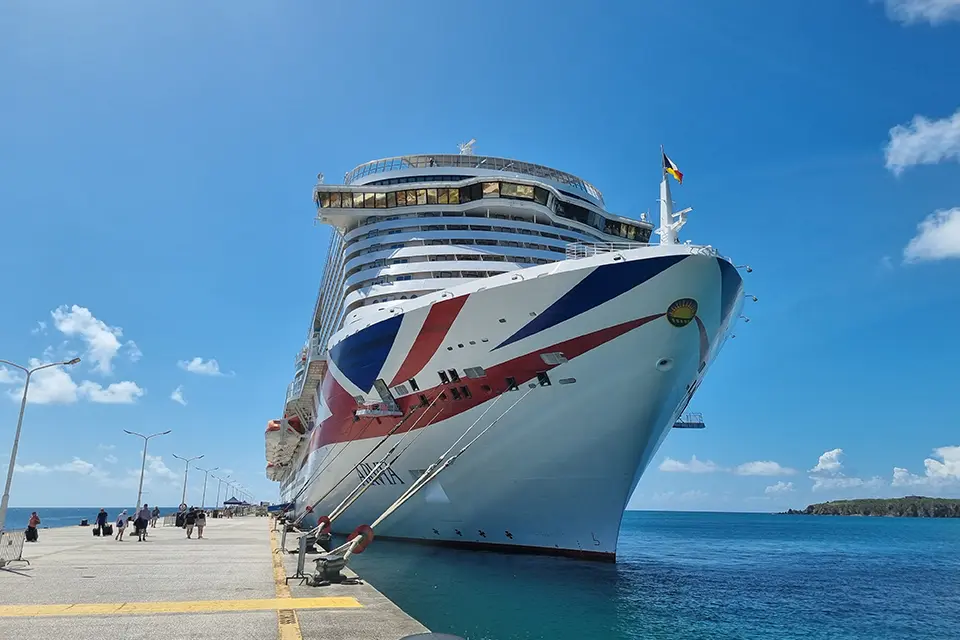
To fully comprehend the operational backdrop of this marine casualty, it is essential to examine the vessel itself. Delivered to its operators as a marvel of modern naval architecture, the Arvia is a colossal floating resort capable of accommodating well over 5,000 passengers, supported by a crew of approximately 1,800 personnel. Spanning over 340 meters in length and boasting a gross tonnage exceeding 180,000 GT, the vessel is essentially a floating city complete with propulsion systems, waste management facilities, complex hotel infrastructure, and recreational spaces.
Operating a vessel of this magnitude requires an intricate division of labor. Crew members operate in high-tempo environments where heavy machinery, high-voltage electrical systems, pressurized fluid lines, and high-load rigging are commonplace. Unlike shore-based industrial sites, a ship is a dynamic platform influenced by rolling, pitching, wind, and vibration, which compounds the occupational risk profile for anyone performing maintenance, line handling, technical repairs, or general deck operations.
Regulatory Frameworks and the Red Ensign Group
The investigation into the Arvia incident highlights the complex web of maritime jurisdiction and safety regulation. The vessel is registered under the Bermuda Ship Registry. Bermuda is a Category 1 Red Ensign Group (REG) member, meaning it is fully compliant with the stringent international conventions established by the International Maritime Organization (IMO), including the Safety of Life at Sea (SOLAS) convention and the Standards of Training, Certification and Watchkeeping for Seafarers (STCW) convention.

When a serious marine casualty or occupational fatality occurs on a red-ensign-flagged vessel operating outside domestic UK waters, formal cooperative mechanisms dictate how investigations are handled. Through established Memoranda of Understanding (MoUs)—such as the one binding the MAIB and the REG—the United Kingdom’s independent accident investigation branch frequently lends its vast technical expertise, forensic resources, and specialized investigators to flag states that may not maintain an equivalent standing army of permanent maritime investigators.
This cooperative framework ensures rigorous oversight, maintaining public trust and driving continuous safety improvements across the global maritime industry regardless of where an incident takes place geographically.
Occupational Safety Trends in the Cruise Sector
The global cruise industry has historically maintained a strong focus on passenger safety, driven by stringent regulatory frameworks and public visibility. However, maritime labor advocacy groups and safety statisticians have long pointed out that crew safety requires distinct, targeted interventions.
According to data compiled across various maritime safety administrations, occupational accidents—ranging from slips, trips, and falls to machinery entanglement, enclosed space incidents, and structural maintenance mishaps—remain a leading cause of injury and mortality among seafaring personnel. The unique challenges of life at sea include:
- Fatigue: Around-the-clock shift work, crossing multiple time zones, and intensive turnaround days can contribute to cumulative fatigue among crew members.
- Cultural and Linguistic Diversity: Crew members often hail from dozens of different nations, making clear communication during complex operations vital yet sometimes challenging.
- Dynamic Work Environments: Performing technical tasks on a rolling deck introduces physical variables absent in standard land-based industrial settings.
Official Statements and Industry Response
The Marine Accident Investigation Branch (MAIB)
The MAIB’s public notification regarding the Arvia report underscores the agency’s commitment to transparency and preventative safety culture. By publishing the summary and making the full technical report accessible to the public and industry professionals, the MAIB fulfills its core statutory mandate: determining the causes and circumstances of marine accidents with the sole objective of preventing future recurrences, rather than apportioning blame or liability.
In its official release, the MAIB noted:
"Today, we have published our accident investigation report into the fatal accident to a crew member on board the Bermuda registered passenger vessel Arvia, while on passage from Southampton, England, to Santa Cruz de Tenerife, Canary Islands, Spain, on 26 October 2025."
The branch further detailed the collaborative nature of the probe, acknowledging the partnership with the Bermuda Ship Registry under the overarching umbrella of the Red Ensign Group MoU. This collaborative stance ensures that investigative findings are not isolated exercises in bureaucracy, but are instead integrated directly into the regulatory feedback loop utilized by shipowners, operators, and flag administrations worldwide.
Stakeholder and Operator Reactions
While formal statements from ship operators and affiliated management bodies typically emphasize cooperation with investigating authorities and express deep condolences to the family and colleagues of the deceased crew member, the broader cruise industry faces mounting pressure to scrutinize onboard safety protocols.
Representatives from international maritime labor organizations have reiterated that safety management systems (SMS) must move beyond mere paper compliance. True safety culture requires proactive hazard identification, empowerment of crew members to halt unsafe work without fear of reprisal, and continuous reinforcement of safe operating procedures—particularly during routine yet hazardous maintenance and operational tasks at sea.
Future Outlook & Preventative Recommendations
Translating Findings into Actionable Safety Measures
The publication of the MAIB accident investigation report on the Arvia is not the final chapter of this tragic event, but rather a catalyst for ongoing safety evolution. When the full technical report is reviewed by safety management committees, shipping companies, and international regulators, it will typically yield specific safety recommendations. These recommendations generally fall into several vital categories:
- Enhancement of Safe Work Procedures (SWPs): Reviewing and refining standard operating guidelines for high-risk technical and deck tasks, ensuring that step-by-step risk assessments are rigorously performed before any work commences.
- Human Factors and Supervision: Examining the supervisory oversight of shipboard tasks, ensuring that communication protocols, crew resource management (CRM), and situational awareness are maintained at peak levels during complex operations.
- Training and Familiarization: Upgrading pre-joining and onboard safety familiarization programs to ensure that all crew members—regardless of department—fully comprehend the specific physical hazards associated with their working environment.
- Equipment Design and Maintenance: Assessing whether physical barriers, guarding, or mechanical design features on modern cruise ships can be improved to provide an added layer of passive safety against human error or unexpected equipment behavior.
The Broader Trajectory of Maritime Safety
As the maritime industry navigates an era of rapid technological advancement, larger vessels, and evolving operational pressures, incidents like the one aboard the Arvia serve as a solemn reminder of the human cost of global trade and travel. Seafarers remain the beating heart of the maritime sector. Ensuring their safety is not merely a regulatory obligation, but a fundamental moral imperative.
The findings from the MAIB investigation will be disseminated across international maritime forums, training academies, and corporate boardrooms. By confronting the root causes of this accident with honesty, rigor, and a commitment to systemic reform, the global shipping community honors the memory of the fallen crew member and takes meaningful strides toward a safer, more resilient future upon the world’s oceans.


