Executive Overview
Maritime authorities have released a comprehensive investigation report detailing a tragic incident that resulted in the death of a crew member aboard the Bermuda-registered passenger cruise vessel Arvia. The fatal accident occurred on October 26, 2025, while the large vessel was navigating the open waters of the Atlantic Ocean during a voyage from Southampton, England, to Santa Cruz de Tenerife in the Canary Islands, Spain.
The investigation was spearheaded by the United Kingdom’s Marine Accident Investigation Branch (MAIB), acting on behalf of the Bermuda Ship Registry. Because Bermuda is a prominent member of the Red Ensign Group (REG)—a collective of British shipping registers—the formal inquiry was conducted under established cooperative frameworks. Specifically, the investigation followed the memorandum of understanding (MoU) currently in place between the MAIB and the various member administrations of the Red Ensign Group, ensuring a rigorous, internationally recognized standard of inquiry.
This incident has once again placed a sharp focus on safety management systems, operational protocols, and onboard risk mitigation across the modern cruise industry. As cruise liners grow to unprecedented dimensions—carrying thousands of passengers and hundreds of international crew members—the logistics of maintaining absolute safety during daily maritime operations remain a formidable challenge. The findings of the MAIB report are expected to serve as a critical reference point for ship operators, regulatory bodies, and maritime safety experts worldwide, prompting renewed scrutiny into how routine tasks at sea are executed, monitored, and supervised.

Detailed Chronology of the Voyage and Incident
Departure from Southampton and the Open Atlantic Passage
The voyage began in the historic port of Southampton, a premier global hub for transatlantic and Mediterranean cruise itineraries. On the day of departure, the Arvia completed all standard pre-sailing checks, clearing customs, immigration, and port authority inspections before setting a southerly course out of the Solent and into the English Channel.
Weather conditions upon departure were typical for late October in Northern European waters, featuring moderate swells and manageable winds as the vessel cleared the British coastline and entered the Bay of Biscay. The ship settled into its routine transit speed, carrying thousands of holidaymakers alongside a vast multinational crew responsible for hospitality, hotel operations, engineering, and deck navigation.
For the first leg of the journey, shipboard operations proceeded according to schedule. Officers of the watch maintained standard navigational paths, while department heads coordinated daily routines for the ship’s workforce.
The October 26 Incident
The fatal event unfolded on October 26, 2025, as the Arvia pressed further south toward the Canary Islands. While the ship was actively underway on passage, an operation involving a crew member resulted in a severe, life-threatening accident.

While specific details regarding the exact nature of the task are meticulously outlined in the full MAIB dossier, the incident required an immediate emergency response from the ship’s onboard medical team and designated safety emergency squads. Upon discovery of the injured crew member, the ship’s internal emergency protocols were activated without delay.
First responders and medical personnel rushed to the scene to administer advanced trauma care and life-saving interventions. Despite the prompt deployment of onboard medical resources and the strenuous efforts of the ship’s medical staff, the crew member succumbed to their injuries.
Post-Incident Protocols and Arrival in Tenerife
Following the confirmation of the fatality, the master of the Arvia immediately notified relevant maritime authorities, including the Bermuda Ship Registry and the MAIB. In accordance with international maritime law and standard reporting procedures, the ship altered or maintained communication channels to coordinate reporting requirements for the upcoming port of call.
Upon arrival in Santa Cruz de Tenerife, local authorities—including maritime police, medical examiners, and port health officials—boarded the vessel to conduct preliminary investigations, gather evidence, and interview key witnesses among the crew. Simultaneously, MAIB inspectors were deployed to liaise with local authorities and initiate the formal, independent safety investigation mandated by flag-state obligations. The body of the deceased crew member was handled with dignity, and repatriation arrangements were coordinated alongside consular services and the vessel’s operating company.
Supporting Context, Regulatory Frameworks, and Industry Metrics
Understanding the Role of the MAIB and the Red Ensign Group
The Marine Accident Investigation Branch (MAIB) is an independent branch of the UK Department for Transport. Its sole objective is to determine the circumstances and causes of marine accidents with the aim of improving safety at sea—not to apportion blame or liability.

However, because the Arvia flies the Red Ensign under the flag of Bermuda, the jurisdiction for marine safety investigation technically rests with the Bermuda Ship Registry. To ensure that marine casualties involving Red Ensign Group vessels receive the highest standard of investigative rigor, the MAIB frequently acts as an investigative agent on behalf of these overseas territories and crown dependencies. This cooperative framework is governed by a formal memorandum of understanding (MoU), allowing elite British marine investigators to deploy their expertise globally.
Cruise Industry Safety and Crew Welfare Statistics
The modern cruise sector is heavily regulated under international conventions overseen by the International Maritime Organization (IMO), most notably the International Convention for the Safety of Life at Sea (SOLAS) and the International Safety Management (ISM) Code. These frameworks require passenger ships to maintain comprehensive Safety Management Systems (SMS) designed to ensure safe practices in ship operation and a safe working environment.
Despite these stringent regulations, maritime work remains among the most hazardous occupations globally. According to international maritime labor organizations and flag-state data, crew members face unique occupational risks that differ significantly from land-based employment:
- Dynamic Work Environments: Unlike fixed industrial sites, a ship is a constantly moving platform subjected to wind, waves, pitch, and roll, which can destabilize personnel and equipment.
- Fatigue and Circadian Rhythms: Shift work, long contracts, and crossing multiple time zones frequently contribute to crew fatigue, which can impair cognitive function and reaction times during critical tasks.
- Multicultural and Multilingual Communication: Cruise ships employ personnel from dozens of nations. While English is the standard working language of the sea, nuances in communication can sometimes lead to misunderstandings during complex operational procedures.
The Arvia: Vessel Profile
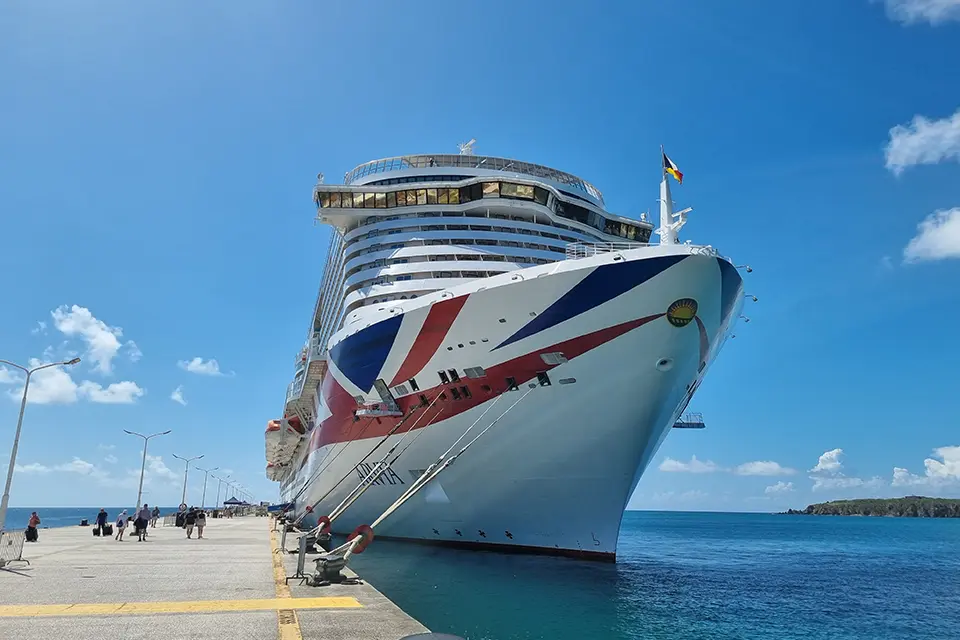
The Arvia is a premier, state-of-the-art cruise vessel designed to accommodate thousands of passengers. Representing the pinnacle of modern shipbuilding engineering, ships of this scale are virtually floating cities, featuring complex propulsion systems, extensive hotel infrastructures, and advanced waste-handling and safety systems. Operating a vessel of this magnitude requires a highly structured division of labor, where deck, engine, and hotel departments must coordinate seamlessly. The occurrence of a fatal accident on such a vessel inevitably triggers deep industry-wide reflections on whether current automation, protective gear, and operational oversight are entirely sufficient for the myriad tasks crew members are expected to perform daily.
Official Statements and Industry Response
Statements from Regulatory Bodies and Operators
In the wake of the report’s publication, representatives from the MAIB emphasized the importance of transparency and rigorous adherence to safety protocols. A spokesperson for the branch noted that the primary purpose of releasing the investigation report is to ensure that lessons are learned across the wider maritime community, preventing similar tragedies from occurring on other vessels.
The management company operating the Arvia released an official statement expressing deep sorrow over the loss of their crew member. The statement conveyed heartfelt condolences to the family, friends, and colleagues of the deceased, emphasizing that the welfare and safety of all onboard personnel remain the organization’s absolute priority. Furthermore, company representatives confirmed their full cooperation with the MAIB and the Bermuda Ship Registry throughout the investigative process, noting that they are reviewing all internal findings to implement any necessary procedural enhancements.
Reactions from Maritime Labor and Safety Advocates
Maritime labor advocates and international transport worker unions have also weighed in on the incident. While acknowledging the thoroughness of the MAIB report, labor representatives frequently use such occasions to call for heightened vigilance regarding working conditions in the cruise sector. Key themes highlighted by safety advocates include:
- Task Risk Assessments: A demand for enhanced, mandatory pre-task safety briefings that account for unexpected environmental variables.
- Supervision and Crewing Levels: Ongoing discussions regarding whether crew fatigue and staffing levels adequately support the heavy maintenance and operational workloads demanded on modern mega-ships.
- Access to Safety Equipment: Ensuring that all personal protective equipment (PPE) is not only provided but rigorously maintained and intuitively suited for the specific physical demands of shipboard tasks.
Future Outlook: Lessons Learned and Preventive Measures
Implementing MAIB Recommendations
The publication of the accident investigation report is not the final step, but rather a catalyst for systemic change. The recommendations put forward by the MAIB in this report will be closely scrutinized by the Bermuda Ship Registry, the operating company, and international maritime safety committees.
Typically, MAIB safety bulletins and final reports lead to several concrete actions:
- Procedural Revisions: Cruise operators often update their Safety Management Systems (SMS) to refine the Standard Operating Procedures (SOPs) associated with the specific type of task that led to the accident.
- Enhanced Training Modules: Maritime training academies and company-specific refresher courses incorporate real-world case studies from MAIB reports into their safety curricula, educating future officers and crew members on recognized hazards.
- Equipment Modifications: If mechanical or design factors contributed to the accident, manufacturers and shipowners may be prompted to modify equipment, install additional safety guards, or improve ergonomic designs.
Navigating the Future of Cruise Ship Safety
As the global cruise industry continues to expand, with new vessels entering service each year, the challenge of maintaining an unblemished safety record becomes increasingly complex. The loss of life on the Arvia serves as a sobering reminder of the inherent dangers of the maritime profession.
By confronting the findings of the MAIB report with honesty and a commitment to continuous improvement, the maritime community honors the memory of the fallen crew member. Ultimately, the collective goal shared by flag states, regulatory bodies, shipowners, and crew members is to ensure that every individual who goes to sea returns home safely, transforming tragic lessons into enduring maritime safety standards for generations to come.