










Executive Overview
The United Kingdom’s Marine Accident Investigation Branch (MAIB) has officially published its comprehensive accident investigation report detailing a fatal incident involving a crew member on board the Bermuda-registered passenger cruise ship Arvia. The tragic event occurred on October 26, 2025, while the vessel was underway on an international voyage traversing the open waters between Southampton, England, and Santa Cruz de Tenerife in the Canary Islands, Spain.
Because the Arvia is registered under the flag of Bermuda—a proud and historic member of the Red Ensign Group (REG)—the formal investigation was spearheaded by the MAIB acting on behalf of the Bermuda Ship Registry. This collaborative framework operates under a pre-established Memorandum of Understanding (MoU) between the MAIB and the various administrations comprising the Red Ensign Group, ensuring that maritime incidents involving British Red Ensign vessels receive rigorous, independent, and internationally recognized scrutiny.
The publication of this report brings to light the intricate and often hazardous realities of modern maritime operations, casting a sharp focus on shipboard safety protocols, crew member welfare, and the continuous need for rigorous risk assessments in the passenger cruise sector. As the maritime community digests the findings, industry stakeholders, regulatory bodies, and operators alike are once again reminded of the relentless vigilance required to safeguard human life at sea.

Detailed Chronology of the Voyage and Incident
Departure from Southampton
On the morning of October 26, 2025, the Arvia—one of the modern flagships of contemporary passenger cruising—completed its final preparations and departed from the bustling port of Southampton, England. The vessel was embarking on a scheduled routine cruise itinerary heading south toward the sun-drenched shores of the Canary Islands, a popular route for thousands of holidaymakers seeking transatlantic or Mediterranean-adjacent warmth during the autumn shoulder season.
As is standard for a vessel of this scale, the ship carried thousands of passengers alongside a vast, highly trained international crew responsible for hotel services, navigation, engineering, and deck operations. The departure proceeded according to standard maritime schedules, with weather conditions initially falling within acceptable operating parameters for open-ocean transit across the English Channel and out into the Bay of Biscay.
The Incidents Leading to the Tragedy
While the vessel was in mid-passage—navigating the open oceanic waters between the southern coast of the United Kingdom and the Spanish archipelago—a critical safety incident unfolded involving a crew member whose identity has been withheld out of respect for the family and in line with privacy protocols.
According to the MAIB findings, the sequence of events began during routine operational tasks assigned to the deck and technical departments. Maritime operations at sea are inherently dynamic, requiring crew members to perform complex duties in challenging environments characterized by vessel motion, fluctuating weather patterns, and heavy machinery.

On this particular day, during the execution of a routine task, circumstances rapidly deteriorated. While the exact operational triggers are broken down meticulously within the full technical report, the incident quickly escalated from a routine working procedure into a critical emergency. Shipboard emergency response teams, trained extensively in medical first aid, damage control, and search-and-rescue protocols, were immediately mobilized to the scene.
Emergency Response and Medical Intervention
Upon notification of the accident, the ship’s onboard medical staff—comprising qualified physicians and specialized nursing personnel—acted swiftly, deploying life-saving equipment and attempting advanced resuscitation and stabilization procedures. The ship’s command team simultaneously reviewed navigational positions to determine the fastest course of action regarding potential medical evacuations, liaising with maritime rescue coordination centers ashore.
Despite the rapid mobilization of the vessel’s emergency medical infrastructure and the valiant efforts of the shipboard response teams, the injuries sustained by the crew member proved to be catastrophic and irreversible. The individual succumbed to their injuries while the vessel was still days away from its scheduled port of call in the Canary Islands.
The master of the Arvia formally notified relevant maritime authorities, including the Bermuda Ship Registry and the MAIB, initiating the mandatory reporting procedures required under international maritime law, specifically the International Maritime Organization (IMO) Casualty Investigation Code.
Supporting Context & Metrics: The Human Element in Modern Cruise Operations
The Scale and Complexity of the Arvia
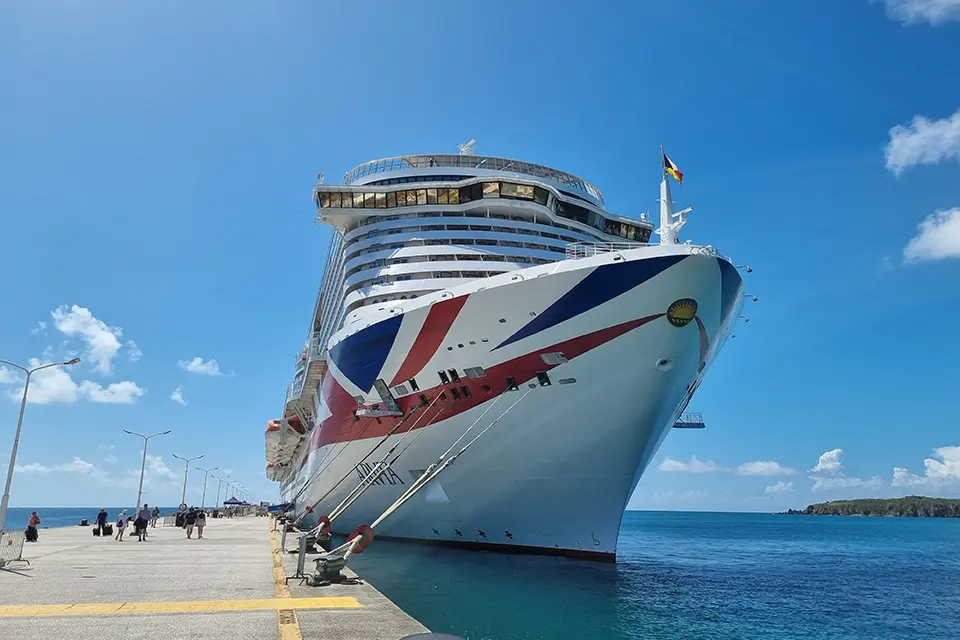
To fully grasp the context of the accident, one must understand the sheer magnitude of vessels like the Arvia. As a modern mega-cruise ship, it represents the pinnacle of contemporary marine engineering, accommodating thousands of guests and operating virtually as a floating city.

However, the immense scale of these vessels also translates into complex operational environments. Thousands of square meters of deck space, towering superstructures, intricate piping and electrical systems, and heavy mechanical equipment require constant maintenance. This maintenance is performed around the clock by a diverse, multicultural crew working rotating shifts—often far from home and under demanding physical conditions.
Statistics on Crew Safety in the Cruise Sector
While the cruise industry maintains an enviable safety record regarding passenger transportation—largely due to stringent compliance with the International Convention for the Safety of Life at Sea (SOLAS)—the occupational safety metrics for crew members present a different narrative.
- Occupational Hazards: Crew members face risks comparable to heavy industrial workers, construction laborers, and logistics personnel, compounded by the constant motion of the sea, maritime weather, and long tours of duty.
- Fatigue and Human Factors: Studies by maritime labor organizations consistently highlight fatigue as a critical contributing factor in shipboard accidents. Managing circadian rhythms across changing time zones, combined with intensive physical labor, creates continuous challenges for shipboard safety management systems (SMS).
- Regulatory Oversight: Under the Maritime Labour Convention (MLC, 2006), shipowners are legally bound to ensure safe and hygienic working environments, fair terms of employment, and robust health protection schemes. Despite these mandates, accidents involving machinery, working at height, and enclosed spaces remain persistent hazards across the global fleet.
The Role of the Red Ensign Group and the MAIB
The Marine Accident Investigation Branch operates independently of the UK Department for Transport, charged with a singular mission: to investigate marine accidents and incidents to determine their causes, with the sole objective of preventing future occurrences—not to apportion blame or liability.
When accidents occur on vessels flying the flag of a Red Ensign Group member territory—such as Bermuda—the collaboration between the MAIB and the local administration ensures that investigations adhere to the highest international standards established by the IMO. Bermuda’s maritime administration delegates technical investigation capabilities to the MAIB due to the branch’s vast global expertise in forensic maritime pathology, naval architecture, human factors analysis, and safety management auditing.
Official Statements and Institutional Responses
Statement from the Marine Accident Investigation Branch (MAIB)
In the official press release accompanying the report’s publication, the Chief Inspector of Marine Accidents emphasized the critical lessons to be drawn from the tragedy.
"The publication of today’s report marks the culmination of a thorough, independent, and impartial investigation into the tragic loss of a crew member on board the passenger vessel Arvia. Our deepest condolences go out to the family, friends, and colleagues of the deceased.
Our investigation has sought to uncover not merely what happened, but why it happened. By examining the operational procedures, the human factors, and the safety management systems in place at the time of the incident, we aim to provide actionable safety recommendations that the maritime industry—from shipowners to regulatory bodies—can implement to ensure that personnel working in these demanding environments are better protected. Safety at sea depends entirely on an uncompromising commitment to identifying risk and eliminating hazards before they result in tragedy."
Response from Ship Operators and Management
Representatives for the vessel’s management and operating company released concurrent statements expressing profound sorrow over the incident and acknowledging full cooperation with the MAIB and the Bermuda Ship Registry throughout the investigative process.
- Commitment to Safety: Management highlighted that the company’s primary priority remains the health, safety, and psychological well-being of all crew members and guests on board its fleet.
- Review of Internal Protocols: Following the incident, the operator initiated an immediate internal review of all deck operations, safety equipment handling, and task-specific risk assessments across its entire fleet of vessels, ensuring that lessons learned from the Arvia incident are disseminated globally to all operational teams.
- Crew Support Services: Immediate counseling and psychological support services were deployed to the Arvia upon its arrival in port, assisting crew members who had been affected by the traumatic loss of their colleague and friend.
Future Outlook: Industry Implications and Preventive Measures
Actionable Safety Recommendations
The MAIB report outlines several specific safety recommendations addressed to the vessel operators, the Bermuda Ship Registry, and the wider maritime community. These recommendations typically focus on:
- Enhanced Risk Assessments: Ensuring that routine and non-routine deck operations are subjected to dynamic, real-time risk evaluations that account for vessel movement, environmental conditions, and crew experience levels.
- Standard Operating Procedures (SOPs): Refining and standardizing the procedures governing high-risk tasks, ensuring unambiguous communication channels between supervisors and working parties.
- Training and Familiarization: Strengthening onboard safety drills and technical training programs to ensure all crew members possess a comprehensive understanding of emergency response protocols and equipment operation.
- Safety Culture Enhancement: Promoting a "just culture" where crew members feel empowered to halt operations if they perceive safety hazards, without fear of reprisal or operational delays.
The Path Forward for the Global Cruise Fleet
As the cruise industry continues to expand—with larger vessels, more complex itineraries, and increasingly sophisticated onboard amenities—the human element remains the single most critical component of maritime safety.
The tragedy on board the Arvia serves as a sobering reminder that the majestic vessels gliding across our oceans rely entirely on the dedication, labor, and safety of the women and men who crew them. By embracing the findings of the MAIB report, investing in superior safety technologies, and fostering an uncompromising culture of mutual care and vigilance, the global maritime sector can honor the memory of those lost at sea by ensuring that such preventable tragedies are never repeated.


