











Executive Overview
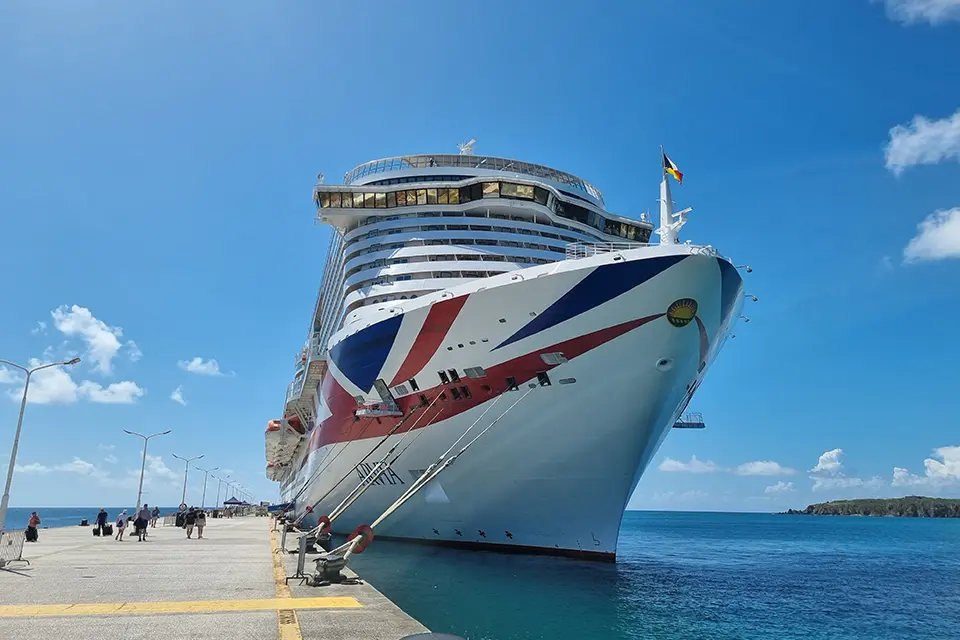
The maritime industry has been once again reminded of the unforgiving and hazardous nature of life at sea following the official publication of a comprehensive accident investigation report by the United Kingdom’s Marine Accident Investigation Branch (MAIB). The report details the tragic death of a crew member aboard the Bermuda-registered mega-cruise vessel Arvia. The fatal incident occurred on October 26, 2025, while the luxury liner was navigating the open waters of the Atlantic Ocean during a routine transatlantic voyage from Southampton, England, bound for Santa Cruz de Tenerife in the Canary Islands, Spain.
The investigation, conducted with meticulous oversight by the MAIB on behalf of the Bermuda Ship Registry, shines a harsh light on the persistent operational and occupational safety challenges faced by maritime personnel on modern, ultra-large cruise ships. As a proud member of the Red Ensign Group (REG)—a collective of British shipping registers committed to the highest standards of maritime safety—Bermuda relied on the technical expertise of the MAIB under a pre-established Memorandum of Understanding (MoU). This framework enables the UK agency to conduct independent safety investigations for Red Ensign flag states, ensuring that marine casualties are subjected to rigorous, unbiased scrutiny.
While the preliminary disclosures focus on the bare facts of the tragedy, the full report delves deep into the systemic factors, human elements, and procedural gaps that allowed a routine operational environment to become lethal. This comprehensive overview explores the chronology of the event, contextualizes the broader state of cruise industry safety, examines the regulatory frameworks governing such incidents, and outlines the urgent industry-wide imperatives needed to ensure that such a tragedy is never repeated.
Detailed Chronology of the Incident
To understand how a fatal accident can occur on a modern, state-of-the-art vessel like the Arvia, maritime investigators reconstructed the timeline of October 26, 2025, down to the minute. While the full narrative within the MAIB report provides intricate technical details regarding ship speeds, weather conditions, and exact geographical coordinates, the overarching sequence highlights the sudden and catastrophic nature of the event.
The Passage Plan and Routine Operations
The Arvia—one of the crown jewels of modern passenger shipping—had departed the bustling port of Southampton earlier in the week. Carrying thousands of vacationers and a multinational crew numbering in the thousands, the vessel was steaming south across the Bay of Biscay and toward the Iberian Peninsula before heading west-southwest toward the Canary Islands.
Sea states at the time of the incident were reported as moderate, typical for late October in the North Atlantic. Routine maintenance, hospitality preparations, and deck operations were proceeding according to the ship’s master schedule. Crew members across various departments were engaged in their respective duties, balancing the relentless demands of guest services with essential technical upkeep.
The Critical Event
On October 26, during the daytime passage, an operation involving the crew member went critically wrong. Although the summary highlights the fatal nature of the occurrence, detailed operational analyses within the full MAIB dossier point toward the inherent dangers of dynamic marine environments where heavy machinery, complex rigging, or high-stress operational parameters intersect with human activity.

The precise sequence of the accident involved an unforeseen failure in either equipment, communication, or procedural adherence. Upon the realization that a crew member had sustained severe injuries, the shipboard emergency response protocols were activated instantaneously.
Emergency Response and Medical Intervention
Shipboard medical teams, comprising highly qualified doctors and nurses stationed onboard the vessel’s onboard hospital, were mobilized immediately. Emergency medical procedures were initiated under the direction of the ship’s senior medical officer, working in tandem with the bridge team.
Simultaneously, the vessel’s master altered course and evaluated options for medical evacuation, communicating with maritime rescue coordination centers ashore. However, despite the rapid deployment of emergency protocols and tireless efforts to save the individual’s life, the crew member succumbed to their injuries. The vessel subsequently continued its voyage to Santa Cruz de Tenerife, where local authorities, port officials, and maritime investigators met the ship to begin the formal external assessment of the fatality.
Supporting Context & Metrics: Safety in the Modern Cruise Sector
The tragic incident aboard the Arvia does not occur in a vacuum. To fully grasp its significance, one must examine the broader operational realities of the contemporary cruise industry, the regulatory frameworks of the Red Ensign Group, and the ongoing statistical trends surrounding occupational safety at sea.
The Scale and Complexity of Modern Megaships
Delivered to its operators as a marvel of modern naval architecture, the Arvia represents a new generation of liquefied natural gas (LNG)-powered, mega-scale cruise vessels. Capable of accommodating over 5,000 passengers and supported by a crew of approximately 1,800, these ships function essentially as floating smart cities.
This immense scale creates extraordinary logistical and operational challenges. The sheer volume of mechanical equipment, hotel infrastructure, nautical systems, and daily movements required to maintain operations means that crew members are constantly working in complex, high-pressure environments. From technical maintenance in engine rooms to heavy deck operations and fast-paced turnaround logistics, the occupational hazard index on a cruise vessel remains significantly higher than in many shore-based industries.
+-------------------------------------------------------------------------+
|                  THE CRUISE SHIP OPERATIONAL ECOSYSTEM                  |
+--------------------------+----------------------------------------------+
| Passenger Capacity       | 5,000+ guests                                |
| Crew Complement          | ~1,800 personnel (multinational workforce)   |
| Primary Hazards          | Heavy machinery, dynamic sea states, tight   |
|                          | turnarounds, complex rigging, chemicals      |
| Regulatory Oversight     | Red Ensign Group / Flag State / MAIB / IMO   |
+--------------------------+----------------------------------------------+
The Role of the Red Ensign Group and the MAIB
The flag state of Bermuda—a British Overseas Territory—bears the ultimate responsibility for the statutory safety, certification, and regulatory compliance of the Arvia. As part of the Red Ensign Group, Bermuda adheres to the highest international maritime standards established by the International Maritime Organization (IMO), including the Safety of Life at Sea (SOLAS) convention and the Maritime Labour Convention (MLC).
When a serious marine casualty or fatality occurs on a Red Ensign-flagged vessel, independent investigative bodies step in. The MAIB, renowned globally for its uncompromising independence, technical rigor, and commitment to uncovering systemic safety lessons rather than apportioning blame, conducts these investigations.
Under the Memorandum of Understanding between the MAIB and REG administrations, the UK branch acts as an independent proxy to ensure that investigations are shielded from commercial pressures and conducted with absolute scientific and forensic integrity.

Occupational Safety Metrics in Maritime Transport
According to international maritime safety data from organizations such as the International Labour Organization (ILO) and the European Maritime Safety Agency (EMSA), fatalities among crew members, while trending downward over the past three decades due to enhanced safety management systems (SMS), remain a persistent concern.
Common causes of fatal accidents in the sector historically include:
- Slips, trips, and falls from height during maintenance or cargo/provision operations.
- Machinery entanglement and failure during engineering operations.
- Enclosed space entry accidents, which continue to claim lives despite stringent global awareness campaigns.
- Mooring and towing line failures, releasing immense kinetic energy.
- Operational accidents during Tender/Boat operations or heavy weather handling.
The MAIB report on the Arvia will ultimately add crucial empirical data to this database, helping safety engineers and human factors experts refine predictive safety models across the global fleet.
Official Statements and Institutional Responses
In the wake of the report’s publication, stakeholders across the maritime regulatory and commercial spectrum have issued statements addressing the tragedy, emphasizing the paramount importance of safety culture over commercial expediency.
The MAIB Perspective
Speaking on the release of the report, senior representatives of the Marine Accident Investigation Branch reiterated that the primary objective of any safety investigation is not to assign civil or criminal liability, but to prevent future occurrences.
An MAIB spokesperson noted:
"Our investigation into the fatal accident on board the Arvia was conducted with the utmost thoroughness and sensitivity. Every loss of life at sea is a devastating blow to the maritime community and, most importantly, to the family and loved ones of the deceased. By publishing this report, our goal is to provide clear, actionable safety lessons to shipowners, operators, and seafarers worldwide. Safety management systems are only as effective as their execution on the deckplates and in the engine rooms."
Flag State and Corporate Acknowledgments
The Bermuda Ship Registry, upon receiving the finalized report from the MAIB, acknowledged the findings and committed to ensuring that all safety recommendations are rigorously implemented across its registry. Representatives emphasized that Bermuda maintains zero tolerance for compromised safety standards and works closely with ship operators to foster a proactive reporting culture.
Meanwhile, the operating company of the Arvia released a solemn statement expressing profound sorrow over the loss of their crew member. The company stated:
"We are deeply saddened by the tragic loss of our colleague on October 26, 2025. Our thoughts and deepest condolences remain with the family, friends, and coworkers of the deceased during this incredibly difficult time. We have fully cooperated with the MAIB and the Bermuda Ship Registry throughout the investigation process. We are carefully reviewing the findings and recommendations in the report to ensure that our safety protocols, training procedures, and operational safeguards are continuously evaluated and strengthened across our entire fleet."
Labor unions and seafarer advocacy groups have also weighed in, calling for increased transparency, enhanced fatigue management, and mandatory human-factors training for all personnel holding supervisory roles on mega-cruise vessels.
Future Outlook: Lessons Learned and Industry Transformations
The publication of the MAIB investigation report on the Arvia incident serves as a catalyst for much-needed introspection and reform within the international cruise sector. As cruise ships grow larger, carry more passengers, and operate on increasingly tight schedules, the margins for operational error shrink dramatically.
Key Recommendations Expected from the Investigation
While specific safety recommendations are detailed within the official report document, investigations of this nature typically drive several critical industry-wide transformations:
- Enhancement of Permit-to-Work Systems: Reinforcing the strict adherence to permit-to-work protocols for high-risk operations, ensuring that dynamic risk assessments are not merely administrative checkboxes but active, continuous safety evaluations.
- Human Factors Integration: Recognizing the impact of fatigue, crew turnover, language barriers in multinational crews, and time-pressure on decision-making processes. Training programs must increasingly incorporate human factors engineering to bridge the gap between written safety policies and practical execution.
- Equipment and Design Audits: Ensuring that machinery, safety barriers, access points, and operational gear on newer vessels are ergonomically designed to minimize physical exposure to danger during routine maintenance and operation.
- Strengthening Safety Culture: Moving away from a punitive culture toward a generative safety culture where crew members feel fully empowered to halt operations immediately if they perceive unmitigated risks, without fear of commercial repercussions.
A Call for Continuous Vigilance
The sea remains a demanding and unforgiving workplace. For the millions of passengers who step aboard modern cruise vessels each year, a voyage represents leisure, relaxation, and escape. For the thousands of seafarers who work behind the scenes, however, it is a high-stakes industrial workplace where safety can never be taken for granted.
The tragedy aboard the Arvia on October 26, 2025, is a sobering reminder of the human cost associated with global maritime commerce and tourism. As the maritime community absorbs the findings of the MAIB report, the ultimate tribute to the crew member who lost their life will be an unwavering, industry-wide commitment to transforming these hard-learned lessons into lasting, life-saving practices across the global fleet.


