Executive Overview
For generations, the final hundred yards of any marine voyage have been a crucible of stress. Whether you are navigating a crowded municipal marina at dusk, battling an aggressive cross-current in a tight slip, or attempting to park a heavy single-screw cruiser without the aid of thrusters, docking remains the ultimate stress test for recreational boaters. It is an intersection of high financial stakes, unpredictable environmental forces, and human anxiety—a time-honored nautical friction point that has humbled even seasoned captains.
Enter Simrad Yachting’s AutoCaptain.
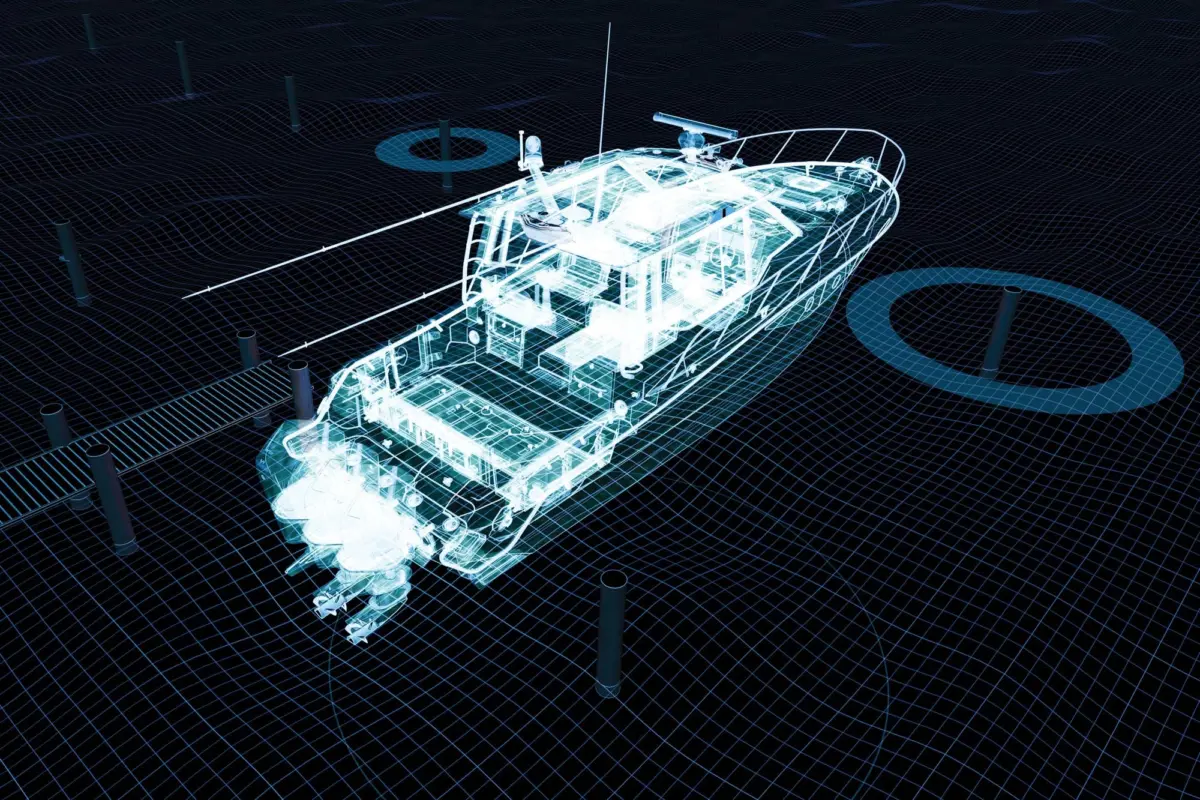
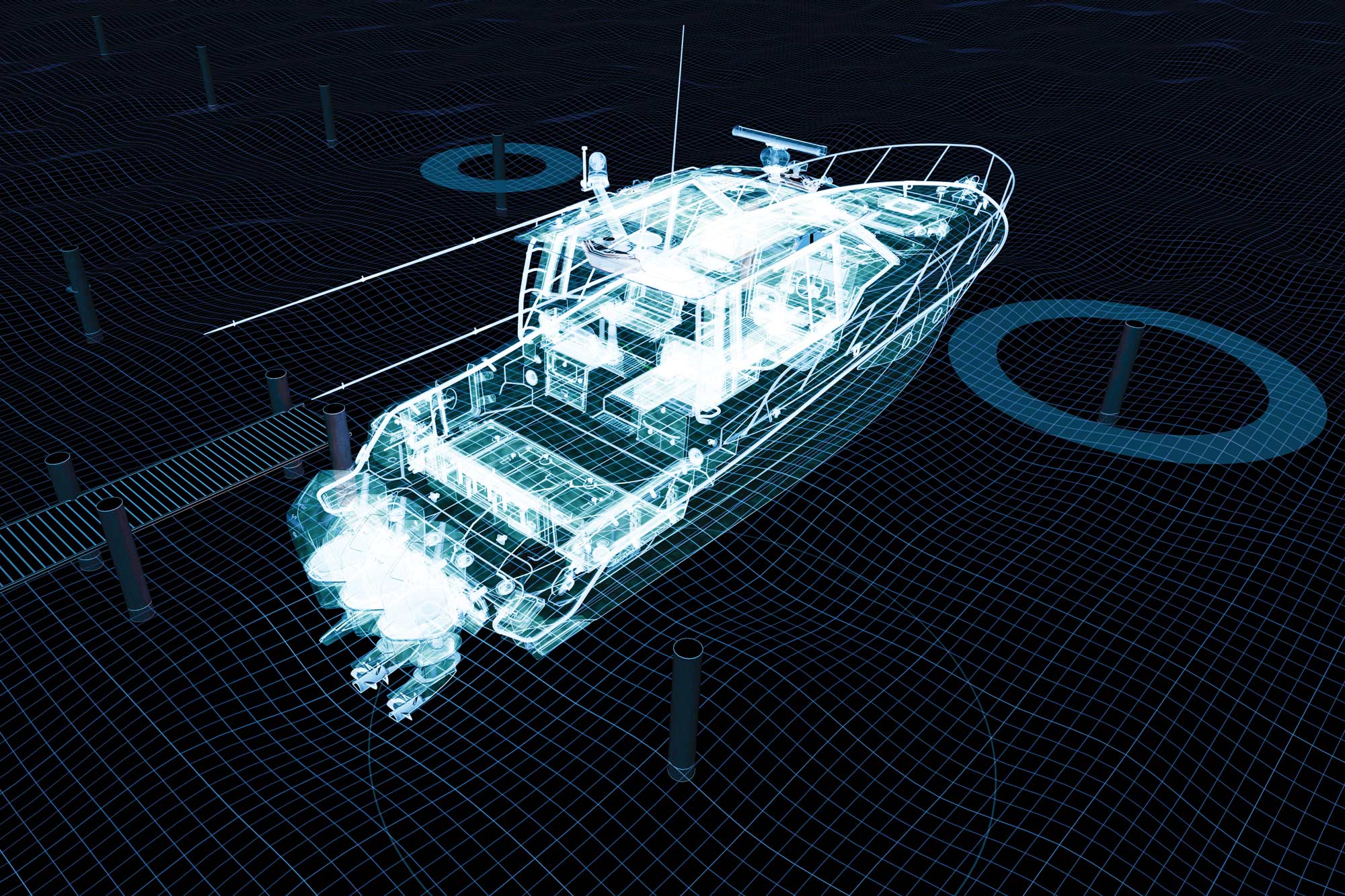
Representing a quantum leap in recreational marine electronics, AutoCaptain is an advanced, sensor-driven autonomous docking and close-quarters maneuvering system. Developed under the umbrella of Brunswick Corporation—the parent company of both Simrad’s parent, Navico Group, and marine propulsion giant Mercury—AutoCaptain pairs high-resolution stereo cameras with advanced machine learning and Mercury Joystick Piloting.
Crucially, AutoCaptain is not merely a patchwork of third-party electronics grafted onto a hull. It is the first autonomous docking system engineered from the ground up by a single corporate entity that builds everything from the steering and propulsion to the sensors and multifunction displays. This vertical integration promises seamless system-level performance, eliminating the finger-pointing of aftermarket installations and opening the door to rapid, over-the-air software advancements.
Currently debuting aboard the luxurious Boston Whaler 405 Conquest, AutoCaptain heralds a new era where technology bridges the gap between intimidation and accessibility, transforming how we interact with our vessels in close quarters.
Detailed Chronology: From Late-Night Dockmares to Autonomous Precision
The Universal Dread of the Marina
High-consequence maneuverings have plagued mariners since the first vessels were lashed to wooden piers. To understand the value of a system like AutoCaptain, one only has to look at the ubiquitous rite of passage for weekend boaters: the evening return to the slip.
Picture a midweek sailboat race committee boat in a bustling Connecticut harbor back in the mid-1990s. The day on the water is idyllic, but the dread sets in hours before sundown—the realization that you must dock a heavy, unresponsive cabin cruiser into a dark slip without bow thrusters, often with well-meaning crew members who have enjoyed a few too many post-race libations. The resulting maneuver is rarely graceful, leaving behind scraped gelcoat, frayed nerves, and bruised egos.

Throughout maritime history, finding a reliable way to hand off this high-stress responsibility to a machine has been a holy grail. While various sensor-based docking assistants have trickled onto the market over the last decade, they have largely suffered from the limitations of aftermarket integration: disparate components communicating across mismatched NMEA networks, software lag, and proprietary finger-pointing when faults occur.
The Brunswick Advantage and Factory Integration
Simrad’s approach sidesteps these legacy issues entirely through Brunswick Corporation’s overarching ecosystem. According to Jeremiah Clark, Navico Group’s vice president of product management for electronics solutions, AutoCaptain is strictly an OEM (Original Equipment Manufacturer) offering.
"There’s no aftermarket. There’s no dealer install," Clark asserts. "The only way to get this is with a new boat."
By designing AutoCaptain as an intrinsic part of the vessel’s nervous system from the factory floor, engineers were able to eliminate latency issues between the sensors, the central processor, and the propulsion actuators. The system debuted exclusively on the Boston Whaler 405 Conquest, though Brunswick plans to systematically roll out the technology across other premium new builds in its extensive portfolio.
Supporting Context & Metrics: Hardware, Software, and Architecture
To understand how AutoCaptain performs its seemingly magical feats of seamanship, one must look under the gelcoat at the robust collection of hardware and software working in tandem.
Hardware Specifications
On the Boston Whaler 405 Conquest, the AutoCaptain suite is comprehensive and redundant:
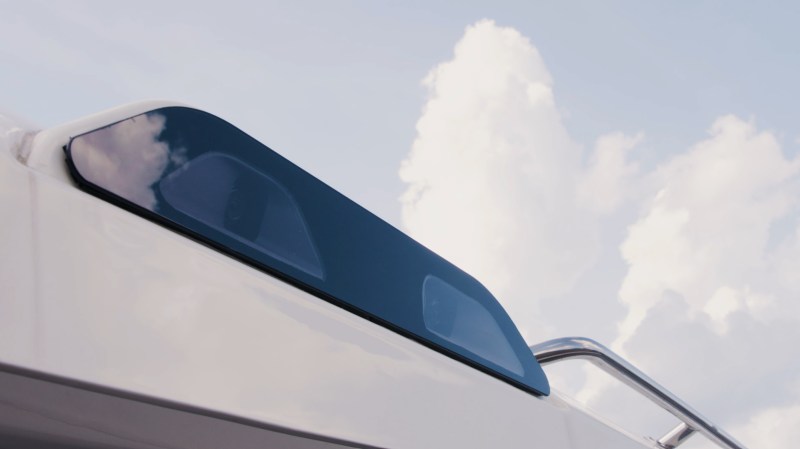
- Cameras: Six factory-installed stereo cameras are seamlessly integrated into the vessel’s hardtop, providing an uncompromised, 360-degree field of view around the entire perimeter of the yacht.
- Processing Core: A dedicated heavy-duty black-box processor handles real-time data ingestion and trajectory calculations.
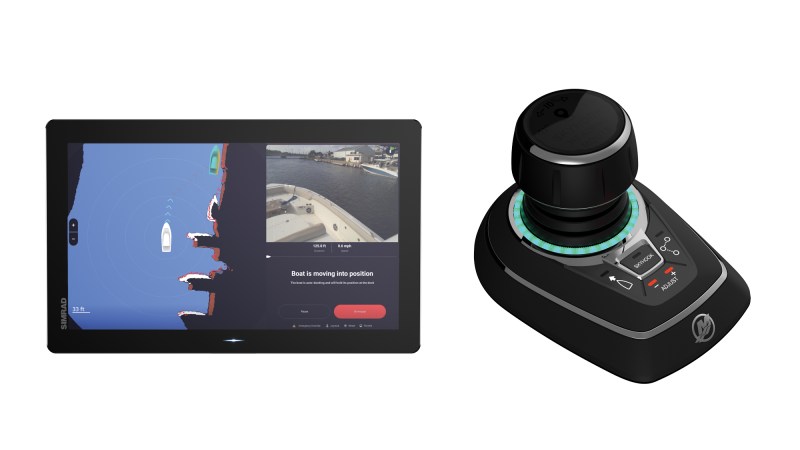
- Displays: At least one Simrad NSO 4 or NSS 4 multifunction display running the proprietary AutoCaptain application serves as the primary human-machine interface (HMI).
- Navigation: A high-precision Global Navigation Satellite System (GNSS) receiver tracks the boat’s exact geographic placement relative to its digital environment.
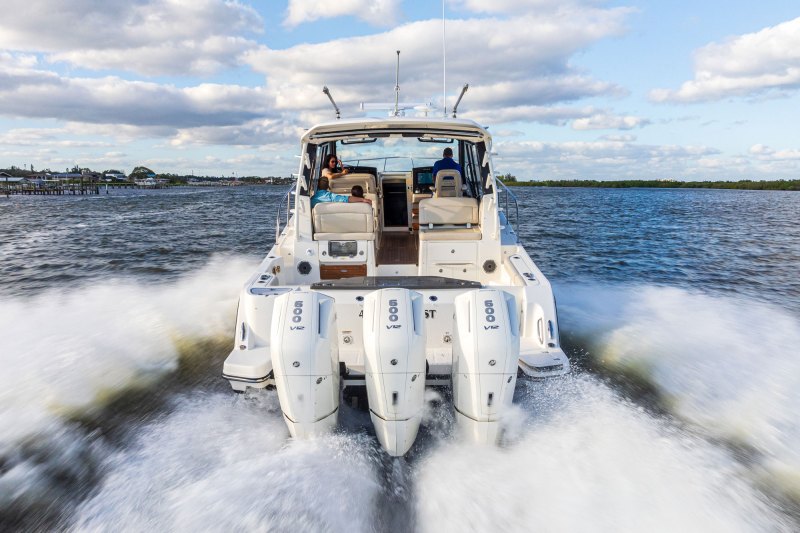
- Propulsion and Control: At least two compatible Mercury outboards paired with Mercury’s advanced Joystick Piloting system. (While bow thrusters are optional and not always required, the joystick’s vector thrust capabilities do the heavy lifting.)
Software and Artificial Intelligence
The brains of the operation rely on two core algorithms—one dedicated to non-water object detection and another for dynamic route planning. More importantly, AutoCaptain utilizes two distinct branches of Artificial Intelligence:
- Machine Vision: Allows the processor to accurately "see" and interpret above-the-waterline objects, structures, and vessels within its camera streams.
- Machine Learning: Enables the system to improve over time without explicit code updates.
"We’ve taught it what are boats, what are docks, what are obstacles in the water," explains Jeremiah Clark. "लेकिन [But] over time, the more of those things it sees, the smarter it actually gets."
Autonomy Classification
According to Brandon Ferriman, Brunswick’s senior director of program management, AutoCaptain currently operates at Level 2-Plus on the National Highway Traffic Safety Administration’s six-tiered autonomy scale.
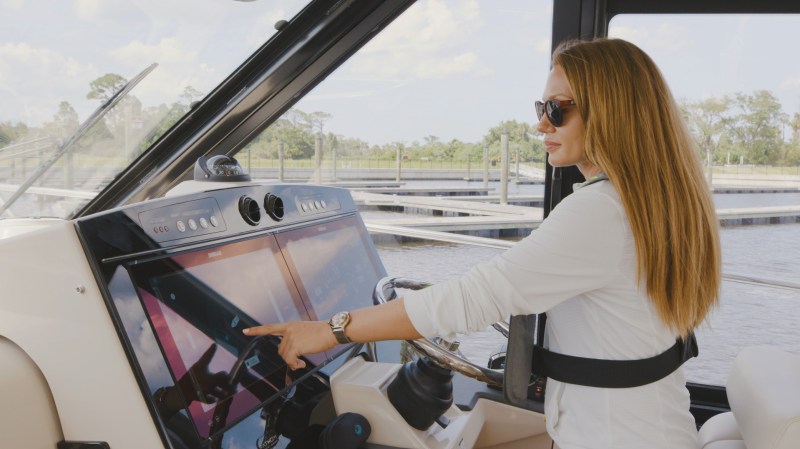
"It’s hands-off, but you’re at the wheel," Ferriman notes. The operator must remain helmside at all times. If the human captain intervenes or overrides the system, AutoCaptain immediately drops into a standby mode, mirroring the behavior of a traditional autopilot.
Official Statements & Operational Mechanics
Operating AutoCaptain is designed to be as intuitive as interacting with a modern chartplotter, yet its underlying mechanics are relentlessly sophisticated.
Step-by-Step Operation
- Initiation: The operator opens the AutoCaptain application on the Simrad NSO 4 or NSS 4 display and explicitly acknowledges that they will remain stationed at the helm.
- Command Selection: Using the touchscreen interface, the captain tells the system where and how to position the yacht (e.g., entering a slip to starboard with the bow facing outward).
- Screen Layout: The interface features a split-pane layout. The port two-thirds display a dynamic, camera-created vector map of the immediate surroundings. The starboard third is partitioned between a live camera feed showing the vessel’s current direction of travel and a clean control box featuring prominent "Pause" and "Disengage" buttons.
- Execution: Once confirmed, the system takes over throttle, gear selection, and steering via the Mercury joystick, smoothly sliding the vessel into its designated berth.
The "Pause" and "Dock-Hold" Features
One of AutoCaptain’s most unique innovations is its pause function. Described by Brandon Ferriman as "a Skyhook-like feature that’s controlled by the autonomy system," engaging the pause button halts the docking sequence and commands AutoCaptain to hold the yacht’s exact orientation and position within a one-meter tolerance. This acts as an invaluable "time-out" option if marina traffic suddenly spikes or unexpected debris floats into the path.
Furthermore, once AutoCaptain completes its docking run, a dock-hold function maintains the vessel’s position against wind and tide, buying the single-handed boater ample time to step away from the helm and secure the docklines.
Safety and Collision Avoidance
Safety protocols are deeply embedded in the software loop. The stereo cameras continuously stream video to the central processor, mapping all surrounding objects. If AutoCaptain detects a potential collision risk—such as a dinghy drifting into its path—it automatically recalculates a safe alternative route in real time. If the system encounters a scenario it cannot definitively resolve, it drops into pause mode before eventually handing control back to the human operator.
Future Outlook: The Road Ahead for Marine Autonomy
As impressive as AutoCaptain is in its debut iteration, Simrad and Brunswick view this as merely the opening chapter of a much larger story.
Expanding Horizons via Software Updates
Because AutoCaptain is built on a unified proprietary ecosystem, future capabilities will be delivered primarily through over-the-air software updates rather than hardware overhauls. Engineers are actively looking at ways to integrate other onboard sensors into the autonomy stack, including:
- Forward- and side-scanning sonars
- Doppler-enabled marine radar
- Automatic Identification System (AIS) transceivers
"We’re open to looking at other sensor technologies," says Jeremiah Clark. "And we don’t need a license to talk to our own sensors."
Market Positioning and Scalability
AutoCaptain is unapologetically aimed at the premium midsize market. Because it requires structural hardware integration—specifically hardtops capable of housing the 360-degree stereo camera array—it is unlikely to appear on small runabouts anytime soon. Similarly, while its underlying software stack could theoretically be scaled to superyachts in the future, its reliance on Mercury propulsion integration keeps it firmly rooted as a premier Mercury-family feature for now.
The target audience is twofold: it drastically lowers the barrier to entry for novice boaters who find close-quarters handling terrifying, while simultaneously serving as a high-end electronic copilot for seasoned captains looking to eliminate the fatigue of routine docking after a long day on the water.
A Paradigm Shift in Boating Culture
Critics may argue that relying on systems like AutoCaptain risks eroding fundamental seamanship skills, particularly among greenhorns. However, the system encourages rather than discourages engagement; owners remain at the helm and are entirely free to practice the "dark arts" of manual docking whenever they choose.
For past generations of boaters left with scraped gelcoat and frayed nerves after a sunset return to the slip, AutoCaptain represents the ultimate realization of a long-held maritime dream. By marrying cutting-edge machine learning, stereoscopic vision, and flawless propulsion integration, Simrad hasn’t just built an autonomous docking tool—they have redefined peace of mind on the water.