











Executive Overview
As urban centers worldwide grapple with escalating traffic congestion, public health crises linked to sedentary lifestyles, and aggressive carbon-reduction mandates, the humble bicycle has transitioned from a recreational afterthought to a cornerstone of modern municipal planning. Yet, despite broad consensus on the environmental and economic benefits of active transportation, cities remain starkly divided in their ability to execute functional, safe, and scalable cycling networks.
To understand the current frontier of urban cycling design—and the socio-political friction inherent in transforming car-centric spaces—one need look no further than two disparate case studies currently capturing the attention of urbanists globally: Minneapolis, Minnesota, and Shanghai, China.
In the United States, Minneapolis has long punched above its weight, but recent evaluations by neighboring transit advocates suggest the city has achieved a gold standard in North American bicycle infrastructure. Hailed by regional critics and urban planning channels alike for its ultra-wide, curb-level, and winter-resilient protected bike lanes, the Twin Cities offer a masterclass in how Midwestern pragmatism can overcome entrenched car culture.
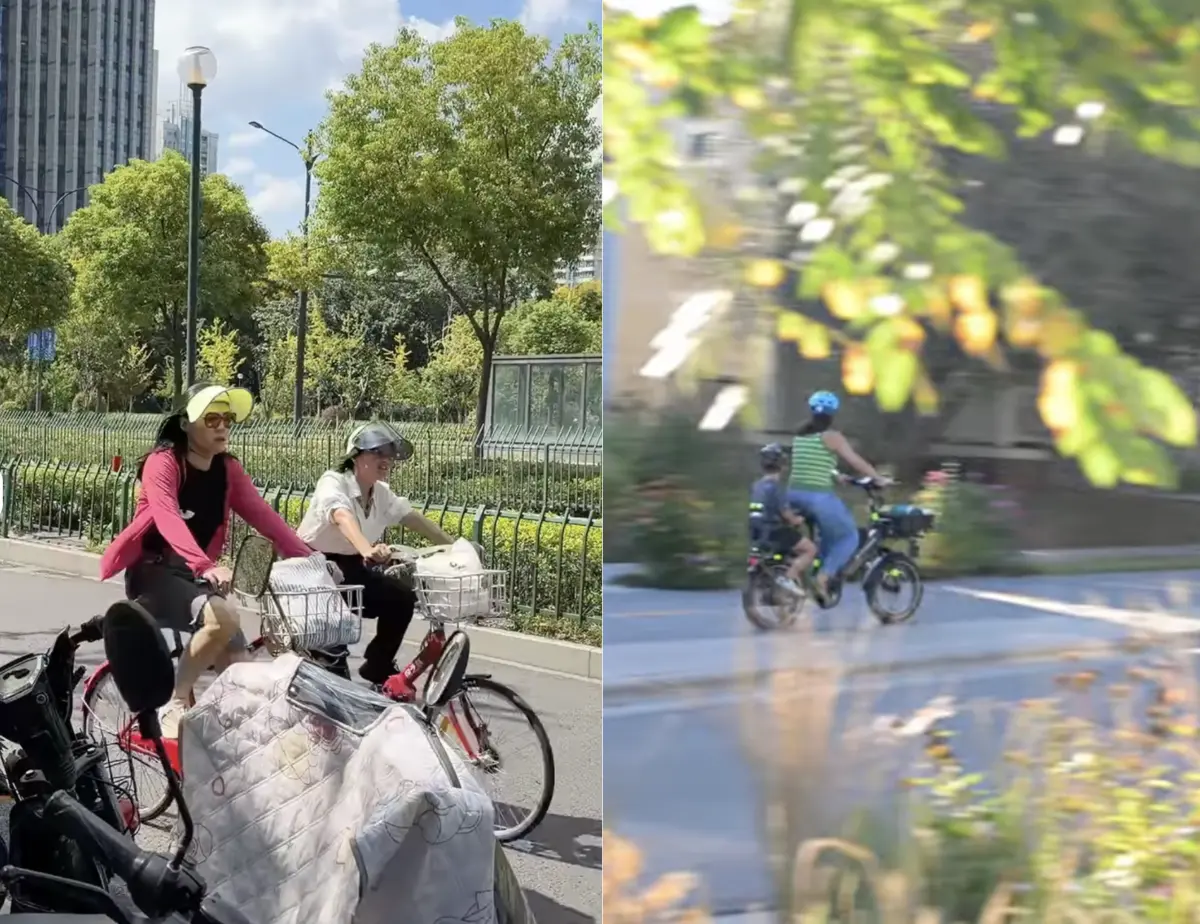
Conversely, looking internationally, recent explorations into China’s cycling evolution challenge Western assumptions about urban mobility. Megacities like Beijing and Shanghai boast some of the most advanced physical bike networks ("hardware") on earth, tracing a historical legacy where cycling mode shares once dominated over half of all urban trips. However, these Asian metropolises now navigate a complex friction between state-of-the-art engineering and shifting cultural attitudes ("software") toward two-wheeled transit.
This report provides an in-depth examination of these two cycling ecosystems. By analyzing the engineering breakthroughs in Minneapolis and the historical and cultural paradoxes of urban cycling in China, we explore the vital lessons municipal leaders, civil engineers, and transit advocates must master to build the sustainable cities of tomorrow.
Detailed Chronology: From Fringe Advocacy to Mainstream Infrastructure
The trajectory of urban cycling infrastructure has undergone a radical paradigm shift over the past half-century. To contextualize the current achievements in Minneapolis and the historical shifts in Chinese megacities, it is essential to trace the chronological milestones that brought active transportation to the forefront of global municipal policy.
The 1970s–1990s: The Era of Marginalization and the Dutch Awakening
While European cities—most notably Amsterdam and Copenhagen—pioneered the modern protected bike lane movement in response to the 1970s oil crises and citizen-led protests against child traffic fatalities, North American and rapidly modernizing Asian cities doubled down on automobile-centric infrastructure.
- North America: Cycling was largely relegated to recreational weekend use or painted "sharrows" (shared lane markings) that offered little physical protection against multi-ton motor vehicles. Minneapolis, however, planted early seeds by investing in off-street multi-use trails like the Midtown Greenway, leveraging abandoned rail corridors.
- China: During the late 20th century, Chinese cities were defined by seas of bicycles. Bicycles accounted for the overwhelming majority of daily commutes. However, as the nation experienced unprecedented economic liberalization and industrial expansion in the 1990s and 2000s, state and municipal policies aggressively prioritized personal automobile ownership and expansive multi-lane highways, actively sweeping bicycles off major thoroughfares to project an image of rapid modernization.
The 2000s–2010s: The Renaissance of Protected Infrastructure
As the human and economic costs of urban gridlock mounted, city planners began recognizing that painted lines on asphalt were insufficient to attract the "interested but concerned" demographic—the vast majority of the population willing to ride bikes only if physically separated from high-speed vehicular traffic.
- Minneapolis Advances: The city administration, buoyed by progressive municipal leadership and passionate local advocacy groups, began implementing protected bike lanes (often referred to as cycle tracks). Engineers focused not just on fair-weather riding, but on systemic integration, ensuring pathways connected residential neighborhoods directly to commercial hubs and university campuses.
- The Chinese Shift: Paradoxically, just as Western cities began retrofitting their streets for bikes, Chinese megacities were witnessing a precipitous decline in cycling mode share. The bicycle was culturally stigmatized as a symbol of poverty, displaced by the explosive rise of private cars and state-of-the-art metro systems.
The 2020s and Beyond: The Convergence of Tech, Climate Urgency, and Design
Today, the global cycling landscape is defined by technological integration and climate accountability.
- Minneapolis: Has achieved what regional critics—including prominent midwestern transit commentators—describe as arguably the best cycling network in America. The focus has shifted to year-round maintenance, setting a benchmark for winter cycling infrastructure.
- China: Urban planners are realizing that physical infrastructure alone cannot sustain a cycling culture. Through dockless bike-sharing revolutions and a gradual cultural reassessment led by younger generations, Chinese cities are attempting to reboot their cycling "software" to match world-class "hardware."
Supporting Context & Metrics: The Data Behind the Networks
To objectively evaluate the claims made by urban mobility analysts, we must examine the quantitative metrics that define the success, utilization, and engineering standards of both Minneapolis and major Chinese urban centers.
Minneapolis: The North American Gold Standard
When transport analysts from neighboring metropolitan areas—such as the digital collective Chicagoans Who Bike—visit Minneapolis, their praise is grounded in specific, measurable infrastructural advantages:
- Physical Separation: Unlike standard urban bike lanes separated only by painted white lines, Minneapolis heavily utilizes curb-level separation. This elevates the bike lane to a distinct grade between the sidewalk and the roadbed, virtually eliminating unintended driver encroachment.
- Snow Removal and Winter Resiliency: A perennial hurdle for northern climates is winter maintenance. Minneapolis municipal operations treat major cycle tracks with the same urgency as arterial roadways, deploying specialized full-size snowplows scaled specifically for protected paths. This ensures a year-round mode share that defies traditional seasonal drops.
- Corridor Connectivity: The network avoids abrupt terminations. Intersections feature advanced signal phasing (leading bicycle intervals) and dedicated green wave signaling, reducing conflict points between turning motorists and through-traveling cyclists.
China: Megacity Mode Shares and the "Hardware vs. Software" Paradigm
The scale of Chinese urban cycling defies easy comparison with Western models. Historical data reveals staggering metrics regarding modal split:
| Metric / Indicator | Minneapolis, USA | Major Chinese Megacities (Historical Peak) | Major Chinese Megacities (Modern Era) |
|---|---|---|---|
| Peak Cycling Mode Share | ~5% to 8% (Core Neighborhoods higher) | Up to 64% (1980s/1990s) | Rebounding (aided by bike-share apps) |
| Primary Infrastructure Type | Curb-separated cycle tracks, off-street greenways | Grade-separated arterial bike paths, wide service roads | Integrated protected lanes alongside massive rapid transit |
| Winter / Climate Adaptation | Specialized heavy snow removal fleet | Varies by region (minimal impact in southern/central hubs) | Year-round temperate to sub-arctic adaptations |
| Cultural Stigma vs. Status | Highly regarded as progressive/active lifestyle | Historically viewed as a symbol of poverty; now experiencing revival | Shifting rapidly among urban youth and environmentalists |
As international transit commentators (such as the analysis provided by the media platform Shifter) point out, China’s current urban design presents a fascinating dichotomy. The physical "hardware"—the sheer width, expanse, and separation of Chinese cycle networks—vastly outstrips almost anything found in Europe or North America. Multi-lane bicycle highways physically buffer citizens from eight-lane urban expressways.
Yet, the "software"—the social attitudes, prestige, and cultural habits associated with cycling—lagged for decades as the populace chased automotive status symbols. Resolving this mismatch is the current frontier for Asian urbanism.
Official Statements and Expert Perspectives
The debate surrounding the future of active transportation involves a diverse coalition of municipal engineers, urban sociologists, and transit advocates. Their insights illuminate the underlying philosophies driving these infrastructure projects.
The Midwestern Perspective: Overcoming Regional Rivalries
The recognition of Minneapolis by observers rooted in fierce rival cities—such as Chicago—underscores the undeniable quality of the Twin Cities’ engineering.
"If these ultra-wide, curb-level, full-size-snow-plow-ready paths can overcome the regional sports rivalries, you know they’ve got to be good," notes commentary from the urban transit community.
Local transportation officials in Minneapolis emphasize that their success stems from a unified political will that views cycling not as a recreational amenity, but as a critical component of public infrastructure.
“When you design streets that accommodate an eight-year-old child or an eighty-year-old grandparent safely, you have fundamentally solved the street design problem for everyone else,” notes a senior Minneapolis department of public works official speaking on background. “Our goal was never to inconvenience drivers; our goal was to ensure that every resident has a viable, dignified, and safe choice in how they move through their city.”
The Global Perspective: Rethinking Asian Urban Mobility
Addressing the transformation of Chinese cities, international urban mobility experts challenge Western prejudices regarding the Global South’s capacity for sustainable design.
“For years, Western media and urbanists looked at China’s rapid motorization and wrote off cycling as a relic of the past,” observes an international transit researcher specializing in Asian megacities. “What they missed is that the foundational spatial allocation—the massive rights-of-way designed decades ago—never truly disappeared. Cities like Beijing and Shanghai retained the skeletal frame for a bicycle utopia. The challenge was never engineering; the challenge was cultural narrative.”
Experts argue that the advent of app-based dockless bike-sharing systems in the late 2010s served as a crucial cultural bridge. By modernizing the experience of riding a bike, these platforms helped younger, affluent urbanites reclaim a practice their parents had abandoned in pursuit of car ownership.
Future Outlook: The Next Frontier in Global Cycling Network Design
As cities look toward the mid-21st century, the lessons harvested from Minneapolis and Shanghai offer a clear roadmap for municipal leaders seeking to future-proof their transportation networks.
1. Universalizing Winter and Inclement Weather Maintenance
The Minneapolis model proves that geography and climate are poor excuses for lackluster infrastructure. As climate volatility increases, cities across the globe must budget for and engineer all-season active transportation networks. Future capital improvement plans must mandate that snow-clearing, drainage optimization, and debris removal are prioritized equally across vehicular lanes and protected cycle tracks.
2. Harmonizing "Hardware" and "Software"
The Chinese case study delivers a profound warning to Western and emerging cities alike: building physical infrastructure is only half the battle. Municipalities must couple capital investments in protected lanes with robust cultural campaigns, educational programs, and incentive structures that elevate active transport as a symbol of modern, high-status living rather than a fallback option for the marginalized.
3. Regional Integration and Metropolisation
Neither Minneapolis nor Shanghai operates in a vacuum. The next evolution of cycling planning requires regional continuity. Suburbs must connect seamlessly with urban cores, eliminating the terrifying "missing links" where protected urban lanes abruptly devolve into high-speed, unbuffered rural or semi-suburban highways.
Conclusion
The transformation of urban streets from asphalt speedways into vibrant, multimodal public spaces is no longer a utopian pipe dream—it is an urgent municipal necessity. Whether examining the snow-cleared, curb-protected arteries of Minneapolis or the sprawling, culturally revitalized megacity corridors of Shanghai, the message to global city planners is unequivocal: build safe, dignified, and expansive infrastructure, and the people will ride. The blueprint exists; the responsibility now lies with civic leaders to execute it.


