











Executive Overview
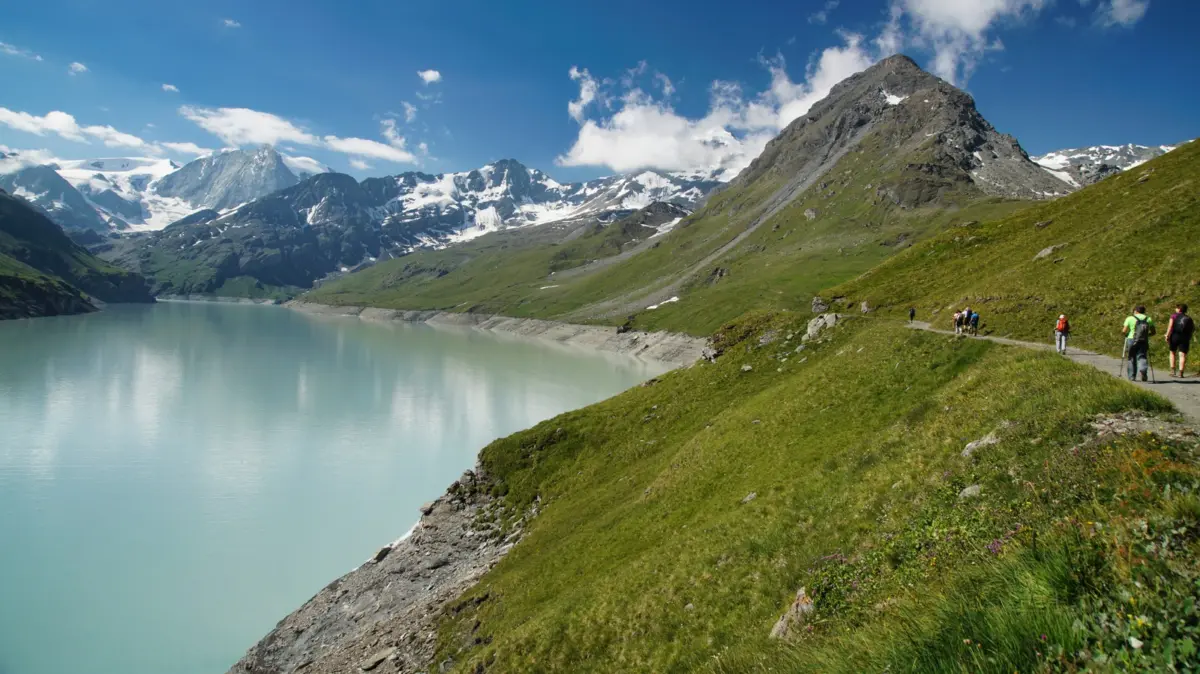
Nestled deep within the rugged expanse of the Pennine Alps in the canton of Valais, Switzerland, lies an alpine phenomenon that seamlessly blends raw natural wonder with monumental human engineering: Lac des Dix. As Switzerland’s largest artificial reservoir by volume, this body of water commands attention not merely for its striking, mineral-rich turquoise waters, but for the sheer scale of the infrastructure that birthed it. Powered by the monumental Grande Dixence Dam—completed in 1961 and historically recognized as Europe’s highest gravity dam—the reservoir holds an astonishing 400 million cubic meters of glacial runoff.
Far from being a sterile industrial asset, Lac des Dix has evolved into a premier destination for ecological tourism, high-altitude hiking, and outdoor recreation. Surrounded by thriving alpine flora, pristine pastures, and a diverse local fauna that includes ibex, deer, and protected bird species, the region offers an immersive escape for nature enthusiasts. However, the delicate logistics of high-altitude travel mean this sanctuary is seasonally bound, welcoming explorers exclusively from June through October. This comprehensive report explores the geological, engineering, and touristic facets of Lac des Dix, offering an authoritative guide for modern travelers and alpine researchers alike.
Detailed Chronology: The Evolution of an Alpine Giant
To understand the geographical identity of Lac des Dix today, one must trace the timeline of human intervention in the Valais valley—a history defined by the relentless pursuit of hydroelectric independence.
The Pre-Industrial Valley and the First Dam (1920–1935)
Before the concrete behemoth that dominates the landscape today was ever conceived, the Dix Valley was a wild, glacial trough drained by the Dixence river. As Switzerland entered the 20th century and industrialized rapidly, the demand for reliable domestic energy sources surged.
In the 1920s, engineers recognized the immense hydroelectric potential of capturing the meltwater from the surrounding glaciers, including the massive Cheilon Glacier. Between 1929 and 1935, the first Grande Dixence Dam was constructed. Standing at roughly 85 meters tall, this initial barrier created a much smaller reservoir. While it successfully generated electricity for the region, the rapidly modernizing Swiss economy quickly outgrew its capacity. The surging post-World War II demand for electricity necessitated a vastly more ambitious vision.
The Rise of the Concrete Leviathan (1951–1961)
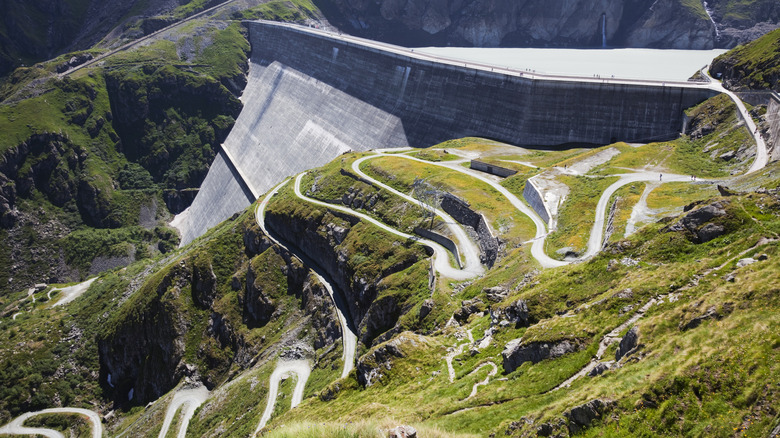
The blueprint for the modern Grande Dixence Dam was nothing short of audacious. Construction began in 1951 under the management of Grande Dixence SA. To capture the entirety of the regional glacial runoff, engineers designed a dam that would dwarf its predecessor—literally swallowing the old 1935 structure beneath millions of tons of concrete.
Over a decade of intensive, often perilous labor in extreme alpine conditions, thousands of workers hauled materials up the steep Valais slopes. The project required an intricate network of underground tunnels—some stretching over 100 kilometers—designed to siphon water from neighboring valleys and feed it directly into the burgeoning reservoir.

When the project reached completion in 1961, the new Grande Dixence Dam stood at an staggering 285 meters (935 feet) tall, making it the highest gravity dam in the world at the time and cementing its status as a pinnacle of 20th-century civil engineering.
Modern Transformation into an Eco-Tourism Haven (1962–Present)
In the decades following its completion, the operational focus of Lac des Dix shifted from purely industrial utility to a dual mandate: safeguarding Switzerland’s energy grid while preserving and promoting the fragile surrounding alpine ecosystem.
With the stabilization of roadways and the integration of tourist infrastructure—such as the installation of cable cars, interactive visitor centers, and the formalization of trekking routes—the area transitioned from a restricted industrial zone to an internationally recognized hub for sustainable outdoor tourism. Today, Lac des Dix stands as a living laboratory where green energy production coexists harmoniously with high-altitude biodiversity.
Supporting Context & Metrics: Engineering and Geography by the Numbers
To fully comprehend the magnitude of Lac des Dix, one must evaluate the raw data and physical dimensions that define the site. The following metrics illustrate the scale of both the natural environment and the structural marvels that harness it:
Key Technical Metrics of the Grande Dixence Infrastructure
- Dam Height: 285 meters (935 feet) — making it the tallest gravity dam in Europe and one of the highest globally.
- Dam Length at Crest: 700 meters (2,296 feet).
- Base Thickness: 200 meters (656 feet), tapering to 15 meters at the crest, engineered to withstand the colossal hydrostatic pressure of millions of tons of water.
- Volume of Concrete Used: Approximately 6 million cubic meters—enough to build a concrete wall one meter thick around the entire equator of the Earth.
- Reservoir Volume Capacity: Up to 400 million cubic meters of water at full capacity.
- Catchment Area: Spans roughly 350 square kilometers, fed by an intricate network of 35 glaciers via nearly 100 kilometers of underground collection galleries and tunnels.
- Power Generation: Water from the reservoir is channeled down massive penstocks to power downstream hydroelectric stations such as Fionnay and Riddes, supplying electricity to hundreds of thousands of Swiss households.
Environmental and Geographic Data
- Altitude of the Lake Surface: Approximately 2,136 meters (7,008 feet) above sea level.
- Lake Length: Roughly 5 kilometers long.
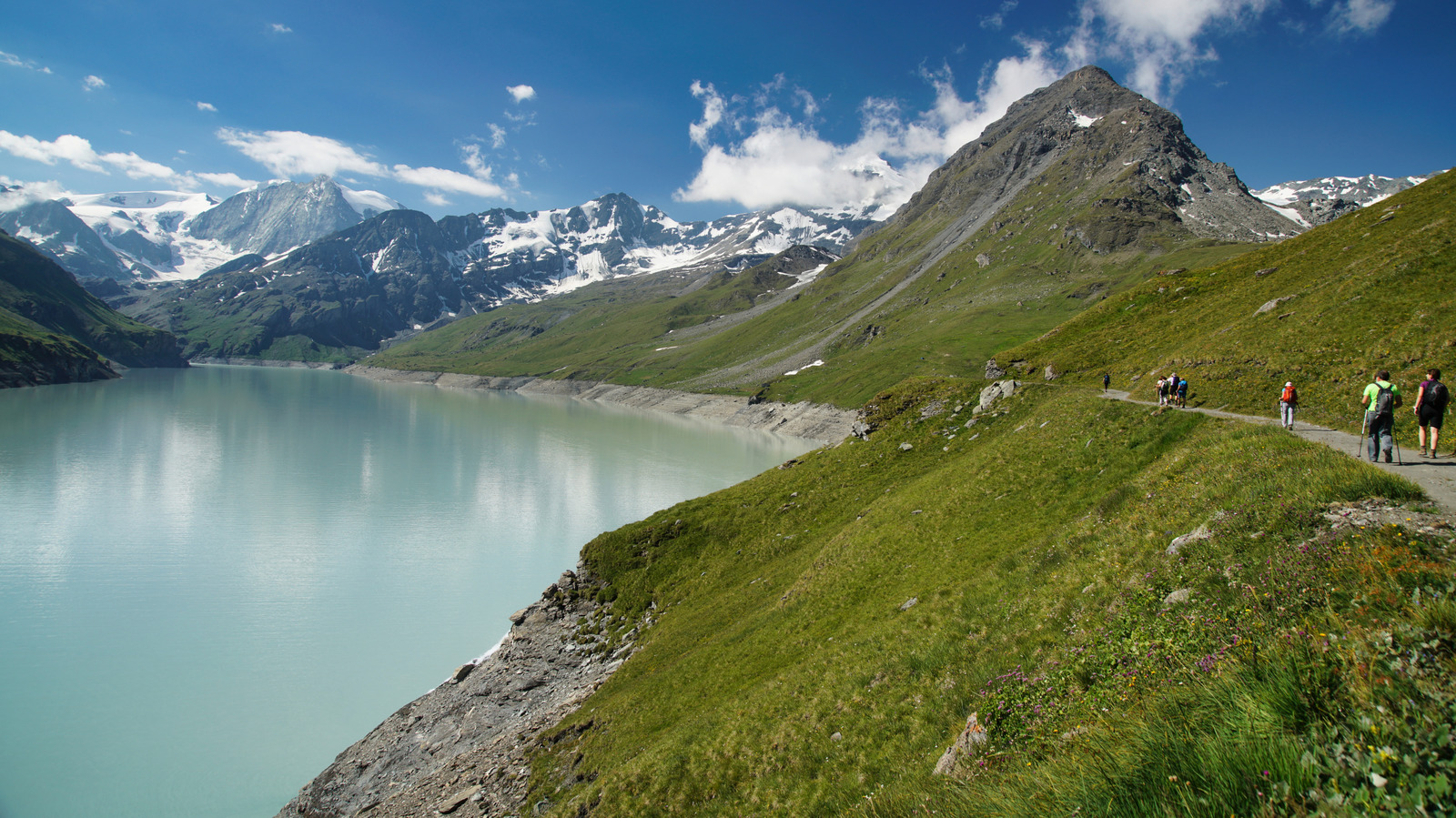
- Water Color: A distinct, milky turquoise hue caused by "glacial flour"—microscopic mineral particles pulverized by moving glaciers that remain suspended in the runoff water.
- Regional Accessibility Windows: Roadways and public infrastructure are strictly open from June through October, as heavy winter snowfall and high avalanche risks render the area impassable for standard vehicles during the colder months.
Official Statements and Expert Perspectives
The dual identity of Lac des Dix as both an industrial powerhouse and an ecological sanctuary has drawn commentary from energy experts, environmental scientists, and tourism boards alike.
The Energy Perspective
In a retrospective brief on Switzerland’s renewable infrastructure, Grande Dixence SA engineering leads emphasized the ongoing strategic importance of the reservoir:
"Lac des Dix is not merely a monument to mid-century construction; it is a living, responsive battery for the Swiss Confederation. In an era where Europe is aggressively transitioning toward intermittent renewable sources like wind and solar, the ability of the Grande Dixence system to dispatch up to 2,000 megawatts of flexible hydroelectric power within minutes is an irreplaceable asset to national grid stability."
The Environmental and Conservation Perspective
Conservationists monitoring the Pennine Alps have similarly praised the management of the surrounding ecosystem. A spokesperson for the Valais regional environmental protection agency noted:
"The co-existence of heavy industrial infrastructure and delicate alpine biodiversity is a masterclass in spatial management. The restriction of vehicular access to the summer months naturally limits anthropogenic pressure on the local ibex, chamois, and migratory bird populations. Visitors who respect the marked trails find themselves stepping into an ecosystem that thrives precisely because human intrusion is seasonal and regulated."
Future Outlook: Sustainability, Climate Change, and Tourism
As global climate patterns shift, the future of high-altitude reservoirs like Lac des Dix is undergoing intense scrutiny from both glaciologists and energy strategists.
The Impact of Glacial Recession
The primary lifeline of Lac des Dix is the meltwater produced by the surrounding glaciers. However, accelerated warming in the European Alps has led to measurable glacial retreat across the Valais region. While short-term runoff volumes may fluctuate or initially increase as glaciers melt at a faster rate, hydrologists project a long-term decline in natural glacial replenishment over the coming decades.
In response, operators are implementing advanced hydrological modeling systems to optimize water storage cycles, ensuring that the reservoir can efficiently balance the competing demands of summer agricultural irrigation, municipal drinking water, and peak-load hydroelectric generation.
Evolving Tourism and Accessibility
Tourism trends around Lac des Dix are shifting toward low-impact, sustainable exploration. Regional tourism boards are heavily promoting non-motorized access, encouraging visitors to utilize the extensive rail networks connecting Italy and Switzerland (such as the famed Vigezzina-Centovalli railway) before connecting via local transit hubs like Sion International Airport or Geneva (a two-hour drive away).
For the intrepid traveler, the site offers an expanding portfolio of activities:
- The Crest Walk: A 45-minute winding trail leading to the summit of the dam, offering panoramic vistas of the Pennine Alps.
- Vertical Recreation: On-site climbing walls and zip lines managed during the summer months, providing adrenaline-fueled perspectives of the massive concrete wall.
- High-Altitude Trekking: Trail networks ranging from the family-friendly, beginner-accessible Lac des Dix Path (featuring tunnels, gentle inclines, and glacial views) to the rigorous, 6-mile Plafeuri Hut trail starting from Hérémence, which challenges seasoned backpackers with a 2,400-foot elevation gain.
Conclusion
Lac des Dix stands as a testament to what is possible when human ingenuity works in tandem with the majestic, unforgiving forces of nature. Whether viewed as an engineering marvel capable of powering a nation, or as a serene turquoise sanctuary framed by soaring peaks, glaciers, and thriving alpine wildlife, this Valais gem remains an unmissable cornerstone of Swiss alpine culture. Travelers planning their next European expedition would do well to mark their calendars for the brief, golden window between June and October, when the roads part to reveal one of the continent’s most breathtaking outdoor destinations.


