










PUBLISHED: March 2026
AUTHOR: Maritime Industry Desk
LOCATION: London, United Kingdom / Hamilton, Bermuda
Executive Overview
In a stark reminder of the inherent hazards defining modern commercial seafaring, the United Kingdom’s Marine Accident Investigation Branch (MAIB) has officially published its comprehensive safety investigation report regarding a fatal accident involving a crew member on board the Bermuda-registered passenger cruise vessel Arvia. The tragic event occurred on October 26, 2025, while the luxury liner was underway on an international voyage traversing the Atlantic Ocean, traveling from the port of Southampton, England, to Santa Cruz de Tenerife in the Canary Islands, Spain.
The exhaustive inquiry, spearheaded by the MAIB acting on behalf of the Bermuda Ship Registry, brings to light critical operational vulnerabilities, communication breakdowns, and procedural lapses that routinely plague high-tempo maritime environments. Because Bermuda is a esteemed member of the Red Ensign Group (REG)—a collaborative body representing the United Kingdom and its various shipping registries—the investigation was executed under a specialized memorandum of understanding. This agreement allows the UK’s elite accident investigators to conduct rigorous technical analyses for Red Ensign flag states, ensuring that marine casualties receive the highest standard of independent scrutiny, regardless of where the vessel is formally registered.

As the global cruise industry experiences unprecedented post-pandemic growth, deploying increasingly massive vessels staffed by multi-national workforces, the findings of the Arvia report carry immense weight. This article provides a deep-dive analysis of the incident, breaking down the chronology of events, evaluating the regulatory and operational frameworks governing cruise ship labor, reviewing statements from key maritime authorities, and charting a forward-looking roadmap for maritime safety reform.
Detailed Chronology: The Journey to Santa Cruz de Tenerife
Departure from Southampton: A Routine Cruise Begins
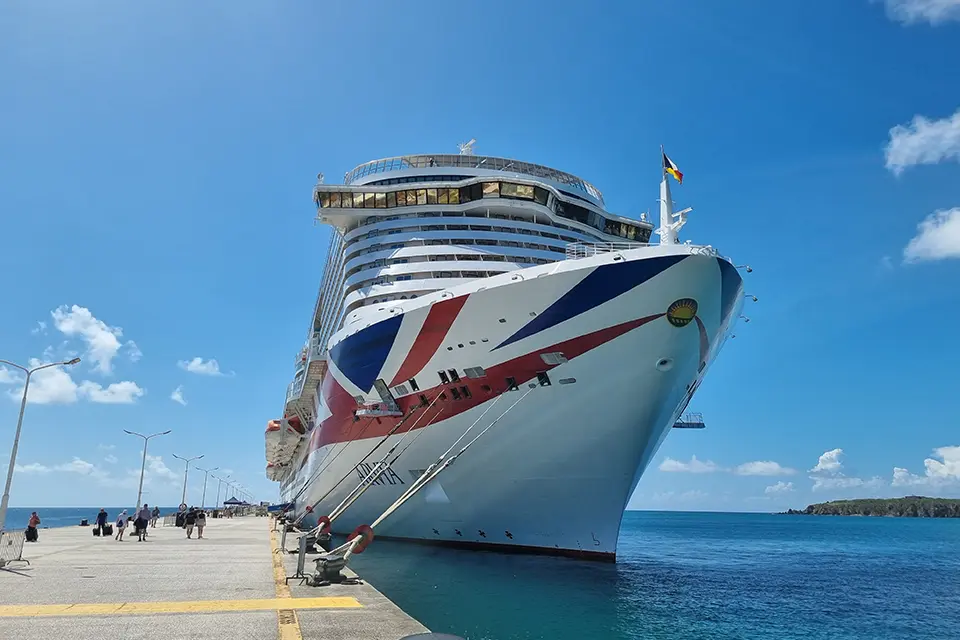
On October 25, 2025, the Arvia—a massive, state-of-the-art mega-cruise ship operated by Carnival UK under the P&O Cruises brand—completed its final preparations and cast off from its home berth in Southampton, England. Thousands of holidaymakers were on board, looking forward to a sun-drenched itinerary heading south toward the Atlantic islands and the Mediterranean. Alongside the passengers, a vast contingent of international hospitality, deck, and engine-room crew members worked diligently behind the scenes to maintain the floating resort’s seamless operations.
Among the crew was the victim, an experienced maritime worker whose daily duties encompassed critical shipboard upkeep and technical routines. At the time of departure, weather conditions along the English Channel were monitored closely by the bridge team, but the voyage was initially characterized by standard operational protocols. The atmosphere on board was festive, typical of the first 24 hours of a major cruise vacation, masking the complex, high-pressure industrial ecosystem functioning just out of sight of the paying guests.
The Transits South and the Escalation of Risk
As the Arvia cleared the English coastline and pushed out into the broader, often unpredictable waters of the Bay of Biscay and the open Atlantic, daily departmental routines shifted into high gear. While passengers enjoyed the ship’s world-class entertainment, restaurants, and leisure facilities, the crew engaged in continuous maintenance schedules required to keep a vessel of this magnitude seaworthy.

On October 26, while the ship was thousands of tons of steel moving at cruising speed toward Santa Cruz de Tenerife, operational tasks were assigned across various departments. It was during the execution of one such routine operation that safety barriers failed, culminating in the catastrophic accident.
While the MAIB report deliberately protects the immediate personal details of the deceased out of respect for the family and in line with international investigative protocols, the sequence of operational errors leading up to the fatality has been meticulously mapped. According to the investigation, the accident was not the result of a single catastrophic system failure, but rather the tragic convergence of multiple latent conditions: miscommunication between departmental supervisors, time-pressure constraints common in modern cruise operations, and a breakdown in the stringent permit-to-work protocols designed to protect personnel in high-hazard zones.
Emergency Response and Immediate Aftermath
The emergency response protocols on board the Arvia were activated immediately following the incident. Shipboard medical personnel, trained extensively in trauma care and mass-casualty or acute emergency management, rushed to the scene. Despite rapid intervention, advanced life-support procedures, and the tireless efforts of the ship’s medical staff, the crew member succumbed to their injuries.
The master of the vessel immediately notified the relevant maritime authorities, including the Maritime Rescue Coordination Centre (MRCC) and the Bermuda Ship Registry. In accordance with international maritime law (specifically the International Maritime Organization’s Casualty Investigation Code), preparations were made to interface with shore-based authorities at the next port of call.
Upon arrival in Santa Cruz de Tenerife, local Spanish authorities boarded the vessel to conduct preliminary judicial and forensic examinations, cooperating closely with maritime safety inspectors. Concurrently, the MAIB deployed a specialized team of investigators to meet the vessel, gather physical evidence, download Voyage Data Recorder (VDR) logs, and interview surviving witnesses and shipboard management.

Supporting Context & Metrics: The Human and Structural Cost
The Scale of the Arvia and Modern Cruise Operations
To fully grasp the dynamics of the accident, one must understand the unique environment of a modern mega-cruise ship. Delivered to its operators shortly before the incident, the Arvia is an engineering marvel. Spanning over 340 meters in length, weighing approximately 185,000 gross tons, and capable of accommodating well over 5,000 passengers and nearly 2,000 crew members, the vessel functions essentially as a floating city.
Operating a vessel of this scale requires industrial-level logistics. Maintenance operations must be performed continuously, often while the ship is actively on passage, to ensure that mechanical, electrical, and structural systems remain operational. This creates an inherent tension between the leisurely guest experience desired by passengers and the grueling, high-risk industrial environment experienced by the crew.
+-------------------------------------------------------------------------+
|                  THE DUAL REALITY OF MODERN CRUISE SHIPS                |
+-----------------------------------+-------------------------------------+
|         GUEST ENVIRONMENT         |          CREW ENVIRONMENT           |
+-----------------------------------+-------------------------------------+
| - Luxury hospitality & leisure    | - High-tempo industrial maintenance |
| - Uninterrupted relaxation        | - Strict operational timetables     |
| - Shielded from technical spaces  | - Complex multi-national workforce  |
+-----------------------------------+-------------------------------------+
Safety Metrics and Maritime Labor Realities
The accident on board the Arvia contributes to a sobering body of global maritime statistics regarding occupational safety. While the cruise industry heavily promotes passenger safety—surpassing modern aviation standards in many regulatory oversight categories—crew safety has historically faced distinct structural challenges.
- Multi-National Workforce Dynamics: Crew members on vessels like the Arvia often originate from dozens of different nations, primarily developing economies. While English is the working language of the sea, nuances in technical communication, differing baseline safety cultures, and hierarchical reluctance to question supervisors can create dangerous communication gaps.
- Fatigue Management: The relentless pace of cruise itineraries leaves narrow windows for routine maintenance. Crew members frequently navigate tight schedules, balancing hospitality duties or technical repairs with mandatory rest-hour regulations. The MAIB and other agencies have repeatedly flagged fatigue as a compounding factor in maritime industrial accidents.
- Hazardous Spaces and Operations: Routine tasks such as working at height, handling heavy machinery, entering enclosed spaces, and managing deck operations carry inherent fatality risks. When safety management systems (SMS) fail to adapt to the fluid realities of day-to-day operations, the results can be catastrophic.
Official Statements and Regulatory Analysis
The Role of the MAIB and the Red Ensign Group
The publication of the MAIB report marks the conclusion of months of forensic analysis, engineering testing, and human factors research. As an independent branch of the United Kingdom’s Department for Transport, the MAIB does not ascribe civil or criminal liability; rather, its sole objective is to determine the causes and circumstances of marine accidents with the aim of preventing future occurrences.
In a formal statement accompanying the report’s release, a senior MAIB spokesperson emphasized the systemic lessons to be drawn from the tragedy:
"The loss of any seafarer is a profound tragedy that reverberates across the entire global maritime community. Our investigation into the accident on board the Arvia was conducted with absolute rigor to ensure that every contributing factor—from procedural design to human interaction—was brought to light. We urge ship operators, flag states, and maritime regulators globally to review their safety management systems critically, ensuring that the paper policies established in corporate boardrooms translate seamlessly into life-saving practices on the deck plates."
Because the Arvia flies the red ensign under the Bermuda Ship Registry, the findings carry direct regulatory implications for the Red Ensign Group as a whole. Bermuda maritime officials have committed to working closely with Carnival UK to verify that all safety recommendations issued by the MAIB are fully implemented across the fleet.
Carnival UK’s Response
Carnival UK, the parent operator of P&O Cruises, released an official statement expressing deep sorrow over the loss of their crew member and confirming full cooperation with the investigative process:
"We are deeply saddened by the loss of our colleague on board the Arvia on October 26, 2025. Our thoughts and deepest condolences remain with the family, friends, and colleagues of the deceased during this incredibly difficult time. We have fully cooperated with the Marine Accident Investigation Branch and the Bermuda Ship Registry throughout their investigation. The safety, health, and well-being of every single person on our ships is our absolute highest priority. We are actively reviewing the MAIB report in detail and are committed to implementing its recommendations across our fleet to ensure that an event of this nature can never happen again."
Future Outlook: Reforming Maritime Safety Protocols
Key Recommendations from the MAIB Report
The newly published investigation report outlines a series of targeted, actionable recommendations aimed at mitigating future risks across the passenger vessel sector. These recommendations focus heavily on three core pillars:
- Enhancement of Permit-to-Work (PTW) Systems: The report highlights inconsistencies in how high-risk tasks are authorized and monitored. Future operations must utilize digitized, highly verifiable PTW systems that require mandatory cross-departmental sign-offs and real-time supervisory oversight.
- Bridging Communication and Safety Culture: Recognizing the diverse cultural makeup of modern ship crews, the report stresses the necessity of empowering all personnel—regardless of rank or nationality—to exercise their "Stop Work Authority" if they perceive an unsafe condition, free from fear of professional retribution.
- Auditing Safety Management Systems (SMS): Flag states and classification societies must move beyond compliance-box ticking during annual audits. There must be a renewed focus on verifying that shipboard safety drills, equipment maintenance logs, and operational risk assessments reflect real-world working conditions rather than theoretical ideals.
A Turning Point for the Cruise Industry?
As the maritime sector looks toward the future, the tragic incident aboard the Arvia serves as a sobering touchstone. The global cruise fleet is expanding rapidly, with dozens of even larger, more complex vessels slated for delivery over the next decade. Accommodating this growth without compromising the lives of the hundreds of thousands of seafarers who keep the industry afloat requires an unwavering commitment to cultural and structural reform.
The lessons of October 26, 2025, must extend far beyond the administrative offices of Carnival UK or the Bermuda Ship Registry. They must resonate through every maritime training academy, every shipping company boardroom, and every shipboard safety committee across the globe. Only through total transparency, relentless accountability, and an absolute prioritization of human life over operational expediency can the maritime community honor the memory of the crew member lost aboard the Arvia and ensure that the oceans remain a safe workplace for those who traverse them.


