










Executive Overview
Every year, nature performs some of the planet’s most astonishing choreography. Humpback whales navigate thousands of miles across open oceans to reach their ancestral breeding grounds, while under the cover of darkness, trillions of plankton, fish, and squid undertake the largest daily vertical migration on Earth, surging from the abyssal depths toward the surface to feed. These natural rhythms have pulsed through our biosphere for millennia, functioning with clockwork precision.
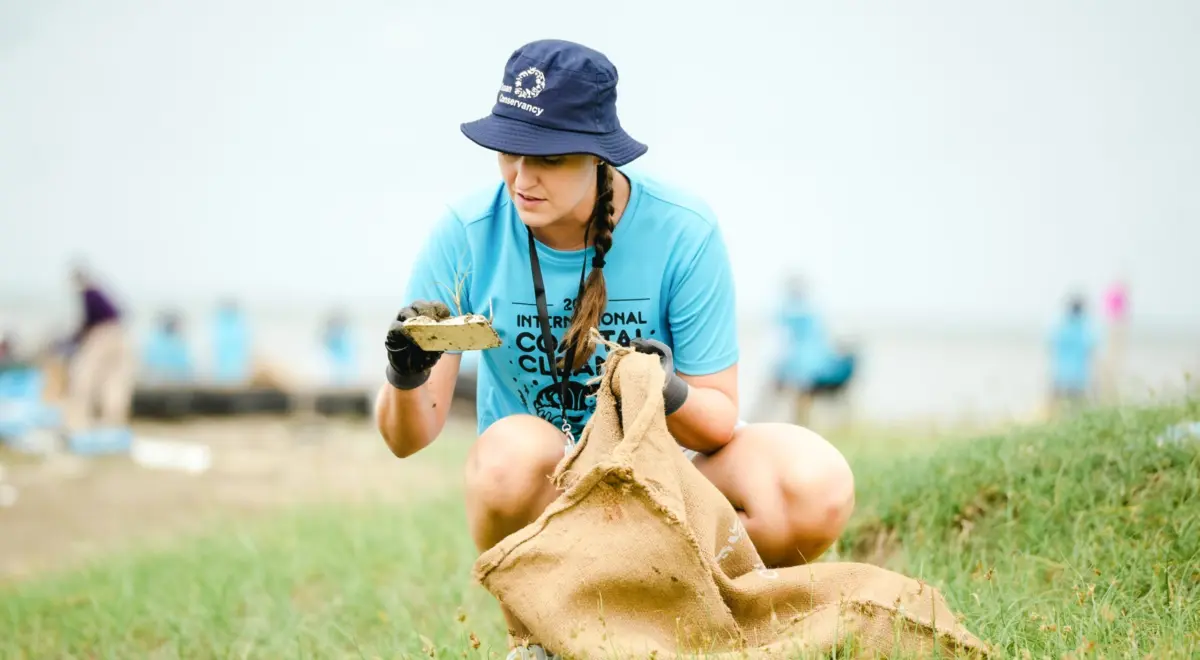
Yet, alongside these ancient biological migrations, a powerful anthropogenic movement has emerged to counter a modern crisis. Each year, hundreds of thousands of people across the globe flock to local coastlines, riverbanks, and lake shores to participate in a different kind of trek: the Ocean Conservancy’s International Coastal Cleanup® (ICC).
As the world prepares for the 41st season of this monumental citizen-science initiative, the stakes have never been higher. Led by Sarah Weller, Associate Director of the International Coastal Cleanup, this year’s mobilization represents not only an ongoing battle against marine debris, but a deeply personal passing of the torch. For Weller, this season marks a poignant milestone: her first cleanup alongside her eight-month-old daughter, planting the seeds for a lifelong commitment to marine stewardship.

Behind the inspiring imagery of volunteers hauling bags of plastic from sandy shores lies a massive, data-driven global operation. The ICC is much more than a localized day of service; it is the backbone of the world’s largest open-access marine debris database, informing international policy, driving scientific innovation, and quantifying the direct, life-saving impacts of community action on vulnerable marine wildlife.
Detailed Chronology: The Evolution and Mechanics of the ICC
To understand the magnitude of the International Coastal Cleanup, one must look back at its origins and how it evolved into a synchronized global phenomenon. Established over four decades ago, the ICC was born from a recognition that local beaches were becoming dumping grounds for single-use plastics, discarded fishing gear, and municipal waste. What began as scattered, localized efforts to beautify shorelines crystallized into an organized, internationally coordinated campaign designed to capture empirical data about the nature of marine pollution.
While the official flagship events of the ICC traditionally peak during the month of September, the movement operates as a 365-day enterprise. Cleanups occur continuously across continents, adapting to regional weather patterns, seasonal tourism influxes, and local environmental emergencies. Crucially, the methodology of the ICC empowers anyone—from a solo beachgoer to a massive corporate volunteer group—to become an active researcher.
This democratization of science is made possible by Ocean Conservancy’s proprietary mobile application, Clean Swell®. Available to the public free of charge, the app serves as a digital ledger for environmental restoration. As volunteers comb the sand or riverbanks, they log every item of trash they collect into the application. This data includes everything from cigarette butts and plastic beverage bottles to abandoned fishing nets and micro-plastics.

Once submitted, these individual data points feed directly into a vast, open-access online database. This repository is utilized by marine biologists, environmental economists, policymakers, and nongovernmental organizations (NGOs) worldwide. By identifying the specific types and brands of debris polluting local waterways, researchers can trace pollution back to its source, advocating for upstream legislative solutions such as extended producer responsibility (EPR) laws, plastic bag bans, and improved municipal waste management infrastructure.
Supporting Context & Metrics: The Scale of the Crisis and Its Solutions
The numbers generated by the International Coastal Cleanup tell a sobering story of human consumption, but they also highlight the extraordinary power of collective action. During the previous cleanup season, the metrics achieved by the global volunteer network were staggering:
- Total Volunteers: More than 630,000 individuals mobilized across the globe.
- Total Weight Removed: An astonishing 7.9 million pounds (3.4 million kilograms) of trash was extracted from aquatic ecosystems.
- Itemized Tally: Volunteers meticulously recorded and removed 13.8 million individual pieces of marine debris.
Despite these heroic efforts, the volume of plastic entering the world’s oceans continues to outpace containment measures, threatening marine ecosystems on an unprecedented scale. Plastic debris does not readily biodegrade; instead, wave action and ultraviolet radiation break it down into increasingly smaller fragments known as microplastics. These particles permeate the marine food web, contaminating everything from filter-feeding bivalves to apex predators, and ultimately finding their way into the human food supply.
However, the ICC’s value proposition extends far beyond cleaning beaches; it delivers measurable, immediate protection for marine fauna. Recognizing the urgent need to connect local cleanup actions with broader ecological outcomes, Ocean Conservancy scientists spearheaded groundbreaking research that recently earned the prestigious Cozzarelli Prize for Scientific Excellence.
Building on this research, the organization developed an innovative tool known as the Wildlife Impact Calculator. Integrated directly into the Clean Swell® app, this calculator utilizes empirical data models to estimate how the removal of specific plastic items—such as discarded packaging rings, plastic bags, and abandoned fishing lines—directly prevents entanglements, ingestions, and mortality in marine birds, sea turtles, and marine mammals.
When a volunteer submits their cleanup data through the app today, they are no longer just looking at a tally of collected trash. They receive real-time, quantified insights showing exactly how many animals their specific cleanup effort has protected from potential injury or death. This direct feedback loop transforms abstract environmentalism into a tangible, emotionally resonant victory for every participant.
Voices from the Frontlines: What the Ocean Means to Humanity
While the scientific metrics and technological tools provide the framework for the ICC, the soul of the movement lives within its community of supporters. The psychological and emotional connection between humanity and the ocean runs deep, serving as a powerful catalyst for conservation.
Ahead of the 41st season, Ocean Conservancy reached out to its global community with a fundamental question: What does the ocean mean to you, and why do you feel called to protect it? The responses paint a vivid portrait of reverence, nostalgia, and urgent responsibility.
For many, the motivation is rooted in legacy and intergenerational equity. Debra E. expressed a heartfelt desire for the future:
"I would love for future generations to be able to see the beautiful ocean we have. We need to stop the destruction of pollution, overfishing, and warming of our oceans."
This sentiment is echoed by Cynthia K., who looks back to her own upbringing to shape her conservation ethos:
"The ocean and wildlife were part of my childhood. It was where I felt like I belonged. I want to protect it so future generations can have the connection that I had."
Others view the ocean through the lens of exploration and planetary survival. Suzy W. highlighted its intrinsic majesty:
"It is our future! And it is an honor to explore it at times. I wish everyone could see its beauty below the surface."
That sense of awe is amplified by Derek H., who framed the marine environment as humanity’s final terrestrial frontier:
"It’s one of the most important places on the planet and it is still as unknown to us as outer space, for this is the final frontier to be explored. And now more than ever, our future depends on a healthy thriving ocean."
Perhaps encapsulating the philosophical weight of the crisis, Laurie S. provided a holistic reflection on the interconnectedness of life on Earth:
"The ocean is life itself; a vast, breathing force whose rhythms sustain the planet, nourish entire ecosystems, and cradle an extraordinary tapestry of wildlife. It embodies natural beauty in its purest form, from shimmering surfaces to the hidden worlds below, each layer reminding us of the delicate balance that keeps Earth alive. Without the ocean, all life ends; with it, the planet thrives. It is both a wonder and a responsibility, a reminder that we must protect the oceans if we hope to protect ourselves and the future of every living thing."
These testimonies demonstrate that protecting the ocean is not merely an ecological necessity, but a profound moral obligation.
Future Outlook: A Vision Beyond Cleanups
As Sarah Weller and hundreds of thousands of volunteers prepare to deploy trash bags, gloves, and smartphones equipped with Clean Swell® across the globe, they do so with a dual-purpose mindset. On one hand, immediate remediation is required to rescue suffocating coastlines and shield wildlife from lethal debris. On the other hand, cleanups are viewed as a temporary diagnostic tool—a symptom-treatment strategy while systemic cures are developed.
The ultimate vision for the International Coastal Cleanup is, paradoxically, its own obsolescence. The goal shared by Ocean Conservancy leadership, marine scientists, and millions of grassroots supporters is a future where the plastic pollution crisis is entirely eradicated, rendering annual coastal cleanups unnecessary.
This utopian vision is not as far-fetched as it may seem. The technological innovations, scientific frameworks, and policy blueprints required to stem the tide of plastic waste already exist. What is required now is the political will, corporate accountability, and societal prioritization to implement them globally. Redesigning packaging materials, expanding municipal recycling infrastructure, enforcing strict limits on single-use plastics, and holding major polluters accountable are the critical next steps in phasing out the need for shoreline cleanup brigades.
Until that day arrives, however, the annual migration of people to the water’s edge remains an irreplaceable act of love for our blue planet. It is a testament to human resilience, community solidarity, and an unyielding refusal to surrender our oceans to the tide of negligence.
The 41st International Coastal Cleanup calls upon global citizens to join the mission. Whether participating as a family tradition—like Sarah Weller and her infant daughter—or logging debris via the Clean Swell app for the first time, every action contributes to the preservation of a healthy ocean and a thriving planet, forever and for everyone.


