











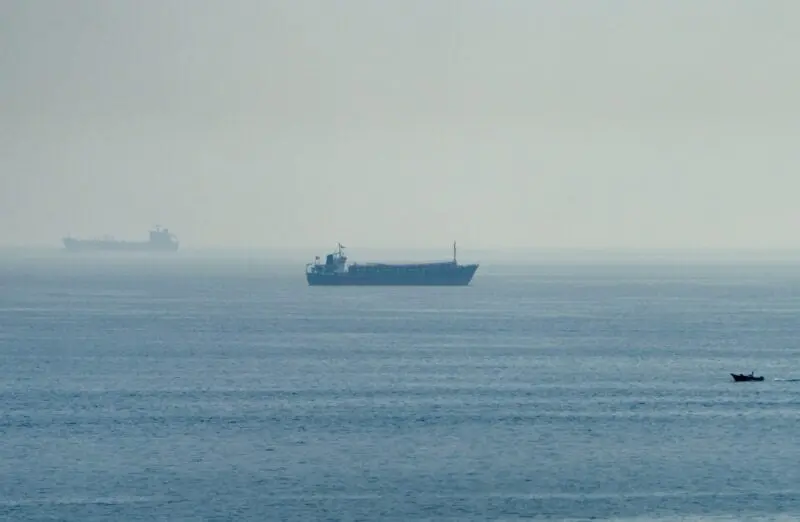
Executive Overview
The global maritime commons is facing a critical security crisis as a rapid succession of kinetic strikes targets commercial shipping in the Strait of Hormuz. Over a high-tension six-day period beginning Sunday, September 28, at least six commercial tankers have been struck by unknown projectiles while transiting the world’s most vital energy chokepoint.
The latest incident, occurring on Friday, October 3, involved an outbound tanker that suffered a projectile strike, resulting in a localized fire and a temporary shipboard power blackout. While the vessel managed to extinguish the blaze, restore propulsion, and continue its voyage without casualties or immediate environmental damage, the attack underscores a dramatic escalation in maritime risk.
This surge in hostilities has caught the international shipping community off guard, particularly due to a troubling pattern of delayed reporting. Several of the earlier attacks, which occurred on Sunday and Monday, only became public days later through delayed notifications issued by the United Kingdom Maritime Trade Operations (UKMTO). This lag in information sharing has raised urgent questions among shipowners, insurers, and maritime security analysts regarding the real-time accuracy of situational awareness in the region.

As geopolitical tensions in the Middle East simmer, the vulnerability of the Strait of Hormuz—through which roughly one-fifth of the world’s petroleum passes—is once again in sharp focus, threatening to disrupt global supply chains and drive up energy costs.
Detailed Chronology of the Week’s Attacks
The rapid sequence of strikes has created a highly volatile environment for commercial crews operating in the Middle East. Below is a detailed breakdown of the events that transpired between September 28 and October 3.
+-------------------------------------------------------------------------+
|                    CHRONOLOGY OF HORMUZ TANKER STRIKES                  |
+---------------------+-----------------------+---------------------------+
| Date (Local/UTC)    | Incident Type         | Operational Impact        |
+---------------------+-----------------------+---------------------------+
| Sunday, Sept 28     | Projectile Strike     | Onboard fire (extinguished|
|                     |                       | ship remained underway.   |
+---------------------+-----------------------+---------------------------+
| Monday, Sept 29     | Three separate tanker | Delayed reports; limited  |
| (Three Vessels)     | projectile strikes    | damage/casualty data.     |
+---------------------+-----------------------+---------------------------+
| Thursday, Oct 2     | Projectile Strike     | Onboard fire; crew safe;  |
|                     |                       | damage assessment ongoing.|
+---------------------+-----------------------+---------------------------+
| Friday, Oct 3       | Projectile Strike     | Fire and power blackout;  |
| (11:22 UTC)         |                       | power restored; underway. |
+---------------------+-----------------------+---------------------------+
The Friday Attack: Outbound Interdiction (October 3)
At 11:22 UTC on Friday, an unidentified commercial tanker transiting outbound through the Strait of Hormuz was struck by an unknown projectile. According to UKMTO, which registered the incident as Warning 148-26, the impact was violent enough to cause an immediate blackout of the vessel’s primary electrical and propulsion systems, alongside a localized fire.
The ship’s crew acted quickly, utilizing onboard damage-control protocols to extinguish the fire and restore auxiliary and primary power systems. The vessel was able to resume its transit out of the Gulf. Crucially, no casualties were reported among the crew, and initial aerial and onboard surveys indicated no breach of the cargo holds or subsequent environmental spillage.

The Thursday Strike: Fire in the Transit Lane (October 2)
The Friday strike followed a similar incident on Thursday, October 2. In that attack, a tanker transiting the strait was hit by a projectile, igniting a fire on deck. While the crew successfully contained the flames and prevented casualties, the extent of the structural damage to the vessel and potential long-term environmental impacts remained unclear in the immediate aftermath. This incident confirmed to security analysts that the previous days’ attacks were not isolated events but part of a coordinated campaign.
The Monday Blackout: Three Delayed Reports (September 29)
The scale of the threat only became clear on Wednesday, October 1, when UKMTO released a series of time-late warnings detailing three separate attacks that had occurred on Monday, September 29.
In all three instances, tankers transiting the Strait of Hormuz were struck by unknown projectiles. Because these incidents occurred almost simultaneously or in rapid succession, and because the affected vessels did not immediately broadcast distress signals to public channels, the maritime community remained unaware of the triple-strike for nearly 48 hours. The delayed disclosure fueled anxieties across maritime operations centers globally, highlighting a potential breakdown in rapid-response communications.
The Sunday Opening Salvo (September 28)
The current wave of violence began on the evening of Sunday, September 28. A merchant vessel was struck by a suspected projectile, sparking a fire that was quickly brought under control by the crew. UKMTO initially classified this incident under the ambiguous heading of "suspicious activity." It was only after subsequent strikes occurred that analysts retroactively identified this event as the opening salvo of a concerted campaign targeting commercial shipping.
Supporting Context & Metrics: The Strategic Vulnerability of Hormuz
To understand the gravity of these attacks, one must examine the unique geographical and economic realities of the Strait of Hormuz.
                       [ THE PERSIAN GULF ]
                                |
                                v
                     =======================
                    /   Strait of Hormuz      <-- Critical Chokepoint
                    |   [Width: 21 miles]   |      (20M+ barrels/day)
                       Traffic Lanes       /
                     =======================
                                |
                                v
                       [ GULF OF OMAN ]
The Chokepoint by the Numbers
The Strait of Hormuz is widely considered the most critical maritime chokepoint in the world. At its narrowest, the strait is only 21 miles wide, with the shipping lanes in each direction consisting of just a two-mile-wide channel separated by a two-mile-wide buffer zone.
- Volume: Approximately 20 to 21 million barrels of crude oil, condensate, and petroleum products pass through the strait daily. This represents roughly 20% of global petroleum consumption and more than one-third of all seaborne traded oil.
- Liquefied Natural Gas (LNG): The strait is also the primary gateway for global LNG exports, particularly from Qatar, carrying over 80 million metric tons of LNG annually.
- Alternative Routes: There are very few bypass options. Only Saudi Arabia and the United Arab Emirates operate pipelines that can transport crude oil outside the Persian Gulf, but their combined capacity is less than 6.5 million barrels per day—far short of the volume passing through the strait.
The Economics of Maritime Risk: Insurance and Freight
The immediate consequence of physical attacks on commercial shipping is a sharp increase in operational costs. Underwriters at Lloyd’s of London and other major insurance syndicates closely monitor these developments through the Joint War Committee (JWC).
- War Risk Premiums: When a region is deemed highly volatile, underwriters levy "War Risk Additional Premiums" (WRAPs). Following the six attacks, maritime insurers are expected to raise these premiums from nominal rates to upwards of 0.5% to 1.0% of the ship’s hull value per transit. For a modern Very Large Crude Carrier (VLCC) valued at $100 million, a single transit could incur an extra $500,000 to $1,000,000 in insurance costs alone.
- Freight Rates: Shipowners pass these rising insurance costs, along with hazard pay for crews, onto charterers. This results in higher Worldscale rates (the industry standard for calculating tanker freight), which ultimately translates to higher pump prices for consumers worldwide.
- The Risk of "Dark Transits": In an attempt to avoid targeting, some vessel operators may turn off their Automatic Identification System (AIS) transponders. While this "going dark" tactic is intended to obscure the vessel’s position, it increases the risk of collisions in the highly congested shipping lanes of the strait.
Tactical Analysis: The Weaponry of Modern Asymmetric Warfare
The term "unknown projectile" used in UKMTO reports points to a complex tactical environment. Maritime security firms analyze several likely vectors for these strikes:
- One-Way Attack (OWA) UAVs: Loitering munitions, or "kamikaze drones," have become the weapon of choice for asymmetric forces in the Middle East. They are cheap, difficult to detect on standard marine radar, and can be launched from hundreds of miles away. Their small warheads (typically 10 to 50 kg) match the damage profile described in this week’s attacks: localized fires and electrical blackouts without catastrophic hull breaches.
- Anti-Ship Cruise Missiles (ASCMs): Though less likely given the lack of catastrophic damage, light anti-ship missiles or guided rockets launched from fast attack craft or coastal batteries remain a constant threat.
- Limpet Mines and Waterborne Improvised Explosive Devices (WBIEDs): While some historical attacks in the region relied on divers placing limpet mines on hulls, the description of ships being "struck while underway" strongly points to airborne projectiles rather than stationary mines.
Official Statements and Geopolitical Attribution
As of Friday evening, no state or non-state actor has claimed responsibility for the six strikes. The lack of immediate attribution complicates both military and diplomatic responses.
UKMTO and Military Watchdogs
The UKMTO, which acts as a primary liaison between the British Royal Navy and commercial shipping, has maintained a strictly factual posture. In its warnings, the agency has refrained from speculating on the origin of the projectiles.
A spokesperson for the U.S. Naval Forces Central Command (NAVCENT) / U.S. 5th Fleet, based in Bahrain, stated:
"We are aware of the reports of multiple commercial vessels being targeted in the Strait of Hormuz. We are actively monitoring the situation alongside our international partners in the International Maritime Security Construct (IMSC). The free flow of commerce through these waters is a cornerstone of global economic stability, and we are working to verify the nature of these strikes."
The Dilemma of the "Reporting Lag"
The delay in reporting the Monday attacks has drawn sharp criticism from industry bodies. Security analysts at various maritime risk advisories have noted that delayed reporting severely compromises the collective security of the fleet.
"When three tankers are struck on a Monday and the information does not enter the public domain until Wednesday, dozens of other vessels transit those exact same coordinates completely unaware of an active threat," said a senior maritime analyst. "Shipowners must prioritize transparent, real-time reporting over concerns about temporary commercial or insurance fallout. In an active conflict zone, information is the best defense."
Future Outlook and Operational Recommendations
The escalation of attacks in the Strait of Hormuz represents a significant threat to the stability of global energy markets. If the strikes continue at this pace, the international community may be forced to take more assertive action.
Potential Escapes and Escalation Scenarios
If diplomatic efforts fail to secure the waterway, several operational scenarios may unfold:
- Convoys and Escorts: The International Maritime Security Construct (IMSC) or a coalition of Western and regional navies may re-establish convoy systems, similar to Operation Earnest Will during the "Tanker War" of the 1980s. Under this protocol, warships would actively escort groups of commercial tankers through the strait.
- Route Diversions: Unlike the Red Sea crisis, where vessels can opt to bypass the Suez Canal by sailing around Africa’s Cape of Good Hope, there is no geographic alternative for ships loading cargo inside the Persian Gulf. If the Strait of Hormuz is closed or deemed too dangerous, the oil remains trapped. This reality makes the security of the strait a zero-sum game for global energy security.
Immediate Recommendations for Vessel Masters and Operators
In light of the ongoing threat, maritime security organizations have updated their Best Management Practices (BMP5) recommendations for vessels transiting the Persian Gulf, Strait of Hormuz, and Gulf of Oman:
- Enhanced Visual and Radar Lookouts: Maintain a 24-hour watch for small, low-flying aircraft, drones, and fast-approaching surface craft.
- Hardening of the Vessel: Ensure all fire-fighting equipment is fully operational and positioned for rapid deployment. Crews should practice emergency drills, focusing on localized fire containment and emergency steering procedures following a power blackout.
- Safe Haven Drills: Non-essential crew members should remain in secure, protected interior spaces (such as the citadel or lower accommodations) during the transit of the strait to minimize the risk of casualties from superstructure strikes.
- Strict Compliance with Reporting Protocols: Report any suspicious activity, drone sightings, or unusual radar contacts immediately to the UKMTO and the U.S. 5th Fleet NCAGS (Naval Cooperation and Guidance for Shipping) office to ensure the safety of the wider commercial fleet.


