


Executive Overview
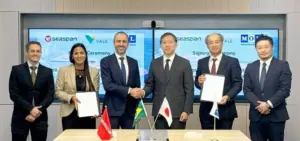
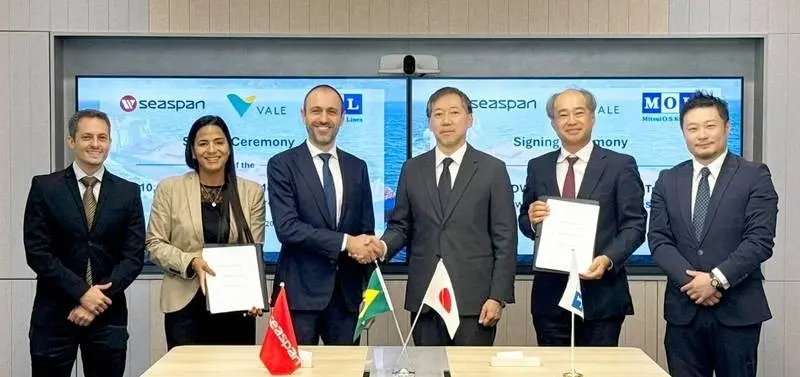
In a decisive move that underscores the shifting geopolitical and environmental dynamics of global maritime logistics, Mitsui O.S.K. Lines’ (MOL) dry bulk subsidiary, MOL Ocean Bulk, has finalized a long-term, 25-year charter agreement with Brazilian mining titan Vale International. The deal centers on the construction and deployment of two next-generation, 210,000-deadweight-tonne (DWT) Newcastlemax ore carriers.
What elevates this transaction from a standard long-term charter to a historic industry milestone is the propulsion technology at its core. These vessels will be the world’s first ore carriers of their size equipped with highly adaptable tri-fuel propulsion systems. Designed to operate on ethanol, methanol, and conventional heavy fuel oil (HFO), the vessels represent a paradigm shift in how shipowners and charterers mitigate fuel supply risks while aggressively targeting Scope 3 emissions.
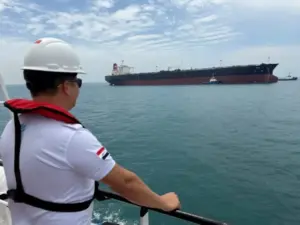
Scheduled for delivery in 2030, the vessels are engineered to navigate the demanding long-haul route between Brazil and East Asia—primarily China—which constitutes one of the most carbon-intensive corridors in global dry bulk shipping. Beyond their tri-fuel capabilities, the vessels will feature "LNG- and ammonia-ready" structural designs, providing an unprecedented level of fuel flexibility.
By integrating advanced energy-saving technologies and securing access to Brazil’s robust domestic bioethanol market, MOL and Vale are establishing a blueprint for low-carbon maritime corridors. This contract signals a departure from single-fuel transition strategies, acknowledging that the future of green shipping will likely be defined by fuel optionality, regulatory compliance, and localized supply chain advantages.
+-----------------------------------------------------------------------------+
|                         VESSEL PROFILE & SPECIFICATIONS                     |
+-----------------------------------------------------------------------------+
| Parameter                 | Specification                                   |
+---------------------------+-------------------------------------------------+
| Deadweight Tonnage (DWT)  | 210,000 tonnes (Newcastlemax Class)             |
| Length Overall (LOA)      | 299.95 meters                                   |
| Beam (Breadth)            | 50.00 meters                                    |
| Delivery Timeline         | 2030                                            |
| Primary Propulsion        | Tri-Fuel (Ethanol, Methanol, Heavy Fuel Oil)    |
| Future Adaptability       | LNG-Ready and Ammonia-Ready design notations     |
| Core Trade Route          | Brazil to China (Iron Ore Corridor)             |
| Primary Lifecycle Target  | Up to 90% CO2e reduction (using bioethanol)     |
+-----------------------------------------------------------------------------+
Detailed Chronology
The partnership between MOL and Vale represents the culmination of multi-year decarbonization strategies pursued by both corporations. To understand the genesis of this 25-year agreement, one must trace the parallel paths of Japanese shipowning pragmatism and Brazilian industrial decarbonization.
[2020-2022: Corporate Alignment]
   │
   ├── Vale launches "Ecoshipping" program to lower maritime Scope 3 emissions.
   └── MOL publishes "Environmental Vision 2.1/2.2," targeting net-zero GHG by 2050.
   │
[2023: Engineering & Feasibility]
   │
   ├── Joint feasibility studies examine bio-alternative fuels for the Brazil-China route.
   └── Engineering focus shifts to Newcastlemax dimensions to optimize port draft limits.
   │
[Late 2024: Agreement & Execution]
   │
   ├── MOL Ocean Bulk and Vale International sign the historic 25-year charter party.
   └── Technical specifications finalized for tri-fuel and LNG/Ammonia-ready notations.
   │
[2025-2029: Construction Phase]
   │
   └── Detailed design, classification society approvals, and keel-laying at selected shipyard.
   │
[2030: Operational Deployment]
   │
   └── Delivery of both vessels; commencement of the 25-year iron ore transport contract.
The Genesis: Vale’s "Ecoshipping" Initiative
Faced with intense scrutiny over its Scope 3 value chain emissions—of which maritime transport of iron ore is a major contributor—Vale launched its "Ecoshipping" program in the early 2020s. The program aimed to foster collaboration with leading shipowners to test and adopt wind-assisted propulsion (such as rotor sails), air lubrication systems, and alternative fuels.
Concurrently, MOL was updating its "Environmental Vision," establishing a firm commitment to achieve net-zero greenhouse gas (GHG) emissions across its fleet by 2050. Recognizing that the long-haul voyage from Ponta da Madeira (Brazil) to Qingdao (China) requires immense energy density, the companies realized that relying on a single alternative fuel, such as green methanol, presented severe supply-chain risks.
The Development Phase (2023–2024)
Throughout 2023, joint technical committees from MOL and Vale evaluated various fuel pathways. While liquefied natural gas (LNG) offered immediate carbon reductions, it was deemed an insufficient long-term solution for absolute decarbonization. Ammonia offered zero-carbon potential but carried significant toxicity risks and lacked mature bunkering infrastructure.
By early 2024, the focus shifted to liquid organic biofuels, specifically ethanol. Brazil’s status as the world’s second-largest producer of ethanol presented a unique geographical advantage. If vessels loading iron ore in Brazil could bunker domestically produced, sugarcane-based bioethanol, they could substantially reduce their carbon footprint on the outbound leg. This logic paved the way for the tri-fuel concept.
The Agreement and Beyond (2024–2030)
The formal signing of the 25-year charter party in late 2024 marked the transition from theoretical engineering to commercial execution. The long duration of the charter—running until 2055—provides the financial security required to offset the capital expenditure premium associated with tri-fuel engines and dual fuel-ready storage tanks.
Between 2025 and 2029, the vessels will undergo detailed design approval, hull optimization, and construction at a specialized shipyard. Upon delivery in 2030, they will enter continuous service, serving as the vanguard of Vale’s green corridor strategy.
Supporting Context & Metrics
The introduction of these vessels addresses several critical challenges facing modern merchant shipping: regulatory compliance, fuel availability, and asset obsolescence.
The Newcastlemax Advantage and Vessel Dimensions
At 299.95 meters in length and 50 meters in breadth, these vessels conform to the Newcastlemax size class. This is the maximum physical dimension capable of entering the port of Newcastle, Australia, but more importantly, it represents the sweet spot for maximizing cargo intake while maintaining draft flexibility across major Brazilian and Chinese iron ore terminals.
By utilizing a 210,000-DWT platform, MOL and Vale achieve massive economies of scale, reducing the carbon emissions per ton-mile of cargo carried even when operating on conventional fuels.
The Tri-Fuel Propulsion Paradigm
The core innovation of these newbuilds is their tri-fuel main engines. Historically, dual-fuel vessels have operated on HFO and either LNG or methanol. Designing an engine and fuel delivery system capable of seamlessly switching between three distinct fuel types—ethanol, methanol, and conventional fuel oil—requires advanced fuel injection technology and sophisticated engine control software.
                        +---------------------------+
                        |  Tri-Fuel Engine Control  |
                        +-------------+-------------+
                                      |
             +------------------------+------------------------+
             |                        |                        |
+------------v------------+ +---------v----------+ +------------v------------+
|      Heavy Fuel Oil     | |      Bioethanol     | |       Methanol       |
|  - Standard operations  | |  - Brazil bunkering | |  - Global bunkering  |
|  - High energy density  | |  - ~90% CO2 reduction| |  - Scalable green fuel|
|  - Baseline fuel        | |  - Sugarcane source | |  - High versatility  |
+-------------------------+ +--------------------+ +----------------------+- Bioethanol: Primarily sourced in Brazil from sugarcane, bioethanol offers a mature supply chain. According to life-cycle assessments validated by Vale, sugarcane-derived ethanol can reduce greenhouse gas emissions by up to 90% on a "Well-to-Wake" (lifecycle) basis compared to standard heavy fuel oil.
- Methanol: Increasingly favored by the global container and dry bulk sectors, green methanol (either e-methanol or bio-methanol) provides a highly scalable, clean-burning alternative that is liquid at ambient temperatures, simplifying storage and handling compared to cryogenic fuels.
- Heavy Fuel Oil (HFO): Retained as a pilot fuel and a commercial backstop, ensuring the vessel can continue global operations even if alternative fuel supply chains experience localized disruptions or price spikes.
Future-Proofing with "Ready" Notations
Recognizing that the maritime fuel landscape will evolve continuously over the next quarter-century, MOL has specified that the vessels be built with "LNG-ready" and "Ammonia-ready" structural configurations. This means that while the ships will not initially carry LNG or ammonia fuel tanks or handling systems, their hull structures, piping routes, and engine spaces are pre-engineered to accommodate these retrofits at a later date without requiring catastrophic structural modifications. This design philosophy directly mitigates the risk of asset stranding under future International Maritime Organization (IMO) carbon levies.
Official Statements
The collaboration has drawn high-level endorsements from both organizations, reflecting its alignment with broader corporate and environmental objectives.
A representative from Mitsui O.S.K. Lines emphasized the systemic nature of the transition, noting that ship design is only one piece of the decarbonization puzzle:
"This landmark agreement with Vale is a testament to MOL’s commitment to leading the maritime energy transition. Developing the world’s first tri-fuel Newcastlemax vessels is a technical triumph, but our work does not end at the shipyard. MOL is actively engaging with stakeholders across the ethanol and methanol supply chains—including fuel producers, port authorities, and bunkering providers—to ensure that when these vessels hit the water in 2030, a reliable, green fuel infrastructure is ready to support them. Our goal remains a net-zero greenhouse gas emissions profile by 2050."
Vale International’s shipping division highlighted the strategic integration of Brazil’s agricultural strength with its mining export logistics:
"Decarbonizing our maritime logistics chain is one of the most complex challenges Vale faces in achieving our Scope 3 reduction targets. By partnering with MOL to deploy these innovative tri-fuel carriers, we are leveraging Brazil’s unique competitive advantage in sustainable bioethanol production. The ability to achieve up to a 90% reduction in lifecycle emissions using sugarcane ethanol, combined with the flexibility to utilize methanol and future zero-carbon fuels, ensures that our logistics corridor to Asia remains resilient, compliant, and environmentally responsible for decades to come."
Future Outlook
The deployment of these tri-fuel vessels in 2030 will occur in a radically changed regulatory landscape. The maritime industry is currently grappling with a tightening web of international and regional environmental mandates.
+-----------------------------------------------------------------------------+
|                        REGULATORY TIMELINE & MILESTONES                     |
+-----------------------------------------------------------------------------+
| Year | Regulator | Mandate / Target                                         |
+------+-----------+----------------------------------------------------------+
| 2025 | EU        | FuelEU Maritime takes effect, penalizing high-intensity  |
|      |           | carbon fuels for vessels calling at European ports.      |
+------+-----------+----------------------------------------------------------+
| 2027 | IMO       | Expected implementation of a global maritime carbon      |
|      |           | pricing mechanism (carbon levy/tax).                     |
+------+-----------+----------------------------------------------------------+
| 2030 | IMO       | Target: At least 5% to 10% uptake of zero or             |
|      |           | near-zero GHG emission technologies/fuels.               |
+------+-----------+----------------------------------------------------------+
| 2030 | MOL/Vale  | Delivery and commercial deployment of the two            |
|      |           | tri-fuel Newcastlemax ore carriers.                      |
+------+-----------+----------------------------------------------------------+
| 2040 | IMO       | Target: 70% to 80% absolute reduction in GHG             |
|      |           | emissions compared to 2008 baselines.                    |
+------+-----------+----------------------------------------------------------+
| 2050 | IMO / MOL | Absolute Target: Net-zero greenhouse gas emissions       |
|      |           | from international shipping.                             |
+-----------------------------------------------------------------------------+
Navigating the Regulatory Landscape
The IMO’s revised greenhouse gas strategy, adopted in 2023, targets net-zero emissions "by or around, i.e., close to 2050," with indicative checkpoints of at least a 20% reduction by 2030 and 70% by 2040 (compared to 2008 levels). Furthermore, regional regulations like the European Union’s ETS (Emissions Trading System) and the upcoming FuelEU Maritime initiative are creating financial penalties for carbon-intensive voyages.
While the Brazil-to-China route lies outside the direct jurisdiction of European regulations, industry analysts widely expect other jurisdictions, including China and Japan, to implement comparable carbon accounting frameworks by the end of the decade.
Resolving the Fuel Availability Dilemma
The biggest hurdle for any alternative fuel vessel is bunkering availability. By selecting a tri-fuel design, MOL and Vale have insulated themselves against the "chicken-and-egg" dilemma of green fuel infrastructure. If green methanol is scarce or prohibitively expensive in 2030, the vessels can run on Brazilian bioethanol. If bioethanol supplies are constrained by agricultural factors, the vessels can utilize methanol or fall back on conventional fuel oil.
This flexibility is expected to spark a trend in the dry bulk sector. As shipowners realize that committing to a single alternative fuel path carries immense commercial risk, multi-fuel engines and future-ready modular designs will likely become the standard specification for long-haul, capesize tonnage. The 25-year partnership between MOL and Vale is not merely a contract; it is a long-term hedge against regulatory uncertainty and a bold bet on the multi-fuel future of global trade.