








Executive Overview
Major institutional change is rarely driven by altruism or abstract social consciousness. While historical environmental breakthroughs—such as the global bans on DDT and Freon—were catalyzed by ecological imperatives, structural market transformations are almost universally anchored in self-interest and the cold, hard logic of the corporate balance sheet.
Today, a fascinating ideological and economic tug-of-war is playing out across Europe. Driven by skyrocketing fossil fuel prices and the crippling volatility of diesel markets, a coalition of some of the continent’s most powerful corporations has formally petitioned the European Commission. Their unified message: hold the line. Rather than succumbing to heavy lobbying by traditional commercial vehicle manufacturers to water down emissions targets, corporate giants including IKEA, EDF, Geopost, and DFDS are demanding that the European Union stay the course on its ambitious heavy-duty truck (HDV) carbon dioxide standards.
This high-stakes policy clash pits the ultimate buyers of heavy commercial vehicles—companies bearing the brunt of operational fuel expenditures—against the legacy manufacturing powerhouses that build them. As the European Commission weighs whether to grant a three-year grace period on upcoming compliance timelines, the future of the continent’s green transition hangs in the balance.
Detailed Chronology of a Regulatory Showdown
The fault lines of this debate have deepened over the last several months, culminating in a direct confrontation between Europe’s logistics leaders and its truck manufacturers.
The Regulatory Baseline
Under current European Union regulations, commercial vehicle manufacturers are legally bound to achieve steep reductions in carbon dioxide emissions from their heavy-duty fleets compared to 2019 baselines:
- 2030 Target: A 43% reduction.
- 2035 Target: A 64% reduction.
- 2040 Target: A 90% reduction.
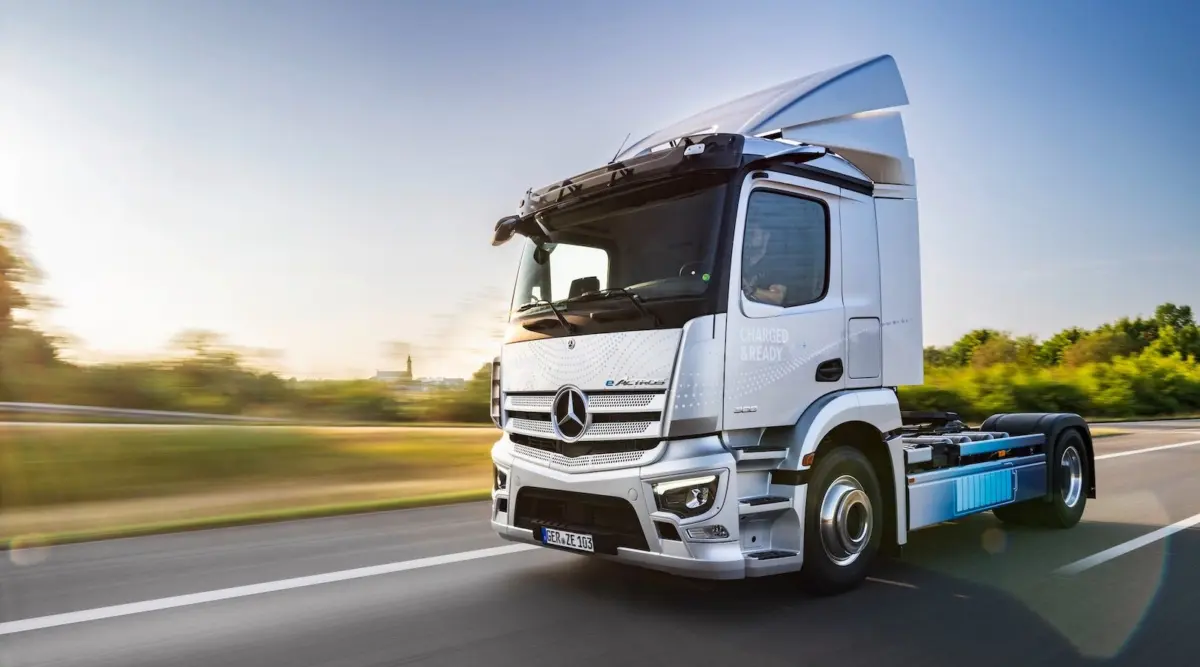
To meet these legally binding trajectories, a massive surge in the deployment of medium- and heavy-duty electric trucks (EMHDVs) across European roadways is required. However, the path to compliance has sparked an escalating industrial conflict.
September 2026: The Manufacturers Push Back
At the prestigious IAA Transportation show in Hannover, Germany, executives from the continent’s premier commercial vehicle manufacturers—including DAF Trucks, Daimler Truck, Ford Otosan, Iveco Group, MAN Truck & Bus, Scania Group, and Volvo Group—sounded the alarm.
Representing the manufacturing sector, these industry leaders warned that the transition to zero-emission commercial transport is suffering from an "alarming delay" in foundational market-support conditions. Pointing to sluggish infrastructure development and high vehicle acquisition costs, they formally petitioned the European Commission for a three-year delay on the 2030 carbon dioxide emissions compliance timeline. Without this buffer, manufacturers warned they could face crippling regulatory penalties exceeding €2 billion.
October 2026: The Buyers Strike Back
Not content to watch environmental targets get rolled back, major commercial fleet operators mobilized in response. On October 1, 2026, members of the Climate Group’s EV100 initiative fired off a direct counter-petition to European Commission President Ursula von der Leyen.

Represented by global powerhouses that depend heavily on freight and logistics, the EV100 coalition urged the Commission to reject any calls to weaken exhaust emissions standards. They argued that maintaining regulatory stability is the only way to lock in long-term demand for electric trucks, accelerate private capital deployment, and catalyze the expansion of pan-European charging infrastructure.
Supporting Context & Metrics: The Ground Reality
To fully understand this tug-of-war, one must examine the current market metrics and the stark financial realities driving both sides.
Current Market Penetration
Despite aggressive regulatory timelines, the adoption of zero-emission heavy-duty trucks remains in its infancy. Across Europe, electric heavy-duty trucks account for a mere 2.4% market share. Adoption rates vary wildly by country:
- Germany Leads: Holds the highest national market share at 4.3%.
- France: Trails close behind at 2.4%.
- Southern & Eastern Laggards: Major logistics corridors in countries like Poland, Spain, and Italy languish well below 1%.
The Infrastructure and Regulatory Bottlenecks
Manufacturers argue that pushing forward without an established support ecosystem is setting the industry up for failure. Karin Rådström, CEO of Daimler Truck, highlighted the structural hurdles:
"We are fully committed to sustainable transport. The investments have been made, and a wide range of CO2-free vehicles is available today. But making them commercially viable at scale also depends on the wider ecosystem that is clearly delayed and not yet developing fast enough."
Key systemic roadblocks cited by manufacturers include:
- Megawatt Charging Deficits: The process of connecting high-capacity, multi-megawatt charging depots to national electrical grids frequently takes years, stalling deployment even where operators possess the capital to invest.
- Payload Disadvantages: Battery-electric trucks carry significant weight penalties compared to legacy internal combustion engine (ICE) vehicles. Manufacturers argue the EU Commission has moved too slowly in adapting vehicle weight and dimension regulations to offset this payload disadvantage.
- Pricely Penalties: Facing potential regulatory fines topping €2 billion for missing 2030 targets, manufacturers view the multi-year delay as an absolute necessity for economic survival.
The Corporate Buyers’ Perspective: Follow the Money
Conversely, the corporate buyers comprising the EV100 coalition—such as IKEA, EDF, Geopost, and DFDS—have run the long-term numbers and reached a different conclusion.
For these enterprises, the high initial capital expenditure of purchasing electric trucks is heavily outweighed by long-term operational savings. Shielded from the volatile spikes of European diesel prices, electric fleets offer predictable, lower operating costs over their lifecycle.
Furthermore, major enterprises value regulatory predictability over temporary compliance relief. Changing the rules midstream disrupts capital allocation strategies and penalizes early movers who have already integrated electric assets into their long-term supply chains.
Official Statements & Stakeholder Perspectives
The ideological divide is sharply captured by the statements emerging from key leaders on both sides of the aisle.

The Corporate Coalition (EV100 & Fleet Operators)
Dominic Phinn, Head of Transportation at Climate Group, emphasized the necessity of regulatory certainty:
"The demand for zero-emission trucks is strong and growing every day. Businesses, including EV100 members, have made significant investment in electric fleets on the understanding that Europe would provide a stable and ambitious regulatory framework for the transition. What companies need now is certainty, not a weakening of the rules that underpin investment decisions."
Echoing this sentiment, Marion Labatut of multinational French utility EDF noted that predictable targets incentivize the energy sector to build out the required grid infrastructure:
"Businesses are already taking action to electrify their heavy-duty fleets, and EDF is helping them make it possible… Maintaining ambitious and stable CO2 standards will give companies the confidence to continue investing at scale, while helping ensure Europe remains competitive in the transition to zero-emission freight."
The Global Context and Double Standards
Critics of the legacy manufacturing lobby point out an uncomfortable hypocrisy. While European truckmakers petition Brussels for leniency, many of the same corporate entities actively oppose aggressive clean-truck mandates in other major global markets—most notably pushing back against stringent emissions rules in the United States, including California’s advanced clean fleet frameworks.
Beyond economic competitiveness and corporate balance sheets, observers note that the regulatory debate carries profound human and environmental consequences. Following a summer that saw approximately 25,000 fatalities across Europe linked directly to extreme heat waves, the climate crisis has transcended abstract environmentalism. Driven by record temperatures, prolonged droughts, and an overheating planet, climate-induced migration and public health crises are reshaping the European socio-political landscape. The question facing policymakers is no longer just about compliance penalties; it is a matter of systemic survival.
Future Outlook: How the European Commission Must Navigate the Crisis
As the European Commission weighs its options, it finds itself caught in the crosshairs of a classic industrial impasse.
On one side stand commercial vehicle manufacturers warning of economic penalties, grid bottlenecks, and infrastructural delays. On the other side stand corporate buyers demanding climate accountability, long-term cost savings, and regulatory stability to protect investments already set in motion.
To resolve this tug-of-war without compromising Europe’s climate goals, the path forward requires a dual-track approach from policymakers:
- Accelerate Infrastructure Deployment: Rather than diluting emissions targets—which risks stalling private investment in charging networks—the EU must aggressively fast-track grid approvals, cut red tape for megawatt-charging installations, and incentivize public-private infrastructure partnerships.
- Harmonize Weight and Dimension Frameworks: The Commission must immediately modernize regulatory frameworks to accommodate the weight of heavy-duty batteries, ensuring that electric freight haulers do not face payload penalties compared to diesel alternatives.
- Maintain Ambitious Standards: By holding firm on the 2030 and 2035 carbon dioxide reduction targets, the EU can retain its status as a global leader in sustainable transport, forcing the manufacturing ecosystem to accelerate its modernization rather than retreat into legacy technologies.
The decisions made by the European Commission over the coming months will reverberate far beyond continental borders. They will determine whether Europe successfully transitions its heaviest transport sectors toward a zero-emission future, or falters under the pressure of short-term industrial hesitation.