








Executive Overview
The intersection of urban planning, public green space, and recreational equity has become the focal point of a high-stakes controversy in the nation’s capital. At the heart of the debate is East Potomac Park, a cherished multi-use peninsula offering sweeping views of the Washington Channel and the Potomac River. For generations, this urban oasis has served as a sanctuary for District of Columbia residents, accommodating everything from casual weekend joggers and cyclists to anglers and municipal golfers.
However, the future of this vital public amenity has been thrown into profound uncertainty following the Trump administration’s aggressive maneuver to wrest control of the park from its current stewards. The administration’s explicit goal is to redevelop the expansive property into a single, PGA-caliber championship golf course. While framed by proponents as an upgrade to the city’s recreational infrastructure, critics—particularly urban planners, community advocates, and avid golfers alike—argue that the project represents a regressive land-use policy that prioritizes elitism at the direct expense of the local community.
The controversy exposes a deeper philosophical divide over the role of golf within an urban ecosystem. Traditionally viewed by urbanists as an inefficient, land-heavy, and exclusive suburban artifact, municipal golf tells a radically different story. When managed with a commitment to accessibility, affordability, and community engagement, public courses can function as vibrant, egalitarian green spaces. Organizations like the National Links Trust (NLT) have long demonstrated that golf and urbanism can harmoniously coexist, providing recreational outlets for historically underrepresented demographics, including women and people of color.

By dismantling the successful collaborative framework between the National Park Service and community-oriented non-profits in favor of a luxury, high-cost development model, the federal government risks privatizing public trust land. The planned transformation of East Potomac Park threatens to price out the very residents who rely on it most, turning an inclusive neighborhood haven into an exclusive playground for the affluent, all while heavily subsidizing the transition with taxpayer funds.
Detailed Chronology: The Takeover of East Potomac Park
The sequence of events leading to the current precarious state of East Potomac Park highlights a turbulent period in federal-local land management, characterized by shifting lease agreements, administrative pressure, and community resistance.
The Foundation of Community Stewardship
For decades, the municipal golf courses of the District of Columbia—comprising East Potomac Golf Links, Langston Golf Course, and Rock Creek Golf Course—operated under a standard federal lease structure managed by the National Park Service (NPS). Recognizing the potential to elevate these courses as community assets centered on environmental sustainability and socioeconomic inclusion, the National Links Trust stepped in as a 501(c)(3) non-profit dedicated to transforming municipal golf. NLT assumed stewardship with a mandate to preserve the historic character of the courses, expand youth programming, and dramatically improve ecological biodiversity without sacrificing affordability.
The December Decapitation
The turning point in the modern history of the park arrived in December, when the Trump administration abruptly terminated the long-standing lease agreement between the National Parks Service and the National Links Trust. Citing technical lease violations—a justification widely viewed by local stakeholders and legal analysts as a pretextual maneuver—the administration moved to seize direct administrative control over the East Potomac property. This sudden eviction sent shockwaves through the District’s urban planning and recreational communities, leaving the immediate future of the park and its golfers hanging in the balance.

Months of Limbo and Partial Reprieve
In the wake of the December termination, East Potomac Park entered an era of profound institutional limbo. Months of tense negotiations between NLT, the Department of the Interior, and federal overseers ensued. While these talks ultimately resulted in a partial reprieve—yielding new long-term lease agreements allowing NLT to retain stewardship over Langston and Rock Creek Golf Courses—East Potomac was carved out of the settlement. Under the revised terms, NLT has been relegated to a temporary management role, holding the fort only until the Trump administration finalizes its blueprint to completely bulldoze and redevelop the existing facilities into a private-style championship layout.
Supporting Context & Metrics: The Economics of Exclusion
To fully understand the gravity of the federal takeover, one must examine the stark economic and demographic contrasts between the current municipal model and the proposed PGA-style development.
The Demographic Reality of Modern Municipal Golf
Urban planning orthodoxy has long cast a skeptical eye toward golf courses. Critics frequently characterize golf as an inefficient use of scarce urban land, pointing to its sprawling footprint and historic association with an exclusive demographic: older, wealthy, white men. While this critique holds some validity when examining private country clubs nestled in affluent suburbs, it fundamentally misrepresents the vibrant reality of municipal golf in major American cities.
Public courses serve as vital melting pots, drawing participants from a wide spectrum of socioeconomic backgrounds, races, and age groups. Industry data underscores a profound cultural shift: women and people of color represent the fastest-growing segments of the golfing population, and the game is steadily skewing younger. In dense urban environments, cities desperately require green spaces that accommodate diverse recreational needs—whether through traditional parks, community gardens, athletic fields, or golf courses.
The NLT Blueprint: Affordability and Heritage
The National Links Trust has served as a gold standard for progressive municipal golf management. At Langston Golf Course—a historic property celebrated as a beacon of African American golf heritage—NLT has maintained low green fees while introducing transformative community initiatives. Programs such as "Free Lesson Fridays" and the Jack Vardaman Workforce Development Program, which offers caddie internships for local high schoolers, actively dismantle economic and racial barriers to entry.
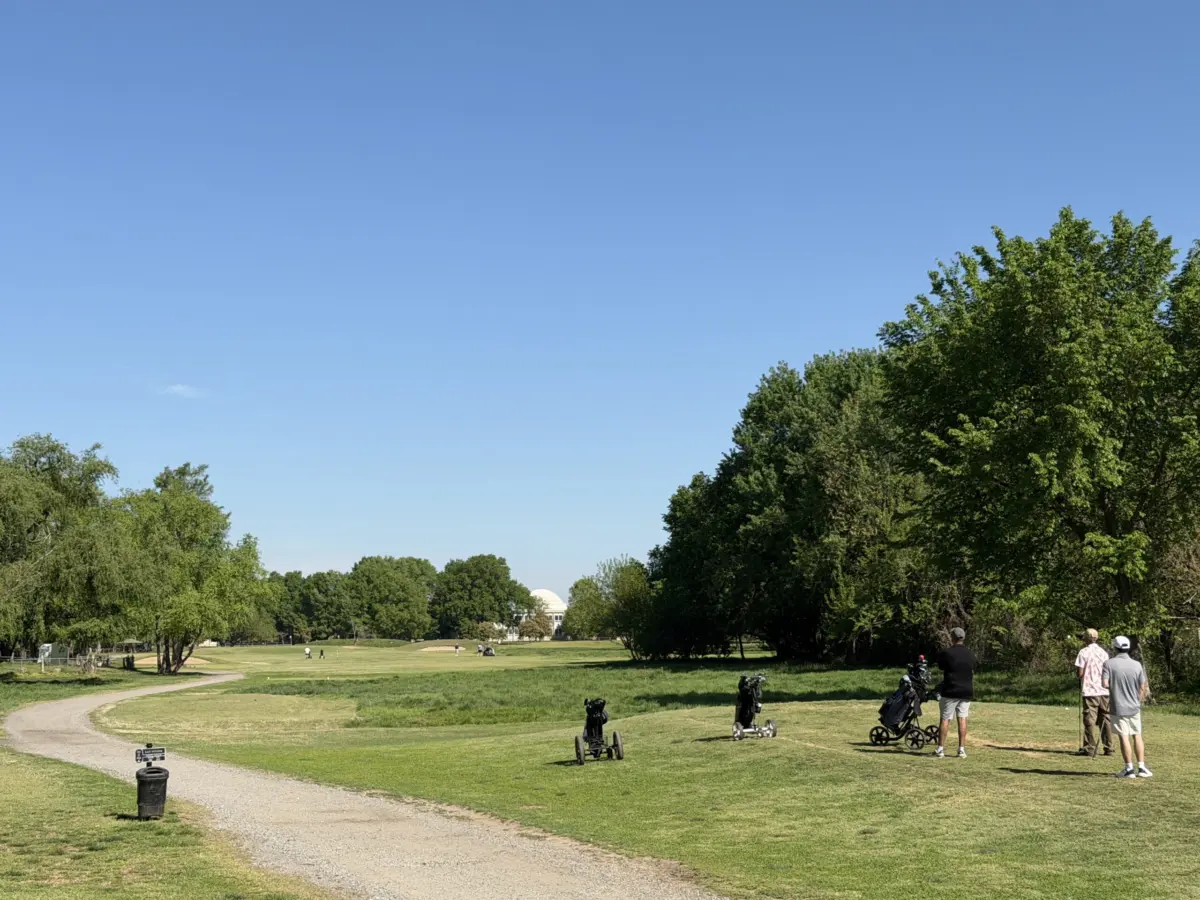
Similarly, East Potomac Golf Links has long operated as a masterclass in accessible recreation. Featuring three distinct courses spanning 36 holes, a comprehensive driving range, multiple practice areas, and a mini-golf course, the facility integrates seamlessly with the surrounding parkland. On any given weekend, the grounds teem not only with golfers but with cyclists, runners, and anglers, sharing a sprawling landscape that bleeds seamlessly into the recreational hubs of West Potomac Park.
The Cost of Privatization: Tax Dollars for the Elite
The financial architecture of the Trump administration’s proposed redevelopment reveals a glaring equity gap. Current green fees for an 18-hole round at Langston or East Potomac range between $34 and $48, depending on the day of the week—making the game genuinely accessible to working- and middle-class residents.
In stark contrast, green fees for PGA Tour-caliber or high-end resort courses typically start between $80 and $150, with premier destinations charging well over $1,000 per round. Looking at existing properties within the Trump portfolio offers a reliable predictive metric: green fees at the administration’s Los Angeles golf course range from $95 to $575 per round.
Using a conservative benchmark of $335 for a round at the proposed East Potomac course compared to the high-end municipal rate of $48, an average golfer would face a staggering 600% increase in green fees alone. This astronomical markup excludes ancillary costs such as mandatory cart rentals, premium merchandise, and membership fees. Furthermore, public disclosures indicate that the reconstruction of East Potomac could carry a price tag between $20 million and $49 million. In effect, public tax dollars are being mobilized to subsidize a luxury amenity that will price out the vast majority of District residents, trading a facility that serves thousands of DMV residents daily for one that will cater to a privileged few hundred.
Official Statements and Stakeholder Reactions
The federal government’s unilateral action regarding East Potomac Park has ignited fierce pushback from local officials, community leaders, and advocacy groups who view the takeover as an encroachment on District self-determination and public equity.
D.C. Mayor’s office and local city council members have repeatedly raised concerns regarding the federal government’s authority to unilaterally alter the recreational landscape of the District without meaningful public consultation. While federal lands in the capital fall under the purview of federal agencies like the National Park Service, local leaders have emphasized that the parks primarily serve the daily quality of life for Washingtonians, rather than acting as a personal canvas for federal administrations.
Spokespersons for the National Links Trust have expressed deep disappointment over the truncation of their long-term vision for East Potomac, while affirming their continued commitment to protecting access at Langston and Rock Creek. In public statements, NLT representatives have stressed that the core mission of municipal golf—fostering community health, environmental stewardship, and youth development—is fundamentally incompatible with exclusive, high-end commercial redevelopment.
Urban planning advocates and environmental organizations have similarly condemned the project. By replacing a flexible, multi-tiered recreational complex with a monolithic championship course, the administration is subverting sound urbanist principles. Rather than integrating the park into the urban fabric through enhanced public transit connectivity, bike-share expansions, and surrounding mixed-use upzoning, the federal plan threatens to wall off a vital public resource behind steep paywalls and exclusive club culture.
Future Outlook: Reimagining the Urban Green Space
As the dust settles on the initial lease negotiations, the ultimate fate of East Potomac Park hangs in a precarious balance. While NLT maintains temporary operational control, the shadow of the impending federal redevelopment looms heavy over the District’s recreational community.
The controversy surrounding East Potomac offers a critical lesson for cities across the nation grappling with the dual pressures of urban growth and open-space preservation. The false dichotomy that pits urbanism against golf must be dismantled. Golf courses do not inherently have to function as exclusive enclaves detached from the life of the city. When deliberately integrated into urban planning frameworks—paired with high-capacity public transit links, surrounded by accessible mixed-use zoning, and managed with an uncompromising commitment to affordability—municipal golf courses can serve as dynamic civic assets.
To achieve this vision, cities and federal land managers must champion organizations that prioritize community impact over profit margins. The preservation of courses like Langston and Rock Creek proves that sustainable, equitable municipal golf is entirely achievable. However, the hostile takeover of East Potomac serves as a sobering reminder of how quickly public goods can be co-opted by elite interests.
Ultimately, the greatest threat to the game of golf—and to the integrity of urban green spaces—is not public accessibility or diverse participation, but calculated exclusivity. As the District watches its waterfront landscape face transformation, the fight for East Potomac Park is about much more than a game of golf; it is a referendum on who truly owns the city, and who gets to enjoy its most precious natural resources.