








In the dark, pre-dawn hours of October 14, 2025, the stability of a routine fishing voyage off the rugged northwest coast of Scotland shattered abruptly. At approximately 02:38 local time, the commercial fishing vessel Silver Cloud II plowed at speed into a jagged perimeter of coastal rocks near the port village of Lochinver, Scotland. The catalyst for the disaster was painfully human, yet starkly systemic: the skipper of the vessel had fallen asleep while actively maintaining the navigational watch.
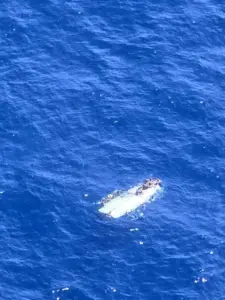
The immediate aftermath of the grounding tested the mettle and preparedness of the three-person crew. Thrust from sleep into a rapidly escalating maritime emergency, the crew successfully abandoned the stricken vessel, scrambling into survival craft as the hull breached and the sea poured in. Miraculously, all three mariners escaped without physical injury, later rescued from the freezing waters by emergency responders. However, the Silver Cloud II itself was not as fortunate. Subjected to the relentless pounding of the North Atlantic swell against the uncharted rocks, the vessel was ultimately declared a total constructive loss, slipping beneath the waves and leaving behind a slick of debris and a sobering reminder of the hazards inherent in commercial fisheries.
This incident has now been formally documented and analyzed by the Marine Accident Investigation Branch (MAIB) under Accident Investigation Report 17/2026. Yet, perhaps the most striking—and deeply troubling—element of the official report is not what it discovered, but what it omitted: no new safety recommendations were issued.

In a damning commentary on the state of safety compliance within the fishing sector, the MAIB concluded that issuing fresh recommendations would be futile. The contributing factors to the Silver Cloud II disaster—most notably, acute fatigue, single-person watchkeeping, and a systemic disregard for adequate rest cycles—are textbook repetitions of findings from decades of prior maritime investigations. The tragedy off the coast of Lochinver was not a novel maritime catastrophe born of unforeseen mechanical failure or rare environmental anomalies; it was a predictable, entirely preventable recurrence of an old, unhealed wound in the commercial fishing industry.
This investigative report examines the chronology of the disaster, explores the broader socioeconomic and physiological contexts driving maritime fatigue, analyzes the systemic policy failures highlighted by the MAIB, and assesses what the future holds for an industry seemingly trapped in a loop of recurring human-error tragedies.
Detailed Chronology: The Final Hours of the Silver Cloud II
To understand how the Silver Cloud II met its end, one must reconstruct the final, critical hours leading up to the grounding near Lochinver. While the official MAIB summary provides the skeleton of the event, maritime tracking data, standard operational protocols for the region, and survivor accounts paint a vivid picture of a voyage quietly slipping off course.
The Departure and Initial Passage
The voyage began under standard operating conditions for the vessel, which operated out of Scottish waters targeting regional fisheries. With a lean crew of three—comprising the skipper and two deckhands—the vessel’s operational overhead demanded continuous labor-sharing, leaving little room for redundant staffing.
In the days and hours leading up to October 14, the crew had been heavily engaged in fishing operations. The grueling physical demands of hauling gear, sorting catches, and processing fish on deck notoriously eat into mandatory rest periods. By the time the Silver Cloud II set a course that would bring it past the treacherous headlands near Lochinver, the accumulated sleep deficit across the bridge team had reached a critical threshold.
The Midnight Watch
As October 13 transitioned into October 14, standard maritime watchkeeping protocols dictated that a vigilant lookout be maintained to monitor coastal proximity, tidal vectors, and nearby maritime traffic. However, economic pressures and small crew sizes frequently force fishing skippers into the perilous trap of single-handed watchkeeping.
At around midnight, the skipper assumed the watch alone on the bridge. The hum of the engine, the monotonous glow of the instrument panels, and the comforting pitch and roll of the vessel combined to create an environment primed for sleep-onset. In maritime psychology, this is known as "microsleeps" evolving into full restorative sleep, wherein the brain overrides conscious intent due to severe homeostatic sleep debt.
The Impact at 02:38
As the Silver Cloud II steamed forward on autopilot or an uncorrected heading, it drifted imperceptibly off its safe track toward the rocky hazards fringing the Lochinver coastline. At 02:38, any pretense of navigation ended violently.
The vessel struck the rocks at full cruising speed. The sudden deceleration violently threw equipment across the wheelhouse and jolted the sleeping crew from their bunks. The impact tore open the forward hull plates, instantly compromising the vessel’s watertight integrity. Seawater rushed into the bilges and compartments faster than the pumps could manage, plunging the engine room into darkness and short-circuiting critical electrical systems.
Abandonment and Rescue
Realizing within seconds that the vessel was unsalvageable and actively breaking apart in the dark surf, the skipper sounded the alarm. The two deckhands, disoriented and jolted from deep exhaustion, rushed onto the deck.
Demonstrating commendable presence of mind under extreme duress, the crew executed their emergency abandonment procedures. They donned lifejackets, deployed survival equipment, and safely evacuated the vessel before it listed dangerously and slipped deeper into the rocks.
Emergency services, coordinated by Her Majesty’s Coastguard (now HM Coastguard), responded swiftly to the distress signal. Lifeboats and local craft converged on the coordinates, pulling the three cold, shaken, but physically uninjured crew members from the survival rafts. While the human cost was mercifully zero, the Silver Cloud II was left to the mercy of the elements, eventually breaking apart and sinking completely—a total loss for its owners and a stark testament to the speed with which fatigue can destroy a multimillion-pound enterprise.
Supporting Context & Metrics: The Shadow Epidemic of Maritime Fatigue
To view the loss of the Silver Cloud II as an isolated navigational error is to misunderstand the fundamental realities of modern commercial fishing. Maritime safety data compiled over the past three decades consistently reveals that fishing remains one of the most hazardous occupations globally, with fatigue acting as the invisible hand guiding many of its worst disasters.
The Physiology of Fatigue at Sea
Fatigue in the maritime industry is distinct from ordinary tiredness. It is a chronic, cumulative condition characterized by degradation of cognitive performance, delayed reaction times, tunnel vision, and involuntary microsleeps.
When a skipper operates on a single-person watch system, they carry the dual burden of heavy physical labor during daylight or operational hours and solitary navigational vigilance at night. The human circadian rhythm—our internal biological clock—naturally promotes sleep between the hours of 02:00 and 06:00. During this "window of circadian low," cognitive function plummets. When combined with severe sleep deprivation, the brain forces sleep upon the individual, regardless of their willpower or intention to stay awake. The skipper of the Silver Cloud II did not choose to fall asleep; biology simply claimed what was owed.

Economic Drivers and Small Crew Pressures
Why do professional mariners continue to place themselves and their vessels in such peril? The answer lies in the harsh economic realities of the modern fishing industry.
- Marginal Profit Margins: Fluctuating fish prices, rising fuel costs, and stringent quota limits mean that vessels must maximize their time at sea to remain economically viable. Every hour spent resting in port is viewed as an hour lost to potential revenue.
- Understaffing: To maximize the share of the catch distributed among crew members, vessels frequently sail with the bare minimum personnel required for operation. This structural understaffing eliminates the possibility of robust watch-rotation schedules (such as the traditional 4-on, 8-off or 6-on, 6-off models used on larger commercial ships).
- Regulatory Loopholes: While international conventions like the STCW (Standards of Training, Certification and Watchkeeping) and ILO Work in Fishing Convention (C188) set legal frameworks for rest hours, enforcement on smaller, independent fishing vessels remains notoriously difficult. Inspectors cannot be on every boat, and self-reporting of rest hours is frequently falsified to satisfy compliance audits.
MAIB Historical Trends
The Marine Accident Investigation Branch has repeatedly highlighted these exact themes in past reports. Investigations into groundings, collisions, and man-overboard incidents over the last twenty years feature hauntingly similar narratives:
- A vessel operating with a minimal crew.
- A skipper fatigued from continuous work routines.
- Solitary bridge watchkeeping during the early morning hours.
- An unintentional departure from course leading to catastrophic contact with land or another vessel.
The repetition of these exact causal chains is what ultimately drove the MAIB to take the extraordinary step of issuing zero new recommendations following the Lochinver disaster.
Official Statements and Regulatory Analysis
The decision by the MAIB to withhold recommendations in Report 17/2026 demands deep scrutiny. In the bureaucratic and safety lexicon of marine accident investigation, recommendations are the primary tools used to drive legislative change, alter equipment standards, or prompt behavioral reforms across an industry. When an investigative body explicitly chooses not to make recommendations, it sends a profound and chilling message.
The Rationale Behind "No Recommendations"
In the official text of Report 17/2026, the MAIB stated:
"In view of the repetition of findings from previous Marine Accident Investigation Branch investigations, no recommendations have been made."
This phrasing is diplomatic language for systemic exhaustion and regulatory exasperation. The MAIB has investigated this scenario dozens of times. It has previously recommended improved fatigue management education, mandatory dual-man watchkeeping on vessels of a certain size, adoption of bridge watch alarms (Bridge Navigational Watch Alarm Systems – BNWAS), and stricter enforcement of rest hours.
The industry—and the regulatory bodies overseeing it—are already fully aware of what causes these accidents and what tools are required to prevent them. Issuing a new recommendation would simply reiterate what has already been stated in past reports, gathering digital dust in government archives without altering the lived reality on commercial decks.
Industry Reactions
The reaction from fishing federations, safety advocates, and labor representatives has been a mixture of defensive resignation and grim acknowledgement.
- Safety Advocates: Organizations dedicated to fisher safety argue that the MAIB’s stance underscores a systemic failure of political and regulatory will. Critics point out that while commercial aviation has implemented stringent, technologically enforced safety management systems regarding pilot fatigue (such as mandatory flight time limitations and automated monitoring), the fishing sector remains largely trapped in a 19th-century regulatory mindset where traditional autonomy supersedes modern safety science.
- Skipper and Owner Associations: Conversely, representatives for vessel owners frequently point out the economic impossibility of increasing crew sizes under current market pressures. They argue that mandates requiring larger crews or expensive technological overhauls without financial subsidization will simply drive remaining independent fishermen out of business, killing coastal communities that depend entirely on the fishing trade.
The Role of Technology: BNWAS and Beyond
One of the most persistent debates in the wake of watchkeeping-fatigue accidents is the mandatory adoption of Bridge Navigational Watch Alarm Systems (BNWAS). A BNWAS is designed to monitor bridge activity and detect operator disability—such as falling asleep or becoming incapacitated.
The system monitors the bridge via motion sensors or push-buttons. If the watchkeeper fails to press a reset button at predetermined intervals (usually every 3 to 12 minutes), a visual alarm is triggered on the bridge. If that goes unacknowledged, the alarm escalates audibly to other parts of the vessel, alerting other crew members that the watchkeeper has lapsed.
While BNWAS is mandatory on larger commercial ships under SOLAS (Safety of Life at Sea) regulations, its implementation across smaller fishing vessels—particularly older tonnage like the Silver Cloud II—remains patchy, voluntary, or entirely absent due to cost and exemption thresholds. Had a functioning BNWAS been installed and operational on the Silver Cloud II, the escalating alarms would likely have broken the skipper’s microsleep cycle or alerted the resting crew members before the vessel struck the rocks. Yet, regulators have historically been hesitant to force expensive retrofits onto economically fragile small-scale fisheries without comprehensive financial backing.
Future Outlook: Breaking the Cycle of Preventable Disasters
The loss of the Silver Cloud II and the sobering findings of MAIB Report 17/2026 force a hard question upon the maritime community: How many times must the same tragedy repeat before the industry fundamentally transforms?
The Limits of Advisory Safety
For decades, maritime safety policy has relied heavily on a philosophy of "advisory enlightenment"—the belief that if you educate fishermen about the dangers of fatigue, provide them with safety leaflets, and encourage better planning, behavior will naturally change.
The record proves this philosophy has failed. Fatigue is not merely a bad habit; it is a systemic product of economic survival in a high-risk, low-margin industry. Telling an exhausted skipper to "get more sleep" while demanding that he work twenty-hour days to service debt and make a living is an exercise in futility. Until safety policies address the economic and structural drivers of overwork, fatigue-related groundings will continue to occur with clockwork regularity.
Pathways to Reform
If genuine progress is to be made in preventing future Silver Cloud II disasters, several radical shifts in policy, technology, and culture must occur:
- Mandatory Technological Safeguards:
Regulators must stop treating safety alarms as optional extras for small vessels. The subsidization and mandatory retrofitting of Bridge Navigational Watch Alarm Systems (BNWAS) across all commercial fishing vessels, regardless of size, must become a non-negotiable prerequisite for licensing. If a skipper falls asleep, the vessel itself must wake them—or wake the crew. - Shift Toward Just Culture and Blameless Reporting:
Often, skippers conceal their fatigue or push through exhaustion out of fear of regulatory penalties, port state detentions, or loss of license. A genuine "just culture" framework must be established, allowing mariners to report exhaustion, halt operations, and seek rest without facing economic ruin or punitive state action. - Economic Restructuring and Quota Flexibility:
Environmental and fisheries management agencies must recognize that rigid, short-term fishing windows and restrictive quotas create dangerous "derby fishery" dynamics, where fishermen are pressured to work continuously regardless of weather, time, or fatigue levels. Flexible management schemes that decouple catch limits from frantic, round-the-clock harvesting would relieve immense psychological and physical pressure on crews. - Cultural Shift within the Fleet:
Ultimately, the old-school maritime machismo that glorifies sleep deprivation—the badge of honor associated with working until exhaustion—must be systematically dismantled. Training academies and veteran skippers must actively mentor the next generation of fishers to view fatigue management not as a sign of weakness, but as a core seamanship competency just as vital as engine maintenance or chart reading.
Conclusion
The Silver Cloud II sits broken and silent on the seabed near Lochinver, a physical monument to a well-documented hazard. Its crew returned home safely—a fortunate exception in an industry where maritime accidents frequently extract a fatal human toll. But fortune is not a safety policy.
By refusing to issue new recommendations in Report 17/2026, the MAIB has thrown the ball back into the court of industry leaders, legislators, and regulators. The causes of the disaster are known; the solutions are available. What remains to be seen is whether the commercial fishing sector possesses the collective will to break a cycle of tragedy that has endured for generations, or whether it will simply wait for the next tired skipper to drift toward the rocks.