




Executive Overview
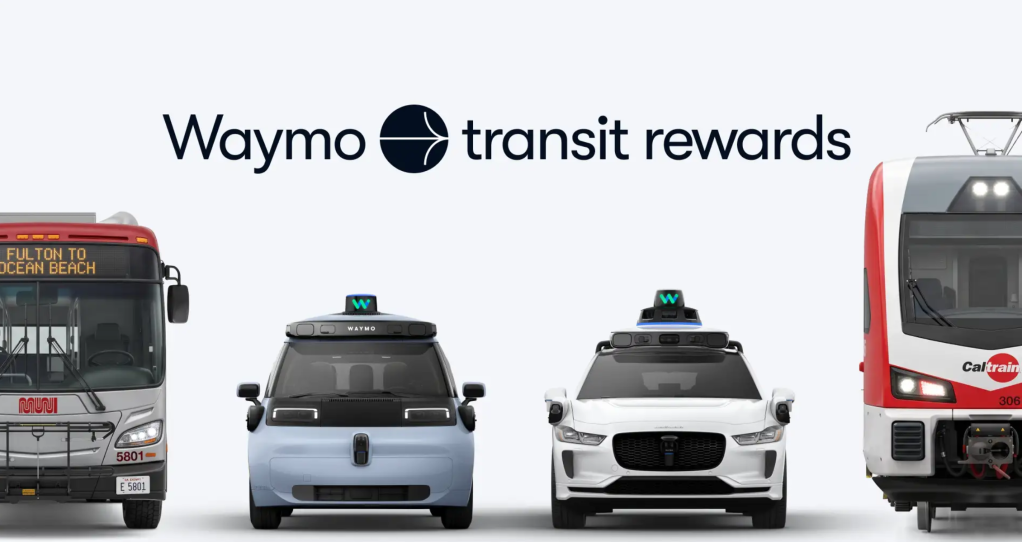
Autonomous vehicle (AV) titan Waymo LLC has officially planted its flag firmly in the territory of public transit, introducing a pioneering "Transit Rewards" initiative across the San Francisco Bay Area. Designed to bridge the historical divide between private micro-mobility solutions and public infrastructure, the program incentivizes multimodal travel by offering financial kickbacks to riders who seamlessly combine Waymo’s ubiquitous robotaxis with regional public transit networks.
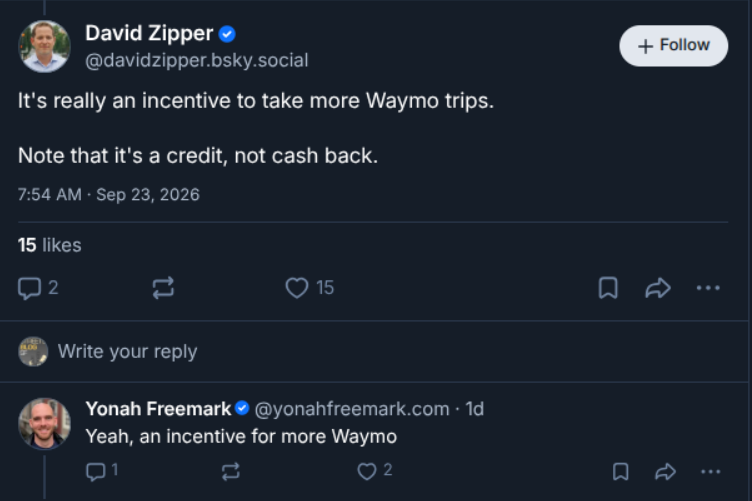
Under the mechanics of the newly minted pilot, users who link an eligible Visa card to the Waymo application and utilize both a Waymo vehicle and a public transit option within a strict two-hour window will automatically receive $2.85 in "Waymo Cash"—the exact equivalent of a standard San Francisco bus fare. Simultaneously, Waymo has solidified a strategic infrastructure play with Caltrain, leasing 40 dedicated station parking stalls to stage its autonomous fleet for incoming commuters.
While municipal stakeholders and transit agency representatives have cautiously welcomed the overture as an innovative approach to solving the perennial "first-mile/last-mile" dilemma, the rollout has triggered intense pushback from regional transit advocates, urban planners, and active transportation groups. Critics argue that the program is little more than a sophisticated public relations maneuver. They contend it is designed to grant local politicians a convenient "permission structure" to underfund public infrastructure while cementing the presence of single-occupant motor vehicles on crowded urban thoroughfares.
This deep-dive investigation explores the mechanics of Waymo’s transit integration, evaluates the dueling perspectives of city agencies and grassroots advocates, and examines what this uneasy marriage of autonomous technology and public infrastructure means for the future of urban mobility.
Detailed Chronology: How the Program Works and the Caltrain Partnership
The rollout of Waymo’s Transit Rewards program represents a calculated evolution in how autonomous vehicle companies market themselves to municipal regulators and everyday commuters. For years, critics have categorized robotaxis and rideshare operations as parasitic elements of the transportation ecosystem—services that siphon riders away from high-capacity mass transit while exacerbating downtown street congestion. By introducing a direct financial tether to public transit, Waymo is attempting to reframe its service as a complementary teammate rather than a disruptive competitor.
The Mechanics of the Transit Rewards Pilot
Participation in the program requires a deliberate, digitally tethered workflow:

- Card Linking: Users must register and link a designated Visa card within the native Waymo smartphone application.
- Multimodal Execution: Riders must complete a trip using an autonomous Waymo vehicle and a regional public transit service within a maximum window of two hours.
- Automated Recompense: Upon verification of the linked-card transactions, Waymo automatically credits the user’s account with $2.85 in Waymo Cash.
The initiative applies across all 27 transit agencies spanning the wider San Francisco Bay Area that accept direct, contactless tap-to-pay infrastructure—a massive regional footprint that encompasses everything from municipal bus lines to heavy rail. Furthermore, company executives have signaled that this Bay Area pilot is merely a testing ground, with clear intentions to export similar discount structures to other major metropolitan markets where Waymo currently operates commercial robotaxi fleets.
The Caltrain Infrastructure Play
Beyond digital incentives, Waymo is making physical inroads into the Bay Area’s heavy rail network. Alongside the transit rewards announcement, the company confirmed a landmark partnership with Caltrain.
Under this agreement, Waymo has secured the lease for 40 dedicated parking stalls across Caltrain stations. These spaces will be utilized to stage idle autonomous vehicles, positioning them directly adjacent to commuter rail platforms. The goal is to provide arriving passengers with an instantaneous, friction-free transition from regional rail to a private, door-to-door autonomous ride.
Waymo hopes this operational model will serve as a blueprint that can be rapidly replicated with additional transit authorities up and down the West Coast and beyond, embedding its fleet directly into the transit architecture of modern cities.
Supporting Context & Metrics: The Friction of "Car-Free" Corridors and Last-Mile Realities
To understand why Waymo’s transit integration has provoked such a polarized response, one must examine the recent history of autonomous vehicle deployment in San Francisco—particularly along the city’s most fiercely protected civic corridors.
The Market Street Precedent
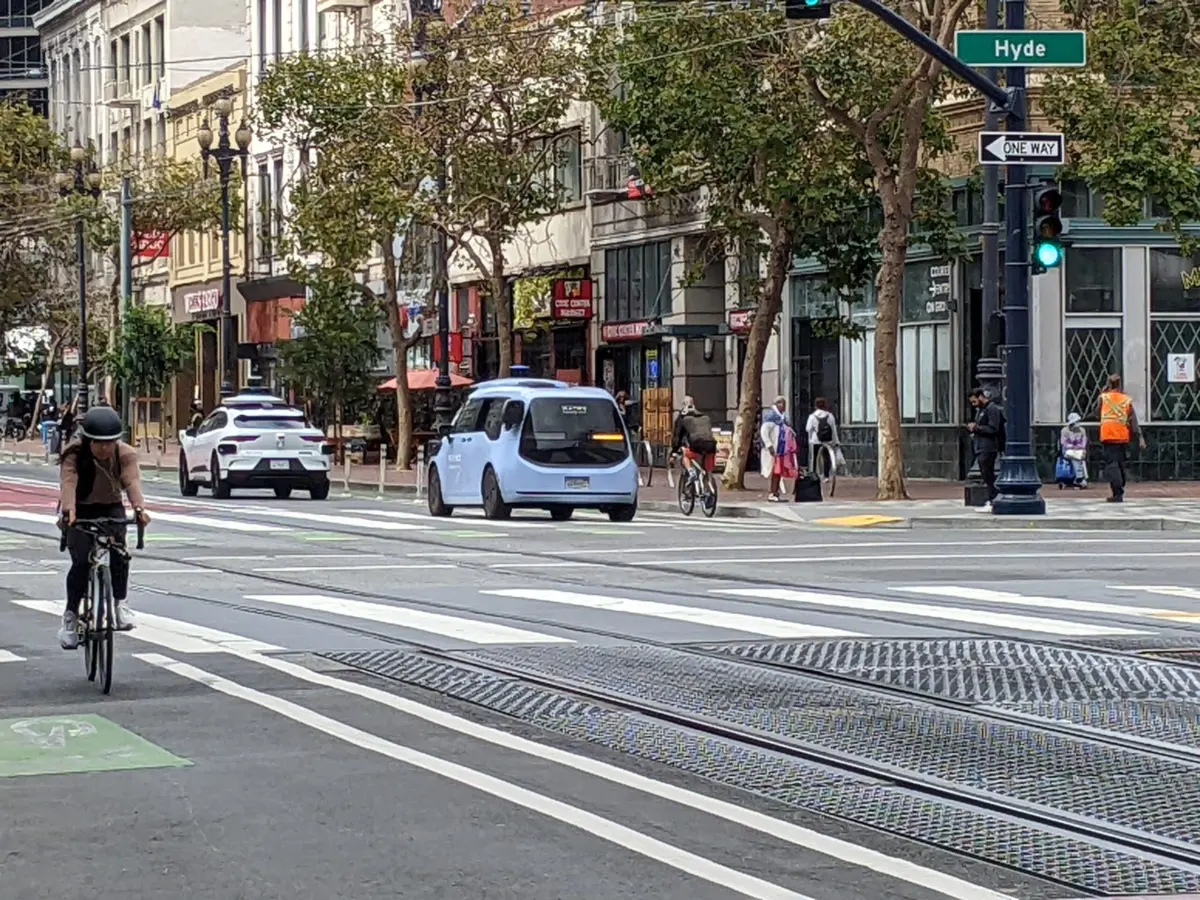
In late 2025, Waymo successfully lobbied municipal leaders—including newly elected Mayor Daniel Lurie—to permit its robotaxis to operate along Market Street, San Francisco’s primary civic and commercial artery. Historically designated as a "car-free" zone meant exclusively for pedestrians, cyclists, and high-capacity public transit (such as the Muni Subway, BART, and various streetcar and bus lines), the introduction of commercial robotaxis sparked widespread outrage.
Cycling and transit advocates immediately raised alarms. Their core argument remains mathematically and operationally sound: introducing thousands of additional vehicles, autonomous or otherwise, onto a corridor specifically engineered to prioritize mass transit invariably introduces friction. Even the most advanced AI struggles with unpredictable human behavior, double-parking, and emergency maneuvers, leading to micro-delays that cascade through fixed-route bus and streetcar systems. Furthermore, transit watchdogs point to documented incidents of Waymo vehicles malfunctioning, blocking critical light-rail tracks (such as the N Judah on Duboce Avenue), or becoming ensnared in group cycling events, directly threatening vulnerable road users.
The Economics of the "Last Mile"
Proponents of ride-hail and autonomous integration frequently champion the concept of the "last-mile problem." In sprawling suburban or lower-density urban environments, getting from a regional transit hub to a final destination can involve tedious multi-transfer bus trips or lengthy walks.
Urban planners acknowledge that in specific contexts, on-demand vehicles can serve as a vital safety net. Adina Levin of the advocacy group Seamless Bay Area highlighted a common scenario: “Outside central cities where transit is less frequent and has shorter hours, even people who rely on transit sometimes benefit from ride-hail services… The other day I took BART to Oakland and realized that I had gone to the wrong station and the bus would not get to my destination in time. I took an Uber for the last two miles.”
However, advocates like Levin emphasize that treating robotaxis as a baseline substitute for robust public infrastructure is fundamentally flawed. When viewed through the lens of a "transportation food pyramid," active transit, walking, biking, and high-capacity mass transit must form the dense, affordable foundation of a sustainable city. Ride-hail and autonomous vehicles, by contrast, should occupy a high-cost, specialized tier reserved for exceptional circumstances—not everyday commuting.
Official Statements: Public Agencies vs. Grassroots Resistance
The divide between institutional municipal bodies and grassroots transportation advocates is starkly visible in their official responses to the Waymo-Caltrain partnership and the Transit Rewards launch.
Municipal Stakeholders: Cautious Optimism
Public agencies, desperate for post-pandemic ridership recovery and grappling with structural budget deficits, are understandably intrigued by any initiative that encourages multimodal travel.
- Caltrain Perspective: Dan Lieberman, spokesperson for Caltrain, adopted a pragmatic stance regarding the infrastructure lease. "During the pilot, we will evaluate any improved connections to and from the stations," Lieberman stated, emphasizing that the transit agency is primarily interested in testing whether staged vehicles genuinely ease the logistical friction for rail commuters.
- SFMTA Perspective: Michael Roccaforte, spokesperson for the San Francisco Municipal Transportation Agency (SFMTA), expressed general support for programs that boost overall transit engagement. "We welcome efforts that encourage transit use and make it easier for people to choose Muni as part of their everyday trips," Roccaforte noted, highlighting the agency’s ongoing push to integrate various mobility options into the urban fabric.
Grassroots Advocates: Deep Skepticism and Warnings
Conversely, transit advocates view these institutional endorsements as dangerously naive, arguing that public agencies are being leveraged to legitimize corporate encroachment on public space.
- The Political "Permission Structure": San Francisco transit advocate Cyrus Hall articulated a scathing critique of Waymo’s true motivations on social media. "I suspect one of Waymo’s goals here is to create a permission structure for local politicians, one in which they can feel justified when they decide to not do the hard work to improve their local public transit agencies," Hall wrote. "Look! We’re part of the transit system!"
- The Equity Gap: Hall also underscored the glaring economic disparity inherent in the program. While a $2.85 discount is a welcome perk, the underlying economics of autonomous travel remain wildly inaccessible for working-class commuters. "Make no mistake, this is a nice benefit if you’re wealthy enough to regularly use Waymo," Hall argued. "But spending ~$15-20 per ride twice a day to get to Caltrain is not affordable or sustainable transportation for everyone, $2.85 discount or not."
- Induced Demand and Congestion: Luke Bornheimer of Streets Forward emphasized the well-documented sociological and traffic data surrounding private ride-hail services. "Robot cars and ride-hail pull people away from public transportation in addition to increasing car trips," Bornheimer warned, pointing to numerous peer-reviewed transportation studies confirming that rideshare proliferation correlates directly with increased urban congestion and declining bus speeds.
Future Outlook: Where Do Autonomous Vehicles Fit in the Urban Ecosystem?
As Waymo expands its Transit Rewards pilot across the 27 participating Bay Area counties and evaluates its staged-parking partnership with Caltrain, the broader urban planning community faces a critical inflection point.
The core tension moving forward is not whether autonomous technology can function safely—though safety and regulatory oversight remain perennial flashpoints—but rather whose cities are we building?
If municipal leaders allow private AV operators to subsidize short trips while starving public bus and rail lines of capital investment, cities risk sliding into a two-tiered mobility future. In this scenario, affluent citizens enjoy the comfort of private, air-conditioned autonomous pods subsidized by corporate "rewards" programs, while the broader working-class public contends with slower, underfunded, and congested public transit lines forced to share street space with robotaxis.
Conversely, if cities maintain strict regulatory control, prioritize high-capacity transit corridors, and force autonomous fleet operators to genuinely complement—rather than cannibalize—public infrastructure, a harmonious multimodal future remains possible.
For now, the Bay Area serves as the primary global laboratory for this high-stakes experiment. As the data from the Waymo-Caltrain pilot trickles in over the coming months, urban planners, politicians, and everyday commuters will be watching closely to see whether "Transit Rewards" is a genuine bridge to a sustainable transit future, or merely a velvet glove concealing the iron fist of corporate car culture.