





Executive Overview
In the dynamic and high-capacity world of modern commercial cruising, inventory management is a delicate science. Cruise lines typically aim to maximize passenger volume, frequently targeting 100% occupancy or higher through triple- and quadruple-occupancy stateroom configurations. However, when demand forecasting overshoots reality—or when operational adjustments require sudden capacity reductions—cruise operators must turn to creative incentives to recalibrate their passenger manifests.
Royal Caribbean International has once again captured the attention of the travel industry by issuing an extraordinarily generous, albeit unexpected, solicitation to select guests booked on the upcoming September 27, 2026, voyage of the Allure of the Seas. Travelers holding reservations for this six-night Western Caribbean itinerary out of Fort Lauderdale, Florida, have received correspondence offering what can only be described as a "free cruise" package: a 100% refund of their cruise fare coupled with an identical replacement sailing two weeks later, or an unconditional full refund paired with a matching Future Cruise Credit (FCC).
While the cruise line has stopped short of publicly attributing these measures to an overbooked ship, industry insiders and seasoned cruisers immediately recognize the fingerprints of inventory mitigation. Overbooking is a standard practice across the travel and hospitality sectors—airlines, hotels, and cruise lines alike sell slightly more inventory than physically available to account for anticipated last-minute cancellations. Occasionally, however, fewer guests cancel than projected, leaving cruise operators scrambling to free up valuable staterooms.
This comprehensive report explores the mechanics of Royal Caribbean’s latest compensation offer, details the specific logistics of the Allure of the Seas voyage, analyzes the broader trend of overbooking across the cruise line’s fleet, and weighs the hidden logistical complexities that cause some travelers to pass up an ostensibly "free" vacation.
Detailed Chronology and Itinerary Breakdown
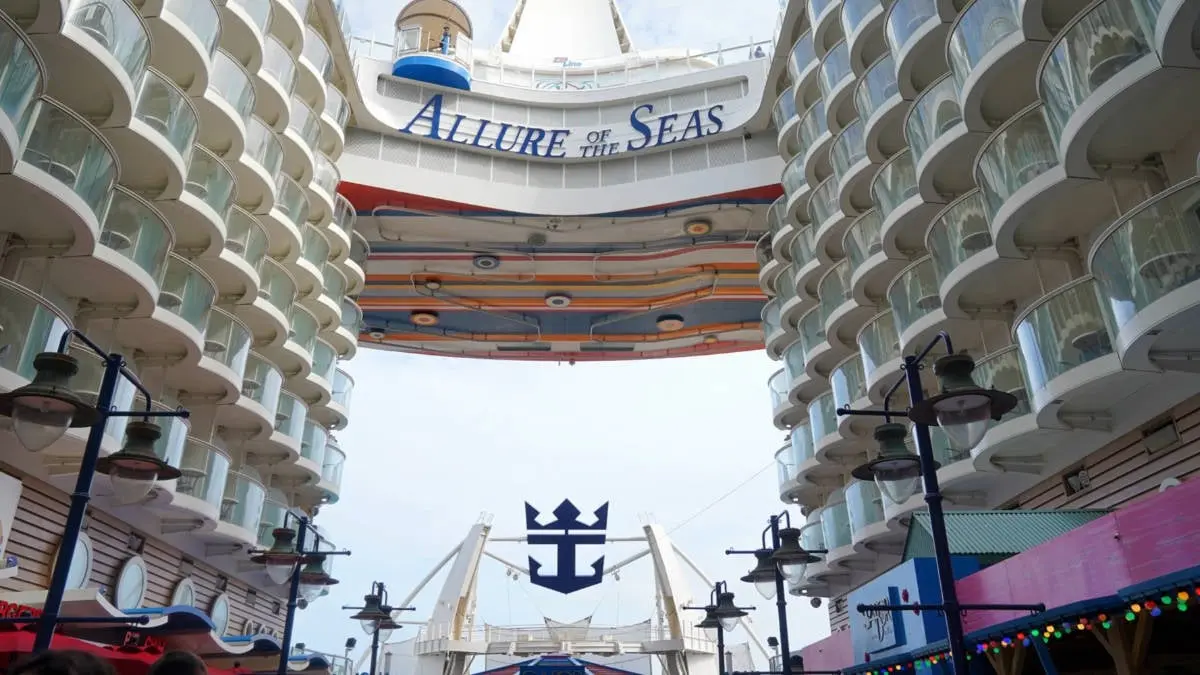
The focal point of this unfolding inventory management strategy is Royal Caribbean’s Allure of the Seas, an illustrious member of the colossal Oasis-class fleet. Capable of accommodating up to 5,718 guests at double occupancy (and well over 6,000 when maxed out), the ship represents a massive logistical footprint for any port or itinerary.
The Affected Voyage: September 27, 2026
The cruise at the center of the compensation offers is scheduled to depart on Sunday, September 27, 2026. Setting sail from Port Everglades in Fort Lauderdale, Florida, the six-night Western Caribbean itinerary is designed with a classic, high-demand port lineup:
- Day 1: Embarkation at Port Everglades, Fort Lauderdale, Florida.
- Day 2: A day at sea to allow guests to experience the vast amenities of the Oasis-class vessel.
- Day 3: A full-day stop at Royal Caribbean’s immensely popular private island destination, Perfect Day at CocoCay, located in the Bahamas.
- Day 4: A cultural port visit to Falmouth, Jamaica.
- Day 5: A stop in Nassau, Bahamas.
- Day 6: A day at sea.
- Day 7 (Saturday, October 3): Disembarkation back at Port Everglades, Fort Lauderdale, Florida.
The Replacement Voyage: October 11, 2026
For guests flexible enough to accept the cruise line’s primary mitigation proposal, the alternative voyage is a mirror image of the original. The replacement sailing is booked aboard the very same ship—Allure of the Seas—and departs exactly two weeks later on Sunday, October 11, 2026.
Crucially, the itinerary is carbon-copied down to the exact sequence of port calls, arrival times, and departure schedules. For a traveler concerned about missing out on a specific vacation experience, this structural parity represents a seamless transition. The only temporal shift is the two-week delay in departure, moving the vacation window into mid-October 2026.
The Offer Structure: Breaking Down the Compensation Package
Royal Caribbean’s outreach emails, described by recipients as outlining "pretty sweet" alternatives, give eligible guests two primary paths forward if they choose to surrender their original booking slots. Both paths are financially engineered to make voluntary displacement exceptionally attractive.
Option 1: The Two-Week Shift (The Mirror Sailing)
Under the first proposal, guests agree to move their vacation from the September 27 departure to the October 11 departure. The structural incentives attached to this option include:
- Full Cruise Fare Refund: Guests receive a 100% refund of the cruise fare paid for the original September 27 sailing, processed back to their original form of payment.
- Stateroom Continuity: Royal Caribbean waives all transfer fees and guarantees that the new reservation will be placed in a stateroom category equivalent to the original booking.
- Travel Expense Reimbursement: Recognizing that displaced travelers may have already locked in non-refundable airline tickets, pre-paid hotel stays, or rental cars, the cruise line agrees to reimburse these out-of-pocket expenses upon submission of valid receipts.
- The Catch on Add-ons: While the base cruise fare is refunded and the new cruise is essentially secured on the house, guests remain responsible for applicable taxes, port fees, and pre-purchased onboard amenities. Furthermore, add-on packages such as specialty dining, spa appointments, and beverage plans must be re-purchased or transferred to align with the new dates.
When synthesized, Option 1 effectively delivers a free cruise. The traveler receives all their money back for the initial booking, has their travel disruption costs covered, and steps onto an identical ship for an identical itinerary two weeks later without paying an additional baseline cruise fare.
Option 2: Full Cancellation and Future Cruise Credit (FCC)
For guests who cannot simply slide their vacation window two weeks to the right, Royal Caribbean provides a secondary exit strategy:
- Complete Financial Reimbursement: A 100% refund of all funds paid toward the voyage, including non-refundable deposits that are normally locked down under standard cancellation penalty schedules.
- 100% Future Cruise Credit (FCC): In addition to getting every dollar back, guests receive a Future Cruise Credit equal to 100% of the cruise fare they paid.
- Fleet-Wide Flexibility: Unlike Option 1—which locks the traveler into a specific replacement sailing on the same ship—the FCC can be applied toward any booking across the entire Royal Caribbean International fleet, allowing guests to choose a different ship, destination, or time of year entirely.
- Travel Expense Coverage: Similar to the first option, verifiable non-refundable travel expenses incurred due to the change are eligible for reimbursement.
This second tier functions as a powerful incentive for travelers who decide that modifying their schedule is entirely unfeasible, transforming an unwanted itinerary disruption into a substantial financial windfall for a future vacation.
Supporting Context & Fleet-Wide Metrics
While Royal Caribbean’s corporate communications typically omit the explicit operational rationale behind these mass solicitations, travel industry analysts and regular cruisers recognize this as a textbook overbooking recovery protocol.
The Economics of Cruise Overbooking
Cruise lines operate under tight margins where empty berths represent unrecoverable perishable inventory. Once a ship leaves port, an empty cabin generates zero auxiliary revenue (such as casino play, spa treatments, shore excursions, or alcohol sales). Consequently, revenue management departments routinely oversell staterooms by a calculated percentage, betting that a predictable number of guests will cancel due to medical emergencies, professional conflicts, or personal reasons prior to final payment and sail dates.
However, predictive algorithms are not infallible. When cancellation rates dip below statistical expectations—often driven by high consumer confidence, attractive promotional pricing, or pent-up demand for specific ship classes—lines find themselves with more confirmed bodies than physical fire-safety capacities or life-raft allocations will allow.
A Growing Trend Across the Fleet
This incident involving Allure of the Seas is part of a broader pattern observed across Royal Caribbean’s roster in recent seasons:
- Utopia of the Seas (September 4, 2026): Cruise Hive previously reported on parallel efforts where guests booked on this Oasis-class newcomer were solicited with stateroom upgrade incentives and refund packages to alter their travel schedules.
- Voyager of the Seas (September 4, 2026): Similarly, passengers booked on an Alaska-bound itinerary aboard Voyager of the Seas received proactive outreach featuring free transfers, full financial restitution, and targeted onboard credits to smooth over voluntary reassignments.
These recurring notifications underscore how aggressively Royal Caribbean manages its passenger counts, utilizing proactive financial levers well in advance of embarkation day rather than facing chaotic denied-boarding scenarios at the cruise terminal.
The Human Element: Why Some Guests Say "No Thanks"
Despite the undeniable allure of a "free cruise" or a complete refund paired with a matching credit, not every recipient greets these emails with enthusiasm. A deep dive into cruising forums, social media travel groups, and passenger commentary reveals several compelling reasons why many travelers choose to ignore the corporate outreach and stick to their original plans.
1. Lack of Guarantee and Time-Sensitive Uncertainty
One of the most prominent friction points is that expressing interest in the offer does not guarantee acceptance. Royal Caribbean typically evaluates the volume of responses before greenlighting specific shifts. As one community member noted on a prominent Facebook travel group:
"I got it too, but I’m disregarding it & still going for the original date as it states it’s not guaranteed."
Furthermore, travelers are often required to make swift decisions without knowing definitively whether their slot will be selected for reallocation, creating an uncomfortable limbo period right up until the final confirmation window closes.
2. Logistical Inertia and Rigid Schedules
For the average working professional, orchestrating a vacation is an exercise in complex macro-scheduling. Securing approved paid time off (PTO) months in advance requires navigating corporate approval chains, coverage plans, and team calendars. As another passenger highlighted:
"I did get the offer and it sounds pretty amazing, but everybody’s ready to go at this point and not finding out until tomorrow would be an issue."
Shifting travel dates by two weeks at the eleventh hour can shatter carefully constructed domestic infrastructure. Beyond employment leave, travelers must contend with:
- Pet Care: Boarding facilities and pet sitters booked months ahead of time often lack availability on short notice.
- Family Coordination: Aligning schedules with extended family members or travel companions who may not have flexible work arrangements.
- Pre-arranged Travel: Even though Royal Caribbean promises reimbursement for non-refundable flights, the administrative burden of canceling, filing claims, and rebooking airline itineraries can deter time-strapped travelers.
3. Special Occasions and Group Dynamics
Cruises are frequently chosen as the celebratory vessel for milestone life events—weddings, anniversaries, milestone birthdays, and family reunions. When a party of ten or twenty people has synchronized their calendars for a specific week, a segmented offer that only targets certain booking numbers within the group can fracture the entire vacation plan. A couple celebrating their 25th wedding anniversary on September 27 is unlikely to abandon their meticulously planned milestone for an administrative puzzle two weeks later.
Future Outlook: Managing Capacity in an Era of High Demand
As the global cruise industry continues its robust post-pandemic expansion, operators like Royal Caribbean face the enviable challenge of sustained high demand colliding with finite physical assets. The deployment of massive vessels like the Oasis-class Allure of the Seas means that minor forecasting errors in passenger yield management translate into thousands of impacted guests.
Moving forward, cruise enthusiasts can expect proactive compensation emails to become a standard tool in the modern revenue management arsenal. Rather than waiting until embarkation morning—where terminal rejections create severe customer service friction and public relations liabilities—lines will increasingly lean toward lucrative voluntary incentives.
For the flexible traveler with an adaptable schedule, these overbooking scenarios represent an unprecedented financial arbitrage opportunity: a chance to secure a fully funded vacation, explore new itineraries, or bank valuable future credits simply by exercising a little patience. However, for the rigidity of modern working life and milestone planning, they serve as a reminder that in the high-stakes world of mega-ship cruising, flexibility remains the ultimate luxury.