








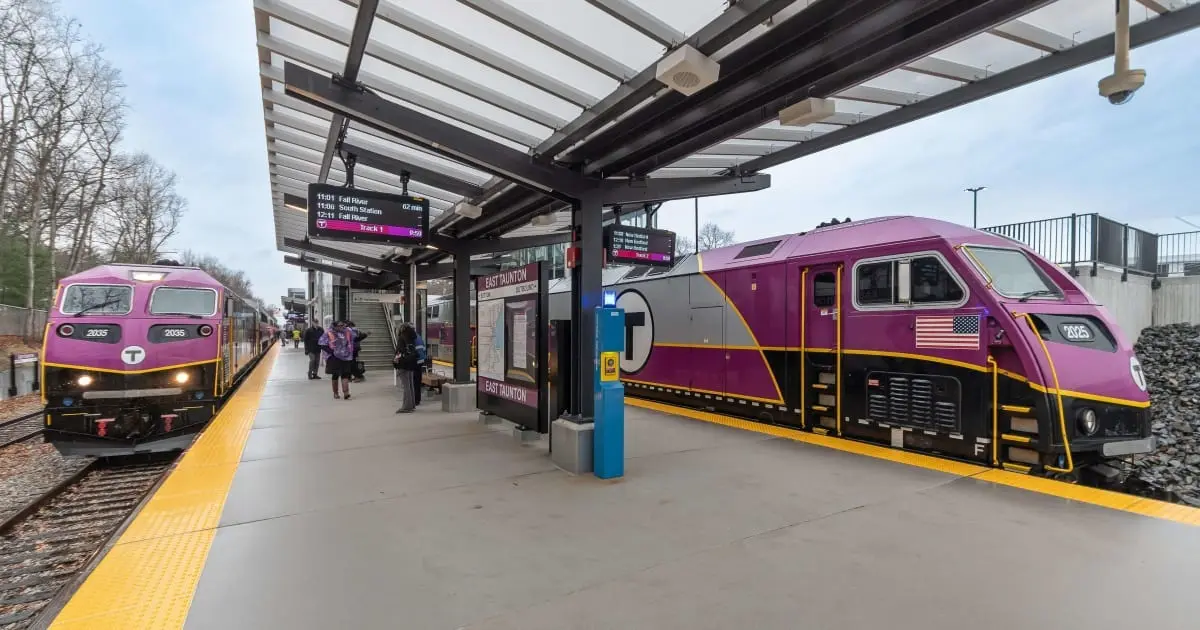
BOSTON — In a major milestone for New England’s largest public transit network, Massachusetts Governor Maura Healey announced today that the Federal Transit Administration (FTA) has officially concluded its exhaustive, years-long review of the Department of Public Utilities’ (DPU) safety oversight concerning the Massachusetts Bay Transportation Authority (MBTA).
The formal closure of this federal oversight process marks the definitive return of direct regulatory control over the MBTA’s safety equipment, operational protocols, and management frameworks back to the Commonwealth of Massachusetts. This decision caps an intensive era of administrative reform, massive capital influxes, and cultural transformation within an agency that, just a few short years ago, was deemed by federal regulators to be in a state of critical distress.
The announcement represents a profound vindication for the Healey-Driscoll administration, state legislators, and the transit agency’s current leadership team. It demonstrates that targeted state interventions, expanded regulatory staffing, and unwavering financial backing can successfully rescue a faltering public infrastructure asset from the brink of federal takeover.
Executive Overview: A Watershed Moment for Massachusetts Transit
The closure of the FTA’s review process signifies far more than a mere bureaucratic housekeeping measure; it represents the successful completion of a grueling, multi-year turnaround effort that tested the resilience of the Commonwealth’s public transit framework.
In 2022, the MBTA and its state-level regulator found themselves under an unprecedented national microscope. Following a harrowing string of high-profile derailments, fires, passenger injuries, and regulatory failures under the prior gubernatorial administration, the federal government stepped in. The FTA exercised its emergency powers, issuing a series of binding special directives that stripped away the illusion of adequate local oversight and placed both the MBTA and the DPU’s Rail Transit Safety Division under strict, punitive federal tutelage.
Today, the landscape is unrecognizably altered. With the FTA’s issuance of a formal clearance letter, the DPU has reasserted its role as a fully empowered, independent State Safety Oversight (SSO) agency. The MBTA, meanwhile, operates under a restored culture of safety compliance, having addressed virtually all of the corrective action plans (CAPs) mandated by federal overseers.
While state officials are quick to emphasize that systemic improvements remain an ongoing, daily necessity rather than a destination achieved, this moment allows the Commonwealth to proudly turn the page on one of the most turbulent chapters in the modern history of American public transportation.
Detailed Chronology: From 2022 Crisis to 2026 Federal Vindication
To fully understand the weight of the FTA’s decision, it is necessary to examine the precise historical trajectory that brought the MBTA and the DPU to this juncture. The timeline of this transformation is characterized by systemic federal intervention, aggressive structural overhauls, and a relentless push toward regulatory maturity.
The 2022 Safety Crisis and Federal Intervention
The catalyst for the federal intervention occurred during the spring and summer of 2022. A series of horrifying safety breakdowns—culminating in a catastrophic incident on the Orange Line where a dragging equipment failure resulted in a passenger fatality and multiple injuries—compelled the FTA to launch an unprecedented, comprehensive Safety Management Inspection (SMI) of the MBTA.
The findings of the SMI were scathing. The federal probe revealed an agency crippled by a chronic lack of investment, severe understaffing across all operational and maintenance departments, widespread fatigue among overworked personnel, and an alarming disconnect between executive management and frontline workers regarding basic safety protocols.
Crucially, the FTA turned its critical eye toward the state-level regulator: the Department of Public Utilities’ Rail Transit Safety Division. The federal assessment concluded that the DPU was profoundly under-resourced, technologically ill-equipped, and structurally incapable of providing the rigorous, independent oversight mandated by federal law. The DPU was essentially viewed by federal regulators as a "toothless" watchdog that relied too heavily on self-reporting from the very agency it was tasked with policing.
The Imposition of Special Directives
In response to these systemic failures, the FTA issued a series of binding Special Directives (including the pivotal Special Directive 22-8). These directives imposed stringent, non-negotiable mandates upon both the MBTA and the DPU.
The DPU was ordered to fundamentally restructure its operations, dramatically scale up its technical headcount, and institute aggressive, unannounced inspections of MBTA tracks, signal systems, rolling stock, and rail yards. Simultaneously, the MBTA was slapped with dozens of Corrective Action Plans (CAPs) targeting every imaginable vulnerability: from deteriorating track geometries and uncontrolled train movements to chaotic operations control center (OCC) procedures and deficient employee training programs.
The Structural Overhaul (2023–2024)
Recognizing the existential threat that federal takeover or continued receivership posed to the state’s economic vitality, Governor Maura Healey—upon taking office in January 2023—made the revitalization of the MBTA a top administrative priority.
Working in close tandem with the Massachusetts Legislature, the Healey-Driscoll administration poured unprecedented financial resources into both the transit agency and its regulatory overseer. The DPU took aggressive steps to professionalize and expand its Rail Transit Safety Division. This included the appointment of Robert Hanson as the division’s inaugural Director, bringing seasoned transit safety expertise to a once-moribund regulatory body.
The division began an aggressive recruitment campaign, more than doubling its personnel. It transformed from a skeletal unit of generalist bureaucrats into a sophisticated, multi-disciplinary enforcement agency comprising dedicated rail transit investigators, electrical and mechanical engineers, data analysts, legal counsel, and experienced operations leadership.
The 2024 Triennial Audit and Regulatory Progress
By 2024, the fruits of these structural investments began to materialize. The FTA conducted its rigorous Triennial Audit of the DPU’s State Safety Oversight program and delivered a deeply encouraging, satisfactory report—a stark contrast to the condemning evaluations of 2022.
Buoyed by this progress, the FTA formally closed Special Directive 22-8 later that same year, signaling that the DPU had successfully implemented the foundational structural reforms required to police the transit network independently.
The Final Milestone: September 11, 2026
The culmination of this multi-year marathon arrived on September 11, 2026. On this date, the FTA dispatched a formal correspondence to the DPU announcing the complete closure of the final remaining special directives.
The federal regulators formally certified that the DPU had satisfied every statutory and operational requirement, proving beyond a doubt that it possesses the institutional capacity, technical expertise, and unwavering independence required to oversee the safety of MBTA rail operations without federal hand-holding.
Supporting Context, Metrics, and Operational Transformations
The closure of the FTA review was not merely a diplomatic achievement; it was built upon a foundation of measurable, hard-fought operational metrics and systemic infrastructure overhauls across the entire MBTA network.
Eradication of Systemic Slow Zones
For years, daily commuters on the MBTA’s Red, Orange, Blue, and Green lines endured excruciatingly slow transit times due to hundreds of system-wide "slow zones." These blanket speed restrictions were imposed by the MBTA itself wherever deteriorating track conditions, decaying tie structures, or faulty signaling systems made normal operations hazardous.
Under the leadership of Interim Secretary of Transportation and MBTA General Manager Phillip Eng, the agency launched aggressive, round-the-clock track replacement campaigns—often utilizing creative "surge" shutdowns to accomplish months of engineering work in a matter of days or weeks. By systematically ripping out defective track components, replacing thousands of rotting wooden and concrete ties, and regauging rails, the MBTA achieved a historic milestone: the complete elimination of all system-wide slow zones, restoring pre-crisis travel speeds across the entire heavy and light rail network.
Technological and Rolling Stock Upgrades
Safety is inextricably linked to the quality of the physical assets in service. The MBTA has aggressively accelerated the delivery of brand-new, state-of-the-art subway cars across the Orange and Red lines, replacing fleets that were decades past their intended retirement dates.
Furthermore, the agency has prioritized the deployment of advanced anti-collision technologies and upgraded signal systems. These modern safety overlays are designed to automatically intervene if an operator fails to obey a signal or exceeds safe speed thresholds, drastically reducing the risk of human-error accidents.
Workforce Stabilization and Training
A transit system is only as safe as the people who operate and maintain it. Recognizing that chronic understaffing directly contributed to the 2022 safety crisis, the Healey-Driscoll administration authorized aggressive hiring and retention initiatives across the MBTA.
Thousands of new positions have been filled, ranging from frontline maintenance technicians and track inspectors to train operators and dispatchers. Crucially, the agency overhauled its training pipelines, dramatically lengthening and deepening the instructional periods required for safety-sensitive personnel to ensure absolute mastery of operational rules and emergency response protocols.
Official Statements and Leadership Perspectives
The announcement of the FTA’s review closure elicited powerful reflections from the officials who steered the agency through its darkest hours and into its current renaissance.
Interim Secretary of Transportation and MBTA General Manager Phillip Eng reflected on the monumental cultural and operational shift that has taken place within the agency over the past three years:
"The MBTA is a different agency than it was three years ago, and while we know we have more work to do, 99% of our CAPs have been submitted, and the safety of riders and the workforce continues to be at the forefront of everything we do," stated Eng. "This achievement wouldn’t be possible without the tremendous support of the Healey-Driscoll Administration and Legislature, and I thank them for their leadership and support, which has enabled the MBTA to make these extraordinary strides in safety, more reliable service, better conditions for our workforce, and so much more."
Eng’s sentiments underscore the collaborative nature of the turnaround. Rather than viewing federal oversight as an adversary, current leadership leveraged the pressure of the FTA’s directives to extract the political will and financial investment necessary to modernize an aging network.
Governor Maura Healey, who made the structural reform of the MBTA a central pillar of her gubernatorial platform, emphasized that the return of direct oversight to the Department of Public Utilities is a testament to the Commonwealth’s renewed administrative competence:
"When we took office, restoring the safety, reliability, and public trust of the MBTA was our most urgent mandate," Governor Healey noted. "The closure of this federal review proves that when state government commits the necessary resources, hires the best talent, and refuses to accept mediocrity, we can achieve transformational change. Our work is never truly finished when it comes to the safety of our riders and workers, but today we celebrate a profound milestone that proves the MBTA is back on the right track."
Meanwhile, DPU leadership and Rail Transit Safety Division Director Robert Hanson emphasized the ongoing vigilance that will define the state’s regulatory posture moving forward. With the return of unmitigated oversight powers, the DPU’s multi-disciplinary team of inspectors, engineers, and data analysts will maintain an active, daily presence across the system.
Through rigorous, independent field inspections of subway cars, stations, and carhouses—alongside comprehensive external safety and compliance audits—the DPU has institutionalized a permanent posture of rigorous accountability. The days of passive regulatory oversight are definitively over.
Future Outlook: Sustaining Momentum and Restoring Permanent Public Trust
While the formal closure of the FTA’s review process closes a turbulent chapter in the history of Massachusetts public transportation, transit experts and state leaders alike stress that complacency is the greatest remaining threat to the MBTA.
Achieving compliance with federal directives and successfully executing the closure of a regulatory review are monumental accomplishments, but maintaining an exemplary safety culture requires perpetual vigilance. The MBTA and the DPU face several critical challenges in the years ahead:
1. Capital Sustainability and Long-Term Funding
The massive capital improvements that eradicated slow zones and modernized fleets were fueled by extraordinary legislative appropriations and federal COVID-19 relief funds. As these one-time federal relief funds dry up, the Commonwealth must grapple with the perennial challenge of establishing a sustainable, long-term capital funding model for the MBTA. Ensuring that the transit agency has a predictable, robust revenue stream for ongoing maintenance—rather than waiting for infrastructure to decay to the point of crisis—remains a top priority for state lawmakers.
2. Retaining Institutional Knowledge and Workforce Talent
The aggressive recruitment wave that brought thousands of new workers to the MBTA must be sustained. As a wave of veteran transit workers approaches retirement eligibility, the agency must position itself as an employer of choice in a competitive regional labor market. Continuous, high-level training programs must be institutionalized so that safety-first mentalities are permanently embedded into the organizational DNA, independent of shifting political administrations.
3. Expanding Modernization Beyond Rapid Transit
While the heavy rail subway lines (Red, Orange, Blue) have captured the lion’s share of modernization funding and public attention, the MBTA’s vast ecosystem extends far beyond the central subway. The Commuter Rail network, the massive bus fleet (including the ongoing transition to zero-emission electric buses), the historic Green Line extensions, and the paratransit THE RIDE service all require the same rigorous application of safety oversight and capital reinvestment.
Conclusion
The Federal Transit Administration’s decision to formally close its review of the DPU’s safety oversight of the MBTA is a watershed moment for Massachusetts. It demonstrates that broken public infrastructure can be repaired when political courage, professional expertise, and financial investment align.
As the MBTA steps out from beneath the direct shadow of federal intervention and resumes full self-governance under the watchful eye of the Department of Public Utilities, millions of daily riders can board their trains with a renewed sense of security, confidence, and civic pride. The crisis of 2022 has forged a stronger, safer, and more resilient transit network for the generations of Massachusetts residents to come.