









By Global Aviation Correspondent
Published: Monday Afternoon
Executive Overview
Air travel across the United States’ most densely populated and economically vital aviation corridor ground to a sudden and chaotic halt on Monday, as the Federal Aviation Administration (FAA) issued sweeping ground stops for major terminals in the New York metropolitan area and Philadelphia. The emergency measures were triggered by a critical technical malfunction—an unexpected equipment outage at a key regional air traffic control facility.
The disruption immediately paralyzed departures from John F. Kennedy International Airport (JFK), LaGuardia Airport (LGA), Newark Liberty International Airport (EWR), and Philadelphia International Airport (PHL). Thousands of passengers found themselves stranded in departure lounges, while countless incoming aircraft entered holding patterns or were diverted to regional airports hundreds of miles away.
This breaking incident exposes the fragile underpinnings of the United States’ national airspace system. While the FAA and regional airport authorities scrambled to implement contingency protocols, the ripple effects of the outage demonstrated how quickly a single technical failure can compromise a network handling tens of thousands of daily passengers. As investigators probe the root cause of the outage, aviation analysts, airline executives, and frustrated travelers are left questioning the resilience and modernization timeline of America’s critical transportation infrastructure.
Detailed Chronology of the Disruption
Morning Calm Shattered by Sudden Alerts
The crisis began unassumingly during the peak of Monday morning’s corporate and regional transit windows. Air traffic controllers at major East Coast facilities noted anomalies in data transmission systems, signaling an abrupt failure in primary radar and communication feeds. By mid-morning, the intermittent technical glitches escalated into a complete systemic drop-off of vital flight data processing equipment.
Recognizing the immediate threat to flight safety—the non-negotiable cornerstone of federal aviation oversight—the FAA initiated emergency protocols. At approximately 11:30 a.m. EST, the agency issued formal ground stop orders. Under these mandates, no aircraft scheduled to depart from the affected airports were permitted to push back from their gates, while airborne flights inbound to the region were subjected to extended holding patterns or rerouted to alternative facilities.
The Peak of the Gridlock
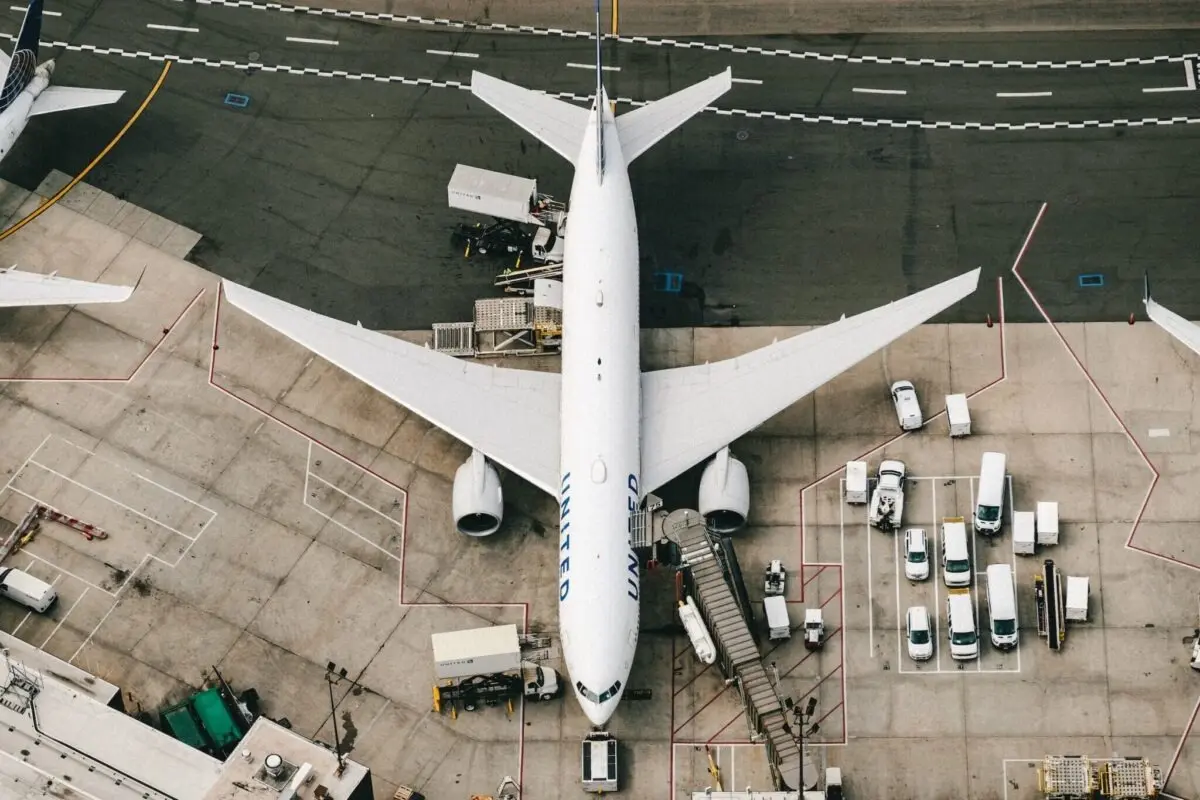
By Monday afternoon, the operational logjam reached its critical mass. The tarmac at JFK, LaGuardia, Newark, and Philadelphia transformed into vast parking lots of wide-body and narrow-body aircraft.
- John F. Kennedy International Airport (JFK): International long-haul departures and high-volume domestic services were frozen. Passengers aboard aircraft already queued on taxiways were forced to return to their gates after sitting idle for hours.
- LaGuardia Airport (LGA): As a primary hub for high-frequency business shuttles, LaGuardia absorbed the brunt of short-haul cancellations. Boarding bridges were retracted, and terminal concourses quickly filled to capacity as incoming crowds merged with stranded outbound travelers.
- Newark Liberty International Airport (EWR): United Airlines, the dominant carrier at Newark, enacted immediate waiver policies as its hub operations came to a grinding halt, halting banks of both domestic and transatlantic flights.
- Philadelphia International Airport (PHL): American Airlines faced massive operational bottlenecks as flights originating from or transiting through its crucial Northeast hub were grounded indefinitely.
By mid-afternoon, flight tracking services recorded hundreds of delayed departures and cancellations, with delay times escalating by the hour even after engineers began working to restore the downed systems.
Supporting Context & Metrics: The Weight of the Northeast Corridor
To fully comprehend the severity of Monday’s ground stops, one must understand the disproportionate weight the New York-Philadelphia airspace carries within the global aviation network.
The Engine of the National Airspace
The airspace governed by the New York TRACON (Terminal Radar Approach Control) and surrounding regional centers handles some of the most congested skies on planet Earth. On any given business day:
- The three major New York area airports (JFK, LGA, EWR) collectively manage well over 3,500 flight operations and accommodate upwards of 350,000 passengers daily.
- Philadelphia International Airport adds another 800+ daily operations, serving as an indispensable gateway for the Mid-Atlantic region.
- Together, this interconnected corridor accounts for roughly 20% to 25% of all commercial flight delays nationwide under normal operating conditions. When a systemic outage strikes this specific node, the delay matrix does not simply add up—it multiplies exponentially.
Economic and Logistical Fallout
The financial implications of an unannounced, multi-hour ground stop across these hubs are staggering. Airlines face immense operational costs, including:
- Crew Duty Time Limitations: Federal regulations strictly cap the hours pilots and flight attendants can work. Stranded crews frequently time out, requiring airlines to source reserve personnel who may not be locally available, compounding cancellations into subsequent days.
- Passenger Compensation and Care: Major carriers are legally and contractually obligated to provide meal vouchers, hotel accommodations, and rebooking services for controllable delays—though weather and technical emergencies often spark legal debates over carrier liability.
- Aircraft Misalignment: Planes and crews do not live in a vacuum; an aircraft grounded in Newark at noon cannot fly its scheduled evening rotation out of Chicago or Atlanta, triggering a cascading series of phantom delays across the entire continental network.
Official Statements and Institutional Response
As the crisis unfolded, federal agencies, airport operators, and major commercial airlines scrambled to provide updates to a bewildered traveling public and an aggressive media corps.
The Federal Aviation Administration (FAA)
In a series of rapidly updated advisories, the FAA confirmed the nature of the emergency. An agency spokesperson released a statement outlining the situation:
"The Federal Aviation Administration implemented temporary ground stops for departures bound for and departing from select metropolitan airports in the New York area and Philadelphia due to an unexpected equipment outage at a regional air traffic control facility. Technical teams were immediately dispatched to isolate the fault, restore primary data feeds, and transition operations to redundant backup systems. Safety remains our absolute priority, and restrictions will be gradually lifted as normal operating parameters are verified."
Federal officials emphasized that while the equipment outage compromised efficiency and data visualization, redundant safety margins were never breached. Air traffic controllers relied on emergency spacing protocols and backup communication channels to safely manage aircraft already airborne at the time of the failure.
Airline Responses and Passenger Advisories
Major network carriers operating within the affected corridor mobilized their customer service and operations teams to manage the fallout.
- United Airlines, operating its major hub at Newark, issued comprehensive travel waivers allowing passengers booked through Monday and Tuesday to reschedule their flights without incurring change fees or fare differences.
- Delta Air Lines and American Airlines echoed similar flexibility measures, urging travelers not to head to the airports until official flight status updates confirmed that operations had fully resumed.
- Airport authorities across JFK, LGA, EWR, and PHL utilized social media channels and terminal public address systems to urge calm, reminding passengers to check directly with their respective airlines before attempting to rebook through overwhelmed phone lines or airport kiosks.
Future Outlook: Infrastructure Vulnerability and the Path Forward
Monday’s equipment outage is far from an isolated incident. Over the past decade, America’s aviation infrastructure has faced mounting scrutiny regarding the reliability of its legacy technology stacks.
The Ghost of Legacy Systems
Much of the hardware and software underpinning the United States’ air traffic control network dates back decades. While incremental upgrades have been implemented under modernization programs like NextGen, core components of regional radar, flight data processing, and communication networks remain vulnerable to age-related hardware failures, software bugs, and unexpected power anomalies.
Industry watchdogs and congressional committees have repeatedly warned that underfunding, bureaucratic delays, and staffing shortages among technical maintenance personnel leave the system exposed to catastrophic single-point-of-failure events.
What Travelers and Regulators Can Expect Next
In the wake of Monday’s chaos, aviation experts predict several immediate developments:
- Congressional Inquiries: Lawmakers from key transportation committees are expected to demand a full accounting from the FAA regarding the exact root cause of the equipment outage, the speed of the technical response, and the robustness of backup fail-safes.
- Accelerated Capital Expenditure: Pressure will undoubtedly mount on federal lawmakers to fast-track funding for comprehensive infrastructure overhauls, ensuring that air traffic control facilities are equipped with modern, resilient cloud-based and decentralized data architectures.
- Long-Tail Recovery: Even after technical teams certified the repair of the downed equipment, airline operations experts warn that it will take upwards of 48 to 72 hours for the national airspace system to completely untangle the backlog of misaligned aircraft and displaced flight crews.
For travelers navigating the skies in the days ahead, the incident serves as a stark reminder of the delicate choreography required to keep millions of passengers moving safely across the globe—and the profound fragility of the systems that make modern flight possible.