





Executive Overview
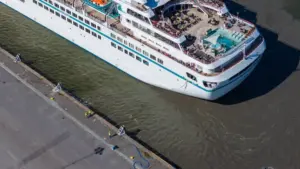
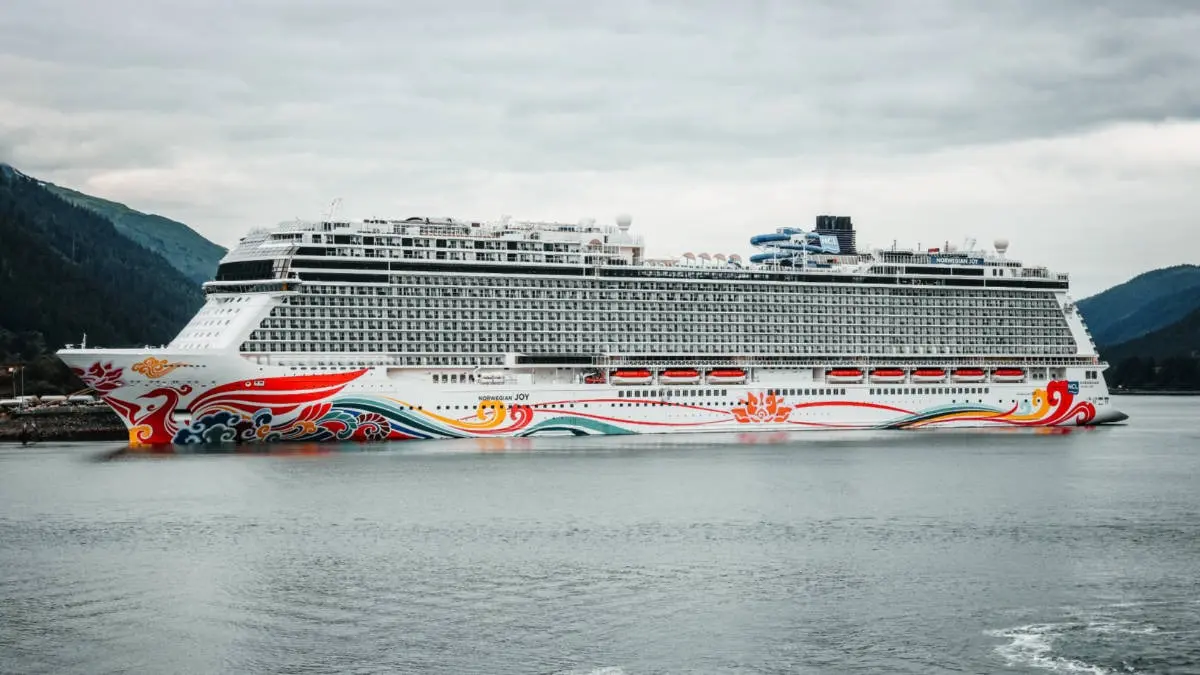
The vibrant cruise season in Southeast Alaska was cast into solemn relief on Thursday, September 17, 2026, when Norwegian Cruise Line’s Norwegian Joy arrived in the picturesque port of Sitka carrying a grim passenger: a dead fin whale lodged directly against its bulbous bow. The discovery not only delayed the vessel’s scheduled morning arrival but also reignited urgent conversations surrounding the environmental impacts of the cruise industry on vulnerable marine wildlife populations.
Federal wildlife officials, including the National Oceanic and Atmospheric Administration’s (NOAA) Alaska Marine Mammal Stranding Network, quickly mobilized to assess the carcass and initiate investigative protocols. While the exact timeline and point of impact remain undetermined—leaving open the possibility that the whale was already deceased when it drifted into the ship’s path—the incident serves as a stark, highly visible reminder of the friction points between expanding maritime tourism and the conservation of marine mammals.
As the cruise sector continues to post record passenger volumes in sensitive northern ecosystems, this tragedy amplifies longstanding calls from conservationists for stricter operational guardrails, mandatory speed restrictions, and enhanced technological detection systems to prevent future fatal collisions.
Detailed Chronology: The Voyage of the Norwegian Joy and the Sitka Discovery
Setting Sail from Seattle
The 10-night roundtrip voyage began on Friday, September 11, 2026, as the 3,802-passenger Norwegian Joy departed Seattle, Washington. Representing the ship’s penultimate Alaskan itinerary of the season, the cruise was designed to showcase the breathtaking natural beauty and coastal ecosystems of the Inside Passage.
The voyage proceeded according to plan through the initial stops of the itinerary:
- Sunday, September 13: Ketchikan
- Monday, September 14: Scenic cruising through Glacier Bay National Park and Preserve
- Tuesday, September 15: Juneau
- Wednesday, September 16: Icy Strait Point
However, the mood aboard the vessel shifted dramatically as the ship navigated toward Sitka for its fourth port of call.
The Discovery in Sitka
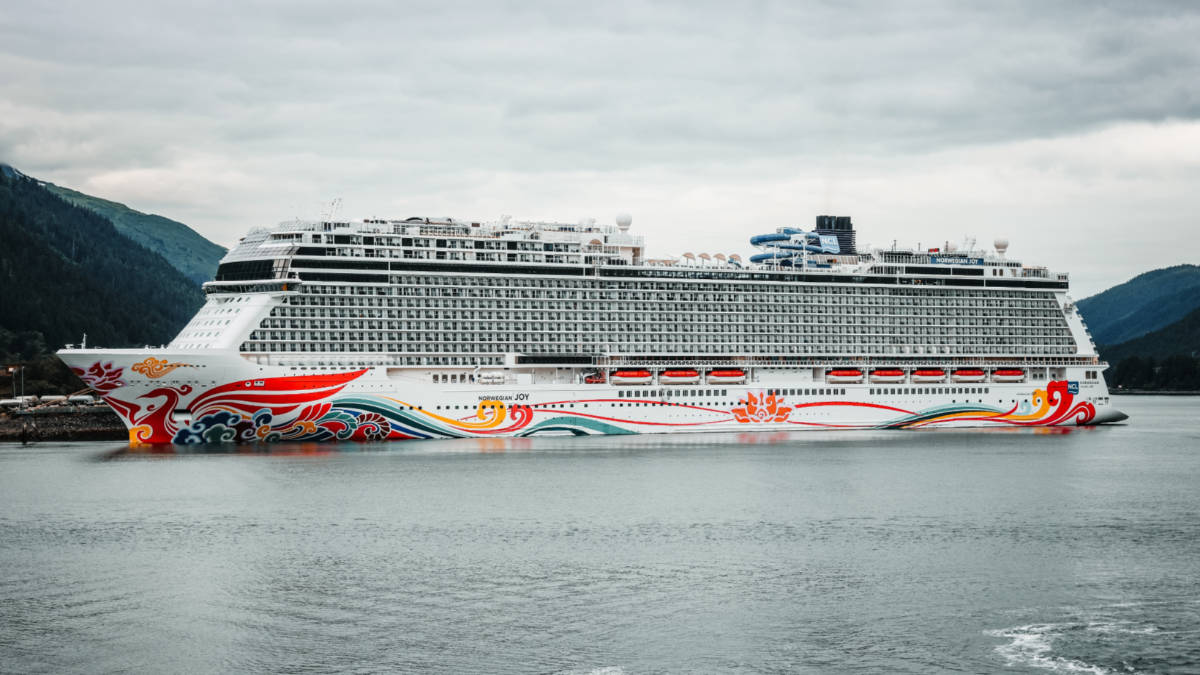
On the morning of Thursday, September 17, as Norwegian Joy prepared to make its scheduled call in Sitka, crew members and passengers realized a fin whale was draped across the vessel’s bulbous bow—the protruding forward structure situated just below the waterline designed to maximize fuel efficiency by modifying water flow.
Passengers took to online forums, including Reddit, to document the unfolding situation. According to traveler accounts shared on the platform, the vessel’s arrival was noticeably disrupted. Originally slated to dock at 8:00 a.m., the 1,094-foot mega-ship did not begin the docking process until approximately 10:00 a.m. Local port authorities and marine specialists required an extended window to safely manage the situation, clear the bow, and remove the marine mammal before passengers could disembark.
To compensate for the lost shore-excursion time, port operators and ship management adjusted the schedule, extending the port call by an hour to allow guests to experience Sitka before the ship’s afternoon departure. Photographs shared by onboard observers showed the massive marine mammal being towed away from the cruise ship’s hull, revealing a distinct wound near the tail and underscoring the physical force involved in marine vessel interactions.
Remaining Itinerary Unchanged
Following the clearance operation in Sitka, Norwegian Joy resumed its schedule. The ship maintained its planned visits to Skagway on Friday, September 18, and Victoria, British Columbia, on Sunday, September 20, ahead of its scheduled return to Seattle on Monday, September 21. No further itinerary alterations or mechanical delays were reported by Norwegian Cruise Line in the immediate wake of the incident.
Supporting Context & Metrics: A Growing Marine Conservation Crisis
The Vulnerability of Fin Whales
The fin whale (Balaenoptera physalus) is the second-largest species of whale on Earth, second only to the blue whale. Sleek, fast-moving, and powerful, these magnificent cetaceans are historically referred to by mariners as the "greyhounds of the sea" due to their ability to cruise at high speeds. Ironically, this very characteristic makes them exceptionally vulnerable to blunt-force trauma and propeller strikes from commercial vessels, container ships, and large cruise liners operating within their feeding and migratory grounds.
Fin whales are listed as endangered under the United States Endangered Species Act and are protected under the Marine Mammal Protection Act. Their presence in the nutrient-rich, protected waters of Southeast Alaska during the spring, summer, and early autumn months coincides directly with the peak operating window for the Alaskan cruise industry.
Broader Industry Trends and Prior Incidents
The tragedy aboard Norwegian Joy is far from an isolated event. It forms part of a distressing pattern of fatal whale strikes involving cruise vessels in Alaskan and North American waters:
- June 19, 2026: Royal Caribbean International’s Ovation of the Seas arrived in Seward, Alaska, with a deceased fin whale draped across its bulbous bow. The ship docked with the carcass still attached, prompting a tarp-covered containment operation before the whale could be towed to a protected lagoon for necropsy. Subsequent investigations revealed that the whale was pregnant at the time of its death.
- July 2026: In the wake of the Ovation of the Seas incident, environmental advocacy groups—most notably the Center for Biological Diversity—formally petitioned Royal Caribbean Group executives, demanding the implementation of mandatory speed reductions in known high-density whale habitats.
- May 2024: MSC Cruises’ MSC Meraviglia arrived at its homeport in New York City with a deceased whale lodged on its bow structure, drawing sharp criticism from urban marine protection advocates.
- Historical Precedents: Incidents dating back years—such as Holland America Line’s Zaandam striking a young male fin whale near Seward—demonstrate that despite advancements in navigational technology, the coexistence of heavy commercial maritime traffic and migrating megafauna remains deeply perilous.
Official Statements and Institutional Responses
In the wake of the discovery, Norwegian Cruise Line released a formal statement acknowledging the somber reality of the event while emphasizing its commitment to regulatory cooperation and environmental stewardship:
"We are deeply saddened by this situation, and we are cooperating with the appropriate authorities and any relevant scientific and wildlife experts as part of the assessment process.
This is a sobering reminder of the importance of ongoing collaboration among the maritime, scientific and conservation communities. We remain committed to operating responsibly, complying with applicable laws and regulations and supporting efforts that contribute to the long-term health of marine life."
Concurrently, federal and state agencies stepped in to manage the scientific analysis. The National Oceanic and Atmospheric Administration (NOAA) deployed personnel from its Alaska Marine Mammal Stranding Network to take charge of the carcass.
Standard operating procedure in such maritime mortality events dictates that a comprehensive necropsy be performed by marine mammal pathologists. This post-mortem examination is critical for establishing whether the whale was alive and actively swimming when struck by the vessel—thereby sustaining fatal blunt-force trauma—or if it was already deceased and floating neutrally in the water column when the ship inadvertently made contact.
Future Outlook: Navigating Toward Solutions
The Regulatory Debate Over Vessel Speed
The recurring nature of ship strikes has intensified scrutiny over maritime transit protocols in narrow channels and whale-rich fjords. Conservation organizations argue that visual spotters and voluntary slowing guidelines are fundamentally insufficient given the size, mass, and stopping distances of modern cruise ships, which routinely exceed 1,000 feet in length and displace upwards of 140,000 gross tons.
Advocacy groups continue to pressure cruise lines, port authorities, and regulatory bodies to adopt legally binding speed restrictions—such as limiting vessel speeds to 10 to 13 knots in designated whale hotspots. Proponents of mandatory caps point to successful speed-restriction zones implemented on the U.S. East Coast to protect critically endangered North Atlantic right whales as a blueprint for Alaskan waters.
Technological Innovations on the Horizon
Beyond speed adjustments, the maritime technology sector is exploring proactive detection systems to minimize the risk of collisions. Emerging solutions include:
- Thermal Imaging Cameras: High-definition infrared systems capable of detecting body heat signatures of whales breaking the surface, even in low-light or foggy conditions common in Southeast Alaska.
- Passive Acoustic Monitoring: Hydrophone arrays deployed to listen for whale vocalizations, alerting bridge officers to the presence of marine mammals in the immediate shipping lane.
- Artificial Intelligence Integration: Machine learning algorithms designed to process radar and visual feeds in real-time, offering automated collision-avoidance warnings to ship pilots.
The Path Forward for Alaskan Cruising
As the 2026 Alaskan cruise season draws to a close, incidents like the one involving Norwegian Joy and Ovation of the Seas force a reckoning within the tourism sector. Balancing the economic engine of multi-billion-dollar cruise operations with the preservation of fragile marine ecosystems will require unprecedented cooperation between cruise operators, federal regulators, and independent scientists.
Until comprehensive preventative measures—whether through enforced speed caps, advanced detection tech, or redesigned routing—are universally adopted, each transit through the majestic waters of the Inside Passage will carry an undercurrent of ecological vulnerability, reminding the maritime world of the heavy toll exacted by our oceans’ shared pathways.