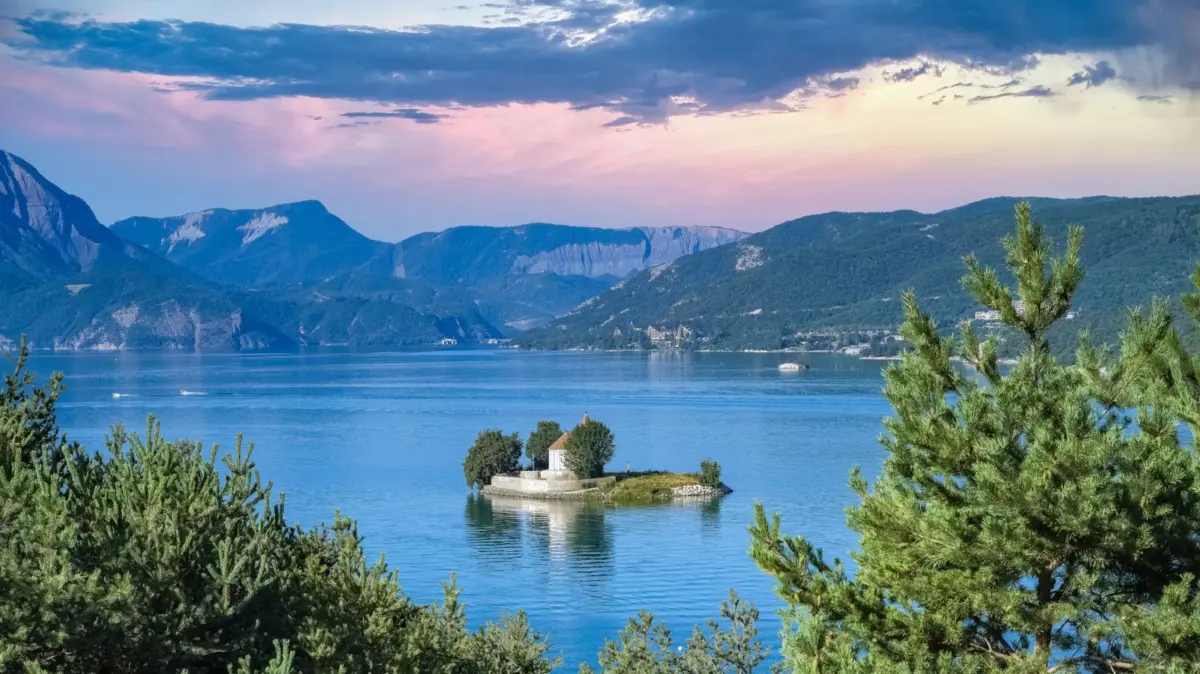
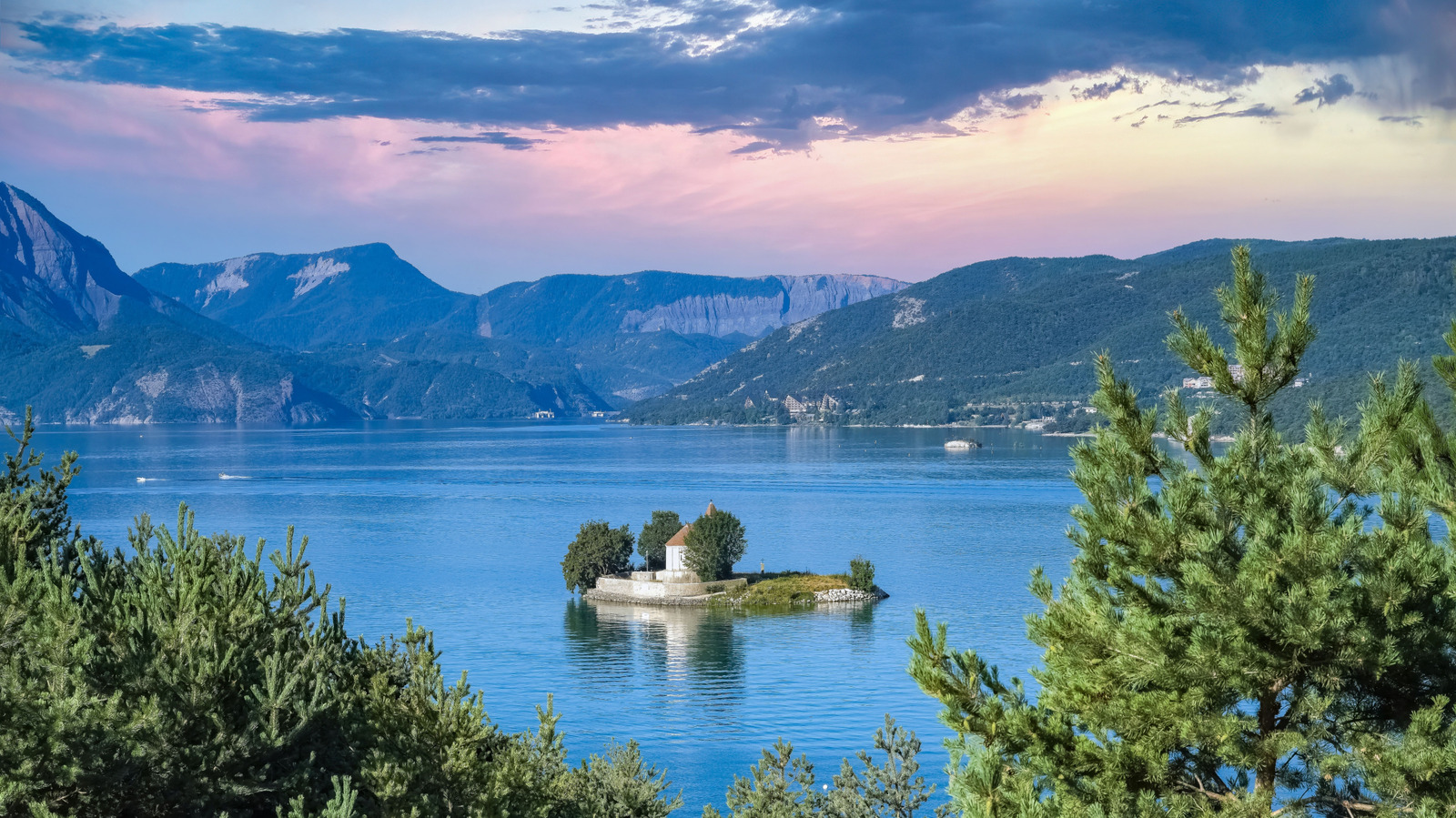
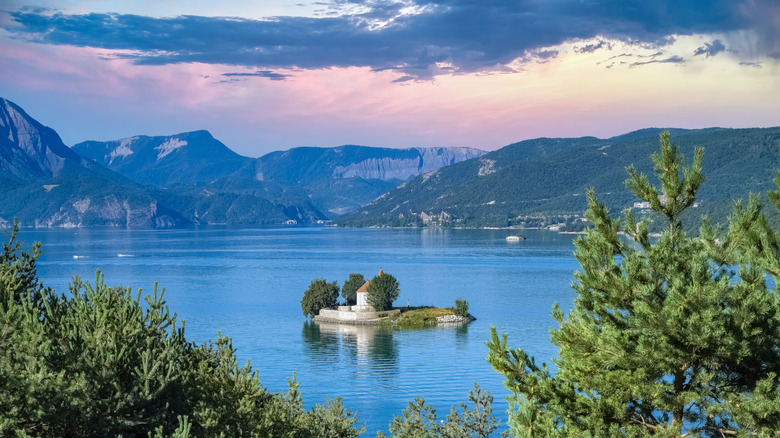
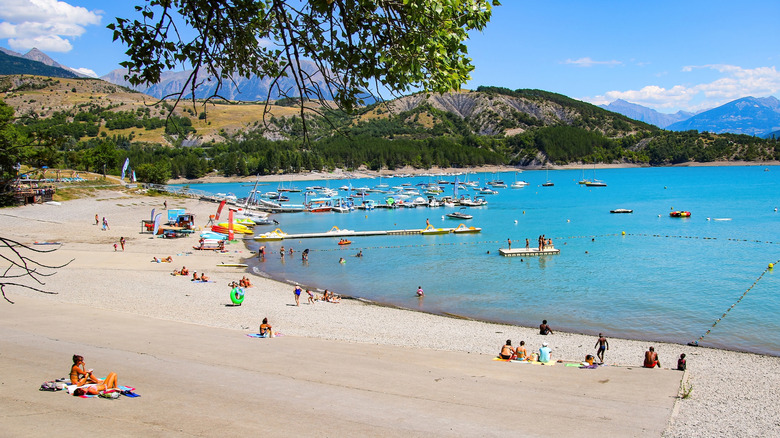
Nestled high within the dramatic folds of the southern French Alps lies an extraordinary juxtaposition of human engineering and raw natural splendor: Lac de Serre-Ponçon. As France’s largest artificial lake, this immense body of brilliant turquoise water spans the border between the Hautes-Alpes and Alpes-de-Haute-Provence departments in the sun-drenched Durance Valley. Far more than a mere scenic getaway, Serre-Ponçon is a multifaceted infrastructural anchor. It serves as a vital renewable energy generator, a critical flood defense mechanism for the downstream Rhône-Durance basin, and an indispensable agricultural irrigation reservoir for the arid lands of Provence.
Yet, despite its utilitarian origins, the reservoir has transformed over the decades into one of Europe’s premier inland aquatic playgrounds. Boasting numerous "Blue Flag" certified beaches, a thriving ecosystem for water sports, and a landscape that rivals the most celebrated natural lakes on the continent, Serre-Ponçon bridges the gap between industrial necessity and ecological integration. This comprehensive report examines the historical genesis of the lake, its modern socioeconomic and environmental metrics, the architectural and infrastructural marvels underpinning its existence, and the future outlook for sustainable tourism and water resource management in the era of climate change.
Detailed Chronology: From Catastrophic Floods to an Alpine Inland Sea
The creation of Lac de Serre-Ponçon was not merely a grand infrastructure project; it was an absolute necessity born of historical tragedy. For centuries, the communities flanking the Durance and Ubaye rivers lived under the constant threat of hydrological catastrophe.
The Durance River, fed by melting Alpine glaciers and torrential seasonal rains, was notoriously volatile. Historical archives document centuries of devastating floods that wiped out agricultural land, swept away infrastructure, and periodically cut off entire mountain communities. The sheer velocity and unpredictable volume of the river made it one of the most feared waterways in France. Conversely, during the dry summer months, the river would shrink to a meager trickle, leaving farmers in the lower Durance Valley and the plains of Provence desperate for irrigation water to save their crops.
The dual threats of unbridled floods and persistent droughts prompted generations of engineers and politicians to propose taming the Durance. However, the rugged topography of the southern Alps presented monumental technical hurdles.
Conception and Construction (1950–1961)
The definitive solution materialized in the mid-20th century under the auspices of Électricité de France (EDF). Planning for the Serre-Ponçon Dam commenced in earnest following post-World War II industrialization pushes that prioritized energy independence and regional flood control.
Construction of the dam began in the 1950s, representing a monumental engineering feat for its era. Building the massive embankment dam required innovative techniques, including the use of an impervious clay core to hold back millions of tons of water and unstable alluvial material. To create the reservoir, the historic villages of Ubaye and Savines were permanently submerged, forcing the relocation of local populations—a poignant cultural sacrifice that remains part of the collective memory of the valley today.
By 1961, the dam was fully operational, and the valley was steadily filled. The resulting reservoir swallowed the confluence of the Durance and Ubaye rivers, transforming a volatile gorge into a placid, multi-lobed inland sea that permanently altered the geography, economy, and climate of the region.
Supporting Context & Metrics: Engineering and Environment
To comprehend the scale of Lac de Serre-Ponçon, one must examine the staggering statistics that define its physical dimensions and socio-economic contributions.
Hydrological and Geographical Metrics
Elevation: The surface of the lake sits at an impressive altitude of 2,560 feet (780 meters) above sea level.
Volume: At maximum capacity, the reservoir holds approximately 1.27 billion cubic meters (over 45 billion cubic feet) of water.
Surface Area: The lake covers a sprawling surface area of roughly 28 square kilometers (nearly 11 square miles), featuring over 90 kilometers of shoreline punctuated by steep cliffs, hidden coves, and gentle pebble beaches.
The Dam Structure: The Serre-Ponçon Dam itself is an earth-fill embankment structure standing approximately 123 meters (404 feet) high and spanning 600 meters across the base of the valley. It is among the largest earth-fill dams in Europe.
Socio-Economic and Environmental Impact
Serre-Ponçon is the lifeblood of the Provence-Alpes-Côte d’Azur (PACA) region. Its primary functions operate in a continuous, highly coordinated cycle:
Hydropower Generation: The hydroelectric plant housed within the complex generates clean, renewable energy capable of powering hundreds of thousands of homes. Its ability to ramp up production rapidly makes it an essential asset for balancing the French national grid during peak demand periods.
Agricultural Irrigation: Millions of cubic meters of water are systematically released downstream each year, sustaining the vital agricultural industries of Provence—renowned for their orchards, vineyards, and market gardens.
Drinking Water Supply: The reservoir acts as a critical strategic reserve, ensuring potable water security for urban centers and rural communities throughout the lower Durance corridor.
Flood Mitigation: By absorbing torrential runoff from Alpine storms, the dam has successfully prevented catastrophic flooding in the Durance and Rhône valleys for over six decades, saving billions of euros in potential property damage and preserving human life.
Official Statements and Stakeholder Perspectives
The management of Lac de Serre-Ponçon requires a delicate balancing act between industrial operations, environmental protection, and regional tourism development. Key stakeholders have consistently emphasized the cooperative framework required to sustain the lake’s multifaceted ecosystem.
In recent policy briefings regarding regional water security, representatives from Électricité de France (EDF) highlighted the dual nature of the reservoir:
"Serre-Ponçon stands as a monumental testament to post-war French engineering, but its true success lies in its modern adaptability. It is not merely an energy asset; it is a shared ecological and economic resource. Managing the water levels requires a continuous, real-time dialogue with agricultural federations, local municipalities, and environmental protection agencies to ensure that energy generation never compromises downstream irrigation or tourist access."
Local tourism boards and municipal leaders in the Hautes-Alpes and Alpes-de-Haute-Provence have likewise championed the lake’s transition into a premier eco-tourism destination. Speaking on the integration of recreational spaces with protected natural zones, regional tourism officials noted:
"The unique beauty of Serre-Ponçon stems from its alpine framing. Visitors are continually struck by the vibrant tropical hues of the water juxtaposed against the soaring, rugged peaks of the French Alps. By maintaining strict environmental standards—such as our expanding portfolio of Blue Flag beaches—we ensure that the millions of visitors who flock to our shores every summer can enjoy swimming, boating, and hiking without degrading the delicate balance of this mountain ecosystem."
Future Outlook: Sustainability, Climate Resilience, and Tourism
As Europe faces unprecedented climatic shifts, the future outlook for Lac de Serre-Ponçon is characterized by both challenges and proactive adaptation strategies.
Climate Change and Hydrological Pressures
The primary threat to the stability of the Serre-Ponçon reservoir comes from changing Alpine precipitation patterns. With rising global temperatures, winter snowpacks in the southern Alps are diminishing, and glaciers are receding at an accelerated rate. This shift means that the timing and volume of spring snowmelt—historically the primary source for filling the reservoir—are becoming increasingly unpredictable.
To combat potential summer water deficits, water management authorities are deploying advanced predictive modeling systems. These technologies analyze meteorological data, soil moisture, and snowpack telemetry to optimize water retention during wet periods while guaranteeing minimum ecological flows to protect downstream river ecosystems.
Evolving Eco-Tourism and Infrastructure Development
Despite environmental headwinds, Serre-Ponçon remains a beacon for sustainable tourism. Local municipalities are heavily investing in green infrastructure to accommodate growing visitor numbers without increasing the human footprint on the surrounding landscape.
Enhanced Accessibility: Beaches such as Ubaye Beach continue to upgrade their facilities to accommodate visitors with reduced mobility, ensuring inclusive access to the shoreline.
Non-Motorized and Low-Impact Recreation: While motorboating remains popular—supported by the lake’s 10 public harbors and over 1,200 moorings—there has been a deliberate regulatory push to expand non-motorized water sports, such as kayaking, paddleboarding, and sailing, preserving the tranquil acoustic environment of the coves.
Preservation of Cultural Heritage: Landmarks like the medieval Saint-Michel Chapel, perched on its isolated islet, and the submerged Chanteloube viaduct continue to serve as focal points for interpretive tourism, educating visitors on the historical sacrifices that created the modern lake.
Conclusion
Lac de Serre-Ponçon is far more than a scenic mountain reservoir. It is a complex nexus where heavy industry, environmental stewardship, and recreational bliss intersect. As it navigates the ecological realities of the 21st century, this artificial sea in the heart of the Alps remains a shining example of how human ingenuity can harmonize with the majestic forces of nature—providing power, safety, and breathtaking beauty for generations to come.