



Executive Overview
European financial and regulatory support for airlines transitioning to Sustainable Aviation Fuel (SAF) experienced an unprecedented surge last year, scaling to €430 million ($494 million)—a staggering fourfold increase compared to the previous year. The European Commission announced on Wednesday that it has greenlit the distribution of free carbon emissions allowances under the EU Emissions Trading Scheme (ETS) to 130 commercial carriers.
This mechanism, designed to offset the prohibitive cost premium of green fuels over traditional fossil-based kerosene, successfully incentivized the claim of over 530,000 tonnes of SAF. According to regulatory estimates, this utilization directly slashed approximately 1.7 million tonnes of carbon dioxide ($CO_2$) emissions from the European skies.
While the jump from the roughly €100 million in allowances allocated in 2024 signals an aggressive acceleration of European climate policy, it represents only a fraction of a broader €1.5 billion financial pot earmarked to drive the continent’s aviation sector toward net-zero targets. Recognizing both the success of the current framework and the immense hurdles ahead, the European Commission has already proposed expanding this envelope further as part of its ongoing ETS reform.
Yet, the transition remains fraught with economic headwinds. SAF typically costs between three and ten times more than conventional fossil-based jet fuel, placing a severe financial burden on airlines operating in a margin-thin industry. As Brussels doubles down on its green mandates, questions linger over whether these incentives are sufficient to scale production to meet upcoming regulatory quotas, or if the aviation industry risks running out of both fuel and financial runway.
Detailed Chronology: The Evolution of the EU’s SAF Incentive Mechanism
Genesis of the ETS Support Framework
The integration of sustainable aviation fuels into the EU Emissions Trading Scheme did not happen overnight; it is the culmination of years of iterative legislative design intended to align Europe’s heavy-emitting transport sectors with the European Green Deal. Historically, airlines received a baseline of free emissions allowances under the ETS to prevent "carbon leakage"—a phenomenon where carriers might route flights through non-EU hubs to avoid compliance costs.
However, as the EU sharpened its 2030 climate targets—aiming for a 55% reduction in net greenhouse gas emissions compared to 1990 levels—policymakers realized that punitive measures alone would not suffice. The aviation sector, notoriously difficult to electrify or power via hydrogen in the medium term, needed a direct economic bridge to make SAF economically viable.
The 2024 Baseline and the 2025 Inflection Point
In 2024, the precursor to the current boom saw roughly €100 million worth of allowances distributed to pioneering airlines willing to absorb the logistical and financial complexities of procuring green fuel. While modest in retrospect, this initial phase served as a stress test for the administrative machinery required to track, verify, and reward SAF usage without triggering market distortions or fraudulent claims.

The breakthrough announced this week marks the operational maturation of this policy. By scaling the allocation to €430 million—a 400% year-over-year increase—the European Commission has demonstrated that demand for these allowances among carriers is robust. The mechanism essentially operates by granting airlines valuable emission allowances for every tonne of eligible SAF they uplift, which they can either use to cover their compliance obligations or monetize on the carbon market to offset the high purchase price of the green fuel.
The Legislative Horizon: Reforming the ETS
The timing of this announcement coincides with a broader legislative overhaul. The €1.5 billion financial envelope originally conceived to support SAF adoption is currently being stretched to its limits. In response, the European Commission has formally proposed expanding the scope and funding of these ETS-derived incentives as part of its sweeping legislative reform package.
This next phase aims to provide regulatory certainty through the 2030s, aligning the ETS mechanisms directly with the mandates set out in the ReFuelEU Aviation initiative. This regulatory harmonization is intended to create a seamless pipeline where supply, demand, and financial compensation move in lockstep, insulating airlines from extreme market volatility.
Supporting Context & Metrics: The Economics and Environmental Impact of SAF
Decoding the Cost Premium
To understand the significance of a €430 million support package, one must examine the stark economic reality governing modern aviation fuel markets. Traditional fossil-based kerosene has long been the lifeblood of global commercial aviation, benefiting from mature supply chains, economies of scale, and, in many jurisdictions, favorable tax regimes.
Conversely, Sustainable Aviation Fuel—derived from diverse feedstocks ranging from used cooking oil and municipal solid waste to agricultural residues and synthetic power-to-liquid (PtL) fuels—is trapped in a classic chicken-and-egg economic dilemma. SAF currently commands a price between three and ten times higher than conventional jet fuel.
+-----------------------------------------------------------------+
|              The SAF Cost & Emissions Disparity                 |
+-----------------------------------------------------------------+
|  Fuel Type         | Relative Cost     | Lifecycle CO2 Impact   |
+-----------------------------------------------------------------+
|  Fossil Kerosene   | 1x (Baseline)     | High (Baseline)        |
|  SAF (Waste-based) | 3x to 5x higher   | Up to 80% reduction    |
|  SAF (Synthetic)   | Up to 10x higher  | Near-zero (with CCU)   |
+-----------------------------------------------------------------+
For an airline operating wide-body fleets on transatlantic routes, fuel represents anywhere from 20% to 30% of total operating expenses. Absorbing a threefold to tenfold increase in fuel costs without external subsidies or passing the entirety of the burden onto consumers—who are already grappling with rising ticket prices—is commercially impossible for most carriers. The EU’s ETS allowance distribution acts as a vital financial shock absorber, closing this deficit and making the math work for chief financial officers.
Quantifying the Environmental Return on Investment
The environmental dividends of last year’s €430 million investment are tangible, though they also underscore the sheer scale of the challenge ahead. The 130 airlines that successfully claimed allowances reported the utilization of over 530,000 tonnes of SAF.
Life-cycle analyses indicate that certified SAF can reduce greenhouse gas emissions by up to 80% compared to fossil jet fuel, depending on the feedstock and production methodology. Consequently, the 530,000 tonnes utilized under the EU scheme directly translated to approximately 1.7 million tonnes of avoided $CO_2$ emissions.
To put this in perspective, 1.7 million tonnes of $CO_2$ is roughly equivalent to taking nearly 400,000 internal combustion engine cars off European roads for an entire year. However, when juxtaposed against total European aviation emissions—which hovered above 140 million tonnes annually pre-pandemic and are rapidly rebounding—the 1.7 million tonnes represents just over 1% of the sector’s total footprint. It is a vital proof of concept, but it highlights how much ground remains to be covered.
Feedstock Realities and Infrastructure Bottlenecks
Beyond the price tag lies a more insidious constraint: physical availability. The global supply of certified SAF constitutes less than 1% of total global aviation fuel consumption.
While Europe boasts ambitious blending mandates under ReFuelEU Aviation—requiring suppliers to ensure that 2% of aviation fuel at EU airports is green by 2025, scaling to 6% by 2030 and 70% by 2050—refineries are struggling to come online quickly enough. The primary bottlenecks include:
- Feedstock Competition: Used cooking oil (UCO) and animal fats are currently the dominant feedstocks, but supplies are finite and vulnerable to fraudulent imports or diversion into other biofuel sectors, such as road transport.
- Capital Intensity: Building dedicated biorefineries or synthetic fuel (e-fuels) plants requires billions of euros in upfront capital expenditure, compounded by high electricity costs for green hydrogen production.
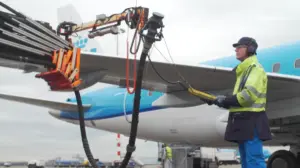
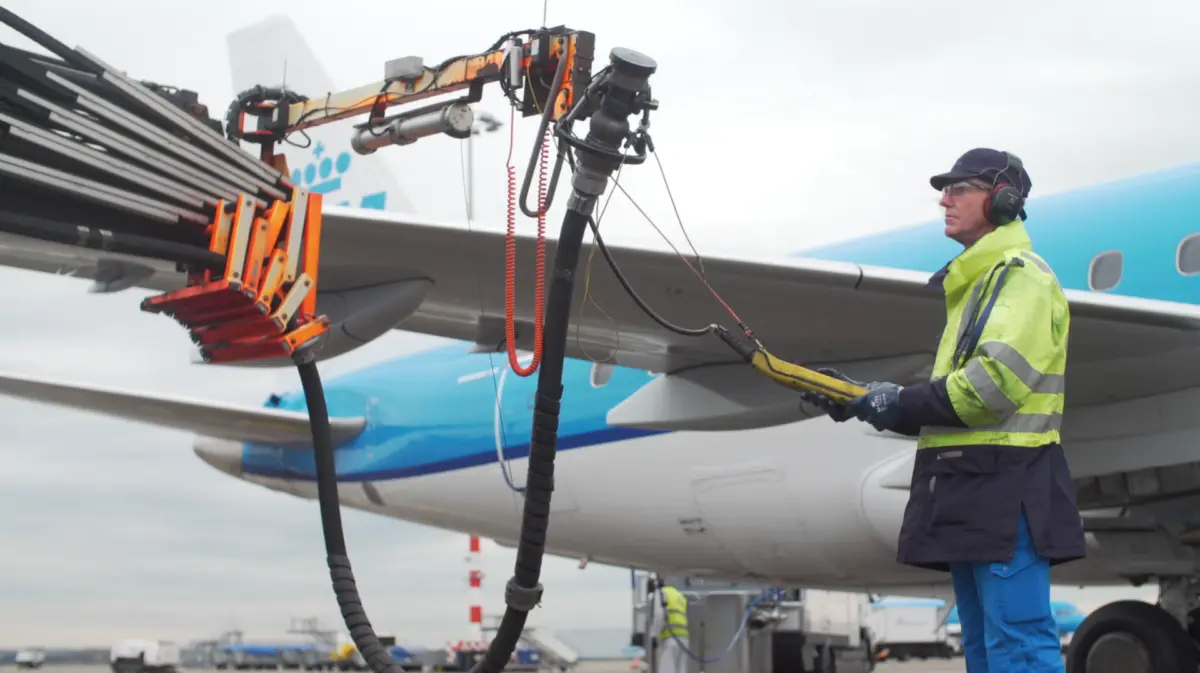
- Logistics and Blending: Infrastructure at major European hubs (such as Frankfurt, Amsterdam Schiphol, and Paris Charles de Gaulle) requires specialized storage and hydra-system upgrades to handle neat (unblended) SAF before it is introduced into airport hydrant systems.
Official Statements and Industry Perspectives
The European Commission’s Stance
In announcing the release of the €430 million in ETS allowances, representatives from the European Commission emphasized Brussels’ unwavering commitment to decarbonizing transport without compromising the continent’s economic competitiveness.
"We are witnessing a fundamental shift in how European climate policy interacts with industrial strategy," a senior European Commission official noted during the briefing in Brussels. "The quadrupling of support for SAF utilization proves that our carriers are ready to fly green when the economic architecture supports them. We are not merely setting targets; we are actively de-risking the green transition. The expansion of our ETS reform proposals ensures that this momentum will not stall as mandatory blending thresholds rise."
The Commission maintains that using the carbon market itself—recycling ETS revenues and allowances—to subsidize nascent green technologies creates a self-sustaining ecosystem. As polluters pay more for traditional emissions, that capital is directly funneled into displacing those emissions with sustainable alternatives.
Airline Reactions: Gratitude Tempered by Pragmatism
Reaction from the commercial aviation sector has been largely welcoming, albeit laced with pragmatic warnings from industry bodies such as Airlines for Europe (A4E) and the International Air Transport Association (IATA).
Airlines have long argued that without robust government intervention, European carriers face an uneven playing field. Non-EU carriers operating flights originating in Europe are subject to ETS rules for intra-European legs, but long-haul flights departing Europe face fierce competition from hub airports in the Middle East and North Africa, where SAF mandates and financial incentives are virtually non-existent.
"The €430 million injection is a welcome and necessary acknowledgment of the immense cost barrier facing our industry," stated an executive from a major European legacy carrier, speaking on the condition of anonymity. "However, policymakers must realize that SAF is not merely an airline procurement problem; it is a chemical, agricultural, and energy infrastructure crisis. Subsidizing demand is brilliant, but if the fuel physically does not exist at scale, financial allowances alone will not fill our tanks."
Industry leaders have also called for greater harmonization between EU support mechanisms and global frameworks like CORSIA (Carbon Offsetting and Reduction Scheme for International Aviation), warning that overlapping regulatory burdens could stifle airline profitability just as the sector recovers from historical disruptions.
Future Outlook: The Road to 2030 and Beyond
Navigating the Regulatory Cliff
As Europe looks toward the remainder of the decade, the intersection of the EU ETS reform, the ReFuelEU Aviation mandates, and the Alternative Fuels Infrastructure Regulation (AFIR) will dictate the survival and transformation of the continent’s aviation landscape.
By 2030, the mandatory minimum share of SAF at EU airports will jump to 6%. Meeting this target will require exponential growth in regional production capacity. The European Commission’s proposal to expand the €1.5 billion financial pot is not optional; it is an existential requirement if airlines are to comply with the law without incurring catastrophic financial penalties.
+-----------------------------------------------------------------+
|             ReFuelEU Aviation Mandate Trajectory                |
+-----------------------------------------------------------------+
|  Year    | Mandatory SAF Share   | Primary Policy Driver        |
+-----------------------------------------------------------------+
|  2025    | 2%                    | Initial ETS Free Allowances  |
|  2030    | 6% (incl. 1.2% e-fuels) | Expanded ETS & €1.5B+ Pot  |
|  2035    | 20%                   | Scaling Industrial Refineries|
|  2050    | 70%                   | Full Net-Zero Integration    |
+-----------------------------------------------------------------+
Furthermore, the sub-mandate for synthetic aviation fuels (e-fuels)—which rely on captured carbon dioxide and green hydrogen—will kick in aggressively toward 2030, starting at 1.2%. Because e-fuels currently command the highest cost premium (up to ten times fossil kerosene) and are in nascent stages of industrial production, future ETS allowance distributions will likely need to be heavily weighted toward these advanced technologies.
The Global Implications: Competitiveness and Carbon Leakage
Europe’s aggressive stance on SAF is transforming it into a global regulatory laboratory. Other jurisdictions are watching closely. In the United States, the Inflation Reduction Act (IRA) has taken a carrot-based approach through blender’s tax credits rather than ETS penalization, triggering a gold rush of SAF capital investment in North America.
European airlines and policymakers now face the dual challenge of protecting their market share against international competitors who do not face the same strict cost penalties, while simultaneously proving that a heavily regulated, green aviation sector can remain globally competitive.
Conclusion: A Decisive Decade
The €430 million milestone achieved last year marks a watershed moment for European aviation policy. It proves that financial incentives can successfully drive behavioral and operational change among commercial carriers, converting political ambition into tangible, emissions-reducing action.
Yet, as the industry stares down the barrel of exponentially escalating mandates toward 2030 and 2050, this achievement must be viewed as the opening salvo of a much larger industrial revolution. Whether Europe can bridge the chasm between a €430 million support mechanism and a fully decarbonized multi-billion-dollar aviation market will depend entirely on its ability to scale not just airline demand, but the physical, chemical, and financial supply chains that underpin the future of flight.