







Executive Overview
For generations, the boundary of wilderness exploration was drawn at the water’s edge. Backcountry travelers were forced to meticulously plan routes around impassable rivers, sprawling alpine lakes, and deep canyons, treating natural waterways as absolute barriers. Today, that paradigm has fundamentally shifted. A quiet revolution in ultralight marine technology—embodied by the modern packraft—has transformed blue ink on topographical maps from obstacles into new highways.
Weighing anywhere from a mere 2 to 15 pounds and packing down to the size of a sleeping bag, packrafts bridge the elusive gap between mountaineering and whitewater navigation. What began as a niche fringe sport pioneered by backcountry explorers in Alaska and Tasmania has exploded into a global outdoor movement. These vessels combine the portability of a backpack with the capability of a whitewater kayak, allowing adventurers to hike deep into remote ranges, inflate a boat, and traverse raging rivers or mirror-calm lakes before rolling the vessel back up and stuffing it into a pack.
However, this democratization of river access comes with significant caveats. The deceptive ease and featherweight nature of packrafts often foster a dangerous false sense of security, luring inexperienced paddlers into high-consequence environments. As the sport surges in popularity, a deep understanding of equipment selection, advanced paddling techniques, rigorous safety protocols, and hazard mitigation has never been more critical for those looking to conquer the backcountry by land and water.

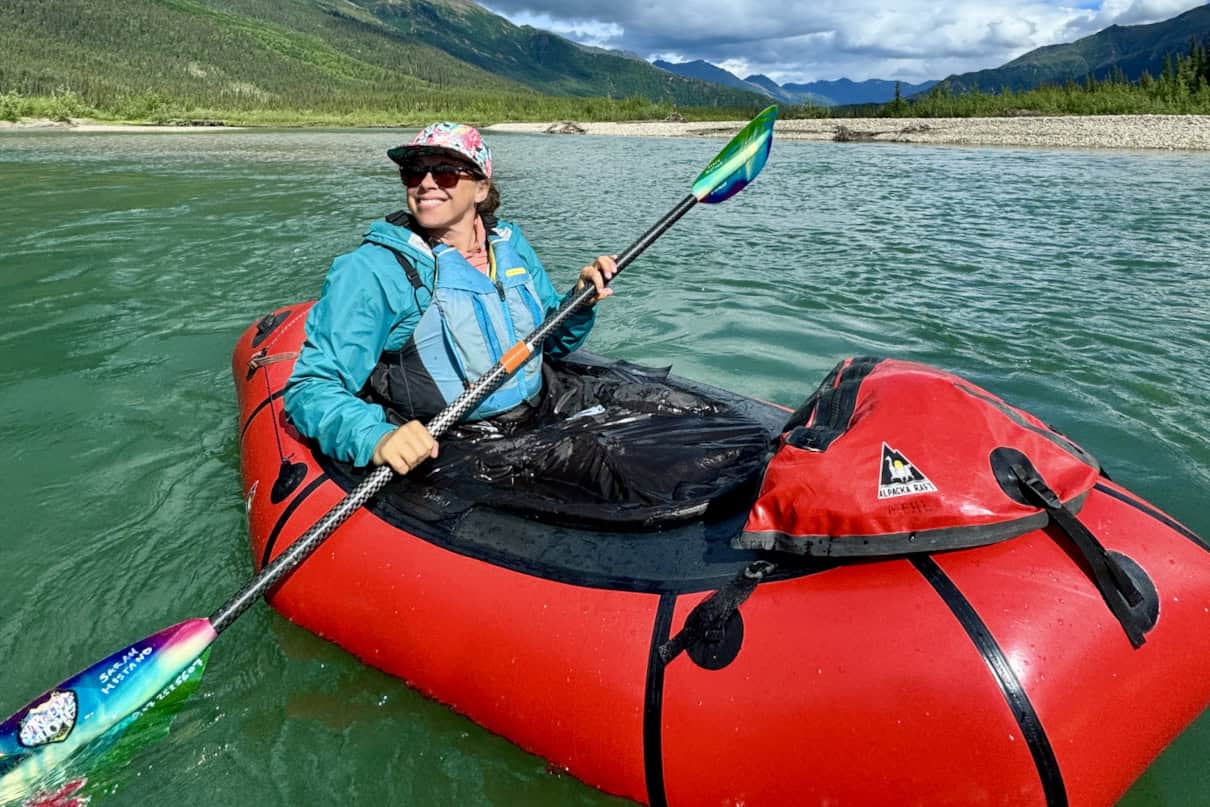
Detailed Chronology & Evolution: From Vulcanized Rubber to High-Tech Polymers
While packrafts feel like a thoroughly modern invention born from contemporary materials science, their lineage traces back nearly two centuries. The foundational technology of the inflatable watercraft was born within years of Charles Goodyear’s 1839 discovery of the vulcanization process for rubber. Early iterations, though crude and heavy, were utilized by military scouts, surveyors, and early explorers who needed a way to cross uncharted waters without hauling massive wooden watercraft.
The Garage-Industry Catalyst
For over a century, inflatable boats remained largely relegated to heavy-duty rubber rafts, military pontoon bridges, or glorified pool toys ill-suited for serious alpine travel. The modern packrafting renaissance truly took root in the early 2000s, largely driven by grassroots innovation in outdoor hubs like Anchorage, Alaska.
Backcountry travelers seeking to link complex, multi-sport routes across rugged wilderness began experimenting with custom-built, hand-welded fabric boats. Early adopters visited local workshops where former industrial designers and gear artisans were heat-sealing coated nylons into miniature, oval-tubed hulls. By securing cosmetic seconds or custom prototypes, these pioneers discovered that a whole new world of travel was suddenly unlocked. The blue lines on maps were no longer the ends of trails; they were the continuation of them.
Engineering Breakthroughs
As demand grew from a tight-knit community of adventurers, manufacturers refined the materials and architecture of packrafts:

- Advanced Fabrics: Heavy, puncture-prone rubber was replaced by high-tenacity nylon or polyester coated with polyurethane (TPU), dramatically increasing tear resistance while slashing weight.
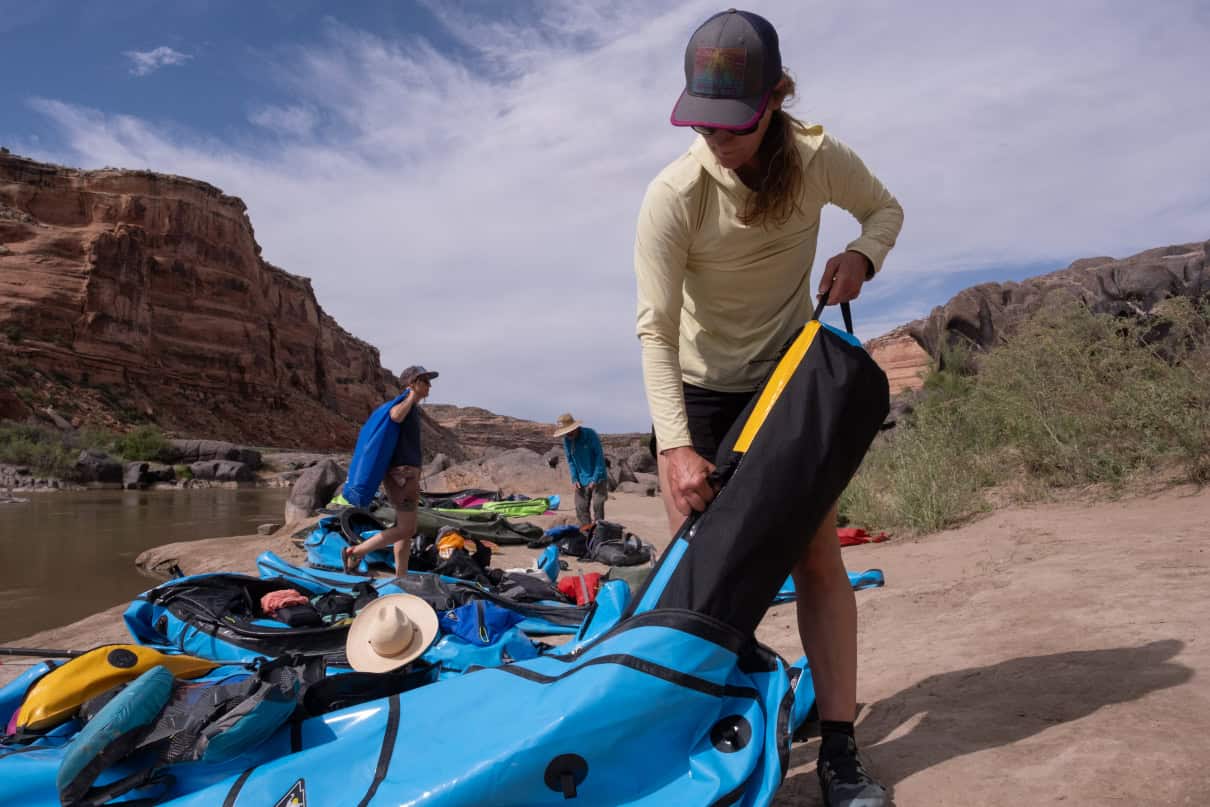
- Internal Storage Systems: The introduction of airtight, waterproof zippers installed directly into the hull revolutionized multi-day expeditions. Paddlers could now stuff heavy gear—tents, food, sleeping systems—inside the tubes of the boat before inflation. This innovation kept cargo completely dry while lowering the craft’s center of gravity, drastically improving stability in turbulent water.
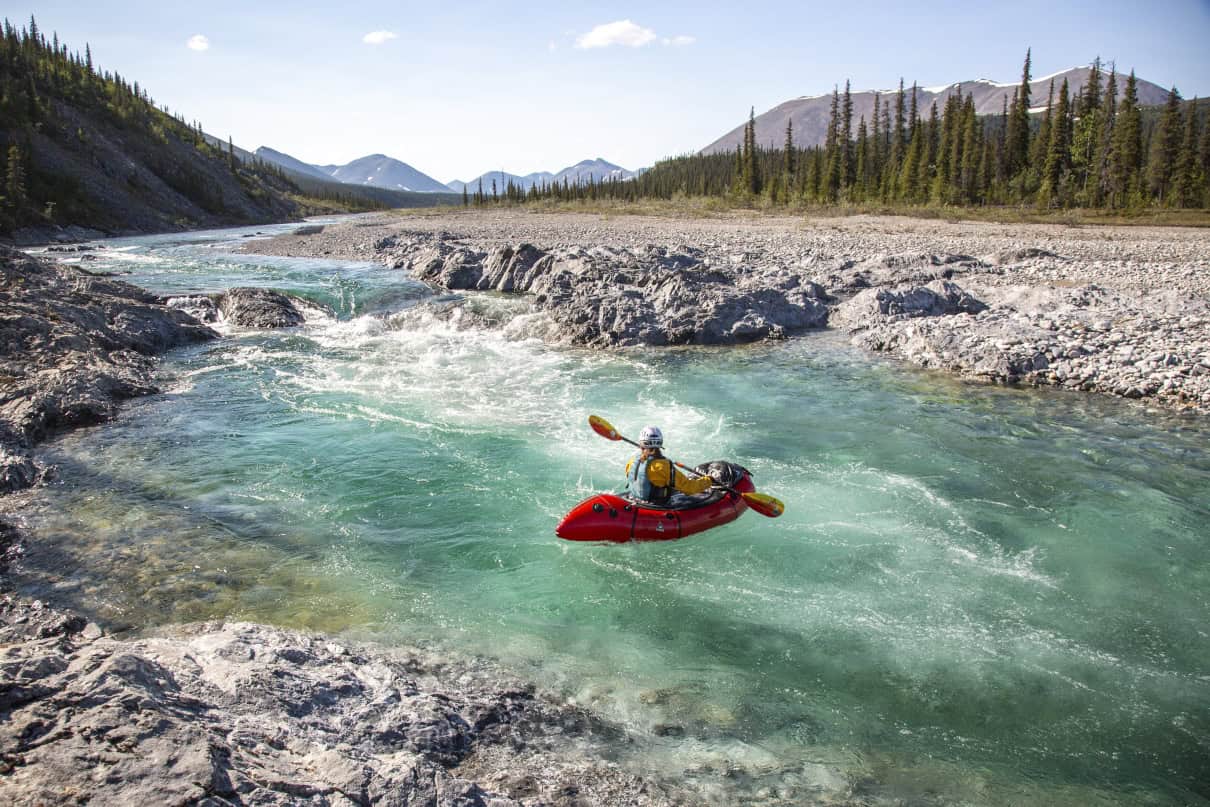
- Whitewater Performance Upgrades: Modern packrafts have evolved far beyond basic "bathtub" flatwater designs. Today’s high-end whitewater models feature rockered bows that ride up and over hydraulic holes, inflatable chines that mimic the secondary stability of hard-shell kayaks, and sophisticated thigh straps that allow paddlers to edge and maneuver through Class III and IV rapids with precision.
Supporting Context & Metrics: Anatomy of a Packraft
Choosing the right packraft requires navigating a complex design matrix. Understanding the intersection of total weight, hull configuration, and intended use is essential for matching the vessel to the adventure.
The Optimization Triangle: Weight, Durability, and Cost
Every packraft buyer faces a fundamental engineering trade-off often described as an optimization triangle: weight, durability, and cost. You can choose any two attributes, but you will invariably be penalized on the third.
- Ultralight Class (2–5 lbs): Constructed from whisper-thin, lightweight fabrics, these minimalist boats are ideal for lazy afternoons on alpine tarns, casual lake crossings, or ultra-fast mountain traverses where the boat spends most of its time packed away. They are entirely unsuited for moving water, sharp rocks, or abrasive environments.
- Utility & Expedition Class (8–12 lbs): Falling into the "sweet spot" for many seasoned adventurers, these boats utilize tougher, higher-denier coated fabrics. They are robust enough to handle multi-day wilderness trips, transport heavy cargo like big-game harvests or mountain bikes, and withstand scrape-heavy shallow rivers.
- Whitewater Performance Class (10–15+ lbs): Featuring heavy-duty floor mats, self-bailing bailers or spray decks, and aggressive outfitting, these heavier boats are built to absorb the severe impacts of churning rapids, boulder gardens, and drop-offs.
                  [WEIGHT]
                   /
                  /
                 /
                /
      [DURABILITY] ------ [COST]
  (Pick two; compromise the third)
Open Cockpit vs. Closed Deck vs. Self-Bailing
- Open "Bathtub" Hulls: The simplest, lightest, and most affordable design. An oval innertube welded to a floor. Ideal for flatwater, warm weather, and massive cargo capacity. However, they can be wet, cold, and easily swamped in rough conditions.
- Decks and Sprayskirts: Adding a spray deck and coaming sheds water entirely and traps body heat, making these models indispensable for cold-weather or alpine paddling.
- Self-Bailing Systems: Featuring an inflated false floor elevated above the waterline with drainage ports around the perimeter, self-bailing packrafts allow water that enters the boat to immediately drain out. They are favored in warm climates and technical whitewater for their simplicity and the absolute ease of entering and exiting the craft during swims.
Official Guidelines & Safety Protocols: Mastering the Craft
Because packrafts are lightweight and portable, users often underestimate the rigorous physical and technical demands of river running. Mastering safety, outfitting, and paddle mechanics is mandatory for survival in dynamic water environments.
Proper Outfitting and Ergonomics
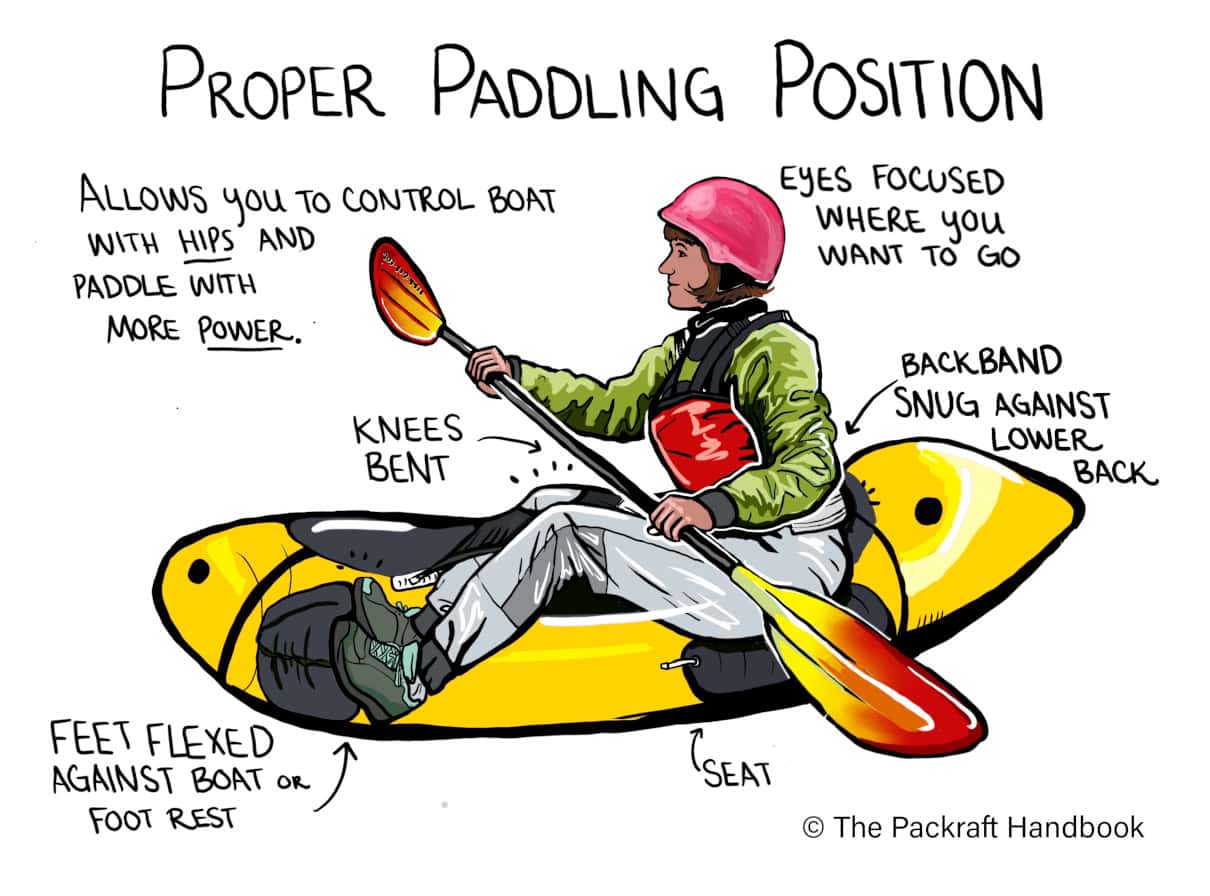
A packraft must fit its pilot like a tailored garment. Proper outfitting allows the paddler to drive the boat using large muscle groups (legs and core) rather than fatiguing the arms.
- Seat Height: Inflate the seat so that your hips sit comfortably above your feet and your elbows clear the main side tubes.
- Knee Bracing: Position your feet firmly against the bow or an integrated foot brace with your knees bent at a 45- to 60-degree angle. Use adjustable thigh straps to lock your knees against the hull, allowing you to tilt and edge the boat responsively.
- Hazard Reduction: Eliminate any closed loops, crossed lines, or loose rigging that could create snagging or entrapment hazards during a capsize.
Fundamental Paddling Strokes
Propelled by a double-bladed kayak paddle, a packraft relies on precise blade work to navigate complex currents:
- Forward Stroke: Keep the blade close to the hull and vertical. Catch the water at your ankles, draw back to your hips, and exit. Rotate your torso to maintain a stable "paddler’s box" with your arms.
- Sweep Stroke: A broad, sweeping arc executed near the surface to turn the boat rapidly.
- Draw Strokes (Side, Bow, and Stern): Essential for lateral movement, catching eddies, and peeling out into fast currents. Advanced stern draws act as rapid anchors in turbulent Class III water.
- Bracing: Essential recovery strokes used just as the boat begins to flip, utilizing low elbow positions to prevent shoulder dislocations.
Rescue and Self-Rescue Protocols
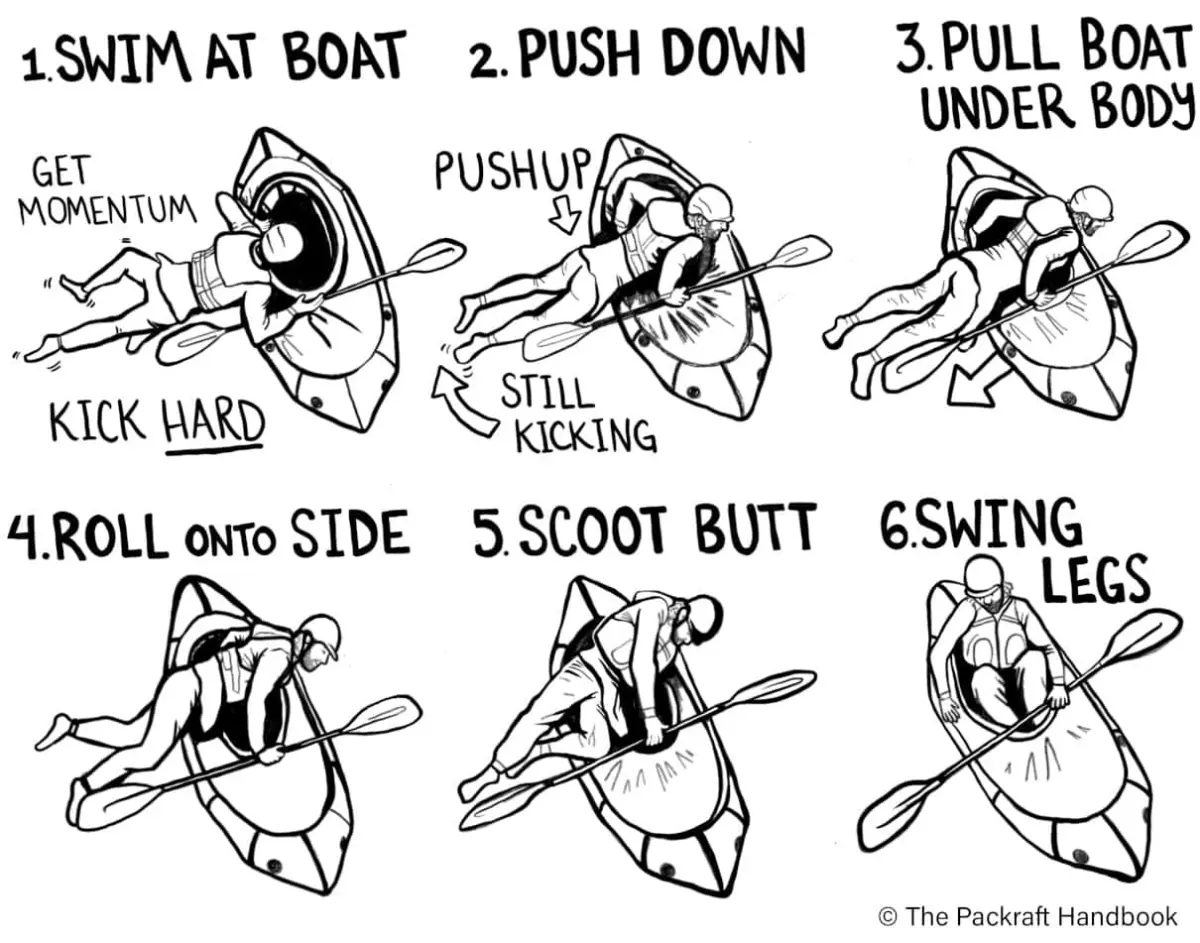
Swimming in a swiftwater environment is high-risk. If you capsize, your immediate priority (Plan A) is to hold onto your packraft with one hand and your paddle with the other, executing a wet re-entry if conditions permit.
However, never prioritize equipment over personal safety. If you are being swept toward an undercut rock, strainer, or hazard (Plan B), ditch the gear instantly and swim defensively to shore. When paddling in groups, maintain a ratio that allows for mutual assistance—ideally paddling in groups of four so that teams can split up or assist downed paddlers without leaving anyone isolated.
Future Outlook: The Next Horizon of Packrafting
As materials science marches forward, the future of packrafting points toward even lighter, stiffer, and more modular designs. Manufacturers are currently experimenting with advanced thermoplastics, carbon-fiber reinforced components, and hybrid craft that blur the lines between packrafts, packable SUPs, and minimalist sailboats.
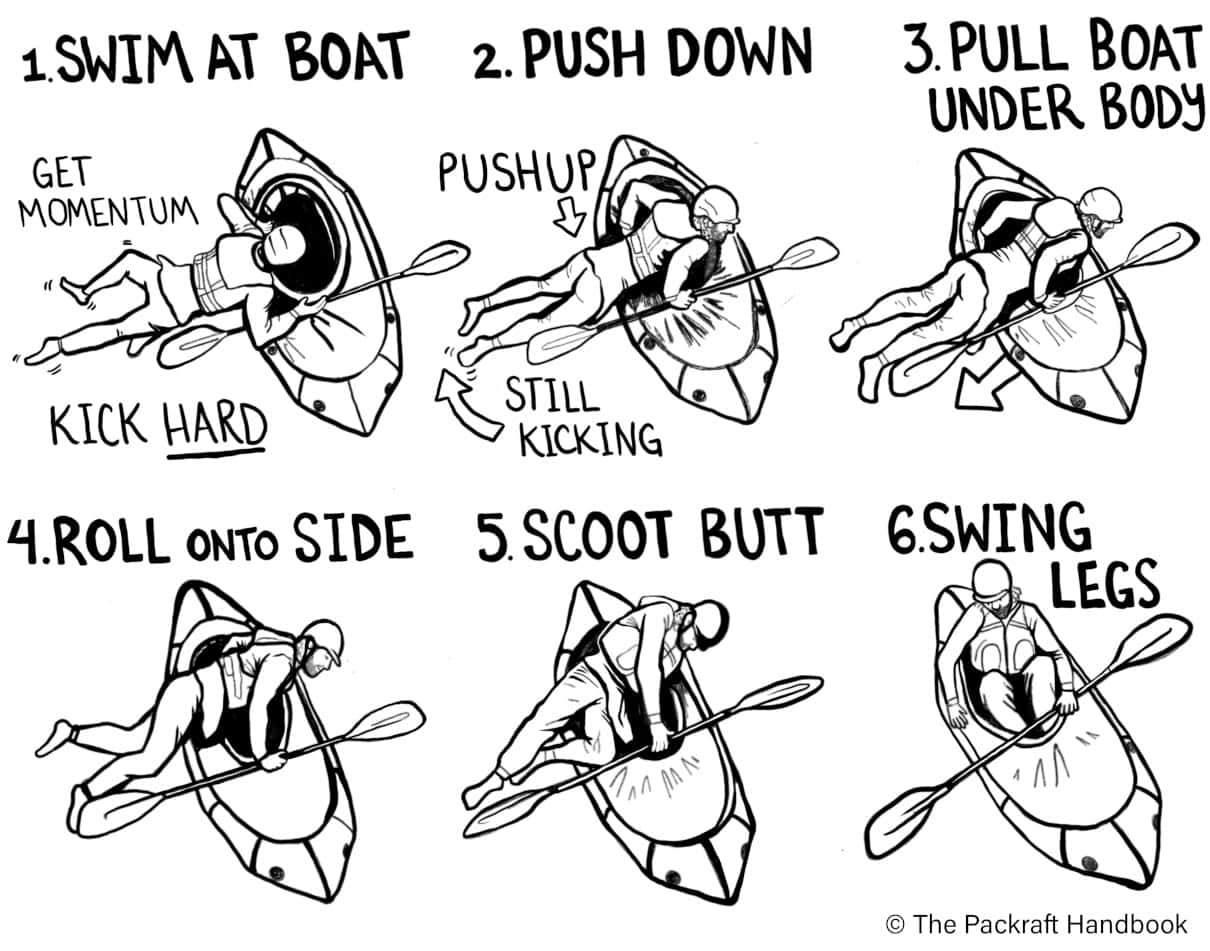
At the same time, the institutional knowledge of the community is maturing. Organizations like the American Packrafting Association (APA), alongside comprehensive educational resources like The Packraft Handbook and international safety initiatives, are working diligently to foster a culture of humility, rigorous training, and peer mentorship.
The allure of the backcountry water trail will only grow stronger as urbanization pushes outdoor enthusiasts further into untamed wilderness. Packrafts have permanently altered how we explore our planet, turning what was once an impassable frontier into an open playground—provided we treat the water with the profound respect it demands.