








Executive Overview
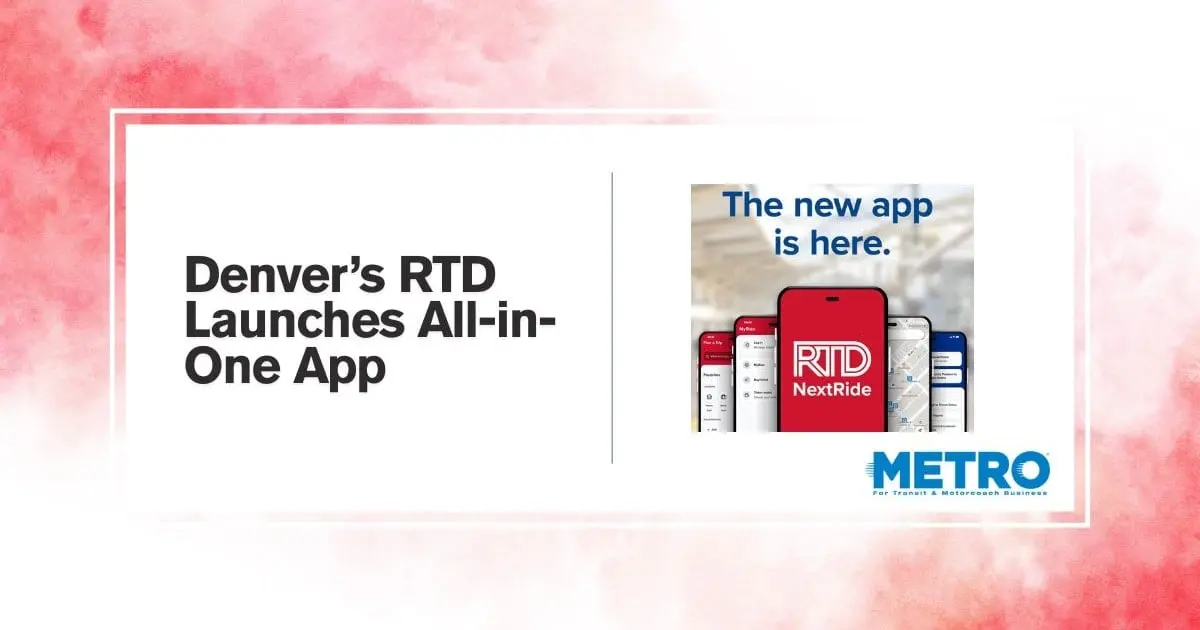
In an era defined by digital convenience and the demand for seamless urban mobility, the Denver Regional Transportation District (RTD) has officially launched its next-generation mobile application: NextRide. Designed to consolidate a fragmented ecosystem of digital tools into a single, cohesive platform, the new application represents a major milestone in public transit technology for the Mile High City.
For years, daily commuters and occasional riders alike have navigated multiple disparate applications to manage their journeys across Denver’s sprawling bus and rail networks. Checking real-time vehicle locations often required one web portal or app, purchasing digital fares necessitated another, and reporting safety or security concerns meant switching yet again to a specialized tool like Transit Watch. Recognizing the friction this caused for riders, RTD leadership embarked on a mission to unify these essential services.
The resulting NextRide mobile app—built using advanced React Native architecture and integrated software development kits—brings trip planning, digital fare management, secure transactions, direct security reporting, and customer support into one unified hub. Available now for both iOS and Android platforms, the app is fully accessible in 10 different languages, underscoring RTD’s commitment to serving Denver’s diverse, multicultural population.
Furthermore, the rollout of NextRide marks the systematic retirement of older legacy applications, including MyRide and Transit Watch. By streamlining digital infrastructure, RTD is not only reducing operational overhead and maintenance complexities but is also dramatically lowering the barrier to entry for public transit users. As urban centers across North America grapple with shifting post-pandemic commuting patterns, rider retention, and safety concerns, Denver’s bold consolidation initiative serves as an insightful case study in modern transit governance and customer-centric design.
Detailed Chronology: From Concept to Launch
The journey toward the NextRide mobile application did not happen overnight; it is the culmination of years of iterative software development, strategic public engagement, and technological evolution within RTD’s Information Technology and Customer Experience departments.
The Foundation: Web-Based Beginnings
The technological lineage of NextRide traces back to RTD’s deployment of its initial NextRide web application. Originally conceived as a desktop and mobile-web tool to help passengers track buses and trains in real time, the web app proved immensely popular. It gave riders a reliable window into schedule adherence and vehicle positioning, cutting down the anxiety of waiting at un-sheltered stops during Denver’s notoriously unpredictable weather seasons. However, while the web app excelled at tracking, it lacked transactional capabilities. Commuters still had to rely on physical ticket vending machines, paper passes, or the separate MyRide mobile application to purchase and manage fares digitally.
Identifying the Fragmentation Challenge
As RTD’s digital footprint expanded over the late 2010s and early 2020s, internal audits and customer surveys revealed a distinct friction point: digital fragmentation. Riders were juggling multiple apps on their smartphones just to complete a single transit journey. Planning a trip required checking one app or website, paying through MyRide, and keeping a separate app—Transit Watch—handy in case a security or maintenance issue arose on board a vehicle or at a station platform.

Agency leadership recognized that this multi-app ecosystem created unnecessary cognitive load for passengers, potentially deterring casual riders and visitors who lacked the patience to navigate several different platforms.
Developing the Unified Platform
In response to direct customer feedback and a mandate for operational efficiency, RTD commissioned the development of a unified mobile application. Engineers and product managers utilized React Native, a popular open-source mobile application framework, allowing for efficient cross-platform development that ensures parity between iOS and Android versions.
Rather than building in an ivory tower, RTD incorporated public input throughout the development lifecycle. Usability testing, focus groups, and iterative feedback loops helped shape the user interface (UI) and user experience (UX) design. The goal was to create an intuitive, clean layout where even the least tech-savvy rider could plan a route, buy a ticket, or alert transit police within a few taps.
The Official Launch and Transition Phase
The release of the NextRide mobile app represents the immediate culmination of this development phase. Crucially, RTD engineered the app to ensure a frictionless migration for existing digital customers. Users of the legacy MyRide platform can sign into NextRide using their existing credentials. Upon signing in, all pre-existing fare products, pass histories, and eligible customer discounts migrate automatically, ensuring that no rider loses money or promotional status during the transition.
Over the coming months, RTD will initiate a carefully managed phase-out of the standalone MyRide and Transit Watch applications. Agency officials have stressed that ample advance notice will be provided to the public before these legacy platforms are officially retired, ensuring that no rider is caught unawares by the digital transition.
Supporting Context & Metrics: Architecture and Accessibility
To truly understand the impact of the NextRide app, one must examine the technological architecture, accessibility standards, and strategic metrics that underpin its deployment.
Technical Infrastructure: React Native and Scalability
The decision to build NextRide using React Native is a strategic choice rooted in scalability and maintenance efficiency. React Native allows developers to write code primarily in JavaScript that can be deployed natively on both Apple’s iOS and Google’s Android operating systems. This ensures a consistent user interface across diverse hardware ecosystems while reducing the long-term cost of software maintenance.
Moreover, the integration of specialized software development kits (SDKs) enables seamless communication between RTD’s Computer-Aided Dispatch/Automatic Vehicle Location (CAD/AVL) systems and the mobile app’s mapping interface. This architecture guarantees that real-time vehicle locations, schedule updates, and service alerts are pushed to users with minimal latency.
Multilingual Accessibility: Serving Denver’s Diverse Communities
Public transit is an essential public service relied upon by populations from every socioeconomic and cultural background. In a dynamic metropolitan area like Denver, language barriers can frequently impede public transit adoption. Recognizing this, RTD engineered NextRide from the ground up to support 10 distinct languages.
This comprehensive linguistic support ensures that English-as-a-second-language (ESL) speakers, international tourists, and immigrant communities can navigate the transit network with the same confidence as native English speakers. By removing language barriers to trip planning and fare purchasing, RTD is actively fostering a more equitable and inclusive transportation network.
Fare Management and Financial Integration
Digital fare management is the financial engine of modern mass transit. The NextRide app streamlines this process by centralizing accounts. Riders can securely link credit cards, debit cards, or digital wallets to purchase single-ride tickets, day passes, or monthly subscriptions.
Because the app inherits the backend logic of the former MyRide system, it instantly recognizes eligible fare discounts for seniors, youth, individuals with disabilities, and low-income riders enrolled in RTD’s equity programs. This automated verification eliminates the need for manual paperwork checks at ticket windows, speeding up boarding times and reducing dwell times at stations.
Official Statements: Leadership Perspectives
The rollout of NextRide has elicited enthusiastic responses from top executives across RTD, highlighting the agency’s dual focus on customer experience and public safety.
Elevating the Customer Experience
Debra A. Johnson, RTD General Manager and CEO, emphasized that the app’s design is a direct reflection of listening to the riding public.
"RTD is introducing a new mobile experience designed to make planning trips and purchasing fares more customer intuitive," stated Johnson. "Direct customer feedback informed app development and usability enhancements, including an easy way to report security concerns."
Johnson’s comments underscore a cultural shift within modern transit agencies—moving away from rigid, top-down operational models toward agile, user-focused service delivery. By acknowledging that riders want simplicity, RTD has positioned the NextRide app as a vital tool in rebuilding post-pandemic ridership numbers and cultivating long-term customer loyalty.
Revolutionizing Transit Security and Communication
In addition to trip planning and fare collection, one of the most innovative aspects of the NextRide app is its integrated Security section. This feature connects riders directly with RTD Transit Police dispatchers in real time, transforming every commuter smartphone into a direct line of communication for safety issues.
Deputy Chief of Police Sean Faris highlighted the tactical advantages of this digital integration:
"NextRide brings multiple transit tools together in one convenient place for our customers. The app makes it easier to communicate concerns with Transit Police dispatchers in real time discreetly."
For years, transit security has been a paramount concern for both riders and agency executives nationwide. Traditional methods of reporting suspicious activity or disturbances—such as searching for a phone number on a poster or trying to flag down a busy operator—often introduced dangerous delays. The NextRide app allows a passenger to report an incident discreetly via text or digital interface, providing precise location data directly to dispatchers. This capability not only improves response times for the Transit Police but also instills a greater sense of psychological safety among riders who might otherwise hesitate to speak up.
Future Outlook: The Roadmap Ahead
While the launch of NextRide is a monumental achievement in its own right, RTD views this release not as a final destination, but as a platform for continuous improvement. The agency has already laid out an ambitious, multi-year roadmap detailing upcoming integrations and feature expansions designed to make the app even more comprehensive.
Integrating Specialized Services: Access-a-Ride and FlexRide
One of the most significant challenges in modern transit app development is unifying fixed-route services (buses and light rail) with specialized, demand-responsive transit services. RTD has committed to bridging this gap over the next several years:
- Late 2027: RTD is scheduled to incorporate Access-a-Ride trip planning directly into the NextRide application. Access-a-Ride is RTD’s ADA-compliant paratransit service, providing door-to-door transportation for individuals with disabilities who cannot independently use fixed-route services. Bringing paratransit planning into the main app will streamline operations for vulnerable riders and their caregivers.
- 2028: Following the paratransit integration, RTD plans to incorporate FlexRide trip planning into NextRide. FlexRide is RTD’s curb-to-curb and point-deviation shuttle service operating in suburban and lower-density corridors throughout the district.
By unifying fixed-route, paratransit, and microtransit planning under a single digital umbrella, RTD will create one of the most comprehensive mobility-as-a-service (MaaS) ecosystems of any regional transit agency in the United States.
Continuous Feedback and Agile Iteration
Technology does not stand still, and neither does RTD. Agency leadership has confirmed that the development team will actively collect and analyze user feedback over the coming months. This data-driven approach will guide subsequent software updates, UI/UX refinements, and feature rollouts.
Furthermore, RTD plans to maintain an open dialogue with transit advocacy groups, disability rights organizations, and daily commuters to ensure the app continues to meet the evolving needs of the Denver community.
Conclusion
The debut of the NextRide mobile application marks a transformative chapter for the Denver Regional Transportation District. By successfully merging trip planning, digital ticketing, customer support, and discreet security reporting into a single, multilingual platform, RTD has eliminated the friction that has historically plagued public transit adoption. Backed by a clear strategic roadmap that includes future paratransit and microtransit integrations, NextRide stands as a shining example of how modern technology, when paired with genuine customer feedback, can elevate public transportation into a smarter, safer, and more accessible experience for all.