







Executive Overview
The modern luxury yachting market is frequently dominated by an arms race of excess: towering superstructures, escalating horsepower metrics, and complex technological footprints that often alienate the operator from the natural environment. However, a quiet revolution is taking shape along the sun-drenched coastlines of the Mediterranean.
Based in Mallorca, Spain, startup maritime firm SAMAR Yachts has introduced its debut model, the SAMAR 50—a 15.8-meter (50-foot) solar electric yacht that challenges contemporary design paradigms.
Rather than inventing an entirely new hull profile from scratch, SAMAR looked backward to move forward. The yacht draws profound inspiration from the llaut, a traditional wooden working boat that has plied the waters of the Balearic Islands since the Middle Ages. Historically celebrated as a cultural asset of the region, the llaut was engineered to weather unpredictable Mediterranean squalls, transport high-ranking dignitaries, haul heavy fishing nets, and navigate tight coastal passages with unmatched efficiency.
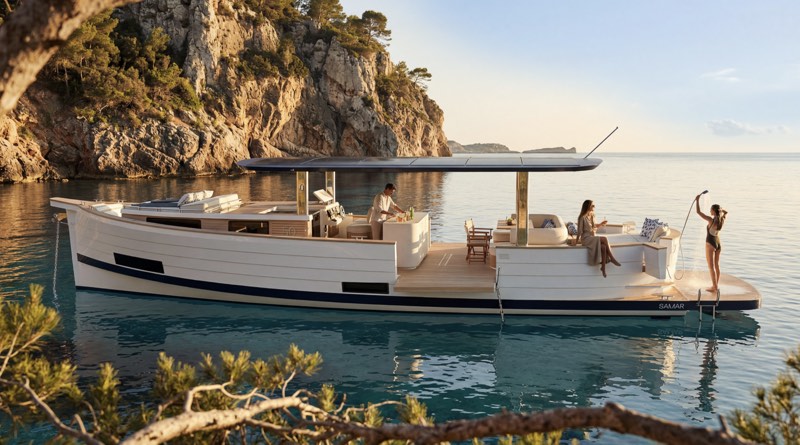
By marrying this centuries-old, laurel-leaf hull geometry with cutting-edge zero-emission propulsion and modern sustainable materials, the SAMAR 50 offers a masterclass in minimalist luxury. Designed for the modern leisure boater seeking an intuitive, silent, and deeply connected relationship with the sea, this vessel strips away unnecessary technological complexity in favor of organic efficiency.
Whether operating on its primary serial hybrid configuration or utilizing its sun-harvesting capabilities, the SAMAR 50 represents a compelling blueprint for the future of sustainable coastal cruising.
Detailed Chronology & Evolution: From Medieval Workhorses to 21st-Century Luxury
To understand the engineering marvel of the SAMAR 50, one must first trace the rich lineage of the llaut. Deeply embedded in Balearic maritime history, the traditional llaut holds an official designation as an "Asset of Cultural Interest." Over the centuries, these versatile craft have been adapted for virtually every conceivable maritime application, ranging from commercial fishing and cargo transport to combat, smuggling, and diplomatic voyages.
The Geometry of Efficiency
Traditional llauts ranged dramatically in scale, built anywhere from 4 meters to upwards of 60 meters (12 to 200 feet) in length. Despite variations in size, the core architectural DNA remained consistent. Viewed from above, the hull exhibits a distinct teardrop or laurel-leaf profile. This specific hydrodynamic shape allows the vessel to slip through the water with minimal resistance, producing remarkably gentle wakes and exceptional fuel or sail efficiency. Furthermore, traditional llauts feature low gunwales, which were originally designed to simplify the hauling of nets, ease rowing strokes, and facilitate safe boarding and disembarking for diplomats. Many historic versions also incorporated a central deck opening known as a cossia.

Reimagining the Form for Modern Boaters
Recognizing that the Mediterranean presents unique sea states and wind patterns that modern high-speed planing hulls often struggle to navigate comfortably at displacement speeds, SAMAR Yachts set out to translate the historic resilience of the llaut into a modern luxury tender.
"This project started with a very clear idea—to create a yacht that allows people to experience the sea in a quieter, more natural way," explains Miguel Rigo, CEO of SAMAR Yachts. "We are not trying to add more complexity, but to remove it. The result is a boat that feels intuitive, efficient, and truly connected to its surroundings."
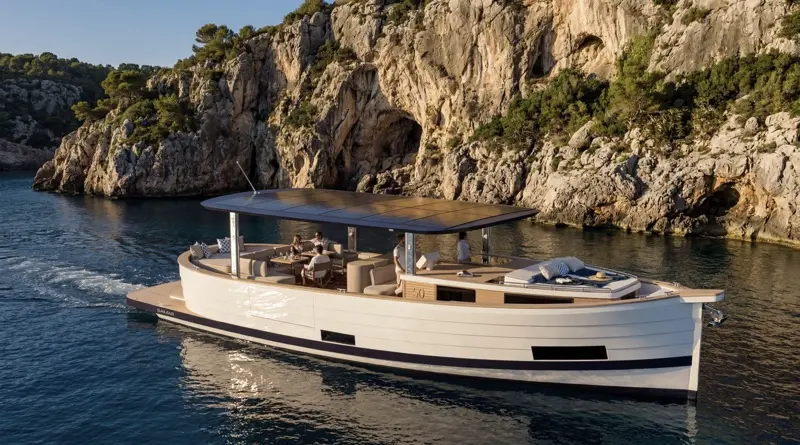
The transition from a historic wooden working boat to a 50-foot luxury leisure yacht required careful engineering. The designers retained the low-profile aesthetic and teardrop hull form while scaling it up to accommodate modern amenities. Crucially, the historic cossia concept has been reimagined for the 21st century. On the SAMAR 50, the hull walls can fold outward, dramatically expanding the aft deck area with what can be described as "hull wings." This transforms the rear of the yacht into an expansive floating backyard deck rather than a traditional enclosed cockpit.

Supporting Context & Technical Metrics
The true brilliance of the SAMAR 50 lies beneath the waterline and across its deck layout, where centuries-old naval architecture meets advanced electrification.
Propulsion Systems and Energy Storage
SAMAR Yachts offers two distinct propulsion architectures for the 50, allowing owners to tailor the vessel’s performance profile to their cruising style:
-
The Serial Hybrid Configuration (Primary Eco-Cruising Setup):
This setup features twin 40 kW (55 hp) electric motors, delivering a combined total available electric power of 80 kW (110 hp). Energy is stored in a robust lithium-ion battery pack boasting a capacity of 139 kWh. Utilizing standard naval architectural calculations (139 kWh divided by 80 kW), the electric motors can operate at absolute maximum continuous power for approximately one hour and forty-five minutes. However, at leisurely displacement cruising speeds, range expands significantly. A diesel generator acts as a range extender when needed, pushing the vessel’s top speed to roughly 10–11 knots. -
The Parallel Hybrid Configuration (Performance Variant):
For owners desiring higher speeds to reach remote anchorages quickly, a four-motor setup is available. This configuration pairs two 80 kW diesel engines (totaling 220 hp) with two 30 kW electric motors (totaling 80 hp). This system unlocks a top speed of 14 to 15 knots, though industry purists argue that pushing a hull optimized for displacement efficiency at higher speeds detracts from the serene ethos of the brand.
Deck Layout and Solar Integration
The deck is organized for seamless horizontal living. Passengers can transition effortlessly from the plush sunbathing beds at the bow, through the central cockpit and al fresco dining area, to the banquette-style lounge seating aft. From there, access to the water is frictionless thanks to the low gunwales and expansive stern platforms.

Protecting the central social hub is an integrated hardtop roof embedded with a high-efficiency solar array capable of generating up to 5.4 kWp (kilowatts-peak). Under typical Mediterranean conditions, this solar canopy continuously trickles charge back into the 139 kWh battery bank, drastically reducing the vessel’s reliance on shore power or fossil-fuel generators during day trips and extended anchoring sessions.
Materiality and Sustainable Craftsmanship
Historically, traditional llauts were brought to life by master carpenters known as maixers. These craftsmen would venture deep into local forests to hand-select prime oak or pine timbers, occasionally timing their cuts to specific lunar phases believed to optimize the wood’s structural longevity.
While the SAMAR 50 relies on modern industrial manufacturing rather than lunar timber harvesting, it maintains a strict environmental ethos. The yacht’s structure incorporates recycled and recyclable aluminum, reflecting a long-term design philosophy centered on structural durability, ease of maintenance, and material circularity.
Technical Specifications Matrix
| Feature / Metric | Specification |
|---|---|
| Length Overall (LOA) | 15.8 meters / 50 feet |
| Beam (Width) | 14.2 meters / (Configurable with hull wings) |
| Draft | 0.9 meters / ~3 feet |
| Displacement | 14 metric tonnes / tons |
| Serial Hybrid Propulsion | 2 x 40 kW electric motors + 11 kW generator |
| Serial Hybrid Top Speed | ~10–11 knots |
| Parallel Hybrid Propulsion | 2 x 80 kW diesel engines + 2 x 30 kW electric motors |
| Parallel Hybrid Top Speed | 14–15 knots |
| Battery Capacity | 139 kWh |
| Solar Array Generation | Up to 5.4 kWp |
| Passenger Capacity | Up to 12 guests + crew |
Official Statements & Industry Vision
The debut of the SAMAR 50 is more than just the launch of a new boat model; it is a calculated philosophical statement against the rapid, noise-saturated trajectory of modern yacht building.
In official company literature, SAMAR Yachts summarizes the core design directive:

"This configuration of the serial hybrid and the open-deck layout enables extended periods of silent and emission-free cruising under typical Mediterranean conditions, while significantly reducing reliance on conventional energy sources."
CEO Miguel Rigo expands on this vision, emphasizing that luxury in the 21st century should be defined by sensory peace rather than mechanical complexity.
"We are not trying to add more complexity, but to remove it," Rigo states. "The result is a boat that feels intuitive, efficient, and truly connected to its surroundings. It allows people to experience the sea in a quieter, more natural way."
By stripping away the intimidating dashboards, roaring exhausts, and excessive mechanical clutter often associated with modern motor yachts, SAMAR has created an environment where the ambient sounds of wind, hull slip, and gentle wavelets take center stage.
Future Outlook & Market Availability
As global maritime regulations tighten and consumer demand shifts toward sustainable luxury, vessels like the SAMAR 50 point the way forward for regional day-cruising and charter markets. By successfully proving that a centuries-old hull form can be optimized for zero-emission propulsion without sacrificing aesthetic appeal or modern utility, SAMAR Yachts has carved out a unique niche in the electric mobility sector.

For those eager to experience this fusion of Balearic heritage and modern green technology firsthand, the wait is over. The very first hull of the SAMAR 50 has officially been completed and is currently available for charter out of the prestigious Club de Mar in Palma, Mallorca.
As prospective buyers and charter guests step aboard to glide silently across the Balearic blue waters, the SAMAR 50 stands as proof that the future of yachting does not lie in inventing entirely new ways to conquer the sea, but in rediscovering how to coexist with it in harmony.