







Executive Overview
The ground transportation industry stands at a critical juncture. Rapidly evolving technology, shifting labor dynamics, changing commuter habits, and economic volatility have placed unprecedented pressure on public and private transit systems alike. In this high-stakes environment, traditional leadership models are no longer sufficient to guarantee survival, let alone long-term prosperity.
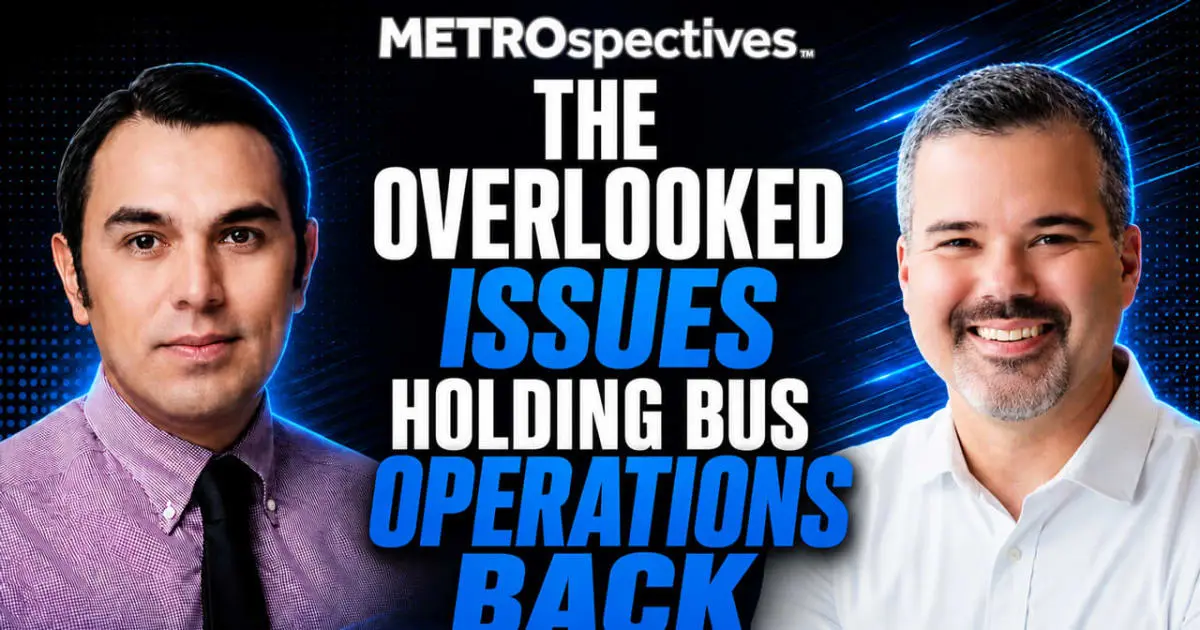
To unpack what it takes to build a truly resilient organization, METRO Magazine Executive Editor Alex Roman sat down with Brian Dickson—founder of Bus Business Consultants and Ground Transportation Insights (GTI)—on a recent episode of the METROspectives podcast. Dickson, a seasoned veteran whose career spans roles as an operator, executive, consultant, and industry observer, brings a wealth of hard-earned wisdom to the table.
This comprehensive feature explores the core takeaways from their conversation, examining how modern transit leaders can cultivate organizational health, redefine leadership through strategic empathy, and proactively engineer future options rather than merely reacting to crises. By synthesizing Dickson’s insights with broader industry trends, this article serves as an authoritative playbook for transportation executives seeking to future-proof their operations in a rapidly transforming landscape.
Detailed Chronology: The Evolution of Transit Leadership
To understand where the transportation industry is heading, one must first examine how it has evolved. For decades, the ground transportation sector—encompassing everything from municipal transit agencies and school bus fleets to private motorcoach operators—operated on a relatively stable, predictable playbook. Success was historically measured by mechanical reliability, route adherence, cost control, and regulatory compliance.
However, the dawn of the 21st century introduced a cascade of disruptions. The proliferation of ride-sharing networks, the rapid advancement of electric and autonomous vehicle technologies, and, most recently, the systemic shocks of the global pandemic completely redefined passenger expectations and operational realities.
Phase One: The Reactive Era of Early Disruption
When initial technological and economic shifts began disrupting legacy transit models in the 2010s, many organizations responded with defensiveness or slow-moving skepticism. Leaders relied on historical data and incremental adjustments to navigate shifting market demands. According to Dickson, this reactive stance exposed a fundamental vulnerability within the industry: a lack of organizational agility. Companies that viewed disruption as an anomaly rather than a permanent operating condition found themselves constantly playing catch-up, handcuffed by rigid corporate structures and outdated operational habits.
Phase Two: The Pandemic Crucible and Cultural Reckoning
The arrival of the COVID-19 pandemic acted as a massive stress test for the global transportation ecosystem. Ridership plummeted overnight, revenues vanished, and labor shortages reached historic highs. It was during this crucible that the true measure of organizational health revealed itself. Organizations with toxic or fragile cultures fractured under the pressure, suffering from severe employee attrition and communication breakdowns. Conversely, companies with resilient, people-first cultures demonstrated remarkable adaptability, leveraging trust and transparent communication to navigate uncharted waters.
Phase Three: The Proactive Paradigm
Today, leaders like Brian Dickson are championing a new era—one defined by strategic intentionality. Modern transit leadership is no longer about weathering the storm; it is about building a vessel capable of charting its own course regardless of the weather. This requires a fundamental shift in mindset: moving away from short-term firefighting and toward the deliberate creation of long-term strategic options.
Supporting Context & Metrics: The Anatomy of Organizational Health
Organizational health is frequently confused with financial profitability or operational scale. However, as Dickson emphasizes, a company can look healthy on a balance sheet while suffering from systemic rot underneath. In the transportation sector—where human lives are transported daily and safety is paramount—organizational health is a multifaceted discipline requiring careful cultivation.
Defining Organizational Health in Transit
In the context of ground transportation, organizational health encompasses alignment across four critical pillars:
- Leadership Integrity: Leaders who walk the talk, foster psychological safety, and view empathy not as a weakness, but as a hard-edged strategic asset.
- Operational Transparency: Open channels of communication between frontline workers (drivers, mechanics, dispatchers) and executive suites.
- Talent Resilience: Robust recruitment, continuous training, and genuine retention programs that combat industry-wide labor shortages.
- Strategic Optionality: The ability to pivot, scale, or diversify service offerings based on real-time market signals.
The Cost of Neglect
Industry data underscores the high stakes of neglecting organizational health. According to recent workforce analyses across the transportation sector, driver turnover rates continue to hover at unsustainable levels—often exceeding 30% to 40% annually for certain segments of commercial motorcoach and transit operations. The financial toll of recruiting, vetting, and training a replacement driver routinely costs thousands of dollars per employee, not to mention the hidden costs associated with service disruptions, scheduling delays, and diminished customer satisfaction.
Furthermore, safety metrics are inextricably linked to organizational culture. Operators suffering from low morale, excessive overtime, and strained management-employee relations consistently record higher rates of preventable accidents and compliance infractions. Dickson’s philosophy directly addresses this vulnerability, arguing that investing in the psychological and structural well-being of the workforce is the most effective safety protocol an operator can implement.
Official Insights: Key Takeaways from Brian Dickson
During his conversation on METROspectives, Brian Dickson articulated several foundational principles that every transportation leader should integrate into their strategic planning.
1. Kindness Isn’t Soft—It’s Strategic
One of Dickson’s most compelling arguments challenges the old-school corporate trope that hard-nosed, authoritarian leadership yields the best results. Drawing a sharp distinction between passive niceness and active, strategic empathy, Dickson explains that true leadership kindness involves setting clear expectations, holding people accountable with respect, and genuinely investing in the well-being of the team.
- "Kindness in leadership is not about avoiding hard conversations or lowering the bar," Dickson notes. "It is about creating an environment where employees feel valued, heard, and supported so they can perform at their highest potential."
In an industry facing severe labor shortages, organizations that master this balance of empathy and accountability are winning the talent war. Drivers and mechanics are voting with their feet, increasingly choosing to work for cultures that respect their dignity and acknowledge the demanding nature of their roles.
2. Building Options, Not Just Responses
Too many transit organizations operate on a cycle of crisis management. When a disruption occurs—whether it’s a sudden spike in fuel prices, a supply chain bottleneck for spare parts, or a dramatic shift in municipal ridership patterns—leaders scramble to put out the fire.
Dickson argues that healthy organizations do something radically different: they intentionally create options before they are forced to use them.
- "Creating options means looking down the road and asking: What if our primary revenue model shifts? What if our labor pool shrinks by another 10%? What if new mobility technologies capture 20% of our market?" Dickson explains. "If you wait until you are backed into a corner to answer those questions, you have already lost."
By diversifying service lines, investing in cross-training programs, maintaining healthy capital reserves, and fostering innovation mindsets among mid-level managers, resilient operators build a strategic buffer that allows them to pivot smoothly when market conditions shift.
3. Bridging the Gap Between the Frontline and the Boardroom
A recurring theme in Dickson’s consulting work is the dangerous disconnect that often forms between executive leadership and frontline operations. Executives sitting in corporate headquarters can easily become insulated from the day-to-day realities experienced by bus operators, dispatchers, and maintenance technicians.
Dickson emphasizes that organizational health requires intentional feedback loops. Leaders must actively seek out the perspectives of those interacting with customers and equipment on the front lines every single day. These frontline workers are often the first to notice emerging trends, operational bottlenecks, or customer dissatisfaction. Empowering them to speak up—and acting on their insights—transforms an organization from a top-down hierarchy into a responsive, collaborative community.
Future Outlook: Navigating the Road Ahead
As the transportation industry looks toward the horizon, the challenges facing operators are complex, yet the path forward is becoming increasingly clear. The era of passive management is officially over. To thrive in the coming decade, transportation organizations must embrace the holistic leadership principles championed by industry experts like Brian Dickson.
Embracing Technological Integration Without Losing the Human Element
The rise of zero-emission fleets (battery-electric and hydrogen fuel cell buses), advanced driver-assistance systems (ADAS), and data-driven dispatching software will continue to reshape operations. However, technology is merely a tool; its success depends entirely on the people wielding it. Future-proof organizations will successfully bridge the gap between cutting-edge innovation and human-centric leadership, ensuring that technology empowers workers rather than alienating them.
Cultivating Adaptive Governance and Continuous Learning
Agility will remain the ultimate competitive advantage. Transit agencies and private operators alike must institutionalize strategic foresight, treating long-range planning not as an annual document that sits on a shelf, but as a living, breathing practice. By regularly stress-testing their business models and fostering a culture of continuous learning, organizations can turn uncertainty into an engine for growth.
A Call to Action for Industry Leaders
The insights shared by Brian Dickson on METROspectives serve as both a diagnostic tool and an inspirational guide. For executives, managers, and entrepreneurs in the ground transportation space, the message is unequivocal: building a resilient organization requires courage, empathy, and uncompromising intentionality.
As the industry accelerates into its next chapter, leaders who prioritize organizational health, champion strategic kindness, and proactively engineer their future options will not only survive the twists and turns of the modern transit landscape—they will lead the way.
Make sure you’re signed up for the METRO Express newsletter so you don’t miss another episode of METROspectives. Sign up for the METRO Express newsletter and follow METRO Magazine on LinkedIn, Facebook, and Twitter to stay connected with the pulse of the ground transportation industry.