






Executive Overview
The Orange County Transportation Authority (OCTA) Board of Directors has advanced a critical blueprint aimed at safeguarding one of the nation’s most vital and fragile transportation arteries. During a pivotal Monday session, the board reviewed the Draft Coastal Rail Resiliency Feasibility Report, directing agency staff to expand coordination with regional stakeholders, regulatory agencies, and the public ahead of a final study adoption later this year.
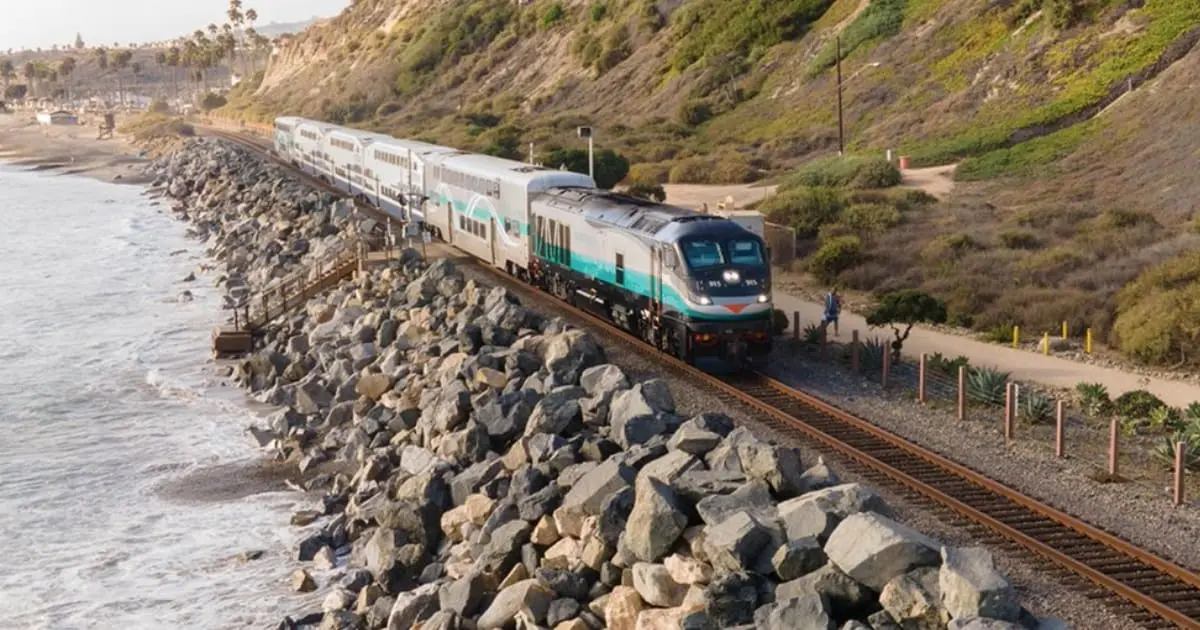
This comprehensive report represents the latest milestone in the multi-year Coastal Rail Resiliency Study (CRRS), launched in late 2023. The initiative is tasked with evaluating, prioritizing, and engineering potential strategies to protect approximately seven vulnerable miles of the Los Angeles-San Diego-San Luis Obispo (LOSSAN) Rail Corridor. Stretching through Dana Point and San Clemente to the Orange County-San Diego County line, this segment of track is ground zero for the escalating battle between critical infrastructure and accelerated coastal erosion.
Rather than proposing a single, uniform engineering fix for the entire seven-mile stretch, the draft report establishes a robust technical foundation and a diversified "toolbox" of interventions. These range from rail-foundation enhancements and bluff-stabilization techniques to beachside sand replenishment and engineered armoring.
The strategy focuses squarely on near- and medium-term resilience—securing safe, reliable passenger and freight rail operations for up to the next 30 years. Meanwhile, parallel, state-led initiatives will evaluate generational, long-term alignments and structural alternatives beyond that timeframe. With the corridor having suffered nearly a full year of cumulative service disruptions since 2021 due to landslides, bluff failures, and relentless ocean swells, the stakes could not be higher for Southern California’s economy, mobility, and national security.
Detailed Chronology of the Coastal Rail Resiliency Study
The Genesis of a Regional Crisis (Late 2021 – 2023)
The vulnerability of the Southern California coastal rail network transitioned from an abstract climate-change projection to an urgent operational crisis over the last several years. Between late 2021 and 2023, a confluence of rising sea levels, severe coastal storms, high-energy ocean swells, and destabilized coastal bluffs triggered catastrophic mudslides and track displacement in San Clemente.
These geological events forced repeated, emergency shutdowns of passenger and freight rail services. Intercity travelers, commuters, and freight haulers faced systemic delays and severed connections, isolating San Diego County from the rest of the national rail network for weeks at a time. Recognizing that reactive, emergency-only stabilization measures were fiscally and operationally unsustainable, OCTA leadership authorized the Coastal Rail Resiliency Study in late 2023. The goal: transition the agency from a perpetual cycle of crisis management to a proactive, scientifically rigorous long-term defense strategy.
From 23 Concepts to a Tailored Toolbox (2024 – Early 2025)
As the study progressed through its technical phases, engineers and environmental planners cast a wide net, initially evaluating 23 distinct engineering concepts. These ranged from avant-garde track stabilization methods and subsurface drainage systems to traditional physical barriers like catchment walls, deep-soil mixing, and extensive bluff-anchoring systems.

Concurrently, the study evaluated a wide spectrum of beachside protection mechanisms designed to dissipate wave energy before it could impact the toe of the bluffs. Following rigorous technical scrutiny, public workshops, and collaborative reviews with regulatory bodies—including the California Coastal Commission—the study was refined. The final selection of viable concepts discarded one-size-fits-all mandates in favor of location-sensitive application.
Review, Feedback, and the Path to Finalization (Mid-2025 and Beyond)
The release of the Draft Feasibility Report and its formal review by the OCTA Board of Directors marks the transition from conceptual planning to project development. By directing staff to continue stakeholder outreach and regulatory coordination throughout the remainder of the year, the board has ensured that environmental stewardship and community concerns remain central to the process.
Following the finalization of the study later this year, any specific project advancing from the "toolbox" must traverse a complex gauntlet. This includes detailed engineering design, rigorous state and federal environmental reviews (under CEQA and NEPA), continuous public engagement, the acquisition of multi-agency regulatory permits, and the securing of dedicated capital funding.
Supporting Context, Metrics, and Strategic Interventions
Anatomy of a Critical Transportation Link
The LOSSAN Corridor is far more than a scenic commuter line; it is the second busiest intercity passenger rail corridor in the United States. Serving a dense network of stakeholders, the corridor acts as a shared highway for:
- Metrolink: Providing essential regional commuter rail service across Southern California counties.
- Amtrak’s Pacific Surfliner: Connecting San Diego, Orange County, Los Angeles, Ventura, Santa Barbara, and San Luis Obispo.
- BNSF Railway: Facilitating vital freight rail movements that support West Coast supply chains and international trade.
- National Defense: Serving as an integral strategic rail link connecting major military installations, such as Camp Pendleton, to national logistics networks.
Financial Commitments and Emergency Response Metrics
To combat the relentless geological degradation of the San Clemente coastline, OCTA and its partner agencies have aggressively pursued capital resources. To date, OCTA has secured more than $300 million in combined federal, state, and local funding dedicated exclusively to emergency rail protection and stabilization efforts.
These funds have already supported emergency intervention projects, including:
- The installation of massive steel anchor rows and tie-backs into failing bluffs.
- The construction of catchment walls designed to intercept rolling debris.
- Emergency placement of heavy armor stone (riprap) to protect vulnerable track foundations from wave action.
The Science of Sand: Replenishment as a Shield
Perhaps the most ecologically sensitive and dynamic pillar of OCTA’s resiliency strategy is large-scale sand replenishment. Beaches act as natural shock absorbers, dissipating wave energy before it can scour the base of coastal bluffs.
Building upon an initial emergency placement of approximately 2,500 cubic yards of sand at San Clemente’s North Beach, OCTA is spearheading an ambitious expansion. The agency is advancing plans to deposit up to 540,000 cubic yards of sand along the San Clemente coastline. This massive project is being closely synchronized with broader, regional sand-replenishment initiatives across South Orange County to maximize retention, environmental benefit, and long-term coastline stability.
Official Statements and Leadership Perspectives
The gravity of the crisis and the collaborative nature of the proposed solutions were underscored by leadership during the board’s deliberations.
OCTA Chair Jamey M. Federico, who also serves as a Dana Point council member, emphasized the delicate balance between aggressive infrastructure protection and community stewardship:
"This is an important step toward identifying practical solutions that can help protect this critical rail corridor while continuing to incorporate input from residents, regulatory agencies, and other stakeholders," said OCTA Chair Jamey M. Federico.
"The work ahead will require continued coordination among local, state, and federal agencies, and we remain committed to advancing solutions that support safe and reliable rail service while continuing to be a partner in broader coastal resiliency planning efforts."
Transportation experts and board members alike noted that the draft report provides an essential reality check: short-term engineering bandages can no longer guarantee the long-term viability of tracks sitting at the mercy of rising seas and eroding cliffs. The consensus among regional planners is that protecting the LOSSAN corridor requires an unprecedented level of intergovernmental cooperation, blending hard engineering with soft-shoreline protection techniques.
Future Outlook: A Multiphased Vision for Southern California Rail
As the Coastal Rail Resiliency Study moves toward final adoption later this year, the road ahead is both challenging and clearly defined. The findings of the Draft Feasibility Report deliver an unmistakable conclusion: the vulnerabilities facing the coastal rail corridor are systemic and long-term.
Short- to Medium-Term Horizon (0 – 30 Years)
Over the next three decades, the implementation of the CRRS "toolbox" will dictate the survival of the current alignment. Success will depend on the seamless integration of:
- Targeted Hard Armoring: Judicious repair and restoration of riprap, engineered revetments, and seawalls where bluff erosion threatens immediate structural failure.
- Advanced Beach Nourishment: Sustained, cyclical placement of hundreds of thousands of cubic yards of sand to maintain wide protective beaches.
- Bluff and Foundation Stabilization: Subsurface drainage improvements, slope stabilization, and innovative track-bed reinforcement.
Long-Term Horizon (Beyond 30 Years)
While OCTA’s current purview focuses on securing the existing right-of-way for the next generation, state-level leaders and transportation planners are already initiating parallel feasibility studies for long-term alternatives. These discussions include examining potential inland realignments or tunneling options to permanently remove passenger and freight rail operations from the dynamic and increasingly hazardous coastal bluff environment.
Until such monumental capital investments can be planned, funded, and constructed, OCTA’s ongoing initiatives remain the primary bulwark defending Southern California’s rail network. By combining rigorous engineering data, substantial funding, active public engagement, and multi-agency partnerships, OCTA is charting a resilient course to keep the LOSSAN corridor safe, operational, and connected for decades to come.