










Executive Overview
The global aviation industry stands at a critical juncture, navigating the crosscurrents of geopolitical instability, fluctuating commodity markets, and evolving consumer demand patterns. In a recent high-profile interview with CNBC, followed by a major route expansion announcement at Newark Liberty International Airport, United Airlines CEO Scott Kirby offered a nuanced, forward-looking perspective on the macroeconomic forces shaping the airline sector.
Kirby’s central thesis posits that while global oil prices are expected to experience a gradual downward trajectory through 2027, the era of cheap airfares is unlikely to return anytime soon. This divergence between declining fuel costs and stubbornly high ticket prices underscores a fundamental shift in how major carriers manage capacity, operational expenditures, and profitability.
For millions of travelers and industry analysts alike, Kirby’s remarks signal that the post-pandemic surge in travel demand—often termed "revenge travel"—has matured into a permanent baseline of high consumer willingness to pay. However, industry watchdogs and financial analysts are sounding a note of caution. While United Airlines is aggressively betting that passenger demand will remain resilient enough to absorb elevated pricing, historical market dynamics suggest that unchecked capacity expansion will eventually compress profit margins and put downward pressure on fares.
This comprehensive report examines the multifaceted implications of Kirby’s forecasts, analyzing the interplay between geopolitical conflicts, jet fuel volatility, corporate capacity strategies, and the long-term outlook for commercial aviation.
Detailed Chronology: From Middle East Tensions to Newark’s Global Expansion
To fully grasp the current state of airline economics, it is necessary to trace the sequence of events that has defined the operational landscape over the past several years. The shockwaves currently reverberating through airline balance sheets are rooted in a cascading series of geopolitical and economic disruptions.
The Pandemic Recovery and the Cost Squeeze
Following the unprecedented devastation of the COVID-19 pandemic, the commercial aviation sector experienced a rapid, pent-up surge in passenger demand. Airlines scrambled to rehire staff, restore grounded fleets, and re-establish global route networks. However, this recovery coincided with severe supply chain bottlenecks and labor shortages.
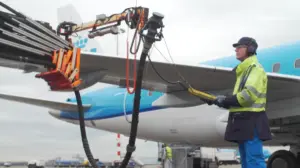
Just as carriers began stabilizing their operations, global energy markets suffered a severe shock. The outbreak of conflict involving Iran and broader instability in the Middle East sent crude oil prices soaring. Because jet fuel represents one of the single largest variable expenses for any airline—frequently accounting for 25% to 30% of total operating costs—the spike in energy prices dealt an immediate blow to profit margins.
The 20% Fare Hike Paradigm
Faced with rapidly escalating operating expenses, major U.S. carriers had little choice but to pass these costs on to consumers. Throughout the preceding year, domestic and international airfares climbed by more than 20% on average. Remarkably, despite this steep inflationary pressure, consumer demand proved remarkably inelastic. Travelers, eager to resume pre-pandemic travel habits, absorbed the higher ticket prices, enabling airlines to post healthy revenues despite the energy headwinds.
The CNBC Interview and Newark Route Unveiling
Against this backdrop, United Airlines CEO Scott Kirby appeared on CNBC to articulate his macroeconomic outlook. Pinpointing the trajectory of energy markets, Kirby noted that his baseline expectation is for oil prices to begin a slow, orderly retreat moving toward 2027.
Immediately following his media appearance, Kirby traveled to Newark Liberty International Airport, where United unveiled an ambitious slate of new international routes. This juxtaposition—predicting lower oil costs while aggressively expanding capacity—highlights United’s aggressive posture. The airline is actively staking its financial future on the assumption that premium demand and robust international travel will insulate it from commodity market fluctuations.
Supporting Context & Metrics: The Economics of Modern Aviation
Understanding why airfares remain stubbornly high even as oil prices eventually decline requires a deep dive into the underlying metrics governing airline finance, fleet management, and capacity allocation.
The Jet Fuel Imperative
Jet fuel (Kerosene-type) pricing is directly tethered to Brent and West Texas Intermediate (WTI) crude benchmarks, but it also reflects regional refining margins (crack spreads). When geopolitical tensions disrupt Middle Eastern shipping lanes or infrastructure, refining capacity tightens, causing jet fuel prices to decouple and spike even higher than standard crude.
[Geopolitical Conflict in Middle East]
       │
       ▼
[Crude Oil Supply Disruption]
       │
       ▼
[Spike in Refining Crack Spreads]
       │
       ▼
[Surging Jet Fuel Costs (~30% of Airline OpEx)]
       │
       ▼
[Airfares Raised >20% to Protect Margins]
While Kirby anticipates a gradual easing of oil prices through 2027, he emphasized that prices will settle at a structurally higher baseline than the pre-pandemic era. Consequently, airlines must maintain higher baseline yields (revenue per passenger mile) simply to break even on historical operational metrics.
Capacity Management vs. Pricing Power
For decades, the airline industry operated under a boom-and-bust cycle characterized by cutthroat price wars and overcapacity during economic downturns. However, the post-pandemic era has ushered in a more disciplined approach to capacity management. Major network carriers like United, Delta, and American have learned to closely align available seat miles (ASMs) with real-time demand.
- The Premium Shift: A significant driver of sustained high fares is the structural shift in consumer preferences. Premium cabins (Polaris business class, premium economy) are filling up faster and commanding higher yields than economy cabins. Airlines have redesigned widebody and narrowbody aircraft to feature a higher percentage of premium seats, shifting the revenue mix away from ultra-low-cost volume models.
- The Overcapacity Trap: As noted by industry skeptics, United’s current strategy relies on the continuation of this robust demand environment. However, economic theory dictates that as carriers continually add capacity to capture market share, the increased supply will eventually outpace demand. When that tipping point is reached, airlines will be forced to stimulate sales through discounting, placing downward pressure on ticket prices.
Official Statements and Industry Analysis
The commentary surrounding Kirby’s predictions reflects a broader debate among aviation executives, financial analysts, and consumer advocates regarding the sustainability of current airline pricing models.
Scott Kirby’s Perspective
During his media engagements, Kirby was pragmatic about the energy outlook while defending the structural necessity of current pricing models.
"My base case would be that oil sort of gradually declines," Kirby stated during his CNBC interview. "It stays higher than it was, but that oil gradually declines into 2027."
By acknowledging that energy costs will remain elevated compared to historical averages, Kirby implicitly justified the retention of higher ticket prices. United’s management team maintains that modernizing fleets with more fuel-efficient Boeing and Airbus aircraft mitigates some environmental and fuel-cost pressures, but not enough to justify slashing fares.
Wall Street and Competitor Reactions
Financial analysts have offered mixed reactions to United’s dual strategy of expanding international routes while anticipating softer oil markets.
- The Bull Case: Proponents argue that United’s hub structure at Newark, Chicago, Denver, and San Francisco gives it unmatched pricing power on lucrative trans-Atlantic and trans-Pacific corridors. Furthermore, corporate travel—though lagging leisure travel in full recovery—is returning at higher yields, further stabilizing revenues.
- The Bear Case: Conservative analysts warn that airlines are ignoring early warning signs of broader macroeconomic softening. Inflationary pressures on everyday consumers, combined with rising debt levels, could cause discretionary leisure travel to contract sharply. If demand dips while capacity continues to expand, airlines could trigger an unprofitable fare war.
Future Outlook: Navigating the Horizon to 2027
As the commercial aviation industry charts its course toward 2027, several key trends and variables will determine whether Scott Kirby’s predictions materialize and how airlines navigate the tension between capacity, fuel, and pricing.
1. Geopolitical Volatility and Energy Markets
The primary wild card in Kirby’s forecast is the unpredictability of geopolitical flashpoints. While a gradual decline in oil prices is the logical baseline barring major new escalations, any sudden supply shock in the Middle East or Eastern Europe could instantly reverse energy trends. Airlines must maintain sophisticated hedging strategies and flexible balance sheets to absorb potential energy spikes without resorting to emergency fare hikes that could alienate price-sensitive consumers.
2. Fleet Modernization and Sustainability Targets
Environmental regulations and the push toward sustainable aviation fuels (SAF) represent another long-term cost pressure. As governments worldwide implement stricter carbon-offset mandates and emissions caps, airlines will face rising compliance costs. United Airlines has been a vocal proponent of SAF investments, but the current production scale of green fuels means they remain significantly more expensive than conventional fossil-derived jet fuel. These green premiums will inevitably factor into future ticket pricing structures.
3. Consumer Resilience and the Shift in Travel Habits
Perhaps the most critical factor is the psychological evolution of the modern traveler. The post-pandemic prioritization of experiential spending—where consumers allocate disposable income toward travel rather than traditional material goods—has defied conventional economic recessions so far. However, if macroeconomic growth slows significantly, the limits of consumer price elasticity will be tested.
Conclusion
Scott Kirby’s projections for United Airlines and the broader aviation sector paint a picture of an industry that has permanently evolved. The combination of structurally higher baseline energy costs, disciplined capacity management, and enduring consumer demand for travel means that the days of bargain-basement airfares are unlikely to return anytime soon.
While United’s aggressive expansion of international routes at hubs like Newark demonstrates supreme confidence in near-term demand, the underlying warnings from financial markets cannot be ignored. As carriers race to capture global market share, the delicate balance between supply, pricing power, and profitability will face severe tests in the years leading up to 2027. For travelers, the takeaway is clear: exploring the world will continue to command a premium price in a fundamentally reshaped global economy.