



By Jeff Watters, Vice President of External Affairs
Published by Ocean Conservancy
Estimated Reading Time: 7 Minutes
Executive Overview
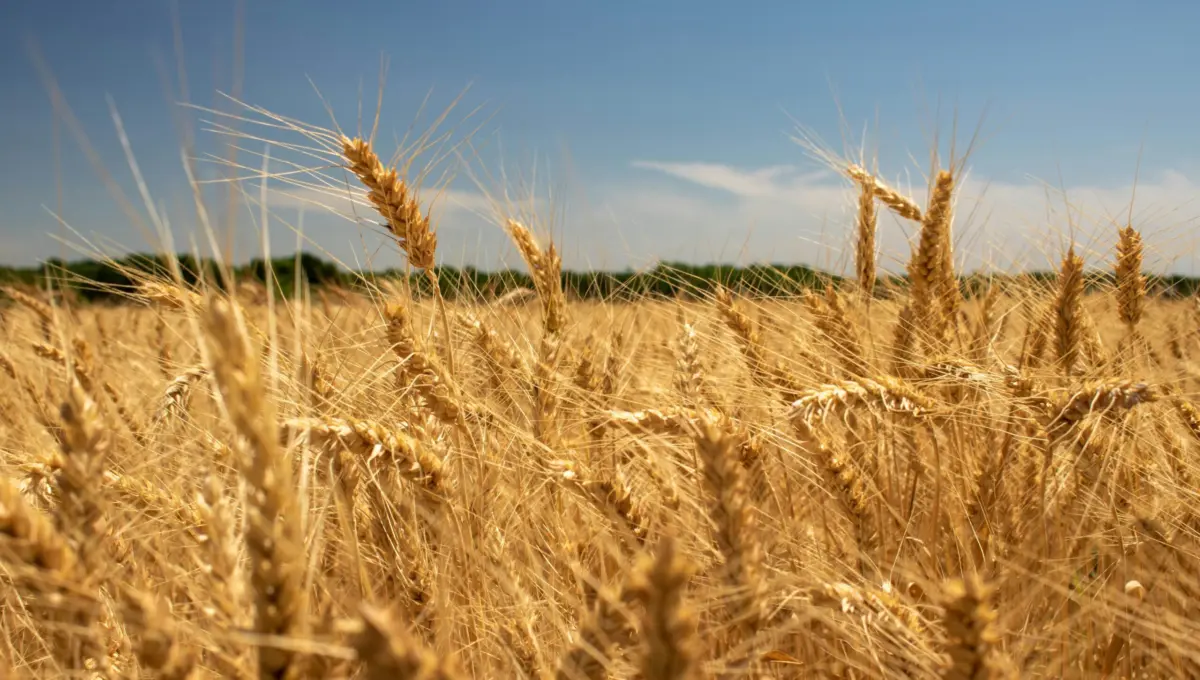
If you were to ask the average American to list the states most reliant on the ocean, Kansas would almost certainly be left off the roster. Characterized by expansive horizons, a rich agricultural heritage, and a complete absence of coastal access, the "Sunflower State" epitomizes the concept of being landlocked. There are no breaking waves crashing against Kansas borders, no saltwater ports fueling its economy, and no maritime horizons shaping its immediate geography.
Yet, to view the ocean as an exclusively coastal concern is to fundamentally misunderstand the intricate, planetary-scale systems that govern our weather, our economy, and our safety. A compelling new report released by Ocean Conservancy reveals a profound truth that applies just as much to Wichita and Dodge City as it does to Miami and Seattle: the ocean does not stop mattering at the shoreline.
At the center of this interconnected web is the National Oceanic and Atmospheric Administration (NOAA). Frequently mischaracterized as a localized agency dedicated solely to marine biology or coastal shipping lanes, NOAA operates as an indispensable pillar of nationwide infrastructure. From issuing life-saving tornado warnings on the Great Plains to shaping long-term agricultural drought outlooks, NOAA’s vast machinery—driven by ocean-based observations, satellite tracking, and atmospheric modeling—proves that landlocked states are inextricably bound to the health and study of the world’s oceans.
Detailed Chronology: The Evolution of Ocean-Atmosphere Integration in the Great Plains
To understand how oceanographic research impacts the American heartland, one must examine how meteorological science has evolved over the past century to connect marine dynamics with terrestrial weather events.
Early Beginnings (Mid-20th Century)
For decades, weather forecasting across the Midwest relied primarily on regional ground-station barometers, thermometer readings, and localized balloon launches. Meteorologists understood that weather moved from west to east, but their visibility into the genesis of these systems was severely restricted. When major storm systems rolled across the Great Plains, forecasters operated with limited lead times, often tracking severe weather only after it had already materialized overhead.
The Satellite Era and Global Data Sharing (1960s–1990s)
The launch of the first weather satellites in the 1960s fundamentally altered the landscape of meteorology. For the first time, scientists could observe cloud formations sweeping off the Pacific Ocean and moisture streams lifting out of the Gulf of Mexico in real time. Over the next several decades, federal agencies—culminating in the consolidation and expansion of NOAA—began deploying vast arrays of ocean buoys, deep-water temperature sensors, and advanced radar networks.

By mapping the temperature gradients of the Pacific and Atlantic oceans, scientists discovered unmistakable teleconnections: shifts in ocean surface temperatures thousands of miles away directly correlated with multi-year droughts and severe storm cycles across the American interior.
Modern Predictive Modeling (2000s–Present)
Today, NOAA operates complex supercomputing systems that ingest millions of data points every second. These models combine oceanic data—such as El Niño and La Niña oscillations—with atmospheric pressure readings to generate hyper-localized forecasts. For Kansas, this means that a farmer evaluating a seasonal drought outlook or a municipal engineer designing a stormwater drainage system is directly utilizing data harvested from oceanic research vessels and orbital satellites monitoring the global seas.
Supporting Context & Metrics: The Invisible Lifeline
The dependency of landlocked communities on marine and atmospheric science is best illustrated through the practical, daily realities of life in Kansas. Weather does not respect state lines, and the atmospheric engines that drive midwestern climates are fueled by distant bodies of water.
The Gulf of Mexico and Pacific Connections
Two primary marine engines dictate Kansas weather patterns:
- The Gulf of Mexico: As warm, moisture-laden air flows northward from the Gulf during the spring and summer months, it collides with dry, cold air descending from the Rocky Mountains. This volatile mixing zone is the primary incubator for the severe thunderstorms, supercells, and devastating tornadoes that characterize the Great Plains. Without NOAA’s continuous tracking of Gulf water temperatures, humidity levels, and low-level jet streams, the predictive models that grant families vital minutes of warning time would be severely compromised.
- The Pacific Ocean: Long-term climate cycles in the Pacific—such as the El Niño-Southern Oscillation (ENSO)—exert a massive influence over Kansas precipitation and drought patterns. Ranchers and agricultural producers rely on seasonal outlooks derived from these oceanic data sets to make critical financial decisions regarding livestock management, crop selection, and irrigation planning.
Critical Infrastructure and Public Safety Metrics
- Severe Weather Lead Time: In Kansas, where tornadoes can materialize with terrifying speed, every single minute of advanced warning is a matter of life and death. Enhanced satellite observation and radar networks provide the necessary lead time for schools to shelter students, hospitals to secure patients, and construction crews to clear job sites.
- Economic Resilience: Agriculture is the backbone of the Kansas economy. Droughts cost the state billions of dollars annually. Access to accurate, long-range precipitation forecasts derived from ocean-atmosphere modeling allows producers to mitigate crop loss and manage water resources more efficiently.
- Civil Engineering Standards: State and local civil engineers utilize NOAA’s Atlas precipitation frequency data to design resilient infrastructure—including bridges, culverts, highway drainage systems, and municipal water treatment plants—ensuring they can withstand extreme flooding events driven by marine-fueled precipitation systems.
Official Statements and Expert Perspectives
The misconception that federal investments in NOAA are exclusively beneficial to coastal economies has long frustrated atmospheric scientists, emergency managers, and conservation advocates.
In Ocean Conservancy’s landmark report, leadership emphasizes the dangers of viewing federal science through a myopic lens. Jeff Watters, Vice President of External Affairs, notes:
"Conversations about NOAA funding can be misleading—this agency isn’t just a coastal concern, or just a weather app with a federal logo. NOAA is much bigger than the forecast people see on their phones. The visible part of NOAA’s work is the downstream result. Upstream are the satellites, ocean observations, research programs, data systems, and modeling capabilities that make accurate forecasts and useful warnings possible in the first place."
Emergency management officials across the Midwest echo these sentiments. When a severe weather outbreak threatens population centers in Wichita, Topeka, or Kansas City, the National Weather Service offices rely entirely on the continuous data streams provided by NOAA’s upstream infrastructure.
Furthermore, lawmakers and policy analysts increasingly stress that environmental conservation and meteorological monitoring are non-partisan imperatives. Protecting marine ecosystems, funding oceanographic research, and maintaining atmospheric observation networks are investments in national security, public safety, and economic stability that transcend geographical boundaries.
Future Outlook: Protecting the Systems That Protect Us
As global climate patterns shift and weather extremes become more frequent and intense, the reliance of landlocked regions on comprehensive Earth-system science will only intensify. Higher ocean temperatures and altered hydrological cycles mean that extreme weather events—from prolonged droughts in the western plains to sudden, catastrophic flooding—are likely to pose escalating challenges to inland communities.
This reality underscores a vital policy imperative: protecting the ocean and funding federal science agencies like NOAA is a nationwide responsibility.
If upstream funding for satellites, ocean buoys, and supercomputing models is cut or weakened, the negative impacts will not remain neatly contained within coastal budgets. They will ripple across the continent, manifesting as degraded weather forecasts, diminished lead times during severe storms, and heightened uncertainty for agricultural producers and emergency responders who cannot afford to guess what the skies have in store.
Kansas serves as a powerful reminder that no state, no community, and no citizen is truly disconnected from the ocean. By recognizing the deep ties between marine science and inland survival, lawmakers and the public alike can champion a unified approach to conservation and scientific investment.
Take Action: Congress—Our Ocean is Not Partisan
Safeguarding our ocean and maintaining the critical public systems that protect communities nationwide is not a partisan issue—it is about delivering real, actionable solutions for the future of our planet.
- Read the Full Report: Discover how ocean data drives inland decisions by reading Ocean Conservancy’s comprehensive publication: NOAA and the Heartland.
- Make Your Voice Heard: Protect NOAA and its vital funding by adding your name to support science-based climate and weather infrastructure. Visit Ocean Conservancy’s Action Center to take a stand today.