






Executive Overview
The global multi-day touring sector—a massive, highly lucrative ecosystem of packaged adventure trips, overland expeditions, and cultural immersions—is undergoing a profound structural evolution. For decades, the industry operated under a sprawling, asset-heavy model where operators attempted to control every conceivable touchpoint of a traveler’s journey, from vessels and aircraft to hotels, fleet vehicles, and proprietary ground networks. Today, however, a masterclass in strategic realignment is playing out across the boardrooms of the industry’s most dominant players.
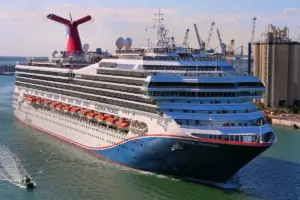
Consider a trio of defining moves executed by three sector heavyweights: Lindblad Expeditions aggressively buying out its founding partners to consolidate total control over its expedition cruise operations; private equity giant KKR systematically pruning Travelopia’s asset-heavy, capital-intensive portfolio; and Intrepid Travel embarking on an aggressive acquisition spree, snapping up independent brands like Dutch operator Sawadee Reizen to supercharge its global ground distribution network.
These maneuvers are not isolated corporate transactions; they are the frontline skirmishes in an ideological war over control. Industry leaders are being forced to make an existential calculation: Which components of the end-to-end trip must be directly owned and operated to protect margins and brand equity, and which are better left to third-party ecosystems or divested entirely to reduce balance sheet bloat?
This investigative report examines the driving forces behind this multi-day touring renaissance. By analyzing the structural divestments of private equity, the aggressive territorial expansion of independent operators, and the vertical consolidation of expedition cruising, we uncover how the economics of travel are shifting beneath our feet. As margins tighten and consumer expectations pivot toward hyper-personalization, sustainability, and seamless digital integration, the old playbooks are being rewritten. Welcome to the great unbundling of modern adventure travel.
Detailed Chronology of Industry Shifts
To understand how the multi-day touring market arrived at this strategic crossroads, one must trace the timeline of key corporate maneuvers that have reshaped the landscape between late 2024 and mid-2025.
Q3 2024: Travelopia Begins Its Strategic Pruning
The private equity behemoth KKR, owner of the specialist travel portfolio Travelopia, initiated a quiet yet aggressive restructuring of its holdings. Travelopia, long celebrated for housing a diverse, eclectic mix of adventure brands, yacht charters, and educational travel companies, found itself weighed down by a legacy of asset-heavy obligations.
As post-pandemic consumer demand stabilized, KKR’s mandate became clear: shed capital-intensive operations that required massive ongoing infrastructure investments, and refocus capital on high-margin, scalable digital platforms. This set the stage for a cascading series of divestments that would ripple across the European and North American tour-operating sectors.
January 31, 2025: Intrepid Makes History in Amsterdam
The watershed moment for the independent adventure sector arrived on the final day of January 2025. Intrepid Travel, globally recognized as one of the world’s largest adventure tour operators, officially closed the acquisition of Sawadee Reizen, a premier Dutch adventure travel company previously housed under the Travelopia umbrella.
The transaction was monumental. Sawadee brought with it approximately $65 million (A$100 million) in annual revenue and a loyal base of roughly 20,000 travelers. For Intrepid, leadership did not mince words: this was officially recognized as the largest corporate acquisition in the company’s history.
However, the strategic brilliance of the deal lay beneath the headline figures. For Travelopia, Sawadee—despite being a profitable, well-managed asset—was fundamentally misaligned with KKR’s broader push to lighten its balance sheet from regional, ground-heavy operations burdened by local leases, regional vehicle maintenance, and complex localized compliance frameworks. For Intrepid, conversely, Sawadee represented an instant, dominant entry point into the lucrative Dutch outbound travel market. More importantly, Intrepid possessed the global scaffolding—an existing ground network spanning 118 countries—to immediately ingest Sawadee’s 20,000 customers and route them through established, optimized supply chains, exponentially increasing yield and operational efficiency.
February to July 2025: The Broader Portfolio Realignment
Following the Sawadee divestment, Travelopia continued its systematic portfolio pruning throughout the first half of 2025. The private equity playbook became crystal clear: isolate non-core, asset-heavy regional touring brands, monetize them amidst a competitive M&A market, and redirect liquidity toward segments offering superior return on capital employed (ROCE).
Concurrently, independent operators like Lindblad Expeditions made decisive moves on the opposite end of the spectrum. Rather than shedding assets, Lindblad moved to buy out its foundational partners, consolidating ownership. In capital-intensive sectors like expedition cruising—where the asset is a multi-million-dollar ice-strengthened vessel—shared ownership models and external stakeholder friction are luxuries companies can no longer afford in a volatile macroeconomic environment.
Supporting Context & Metrics: The Anatomy of Modern Touring
To contextualize these high-stakes corporate maneuvers, one must examine the unique economic and structural realities of the multi-day touring industry.
The Private Nature of Multi-Day Touring
Unlike the airline industry, major global hotel chains, or online travel agencies (OTAs) like Booking Holdings and Expedia Group, the multi-day touring sector remains stubbornly, predominantly privately owned.
A vast majority of the operators that design, market, and execute packaged adventure trips lasting five days or more do not list on public stock exchanges. Consequently, they are not bound by the quarterly reporting mandates that dictate corporate strategy in other verticals of the travel economy. This opacity has historically shielded the sector from aggressive Wall Street speculation, but it has also obscured the complex financial mechanics driving these businesses.
When multi-day tour operators do undergo structural shifts—such as KKR’s stewardship of Travelopia or Intrepid’s aggressive private expansion—it offers a rare, illuminating window into the macro-trends governing the travel landscape.
Asset-Heavy vs. Asset-Light: The Strategic Tug-of-War
The fundamental tension in modern travel economics revolves around asset ownership.
- The Asset-Heavy Burden: Operating ships, private yachts, localized fleets of 4×4 safari vehicles, leased office space across multiple continents, and fixed-payroll ground teams creates massive fixed overhead costs. During macroeconomic downturns, geopolitical crises, or global health disruptions, these fixed costs become financial anchors capable of dragging down even historically profitable enterprises. This was the exact reality facing KKR with Travelopia’s diversified portfolio.
- The Asset-Light/Network-Leveraged Advantage: Conversely, modern scaling relies on digital distribution, brand equity, and localized network orchestration. Intrepid Travel’s business model exemplifies this evolution. By acquiring regional powerhouses like Sawadee Reizen, Intrepid does not necessarily need to reinvent the local operational wheel in the Netherlands. Instead, it absorbs the brand equity and customer base, plugs them into its pre-existing, globally diversified operational framework across 118 countries, and achieves immediate economies of scale.
The Metrics of the Deal: Sawadee Reizen by the Numbers
- Acquisition Date: January 31, 2025
- Buyer: Intrepid Travel
- Seller: Travelopia (backed by KKR)
- Annual Revenue: ~$65 million USD (A$100 million)
- Customer Volume: ~20,000 annual travelers
- Significance: Largest corporate acquisition in Intrepid Travel’s operational history.
These metrics illustrate why the transaction sparked intense interest across the travel investment community. A $65-million-dollar revenue footprint represents a substantial consolidation of the European overland and adventure market, proving that independent travel giants are willing to deploy significant capital to capture regional market share.
Official Statements and Industry Perspectives
The philosophical divergence between asset-shedding private equity strategies and aggressive independent vertical integration is best understood through the strategic commentary of the executives steering these corporate titans.
Industry analysts tracking the KKR-Travelopia maneuvers note that institutional private equity ownership views travel through a lens of strict portfolio optimization. An executive close to the Travelopia restructuring remarked anonymously:
"When you manage a portfolio that spans luxury yacht charters, remote eco-lodges, educational campus travel, and regional overland touring, your capital expenditure requirements are pulled in a dozen different directions simultaneously. The post-pandemic consumer demands digital fluidity, sustainable supply chains, and premium experiences. Maintaining heavy physical assets—regional office leases, localized vehicle fleets, and complex multi-jurisdictional compliance—no longer serves the core growth thesis of a scaled private equity holding."
Conversely, the leadership team at Intrepid Travel has framed their acquisition strategy around the concept of community-driven, sustainable scale. Upon closing the Sawadee transaction, Intrepid executives emphasized that the deal was designed to deepen their footprint in continental Europe while preserving the distinct cultural identity of the acquired brand.
An internal memo circulating within Intrepid highlighted the operational synergy:
"Sawadee is not just a collection of itineraries; it is a deeply trusted brand with a fiercely loyal, discerning community of Dutch travelers. By integrating Sawadee into Intrepid’s global network, we are not stripping away its identity; we are supercharging its operational reach. Our 118-country ground network provides the robust infrastructure needed to deliver safer, more sustainable, and seamlessly coordinated adventures at a scale that independent regional operators simply cannot achieve alone."
Meanwhile, in the expedition cruising sector, Lindblad’s decision to buy out its founding partners underscores a parallel desire for strategic autonomy. Industry commentators point out that in high-end expedition travel—where a single incident in polar waters can trigger massive operational liabilities—shared governance models between founders and institutional backers often create friction in rapid-response decision-making. Total ownership allows leadership to streamline capital allocation toward fleet modernization, technological decarbonization, and direct consumer acquisition without internal boardroom friction.
Future Outlook: The Next Frontier of Adventure Travel
As the dust settles on the wave of consolidation and divestment that defined early 2025, what does the future hold for the multi-day touring sector? Several defining trends will dictate which operators thrive and which falter over the next decade.
1. The Hyper-Consolidation of Regional Specialists
Independent regional tour operators that lack the digital sophistication to compete with global OTAs, or the balance sheet strength to weather localized economic shocks, will increasingly become acquisition targets. Major global players like Intrepid, G Adventures, and specialized private equity platforms will continue to scout for high-performing regional brands that can be easily plugged into centralized distribution systems.
2. The Evolution of Asset-Light Operations
The success of Intrepid’s integration of Sawadee signals that the future belongs to network orchestration rather than physical asset accumulation. Operators will increasingly rely on vetted, local third-party providers for ground logistics while retaining strict control over brand marketing, customer data, software interfaces, and sustainability standards. However, where physical assets are maintained—such as expedition vessels or remote eco-lodges—ownership will concentrate heavily in the hands of fully aligned, unencumbered parent entities to ensure uncompromising quality control.
3. Sustainability as a Non-Negotiable Operational Standard
As multi-day touring scales, regulatory scrutiny regarding carbon emissions, over-tourism, and local community economic impact is intensifying globally—particularly across Europe. Companies that control their ground networks (like Intrepid) argue that vertical integration allows for rigorous enforcement of ethical labor practices, carbon reduction targets, and wildlife protection protocols. In contrast, asset-heavy portfolios that fail to modernize their environmental footprint will face mounting pressure from institutional investors and increasingly conscious consumers.
4. The Direct-to-Consumer Digital Arms Race
With traditional travel agencies and legacy tour desks losing ground to direct-to-consumer digital booking journeys, multi-day operators must invest heavily in proprietary technology. The winners of tomorrow will not simply be those who operate the best tours on the ground, but those who wield the most sophisticated customer relationship management (CRM) systems, AI-driven personalization engines, and seamless mobile booking experiences.
Conclusion
The strategic moves executed by Lindblad, Travelopia (KKR), and Intrepid Travel serve as a definitive case study in modern travel restructuring. The industry has moved past the blunt survivalist tactics of the post-pandemic recovery era and entered a sophisticated phase of structural refinement.
Whether it is private equity pruning asset-heavy portfolios to maximize capital efficiency, or independent adventure giants buying up regional leaders to fortify their global distribution networks, the underlying motivation remains constant: absolute control over the points of economic leverage. In the high-stakes game of multi-day touring, the companies that successfully navigate this great unbundling will dictate the future of how humanity explores the globe.