









Executive Overview
For legacy volume manufacturers like Honda, Toyota, General Motors, Ford, and Nissan, the next few years will mark an existential dividing line. They are no longer simply competing on styling, horsepower, or dealer incentives. Instead, they face a brutal Darwinian filter driven by the accelerating transition to vehicle electrification. Capital is finite. Engineering talent is a strictly constrained resource. Most importantly, the window to make strategic, high-stakes decisions is closing with alarming speed.
For decades, the traditional playbook of the global automotive industry relied on diversification. Automakers spread their research and development budgets across a sprawling portfolio of internal combustion engines (ICE), diesel variants, manual and automatic transmissions, and various hybrid configurations. Today, maintaining this scattershot approach is a recipe for financial ruin.
As the global market pivots toward clean energy and software-defined vehicles, legacy brands that continue to dilute their resources across dying technologies risk a slow, agonizing slide into irrelevance. If they fail to streamline their operations and commit capital where it matters most, they will cease to be independent product innovators. Instead, they will degrade into regional dealer networks and brand fronts for superior, vertically integrated global competitors.
To survive this structural shift, volume manufacturers must evaluate their portfolio through a clear-eyed, unsparing lens. They must categorize every propulsion type by its true economic utility, separating nostalgic legacy products from the functional imperatives of the future.
Detailed Chronology: The Evolution of the Powertrain Dilemma
Phase 1: The Era of Incremental ICE Optimization (The Past)
For over a century, the primary metric of automotive engineering success was the incremental refinement of the internal combustion engine. Billions of dollars were poured into squeezing an extra 1% or 2% of thermal efficiency out of gasoline and diesel powertrains. While this strategy defined the golden age of mechanical engineering, its utility has expired. The competitive landscape has shifted entirely, rendering further heavy investments in conventional engines a fool’s errand.
Phase 2: The Transitional Hybrid Boom (The Present)
Recognizing consumer hesitation toward pure battery-electric vehicles (BEVs), automakers heavily leaned into traditional hybrids (HEVs) and parallel plug-in hybrid electric vehicles (PHEVs). While these technologies successfully served as a bridge, they have introduced their own complexities. Parallel PHEVs, in particular, suffer from compromised packaging, excessive weight, and real-world usage patterns where drivers fail to plug them in, leading to fuel consumption figures far higher than official regulatory estimates suggest.
Phase 3: The Series Hybrid Realization (The Bridge)
As the automotive industry looks for efficient ways to bridge the remaining gap to full electrification, Series Hybrids and Range-Extended Electric Vehicles (EREVs) have emerged as a superior transitional architecture. Proven extensively in markets like China by companies such as Li Auto and AITO, EREVs use an internal combustion engine strictly as an onboard generator, leaving the wheels driven exclusively by electric motors. This eliminates range anxiety while keeping battery costs manageable.

Phase 4: The Battery-Electric Endgame (The Future)
The ultimate destination for the global automotive industry is pure battery-electric propulsion. Scale, vertical integration, software-defined architectures, and continuous over-the-air (OTA) updates now dictate market leadership. Automakers that treat EVs as just another alternative powertrain rather than a fundamental reinvention of the automobile are falling irreversibly behind.
Supporting Context & Metrics: Analyzing the Five Vehicle Categories
To understand where capital should and should not flow, industry analysts must evaluate the five distinct powertrain categories that dominate global markets today.
1. Conventional Gas & Diesel: Managing the Run-Off
Legacy automakers must immediately scale back dedicated engineering teams assigned to conventional gas and diesel engines. While these vehicles will continue to sell in developing markets and rural sectors for another 10 to 15 years, pouring capital into thermal efficiency gains is a low-return exercise that consumers neither notice nor reward.
Worse yet, the global automotive landscape is plagued by structural overcapacity. Europe alone carries more than 20% excess capacity—equivalent to roughly 5.4 million vehicles or over 35 full assembly plants. Asia-Pacific manufacturers face tens of billions of dollars in potentially stranded ICE assets. As residual values come under pressure, companies that continue to refine traditional engines will find themselves optimizing a declining business while bleeding capital needed for the electric transition.
2. Traditional (Non-Plug-In) Hybrids: A Maturing Commodity
Traditional hybrids are enjoying a massive surge in popularity, particularly in the United States, as mainstream buyers seek alternatives to pure gasoline without committing to a full EV. However, this commercial success does not justify aggressive internal development spending.
Traditional hybrid technology is rapidly commoditizing. Chinese manufacturers are already producing highly efficient, scalable hybrid systems that can be sourced via suppliers and strategic partnerships. Pouring capital into proprietary, in-house hybrid development is an inefficient use of scarce engineering talent when off-the-shelf or collaborative hardware will soon saturate the market.
3. Traditional Parallel Plug-In Hybrids: The Compromised Middle
Parallel plug-in hybrids—where both the engine and electric motor can independently or cooperatively drive the wheels—look attractive on paper but fail in real-world execution. These vehicles carry the weight, complexity, and cost of two distinct powertrains. Furthermore, they typically offer a modest pure-electric range of 20 to 40 miles.
Crucially, extensive real-world telematics and fleet studies from Europe have documented a major compliance failure: many owners, particularly corporate fleet drivers reimbursed for gasoline but not electricity, rarely plug their vehicles in. Consequently, these cars operate primarily as heavy, inefficient gasoline vehicles, undermining the low carbon dioxide figures used for regulatory compliance. Automakers should support existing models like the Toyota RAV4 Prime, but refrain from sinking new capital into parallel PHEV development.
4. Series Hybrids and Range-Extended EVs (EREVs): The Practical Bridge
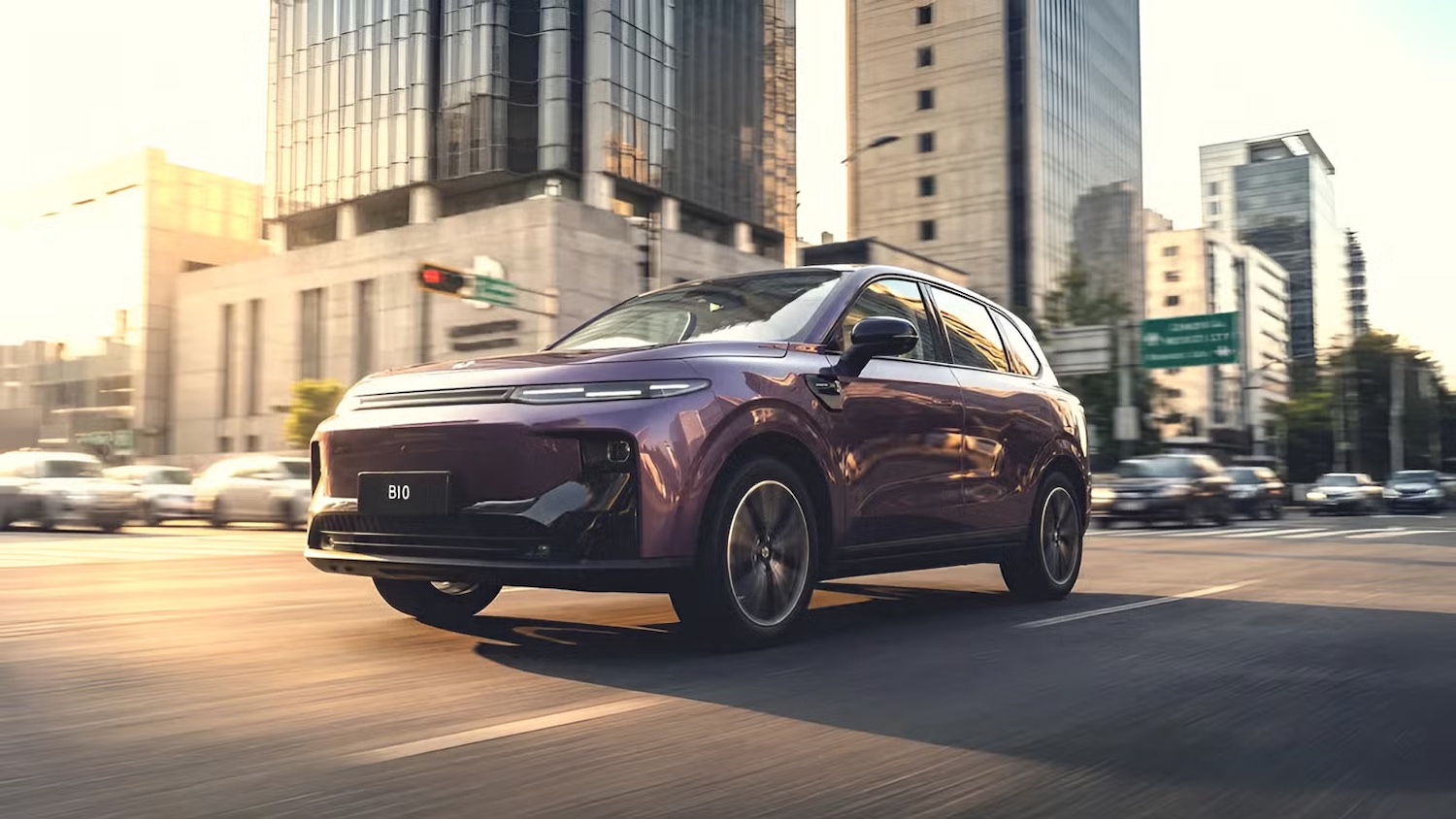
Series hybrids represent a far more intelligent bridge technology. In an EREV, the combustion engine never mechanically drives the wheels; it acts solely as a generator to replenish the battery pack, ensuring the vehicle is always propelled by electric traction motors.
This configuration offers profound advantages:
- Simplified Mechanical Layout: The elimination of complex multi-speed transmissions connected to the engine drastically reduces mechanical failure points.
- Optimized Engine Operation: The internal combustion engine can run constantly at its single most thermally efficient RPM range, rather than constantly ramping up and down to match wheel speed.
- Reduced Battery Requirements: By integrating a small, efficient fuel tank and generator, vehicles can achieve massive total driving ranges using significantly smaller, cheaper battery packs than a long-range pure BEV.
This architecture has been validated at scale in China by brands like Li Auto and AITO, proving strong consumer appetite. Crucially, Western manufacturers do not need to reinvent the wheel. Turnkey solutions already exist, such as the C15 range-extender module developed by Horse Powertrain—a joint venture between Renault, Geely, and Saudi Aramco. Measuring roughly the size of a large suitcase, this compact, multi-fuel-compatible unit can drop into existing battery-electric platforms with minimal redesign, offering a low-cost, highly effective safety net against range anxiety.

5. Battery-Electric Vehicles (BEVs): The Inevitable Destination
Pure battery-electric vehicles represent the ultimate endpoint of the automotive transition. Scale, vertical integration, and proprietary software stacks are non-negotiable for survival in this arena.
For volume manufacturers lagging behind, such as Nissan, Honda, or Ford, two paths remain. They can either secure deep-pocketed partnerships with established EV leaders (such as leveraging Chinese platforms and battery ecosystems) or risk sliding into obsolescence. Companies that lack the capital and engineering depth to compete in the pure-EV space will inevitably devolve into local distribution agents and brand badges for foreign manufacturing giants.
Official Statements & Industry Perspectives
Industry leaders and market analysts increasingly agree that the traditional model of powertrain diversification is mathematically unsustainable.
Financial analysts specializing in the automotive sector emphasize that capital allocation mistakes made today will determine corporate survival by the end of the decade. As one leading market observer noted:
"The old playbook of spreading scarce engineering resources across every propulsion type is over. The winners will be the companies that concentrate on two things: software-defined battery-electric excellence and pragmatic, low-cost transitional architectures where market demand dictates."
Furthermore, engineering consortia point to the rapid maturation of modular components—such as standardized range-extender units and shared skateboard EV platforms—as proof that automakers no longer need to design every mechanical subsystem from scratch. By shedding pride and embracing collaborative outsourcing, legacy brands can free up billions of dollars to focus on user experience, software ecosystems, and vehicle safety.
Future Outlook: Choosing Where to Excel
The path forward for legacy volume manufacturers requires ruthless prioritization. The automotive industry is dividing cleanly into two camps: agile innovators driving the software-defined electric vehicle revolution, and legacy incumbents trapped in the slow death spiral of incremental mechanical optimization.
To avoid becoming mere dealer networks for dominant global players, leadership teams must take decisive action:
- Freeze Heavy ICE R&D: Accept that conventional engines are in their twilight years and cease pouring billions into marginal efficiency gains.
- Outsource Commodity Hybrids: Rely on third-party suppliers and joint ventures for traditional hybrid components rather than wasting proprietary engineering bandwidth.
- Embrace EREVs as a Strategic Bridge: Utilize compact, drop-in range-extender modules to deliver affordable, high-range electrified vehicles without inflating battery costs.
- Commit Fully to the EV Core: Direct all remaining capital toward proprietary software, advanced manufacturing efficiencies, and next-generation battery integration.
Everything else—from continued heavy investment in declining powertrains to the stubborn pursuit of flawed parallel hybrids—amounts to rearranging deck chairs on the Titanic. Automakers must choose where they intend to achieve absolute excellence, and immediately defund the rest.