




Executive Overview
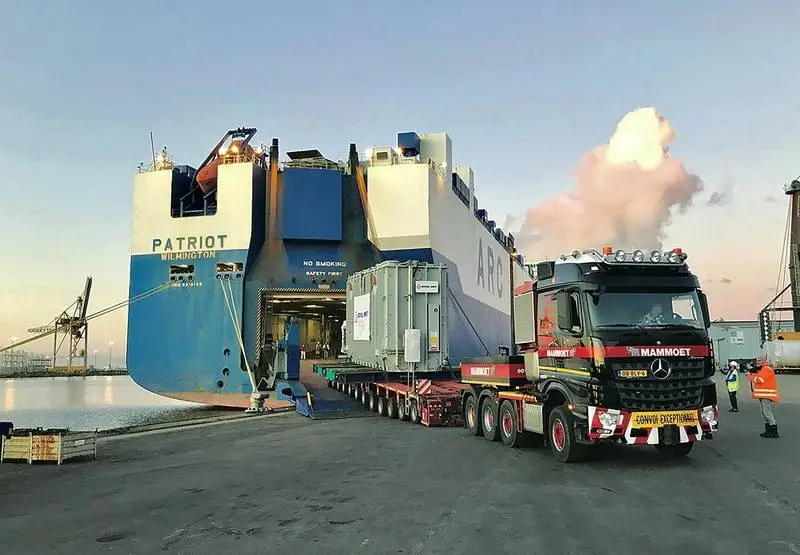
In an era defined by the escalating frequency and severity of natural disasters, the efficiency of emergency supply chains has become a critical determinant of public safety and national resilience. Recognizing the need for highly agile, modern logistics frameworks, the Federal Emergency Management Agency (FEMA) has awarded a major Indefinite Delivery/Indefinite Quantity (IDIQ) contract to American Roll-On/Roll-Off Carrier Group Inc. (ARC Group). Under Contract No. 70FB7026D00000002, ARC Group will provide national "cross-dock" logistics and incident base support services to accelerate the federal government’s disaster response capabilities.
The primary objective of this contract is to bypass traditional, slow-moving warehousing models in favor of a high-velocity, synchronized logistics network. By establishing dedicated cross-docking facilities, ARC Group will enable FEMA to transfer life-sustaining emergency supplies—ranging from industrial generators and potable water to medical resources and temporary shelter kits—directly from inbound transit to a dedicated, GPS-tracked outbound fleet. This operational shift is designed to reduce delivery times from days to mere hours, ensuring that critical assets reach devastated communities when they are needed most.
[Inbound Relief Supplies] (Water, Generators, Medical Assets)
           │
           ▼
┌───────────────────────────────────────┐
│     ARC Cross-Docking Facility        │  ◄── Bypasses long-term storage
│   (Rapid Sorting & De-consolidation)  │
└───────────────────────────────────────┘
           │
           ▼
[Dedicated GPS-Tracked Outbound Fleet]
           │
           ▼
[Affected Communities / Incident Bases]
This award highlights a growing trend within federal procurement: the integration of battle-tested defense logistics contractors into domestic emergency management. With more than three decades of experience managing complex, end-to-end supply chains for both the U.S. military and private enterprises, ARC Group is well-positioned to execute these demanding requirements.
The contract features a one-year base period beginning September 21, 2026, with two subsequent one-year option periods. Structurally, the award is part of a multiple-award vehicle, with FEMA reserving the right to issue up to three IDIQ contracts under this specific operational requirement to ensure redundancy and nationwide coverage.
Detailed Chronology and Contract Architecture
The procurement process leading to the award of Contract No. 70FB7026D00000002 reflects FEMA’s long-term strategic planning. By structuring the contract to commence on September 21, 2026, FEMA is establishing a multi-year transition and preparation runway. This timeline allows ARC Group and partner agencies to align their logistical networks, conduct operational stress tests, and integrate data systems before the contract’s formal activation.
+---------------------------------------------------------------------------------+
|                               CONTRACT TIMELINE                                 |
+---------------------------------------+-----------------------------------------+
| Phase                                 | Target Date / Period                    |
+---------------------------------------+-----------------------------------------+
| Contract Award Announced              | Late 2024 / Early 2025                  |
| Systems Integration & Dry Runs        | Mid-2025 – Q3 2026                      |
| Base Period Commencement              | September 21, 2026                      |
| Base Period Expiration                | September 20, 2027                      |
| Option Period 1 (Subject to Approval) | Sept 21, 2027 – Sept 20, 2028           |
| Option Period 2 (Subject to Approval) | Sept 21, 2028 – Sept 20, 2029           |
+---------------------------------------+-----------------------------------------+
The IDIQ Multiple-Award Framework
FEMA’s decision to issue this requirement as a multiple-award IDIQ contract—with up to three distinct operators selected—is a deliberate risk-mitigation strategy. During catastrophic, multi-regional emergencies (such as concurrent major hurricanes on the Gulf Coast and widespread wildfires in the Pacific Northwest), a single logistics provider’s capacity can be stretched to its limits.
By utilizing a multiple-award framework, FEMA ensures:
- Geographic Redundancy: The ability to activate different regional hubs simultaneously without bottlenecks.
- Capacity Scaling: Access to multiple fleets and yard facilities to handle surge requirements.
- Competitive Efficiency: Continuous performance benchmarking among the selected contract holders.
Scope of Services Under the Agreement
The contract spans several critical logistics disciplines, moving far beyond simple freight transportation:
- Cross-Dock Facility Operations: Establishing and maintaining highly secure, strategically positioned consolidation points where cargo can be rapidly sorted, documented, and re-routed.
- Empty Trailer Yard Management: Managing the flow of empty transport assets to ensure that inbound supply lines do not stall due to yard congestion or a lack of transport equipment.
- Incident Support Base (ISB) Operations: Setting up and managing temporary logistics staging areas just outside active disaster zones, providing the physical infrastructure needed to sustain response personnel and equipment.
- Transportation and Fleet Management: Securing, dispatching, and monitoring a fleet of transport vehicles equipped with real-time GPS tracking.
- Personnel and Facility Support: Providing the security, administrative staff, and material-handling equipment operators required to maintain continuous, 24/7 operations during active disaster declarations.
Supporting Context & Metrics: The Mechanics of Modern Disaster Logistics
To understand the significance of this contract, it is necessary to examine the operational differences between traditional emergency warehousing and modern cross-docking.
The Vulnerability of Traditional Warehousing
In traditional emergency response models, relief supplies are shipped from manufacturers to large regional distribution centers. Here, they are unloaded, logged into inventory systems, stored on pallets, and held until local authorities submit specific requests. While this model works well for predictable supply chains, it introduces several points of failure during a sudden crisis:
- Inventory Bottlenecks: Warehouses can quickly become overwhelmed by volume, leading to offloading delays.
- Double Handling: Moving goods into storage and then back out of storage increases labor costs, equipment wear, and the risk of cargo damage.
- Perishability and Shelf-Life Decay: Critical items, particularly bottled water, medical supplies, and meals ready-to-eat (MREs), can sit unused if distribution networks stall.
The Cross-Docking Alternative
Cross-docking eliminates the storage phase entirely. Inbound trucks carrying specific commodities arrive at an ARC-managed cross-dock terminal. Instead of being placed into inventory, the pallets are moved directly across the facility floor—often using automated sorting systems or dedicated material-handling teams—and loaded onto outbound trailers designated for specific disaster zones.
       [INBOUND TRUCKS]
              │
              ▼
   ┌──────────────────────┐
   │ Inbound Unloading    │
   └──────────┬───────────┘
              │
              ▼
   ┌──────────────────────┐
   │ Sorting / Routing    │  ◄── Zero Storage Hold Time
   └──────────┬───────────┘
              │
              ▼
   ┌──────────────────────┐
   │ Outbound Loading     │
   └──────────┬───────────┘
              │
              ▼
      [OUTBOUND FLEETS]
This process dramatically improves key supply chain performance metrics:
- Transit Time Reduction: By bypassing the storage phase, the time required to route bulk shipments can be cut by 40% to 60%.
- Real-Time Visibility: Integrating GPS tracking across the entire outbound fleet addresses a historical challenge for FEMA: tracking the location of critical supplies in transit. Real-time telemetry allows emergency managers to predict arrival times down to the minute, improving coordination with local distribution sites.
- Resource Optimization: Eliminating long-term warehousing reduces storage overhead costs, ensuring that federal disaster funds are directed toward direct relief efforts.
Official Statements and Corporate Governance
The awarding of Contract No. 70FB7026D00000002 highlights a clear alignment of goals between FEMA’s operational requirements and ARC Group’s corporate capabilities.
In its announcement, ARC Group emphasized its long history of managing high-consequence logistics operations for federal clients, particularly the Department of Defense (DoD). As a major U.S.-flag carrier and maritime logistics provider, ARC Group has spent decades moving heavy military equipment, humanitarian aid, and sensitive government cargo across global theaters of operation. This experience in austere and unpredictable environments translates directly to domestic disaster response, where damaged infrastructure, power grid failures, and unpredictable weather require highly disciplined execution.
ARC Group highlighted its commitment to delivering "accountable, efficient performance that taxpayers expect from federal disaster response." This focus on accountability is particularly important given the public and political scrutiny that often follows major emergency responses. By implementing strict, data-driven tracking and management protocols, ARC Group aims to provide the transparency and reliability required by federal oversight bodies.
For FEMA, partnering with an experienced defense-grade contractor like ARC Group reflects a broader effort to modernize its supply chain. By utilizing private sector logistics expertise, FEMA can scale its operations rapidly during major crises without maintaining the permanent, costly infrastructure required to run a nationwide, high-velocity distribution network year-round.
Future Outlook: Climate Resilience and Supply Chain Adaptation
As ARC Group prepares for the formal launch of operations in September 2026, the broader landscape of emergency management continues to grow more complex. Climate data indicates a steady rise in the frequency of billion-dollar weather disasters, requiring disaster response agencies to build more resilient supply chains.
Frequency of Billion-Dollar Weather Disasters (U.S.)
---------------------------------------------------
Historical Average (1980-2020):  ~8 events per year
Recent Years (2020-Present):    ~20+ events per year
Future Projected Trend:         Increasingly frequent & severe
This trend highlights the strategic value of the FEMA-ARC partnership. Over the three-year potential lifespan of this IDIQ contract (running through late 2029 if all options are exercised), several key logistical developments are expected to shape its execution:
1. Integration of Predictive Analytics
The combination of ARC Group’s logistics platforms with FEMA’s predictive disaster modeling will allow for more proactive supply positioning. By analyzing meteorological data and storm-track projections, emergency managers can initiate cross-docking operations before a storm makes landfall. This ensures that emergency assets are already staged just outside the impacted area, ready for immediate deployment.
2. Transition to Low-Emission Staging Yards
As part of federal sustainability initiatives, future incident support bases and trailer yards are expected to integrate green technologies. This includes deploying solar-powered security systems, hybrid or electric material-handling equipment, and smart idling management systems for transport fleets. These technologies help reduce the carbon footprint of large-scale emergency response operations.
3. Hardening of Logistics Infrastructure
To counter the threat of cyberattacks on critical infrastructure, ARC Group and FEMA will continue to invest in securing their shared digital platforms. Protecting GPS telemetry, inventory databases, and dispatch systems from disruption is essential to maintaining operational integrity during national emergencies.
Ultimately, Contract No. 70FB7026D00000002 represents a major step forward in the modernization of federal disaster response. By combining ARC Group’s deep logistical expertise with FEMA’s emergency management framework, the agreement establishes a faster, more transparent, and highly resilient supply chain designed to protect and support vulnerable communities across the nation.