






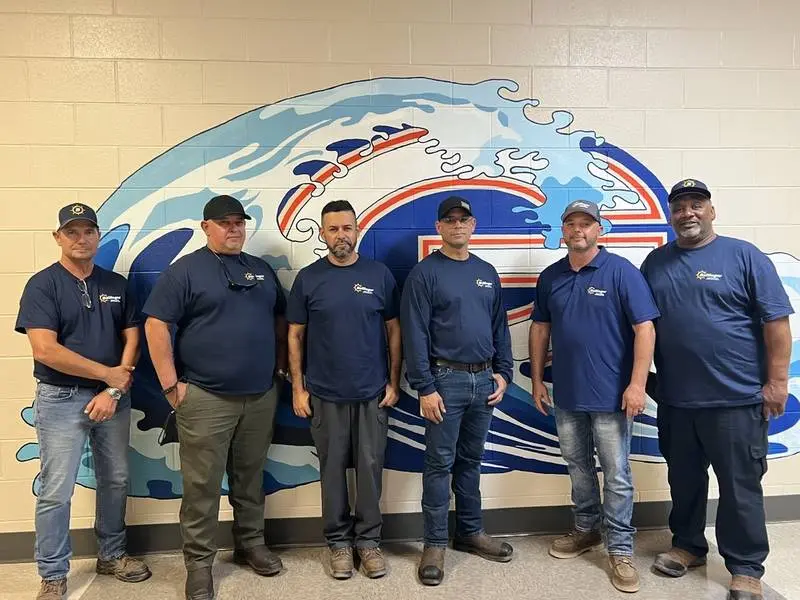
GULFPORT, Miss. — In a strategic move designed to address the critical skilled labor shortages facing the domestic maritime defense and commercial industrial bases, Bollinger Shipyards has announced the launch of an innovative vocational partnership. Christened the "Bollinger NextGen Shipbuilders" program, this work-based learning initiative is a collaborative venture with the Gulfport School District.
The program aims to introduce high school students directly to the specialized trades, engineering disciplines, and high-paying career pathways that form the bedrock of the Gulf Coast’s vital shipbuilding economy.
Executive Overview
As the United States grapples with an urgent need to modernize its naval and commercial fleets, the domestic shipbuilding industry faces an existential challenge: an aging workforce and a persistent deficit of skilled trade professionals. On August 19, 2026, Bollinger Shipyards—one of the nation’s premier designers and builders of high-performance military and commercial vessels—unveiled a proactive solution to this systemic bottleneck.
By partnering with the Gulfport School District, Bollinger is establishing a direct, hands-on pipeline from the classroom to the shipyard floor. The "Bollinger NextGen Shipbuilders" program is designed to demystify heavy industrial careers for high school students, offering them a clear, debt-free pathway into high-paying maritime careers.
Operating out of Bollinger’s newly expanded facilities on the Mississippi Gulf Coast, the program provides students with real-world exposure to the core disciplines of modern marine manufacturing. Rather than relying on traditional post-secondary vocational tracks, which often delay entry into the workforce, this initiative integrates technical training directly into the secondary education curriculum. The goal is to cultivate a new generation of master shipbuilders who can support both national security objectives and regional economic resilience.
Detailed Chronology & Program Mechanics
The rollout of the "Bollinger NextGen Shipbuilders" initiative represents the culmination of extensive planning between maritime industry executives, local educational administrators, and state workforce development agencies. The program is structured to bridge the gap between academic theory and heavy industrial practice.
[Gulfport High School Curriculum]
             │
             ▼ (Selection & Enrollment)
[Bollinger NextGen Shipbuilders Program]
             │
             ├─► 1. Welding (Structural integrity)
             ├─► 2. Pipefitting (Fluid systems & propulsion)
             ├─► 3. Marine Electrical (Power distribution & avionics)
             ├─► 4. Maritime Carpentry (Joinery & outfitting)
             └─► 5. Rigging & Fitting (Heavy lifting & block assembly)
             │
             ▼ (Mentorship & Hands-On Training)
[Bollinger's New Gulf Coast Facility] ──► [Direct Career Pathways / Apprenticeships]
Structuring the Student Journey
Students enrolled in Gulfport High School’s career and technical education (CTE) tracks will have the opportunity to participate in this work-based learning curriculum. Rather than simulating tasks in a school laboratory, students are transported directly to Bollinger’s state-of-the-art manufacturing facility. Here, the industrial environment serves as an extended classroom.

The curriculum is built around five core maritime manufacturing disciplines, each essential to the construction of complex vessels:
- Welding: Students learn the physics of metallurgy, structural design, and the precision techniques required for shielded metal arc welding (SMAW) and gas metal arc welding (GMAW) on marine-grade steel and aluminum.
- Pipefitting: This discipline covers the layout, assembly, and installation of the intricate piping networks that carry fuel, ballast, water, and hydraulic fluids throughout a vessel.
- Marine Electrical: Participants are introduced to the complex electrical grids of modern vessels, learning how to run miles of cable, wire switchboards, and integrate sensitive navigation and propulsion control systems.
- Maritime Carpentry: Focusing on the interior outfitting and structural wood/composite installations, students learn the precise joinery needed to make vessel interiors functional and durable.
- Rigging and Fitting: Addressing the logistics of mega-scale manufacturing, this discipline teaches the mathematical calculations, safety protocols, and mechanical principles required to lift, move, and align multi-ton ship blocks and heavy machinery.
The Mentorship Model
A defining feature of the NextGen Shipbuilders program is its emphasis on intergenerational mentorship. Students do not simply shadow workers; they are paired with seasoned shipbuilders, master tradespeople, and marine engineers.
This mentorship ensures that tribal knowledge—the unwritten, highly nuanced practical skills accumulated over decades on the shipyard floor—is successfully passed down to the younger generation. Simultaneously, students learn to operate advanced manufacturing equipment, including automated welding systems and computer-aided design (CAD) interfaces, ensuring they are prepared for the digital future of shipbuilding.
Supporting Context & Metrics: The Gulf Coast Shipbuilding Landscape
To understand the strategic importance of the "Bollinger NextGen Shipbuilders" initiative, one must examine the broader economic and geopolitical context of the American maritime sector.
The Geopolitical and Industrial Imperative
The U.S. shipbuilding industry is currently undergoing a period of intense pressure. With rising geopolitical tensions in the Indo-Pacific and transatlantic corridors, the U.S. Navy and U.S. Coast Guard have accelerated demands for fleet modernization. Bollinger Shipyards plays a critical role in this defense ecosystem, notably through its production of the Sentinel-class Fast Response Cutters (FRCs) and its involvement in complex auxiliary and security vessel programs.

However, executing these multi-billion-dollar federal contracts requires an unprecedented volume of labor. According to data from the Maritime Administration (MARAD) and the Bureau of Labor Statistics (BLS):
- The average age of a skilled shipyard worker in the United States is currently over 45 years old, with a significant portion of the workforce eligible for retirement within the next decade.
- The maritime industry faces a projected shortfall of tens of thousands of skilled tradespeople over the next five years.
- Traditional four-year college pathways have historically been prioritized over vocational careers, resulting in a decades-long decline in technical training enrollment.
+-------------------------------------------------------------------------+
|                U.S. SHIPBUILDING LABOR DEMOGRAPHICS                     |
+-------------------------------------------------------------------------+
|  Average Age of Skilled Shipyard Worker:  45+ Years Old                 |
|  Projected Labor Shortage (Next 5 Years): Tens of Thousands of Trades   |
|  Key Areas of Deficit:                    Welding, Pipefitting, Marine  |
|                                           Electrical, Rigging           |
+-------------------------------------------------------------------------+
Bollinger’s Regional Expansion
Bollinger’s decision to launch this program in Gulfport is deeply tied to its recent regional footprint expansion. Following its landmark acquisition of VT Halter Marine and STEHMO in late 2022, Bollinger significantly expanded its industrial capacity in Mississippi.
By upgrading these facilities into state-of-the-art shipyards, Bollinger created a pressing demand for localized, highly skilled labor. The NextGen program directly addresses this need, ensuring that the company’s capital investments in Mississippi are supported by a resilient, locally sourced workforce.
Official Statements & Perspectives
The launch of the "Bollinger NextGen Shipbuilders" program has drawn widespread praise from industrial leaders, educators, and regional policymakers, who view the initiative as a template for modern workforce development.
An executive spokesperson for Bollinger Shipyards emphasized the dual economic and national security benefits of the partnership:
"Shipbuilding is not just an industry; it is a vital pillar of our national defense and economic sovereignty. To build the world’s finest vessels, we must first build the world’s finest shipbuilders. Our partnership with the Gulfport School District is a direct investment in our youth and our community. By opening our doors to these talented students, we are providing them with high-paying, stable careers while securing the talent pipeline necessary to keep our shipyards humming for decades to come."
Administrators within the Gulfport School District highlighted the transformative impact of giving high school students direct access to heavy industrial operations:
"Our mission is to prepare students for the realities of the modern economy, and that means offering pathways beyond the traditional classroom setting. The ‘Bollinger NextGen Shipbuilders’ program gives our students a competitive edge. They aren’t just reading about engineering and manufacturing in a textbook—they are standing on the drydocks, working alongside master craftsmen, and learning skills that will immediately translate into prosperous, lifelong careers without the burden of student debt."
Future Outlook & Strategic Implications
The launch of the "Bollinger NextGen Shipbuilders" program in August 2026 is poised to serve as a blueprint for public-private partnerships across the Gulf Coast and the wider United States. As the initial cohort of Gulfport High School students enters the program, industry analysts will be watching closely to measure its retention rates, safety metrics, and transition-to-employment pipelines.
Scaling the Model
If successful, Bollinger plans to scale this educational model, potentially expanding partnerships to other school districts across Mississippi and Louisiana, where the company maintains a massive operational footprint. Furthermore, other major defense contractors and shipbuilders may look to replicate this early-intervention model to shore up their own regional labor supply chains.
Economic and National Security Dividends
In the long term, initiatives like NextGen Shipbuilders are critical to restoring the competitive edge of the American industrial base. By lowering the barriers to entry for high school students and elevating the prestige of skilled blue-collar professions, the program addresses the root causes of the manufacturing labor crisis.
As these young men and women transition from students to certified shipbuilders, they will not only drive the economic growth of the Mississippi Gulf Coast but will also play a direct role in constructing the vessels that protect global commerce and secure national waters. Through tactical education and corporate foresight, Bollinger Shipyards is ensuring that the legacy of American shipbuilding remains strong, resilient, and ready for the challenges of the next generation.