






Executive Overview
For the seasoned traveler who has spent years navigating the countless archipelagos, cays, and coastlines of the Caribbean, formulating a definitive criteria for a "world-class beach" is a rigorous exercise. The sand must possess the precise texture—fine enough to avoid friction, yet substantial enough not to scatter in the trade winds. The swimming conditions must balance invigoration with safety, avoiding treacherous undertows or unpredictable reef breaks. Furthermore, a truly exceptional coastal destination requires scale: it must offer enough linear distance to accommodate solitary morning walks, seamlessly integrate with high-caliber culinary outposts, and be flanked by accommodations that elevate the shoreline from a mere afternoon excursion into the very anchor of daily life.
By almost any objective measure of coastal geography and hospitality integration, Grand Anse Beach on the southwest coast of Grenada does not merely meet these rigorous criteria; it establishes the benchmark.
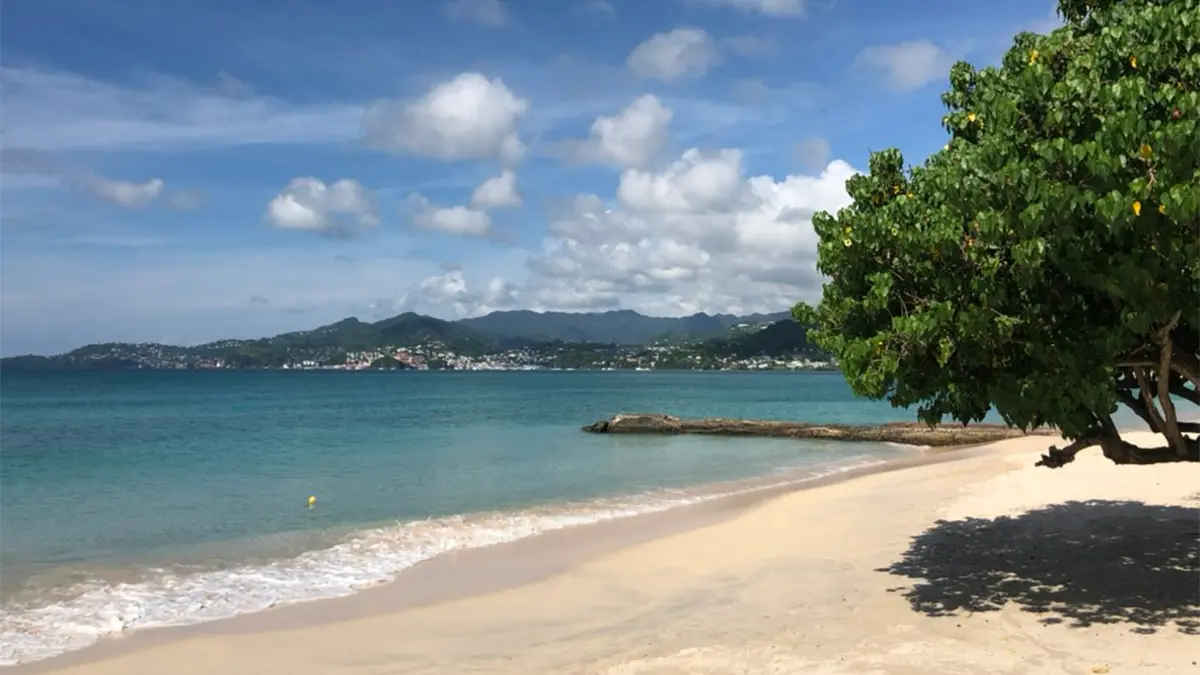
Stretching approximately two miles along a sweeping, protected crescent of powdery white sand and impossibly calm, turquoise Caribbean waters, Grand Anse is the crown jewel of the island nation often celebrated as the "Spice Isle." Yet, unlike many tropical destinations where fame breeds congestion and commercial over-saturation, Grand Anse remains remarkably dynamic. It offers a rare paradox in modern Caribbean tourism: it is undeniably Grenada’s most famous and accessible stretch of coastline, yet it retains an expansive, unhurried atmosphere where travelers can easily secure absolute solitude.

This comprehensive report examines the geography, hospitality ecosystem, cultural integration, and strategic value of Grand Anse Beach, offering an authoritative roadmap for travelers seeking to understand why this two-mile stretch remains one of the most compelling coastal destinations in the Western Hemisphere.
Detailed Chronology and Evolution of a Coastal Icon
To truly understand Grand Anse Beach, one must view it not merely as a geographic feature, but as a living landscape that has evolved in tandem with Grenada’s burgeoning tourism economy.
The Historical Context of the Southwest Coast
Long before the arrival of luxury resorts, boutique eco-villas, and beachfront promenades, the southwestern shelf of Grenada—specifically the protected bay housing Grand Anse—served as a vital maritime and agricultural nexus. The indigenous Kalinago people, followed by European colonial powers, recognized the strategic advantages of the deep, sheltered waters and the fertile volcanic soils rising immediately behind the coastal shelf.
As Grenada developed into a global powerhouse for the production of nutmeg, mace, cinnamon, and cocoa, the coastal zones near St. George’s transformed. However, while the capital city focused on maritime commerce and colonial administration, the pristine crescent of Grand Anse remained largely untouched, prized primarily by local fishermen who utilized its calm conditions to launch traditional wooden skiffs.
The Modern Tourism Transition
The mid-to-late 20th century marked the systematic discovery of Grand Anse by international travelers. Recognizing that the two-mile length of uninterrupted sand offered a canvas unlike the narrow, rocky coves found elsewhere in the region, visionary hoteliers began establishing properties along the bay.
Unlike destinations that permitted high-rise concrete developments to overwhelm their coastlines, Grenada’s tourism planners and local stakeholders largely maintained a disciplined approach to zoning. Properties were designed to harmonize with the natural topography—nestling beneath sea almond and palm trees rather than towering above them.
Over the decades, this deliberate pacing shielded Grand Anse from the over-commercialization that plagued other Caribbean hotspots. Today, the beach represents a harmonious continuum where historical fishing traditions, vibrant local commerce, and ultra-luxury hospitality coexist seamlessly along the same tide line.
Supporting Context & Metrics: The Anatomy of Grand Anse
A granular analysis of Grand Anse reveals why it consistently ranks among the top coastal destinations globally. The following metrics and contextual factors define the physical and operational reality of the beach:
- Linear Footprint: Spanning approximately two miles (3.2 kilometers) from its southern approaches near Morne Rouge to its northern limits closer to the capital, the sheer length of the beach is its greatest operational asset. It disperses foot traffic effectively, preventing the claustrophobic crowding common on shorter beaches.
- Bathymetry and Water Conditions: The bay is naturally shielded from the heavy swells of the open Atlantic Ocean. The nearshore gradient is gradual, featuring crystal-clear, calm Caribbean waters that make year-round swimming exceptionally safe for families, casual waders, and distance swimmers alike.
- Sand Composition: Composed of finely pulverized coral and volcanic fragments, the sand remains comfortable underfoot even during peak tropical heat, possessing a pale, golden-white hue that dramatically enhances the optical brilliance of the surrounding sea.
- Accessibility Index: Located a mere 10 to 15 minutes by vehicle from Maurice Bishop International Airport and roughly 10 minutes from the historic harbor capital of St. George’s, Grand Anse offers rare logistical convenience without suffering from airport flight-path noise pollution.
- Hospitality Diversity: The shoreline accommodates a remarkably diverse tier of lodging options—ranging from ultra-exclusive, family-owned luxury resorts and avant-garde architectural masterpieces to high-value resort footprints and elevated hillside villas.
The Hospitality Ecosystem: Where to Stay
The defining characteristic of a world-class beach is the quality of the residential experience it affords. Grand Anse excels by offering distinct hospitality archetypes, ensuring that travelers can tailor their stay precisely to their aesthetic and operational preferences.
1. Spice Island Beach Resort: The Pinnacle of Intimate Luxury
For travelers seeking the gold standard of Caribbean hospitality, Spice Island Beach Resort represents an unmatched institution. Operating as an ultra-luxury, family-owned sanctuary directly on the sand, the property prioritizes a deeply personal, intimate atmosphere. Suites are positioned steps from the shoreline, allowing the ambient sound of the waves to anchor the daily routine. It is an environment designed for those who wish to make Grand Anse the absolute centerpiece of their itinerary.
2. Silversands Grenada: Contemporary Architectural Drama
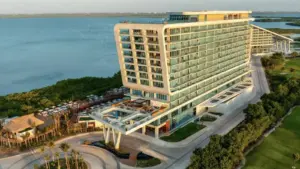
For guests whose sensibilities lean toward cutting-edge design, Silversands Grenada offers a striking counterpoint. Characterized by minimalist architecture, sleek lines, minimalist interiors, and one of the most dramatic infinity pools in the entire Caribbean, Silversands anchors the luxury market with a bold, modern aesthetic while maintaining direct, effortless access to the soft sands of Grand Anse.
3. Radisson Grenada Beach Resort: Scale and Value
Occupying a prominent position along the bay, the Radisson Grenada Beach Resort caters to travelers seeking a more expansive resort footprint. Featuring lush tropical gardens, extensive pool facilities, and immediate proximity to the central commercial activities of the beach, the Radisson delivers exceptional value without sacrificing beachfront real estate.
4. Mount Cinnamon: Elevated Views and Villa Living
Set gracefully on the verdant hillsides rising immediately above the southern stretch of the bay, Mount Cinnamon offers a slightly elevated perspective. Comprising spacious suites and private villas, this property provides panoramic vistas over the entirety of Grand Anse. It is the premier choice for guests desiring additional square footage, residential privacy, and a secluded boutique ambiance while keeping the beach within immediate walking distance.
Official Perspectives: The Tourism and Economic Impact
From an economic and developmental standpoint, Grand Anse Beach serves as the vital engine driving Grenada’s tourism sector, which remains a primary contributor to the national GDP and employment figures.
Government and Tourism Board Strategy
According to strategic updates from the Grenada Tourism Authority (GTA), sustainable coastal management remains a top legislative priority. The government has consistently enforced strict environmental protection policies along the southwest peninsula, mandating waste management compliance for all beachfront vendors and hospitality entities, and preserving the natural vegetative buffer zones that protect the coastline from erosion.
Industry stakeholders emphasize that the enduring success of Grand Anse lies in its inclusive accessibility. Unlike private island concepts or exclusive gated enclaves found elsewhere in the region, Grand Anse is legally and culturally a public beach. This philosophy ensures that international luxury travelers, local Grenadian families, craft vendors, and restaurateurs share the coastal commons equitably.
The Cultural and Economic Mosaic
Walk the length of Grand Anse on any given afternoon, and you witness this economic democracy in real time. In the central sector, local vendors offer freshly harvested nutmeg pods, handmade mahogany crafts, and authentic island delicacies. Nearby, families gather beneath the shade of sea almond trees for weekend gatherings, while international guests lounge on resort-managed chaises. This vibrant cultural cross-section prevents the destination from feeling sterile or overly homogenized, grounding the luxury resort experience in authentic Caribbean life.
Navigating the Two-Mile Stretch: Best Practices for Travelers
A common misstep made by first-time visitors to Grand Anse is confining their experience strictly to the small patch of sand directly fronting their chosen hotel. Doing so reduces a dynamic, multifaceted geographic feature to a static hotel amenity.
The Power of the Long Walk
To truly appreciate Grand Anse, travelers must adopt a pedestrian mindset. The beach functions best as a continuous two-mile thoroughfare.
- Morning Excursions: Begin walking northward from the southern curve of the bay just after sunrise. At this hour, the sand is cool, the water is glassy and undisturbed, and the local community is active with morning runners and fishermen inspecting their nets.
- Midday Transitions: As the day warms, the character of the beach shifts. You will transition from quiet stretches of undeveloped sand into zones bustling with boutique beach bars, casual dining spots serving fresh local catch, and lively swimming areas.
- Landmark Recognition: By traversing the full length of the bay over several days, visitors begin to recognize natural landmarks—a particular cluster of palms, an architectural roofline, or a favorite local food stall. This familiarity transforms an anonymous vacation spot into a known, welcoming landscape.
Venturing Beyond the Sand: The Spice Isle Advantage
While Grand Anse is intoxicatingly easy to build an entire vacation around, limiting oneself exclusively to the coastline means missing the profound geographic and cultural identity of Grenada itself.
- St. George’s: Located just minutes away, the capital city of St. George’s is widely regarded as one of the most picturesque and historic harbor towns in the Caribbean. Its horseshoe-shaped Carenage, pastel-colored colonial warehouses, and winding cobblestone streets offer an ideal half-day cultural excursion.
- The Interior Rainforests: Head inland, and Grenada reveals an entirely different topography. The island’s volcanic interior is fiercely green, featuring dense rainforests, cascading waterfalls (such as the famous Seven Sisters Falls), and historic spice estates where nutmeg, cinnamon, cloves, and organic cocoa are cultivated.
- Agritourism: Visitors can tour active plantations to witness the traditional processing of spices that have shaped global trade routes for centuries. The remarkable convenience of Grenada’s geography allows travelers to spend the morning trekking through a mist-shrouded rainforest canopy and be back on the white sands of Grand Anse in time for a late-afternoon swim.
Future Outlook
As global tourism trends increasingly favor destinations that combine natural authenticity with high-end infrastructure, Grand Anse Beach is exceptionally well-positioned for the decades ahead.
Sustainable Growth and Preservation
The primary challenge facing Grand Anse in the future is balancing increased global demand with ecological preservation. Climate resilience, coastal erosion mitigation, and sustainable wastewater management are critical areas of ongoing investment for both the private resort sector and national authorities. Initiatives aimed at coral reef restoration just offshore and the protection of native coastal flora ensure that the physical integrity of the bay remains uncompromised.
Furthermore, the hospitality landscape surrounding Grand Anse continues to mature thoughtfully. Rather than encouraging aggressive mass-tourism expansion, current development approvals favor low-impact, high-end architectural concepts that respect the natural skyline and adhere to strict environmental baselines.
Summary Verdict
The Caribbean boasts hundreds of stunning coastlines, each with its own distinct allure. Yet, very few locations manage to synthesize so many competing desires into a single coherent destination. Grand Anse Beach offers soft, forgiving sand; immaculate, calm swimming waters; a scale grand enough to prevent overcrowding; an extraordinary tier of world-class hotels; and effortless proximity to the vibrant culture, history, and lush interior of Grenada.
For the discerning traveler, the formula is delightfully straightforward: select a hotel that aligns with your personal style, clear your schedule of rigid itineraries, and commit to walking far beyond the boundaries of your resort. By the time your journey concludes, Grand Anse will have ceased to be just a vacation backdrop—it will be a place you already consider your own.