










Executive Overview
Marine flares serve as an indispensable last line of defense in maritime emergencies, providing critical visual distress signals that can mean the difference between swift rescue and maritime tragedy. However, because these life-saving devices rely on powerful pyrotechnic materials to generate intense light, heat, and smoke, they demand rigorous handling, meticulous maintenance, and highly regulated disposal methods. Far too many boaters treat safety gear as a passive check-box item—stowing flares away in damp lockers and forgetting about them until an emergency arises or an inspection looms.
This oversight can prove dangerous. Pyrotechnics degrade over time due to exposure to marine environments, humidity, and thermal cycling. Furthermore, improper disposal of expired or damaged flares poses severe environmental, legal, and safety risks. Discarding them in household trash, igniting them recreationally, or attempting to dismantle them can lead to catastrophic fires, severe personal injury, false alarms for the U.S. Coast Guard, and hefty municipal fines.
This comprehensive guide delves into the structural lifecycle of marine flares, outlining professional best practices for storage, seasonal inspection protocols, compliant disposal strategies across local jurisdictions, and the growing viability of electronic visual distress signals as modern alternatives. By adhering to authoritative guidelines established by maritime safety organizations and waste management authorities, boaters can ensure their vessels remain legally compliant, environmentally responsible, and operationally prepared for any contingency on the water.

Detailed Chronology & Maintenance Lifecycle of Marine Flares
Understanding the lifespan of a marine flare requires tracking its journey from manufacturing to its eventual, highly regulated retirement. Establishing a proactive maintenance schedule ensures that pyrotechnics perform flawlessly when seconds count.
[Manufacturing / Purchase]
       │
       ▼
[On-Board Storage] ──(Dry, Accessible, Protected from Impact)
       │
       ▼
[Routine Inspections] ──(Seasonal, Pre-Voyage, Post-Moisture Exposure)
       │
       ▼
[Expiration Milestone] ──(Typically 36–42 Months from Production)
       │
       ▼
[Segregation & Backups] ──(Optional: Labeled Expired Backups Kept Separate)
       │
       ▼
[Compliant Disposal] ──(Local Hazardous Waste, Fire Dept, or Manufacturer)
Phase 1: Procurement and Initial On-Board Integration
The lifecycle begins the moment a marine flare kit is purchased and brought aboard. Federal and international maritime regulations dictate that recreational and commercial vessels carry specific types and quantities of visual distress signals depending on the vessel’s length and operating waters (e.g., coastal versus inland). Upon acquisition, the owner must document the manufacturing date and calculate the precise expiration date, which typically falls 36 to 42 months (3 to 3.5 years) from the date of manufacture, as mandated by U.S. Coast Guard regulations.
Phase 2: Active Service and Environmental Exposure
During its active service life, the flare is subjected to the harsh realities of the marine environment: salt spray, high humidity, dramatic temperature fluctuations, and hull vibration. During this phase, routine inspections are vital. Mariners must evaluate the physical integrity of the flares and their storage containers at least once per boating season, before embarking on extended offshore passages, and immediately following any heavy weather event or moisture breach.
Phase 3: The Expiration Milestone and Separation
Once a flare reaches its expiration date, it legally ceases to fulfill U.S. Coast Guard carriage requirements, even if it appears pristine. At this juncture, the mariner faces a critical workflow decision: whether to retire the flare entirely or retain it as an unapproved auxiliary backup. Crucially, expired flares must be physically separated from active inventory and clearly marked to eliminate any possibility of confusion during a high-stress emergency response.

Phase 4: Authorized Disposal Execution
The final phase of the flare’s lifecycle involves removal from the vessel and transfer to an authorized waste management or public safety entity. Because pyrotechnics are classified as hazardous materials, this phase requires strict adherence to transportation safety rules, prior authorization from receiving facilities, and absolute avoidance of self-disposal methods such as burning or municipal trash placement.
Supporting Context, Environmental Metrics, and Safety Standards
The operational mechanics of marine flares involve sophisticated pyrotechnic chemistry. Understanding why they require such careful handling begins with an examination of their composition and the physics of maritime signaling.
The Pyrotechnic Hazard Profile
Most marine distress signals fall into three primary categories: aerial meteors/parachute flares, handheld red flares, and floating or handheld orange smoke signals.
- Aerial Flares: Designed to launch hundreds of feet into the air, burning at temperatures exceeding 2,500°F (1,370°C) while descending slowly on a parachute or burning out rapidly. They project burning slag and hot metallic residue.
- Handheld Flares: Generate intense, blinding red light through chemical reactions involving potassium perchlorate, strontium nitrate, and magnesium powder. They produce significant slag that can burn through fiberglass, rubber dinghies, or human skin if mishandled.
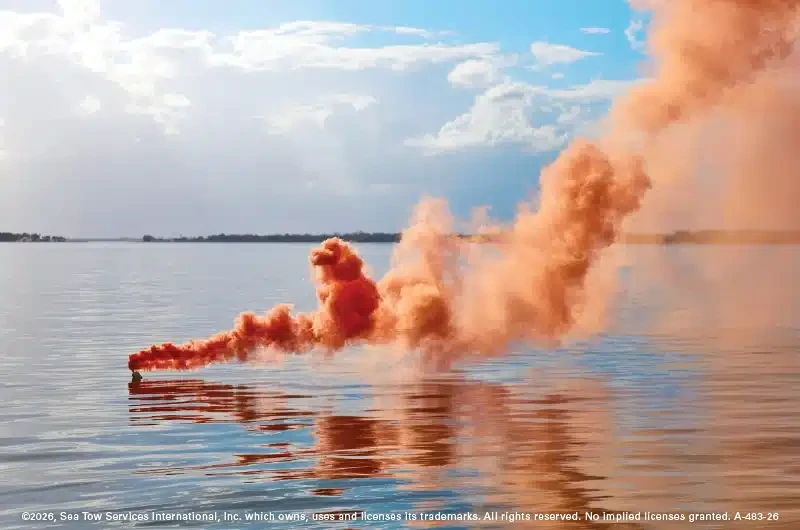
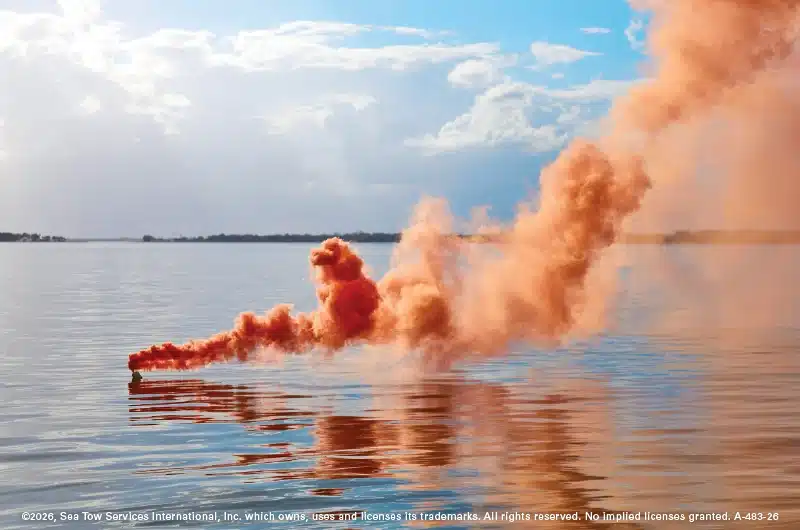
- Smoke Signals: Designed for daytime use, producing dense orange smoke via chemical sublimation, requiring stable thermal containment to prevent premature ignition.
Because these compounds are engineered to ignite swiftly and burn intensely under adverse conditions—such as high winds and wet environments—they remain chemically volatile long after their functional expiration date. An expired flare is not an inert object; it is an unstable chemical device susceptible to spontaneous ignition if exposed to friction, localized heat, or moisture-induced corrosion of the internal ignition train.
Storage Engineering: Finding the Balance
Storing flares effectively is an exercise in balancing opposing environmental requirements:
- Protection: They must be shielded from ambient moisture, salt air, direct UV radiation, and physical impact from loose tools, anchors, or dive tanks.
- Accessibility: They must be retrievable within seconds by any crew member, even in pitch-black, rolling seas.
Mariners should utilize dedicated, water-resistant containers secured firmly to the vessel’s structure. These containers should be positioned in main cabins or easily accessible lockers rather than deep bilge spaces or engine rooms, where heat and moisture concentrate. Storing flares alongside loose batteries, oily rags, or metallic tools must be strictly avoided to prevent short-circuiting or puncturing of the outer casing.
Official Guidelines and Regulatory Frameworks
Navigating the regulatory landscape surrounding marine safety equipment requires strict adherence to federal and local oversight. The U.S. Coast Guard, environmental protection agencies, and local municipalities enforce rigid standards regarding what constitutes compliant safety gear and how hazardous waste must be handled.
U.S. Coast Guard Carriage Requirements
Under Title 33 of the Code of Federal Regulations (CFR), recreational boats operating on coastal waters, the Great Lakes, and territorial seas—as well as those connected waters up to a point where the waterway is less than two miles wide—must be equipped with visual distress signals (VDS) at all times.
- Vessels under 16 feet must carry signals suitable for night use.
- Vessels 16 feet and over must carry unexpired devices suitable for both day and night use.
- A combination of daytime signals (such as an orange distress flag) and nighttime signals (such as pyrotechnic flares or an approved electronic light) fulfills this requirement.
Crucially, expired flares do not satisfy Coast Guard carriage requirements. Law enforcement boarding officers routinely inspect expiration dates during safety checks. Finding expired pyrotechnics in the primary safety kit can result in citations or voyage terminations, regardless of whether unexpired backups are also present.
Waste Authority and Municipal Protocols
There is no singular, federally funded nationwide take-back program for marine flares in the United States. This regulatory gap places the burden of safe disposal on local jurisdictions, leaving many boaters struggling to find compliant drop-off sites.
Official guidance from the Coast Guard and environmental agencies directs mariners to coordinate directly with:
- County Household Hazardous Waste (HHW) Programs: Many municipalities host periodic collection days specifically designated for hazardous materials, though acceptance criteria for pyrotechnics vary widely by county and state.
- Local Fire Departments and Law Enforcement: Certain jurisdictions permit drop-offs or conduct community disposal sweeps, though direct drop-offs without prior scheduling are strongly discouraged due to security and safety protocols.
- Flare Manufacturers: Some commercial producers offer mail-back disposal programs or partner with marine retailers to facilitate safe end-of-life recycling for their specific brand products.
Future Outlook: The Rise of Electronic Visual Distress Signals
As the maritime industry grapples with the complexities, environmental impacts, and disposal bottlenecks associated with traditional pyrotechnic flares, a technological shift is underway. Electronic Visual Distress Signals (eVDSS) are rapidly gaining acceptance as a sustainable, safer, and infinitely more practical alternative for recreational boaters.
┌───────────────────────────────┬───────────────────────────────┐
│     Traditional Flares        │      Electronic VDS (eVDSS)   │
├───────────────────────────────┼───────────────────────────────┤
│ • Single-use lifespan         │ • Reusable (battery-powered)  │
│ • Burn temperatures >2,500°F  │ • No flame, heat, or residue  │
│ • Complex disposal hurdles    │ • No hazardous waste disposal │
│ • Expires in 36–42 months     │ • Operates for hours; updates │
└───────────────────────────────┴───────────────────────────────┘
Advantages of Electronic Signaling
Modern eVDSS units utilize high-intensity LED or flashing light arrays programmed to emit the internationally recognized SOS distress pattern (three short, three long, three short flashes) in the infrared and visible spectrums. These devices offer several distinct advantages over chemical flares:
- Longevity and Reusability: Rather than expiring in three years, an electronic signal can be tested repeatedly and used across multiple boating seasons, requiring only periodic battery replacements.
- Safety: They produce zero flame, smoke, or hot residue, entirely eliminating the risk of accidental deck fires, severe burns, or explosive storage failures.
- Environmental Sustainability: Because eVDSS units do not contain toxic chemicals, heavy metals, or unstable pyrotechnic compositions, they eliminate the end-of-life disposal crisis entirely.
- Extended Signaling Duration: While a standard handheld flare burns out in roughly one to three minutes, an electronic distress light can flash continuously for several hours, providing prolonged visibility during extended search-and-rescue operations.
Regulatory Acceptance and Limitations
The U.S. Coast Guard formally recognizes electronic visual distress signals that comply with RTCM (Radio Technical Commission for Maritime Services) standard 13200.0 as meeting nighttime VDS carriage requirements for recreational vessels.
However, boaters transitioning to electronic systems must remain mindful of two key caveats:
- Daytime Signaling Requirements: Because eVDSS units are primarily lighting devices, vessels utilizing them for compliance must also carry an approved daytime visual signal—typically a 3-foot by 3-foot orange flag bearing the black square-and-circle symbol.
- Battery Maintenance: Just as pyrotechnic flares require date tracking, electronic units demand rigorous battery inspection schedules. Mariners must verify battery charge levels before every voyage and replace alkaline or lithium batteries in accordance with manufacturer recommendations.
As marine infrastructure evolves and environmental regulations tighten, electronic distress signals represent the future of maritime safety—reducing hazardous waste streams while offering reliable, long-term performance for the modern mariner.
Frequently Asked Questions (FAQ)
Can I put expired boat flares in the regular household trash?
No. Marine flares contain hazardous pyrotechnic materials that can easily ignite under pressure within garbage trucks, transfer stations, or municipal incinerators, posing extreme risks to sanitation workers and facilities. Always utilize certified hazardous waste channels.
Is it legal to fire expired flares to get rid of them?
No. Discharging flares recreationally or solely for disposal purposes is illegal in most jurisdictions. Doing so can trigger false distress reports, prompting costly and dangerous emergency responses from the U.S. Coast Guard, local marine police, and rescue helicopters. Furthermore, it creates significant fire hazards in marine and coastal environments.
What should I do if I discover a wet, swollen, or corroded flare?
Do not attempt to clean, dry, test, or dismantle a compromised flare. Minimize handling, place the device in a stable, cool location away from ignition sources, and immediately contact your local fire department, hazardous waste authority, or the manufacturer for specialized extraction and disposal guidance.
Do expired flares count toward U.S. Coast Guard carriage requirements?
No. Expired pyrotechnic signals are legally non-compliant during safety inspections. Even if kept on board as secondary backups, vessels must maintain their full complement of unexpired, Coast Guard-approved visual distress signals to avoid regulatory penalties.
How often should my vessel’s safety kit be audited?
A comprehensive visual and physical inspection of all safety equipment—including expiration date verification, moisture checks, and container integrity evaluations—should be conducted at least once per boating season, prior to embarking on long offshore passages, and immediately following any extreme weather event or exposure to flooding.


