











Executive Overview
In the realm of modern American infrastructure policy, a glaring contradiction defines the federal agenda: while grandiose visions for roads, bridges, and high-tech manufacturing corridors routinely dominate national headlines, public transportation remains a glaring blind spot. For Donald Trump and his political platform, infrastructure has historically been a cornerstone message—encapsulated by the famous, perennial promise of "Infrastructure Week." Yet, a critical analysis of federal prioritization reveals a striking exclusion: heavy rail, light rail, bus rapid transit, and commuter networks are consistently sidelined, underfunded, or outright dismissed.
This deep-dive investigation examines the policy frameworks, political incentives, and ideological underpinnings that explain why Donald Trump’s administration and broader political movement enthusiastically support the expansion of automobile-centric concrete networks while leaving vital mass transit systems—such as Boston’s historic Green Line, New York’s aging subway arteries, and rapidly growing light rail systems across the Sun Belt—to fend for themselves. By tracing the trajectory of federal funding, analyzing structural policy choices, and reviewing the socio-economic impacts on urban centers, this report uncovers the mechanics behind the administration’s transportation paradox.
Detailed Chronology: The Evolution of Transit Skepticism in Modern Federal Policy
To understand why public transportation faces an uphill battle under the current political paradigm, one must review the historical friction between federal administrations and urban transit authorities over the past decade.
The First Term Blueprint (2017–2021)
During his initial tenure in the White House, Donald Trump frequently teased trillion-dollar infrastructure packages that promised to revitalize America’s crumbling physical assets. However, a closer examination of proposed budgets from the White House Office of Management and Budget (OMB) revealed a consistent target for deep cuts: the Federal Transit Administration’s (FTA) Capital Investment Grants (CIG) program, commonly known as "New Starts."
- Spring 2017: Early budget blueprints proposed zeroing out funding for new transit projects, arguing that local and state governments—along with private entities—should shoulder the financial burden of mass transit expansion rather than federal taxpayers.
- 2018–2019: Despite congressional pushback that repeatedly restored funding for urban transit in bipartisan appropriations bills, the administration continuously deprioritized discretionary grants for rail and bus rapid transit systems, favoring highway expansions and aviation updates.
- 2020: Amid the COVID-19 pandemic, federal relief packages provided emergency lifelines to transit agencies facing catastrophic revenue drops. However, administration officials resisted long-term structural bailouts for urban mass transit, framing them as fiscal bailouts for mismanaged municipal governments rather than essential national infrastructure.
The 2024 Campaign and Beyond (2024–2026)
As the political landscape shifted toward the mid-2020s, the rhetoric surrounding transportation solidified. While highway modernization, electric vehicle charging debates (often framed skeptically), and freight corridor efficiency remained standard talking points at rallies and policy forums, urban rail and bus networks were conspicuously absent from major policy unveilings.

By October 2026, major metropolitan systems—exemplified by the Massachusetts Bay Transportation Authority (MBTA) and its heavily utilized Green Line—continued to grapple with maintenance backlogs and modernization needs that received little to no enthusiastic backing from conservative federal policymakers. The persistent neglect has transformed public transportation into a partisan wedge issue, where investing in a train is frequently mischaracterized as an attack on suburban and rural driving habits.
Supporting Context & Metrics: The Cost of Ignoring Transit
The divergence between highway funding and transit investment is not merely rhetorical; it is starkly reflected in federal balance sheets, ridership metrics, and engineering reports.
The Funding Disparity
Historically, the Highway Trust Fund (HTF) receives massive federal backing, primarily through fuel taxes and general fund transfers, while public transit relies on a much smaller percentage carve-out. Under conservative infrastructure frameworks, this disparity widens significantly. Proposals favored by the administration consistently prioritize asphalt over steel.
- Highway vs. Transit ROI: While highway projects are routinely approved under the premise of reducing congestion and boosting interstate commerce, transit projects face stringent cost-effectiveness index ratings from the FTA that are rarely applied with the same vigor to highway widening projects—despite decades of traffic data proving the phenomenon of "induced demand."
- Maintenance Backlogs: According to data compiled by the American Public Transportation Association (APTA), the cumulative repair backlog for the nation’s public transit systems exceeds $175 billion. Without robust federal partnership—the kind historically reserved for the Interstate Highway System—local municipalities are left incapable of closing the funding gap.
The Case Study of Boston’s Green Line
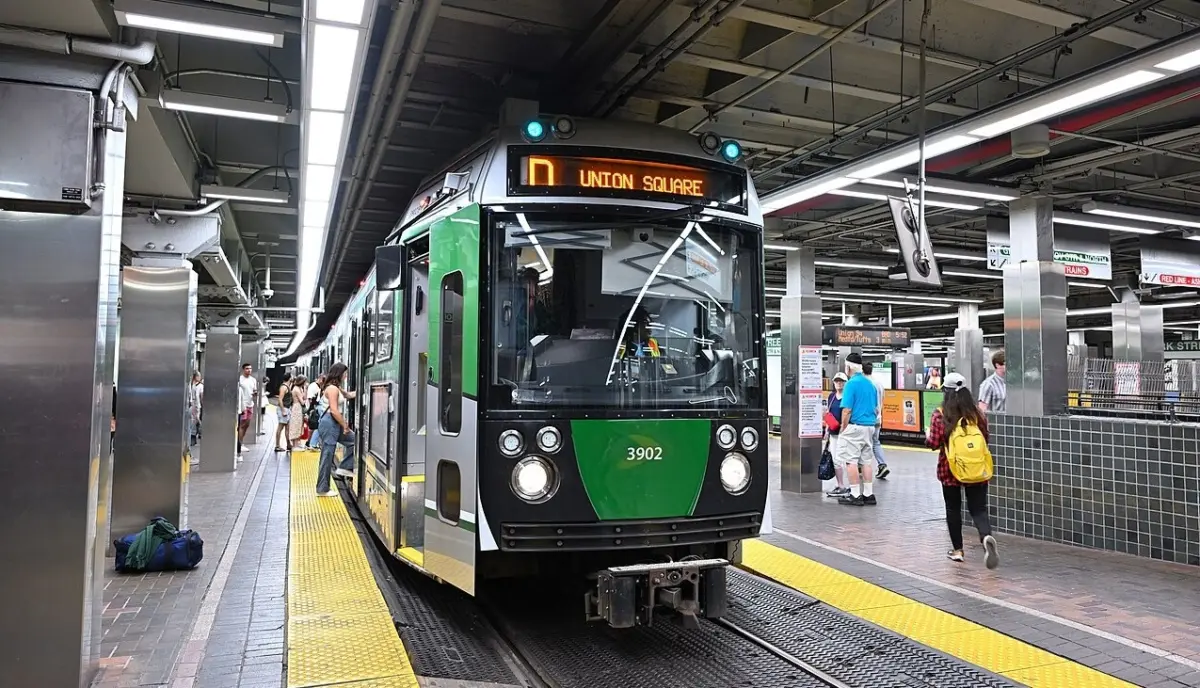
Boston’s Green Line, America’s oldest continuously operating light rail system, serves as a textbook example of the consequences of federal indifference. While portions of the system have seen localized expansions, chronic underinvestment in overarching structural updates, signaling, and rolling stock has plagued the MBTA. When federal infrastructure grants favor sprawling highway interchanges or rural road resurfacing over high-density urban transit upgrades, legacy systems like the Green Line are forced to raise fares or defer critical safety maintenance.
+-----------------------------------------------------------------+
|              US Infrastructure Funding Allocation               |
+-------------------------------------+---------------------------+
| Sector                              | Relative Federal Priority |
+-------------------------------------+---------------------------+
| Interstate Highways & Bridges       | █ █ █ █ █ (High)          |
| Aviation & Air Traffic Control      | █ █ █ █ ▒ (Moderate-High) |
| Freight Rail & Ports                | █ █ █ ▒ ▒ (Moderate)      |
| Urban Mass Transit (Rail/Bus)       | █ ▒ ▒ ▒ ▒ (Low)           |
+-------------------------------------+---------------------------+
Official Statements and Ideological Drivers
Why does the resistance to public transit run so deep within the Trump-aligned wing of American politics? Analysts point to a combination of ideological assumptions, voter demographics, and economic philosophies.

1. The Automobile as a Symbol of American Freedom
At the heart of the resistance is a cultural attachment to the automobile. In conservative political rhetoric, the car represents personal liberty, independence, and the open road. Conversely, public transit is frequently framed by its critics as collectivist, inefficient, and misaligned with the spatial realities of suburban and rural voters.
A former senior Department of Transportation official during the Trump administration noted in a policy briefing:
"Federal infrastructure dollars must go toward where the majority of Americans actually travel and conduct business. For decades, that has meant rubber on asphalt. Forcing taxpayers in rural and suburban communities to subsidize empty railcars in dense urban centers is economically unsound and politically untenable."
2. Geographic Polarization
The political map heavily influences transportation priorities. Urban cores, which rely most heavily on mass transit, tend to vote reliably Democratic, whereas suburban and exurban areas—where car ownership is practically mandatory—represent crucial battleground territory for conservative candidates. Consequently, policy platforms naturally gravitate toward funding projects that resonate with the electorate in swing districts: wider highways, smoother commutes for drivers, and reduced toll burdens.
3. Skepticism of Government Megaprojects
Conservative critics also point to the high cost overruns and construction delays associated with public transit megaprojects—such as California’s high-speed rail initiative or New York’s Second Avenue Subway—as justification for withholding federal support. Rather than viewing these delays as challenges to be solved through better project management and federal oversight, the administration’s posture has often been to defund the category entirely.

Future Outlook: Can the Paradigm Shift?
As American cities grapple with population growth, housing affordability crises, and climate change mandates, the friction between federal infrastructure goals and local transit needs is reaching a critical juncture.
The Urban-Suburban Divide
Looking forward, the long-term viability of American public transit depends heavily on bridging the ideological gap between federal policymakers and urban planners. If transportation policy remains trapped in a zero-sum game where highways win and transit loses, metropolitan areas will continue to struggle with congestion, economic stagnation, and deteriorating air quality.
Technological Adaptation and Private-Public Partnerships
Some proponents of transit modernization argue that the only way to secure conservative backing for mass transit is to pivot toward private-public partnerships (P3s) and autonomous transit solutions. By shedding the perception of heavy-handed government bureaucracy and embracing agile, tech-enabled micro-transit, advocates hope to rebrand public transportation not as an outdated entitlement, but as an efficient, modern mobility service.
Conclusion
Donald Trump’s reluctance to build and fund public transportation is not merely an oversight; it is a feature of a broader political strategy that champions individual automotive freedom, prioritizes suburban and rural constituencies, and views federal spending through a skeptical free-market lens. However, as the infrastructure demands of the 21st century mount, the persistent refusal to invest in mass transit risks leaving America’s economic engines stalled in endless traffic. Until federal leaders recognize that a balanced transportation ecosystem requires both robust highways and world-class rail and bus networks, the Great Infrastructure Paradox will endure.


