











On the morning of 7 January 2026, a routine international sailing across the Irish Sea turned into a critical maritime emergency when the large roll-on/roll-off passenger (RoPax) ferry Stena Estrid made heavy contact with an unprotected turning fender at Terminal 3 of Holyhead Port in Wales. The collision, occurring amidst challenging environmental conditions characterized by strong westerly winds gusting up to force 7, resulted in a significant hull breach. Approximately 500 tonnes of seawater rushed into the starboard engine room, compromising the vessel’s structural integrity and threatening its buoyancy while carrying 157 people on board.
The incident highlights the inherent vulnerabilities present during port berthing maneuvers, especially when interacting with aging or exposed maritime infrastructure under adverse weather. However, the crisis also served as a testament to modern maritime safety protocols, crew training, and rapid emergency response. Thanks to the decisive actions of the ship’s 66-member crew, who successfully shored up the breach, pumped out floodwaters, and altered the vessel’s ballast to lift the damage above the waterline, a potential catastrophe was averted. Passengers were safely disembarked, vehicles were unloaded, and no injuries or fatalities were reported.
Following the preliminary assessment (PA) summary (Reference: 3/2026) released by the Marine Accident Investigation Branch (MAIB), the formal investigation has been closed due to prompt corrective actions and planned infrastructure improvements undertaken by the operators, Stena Line Limited and Stena Line Ports Limited. This comprehensive report explores the chronology of the accident, analyzes the ship particulars and voyage metrics, examines the vessel’s technical specifications, and outlines the broader implications for Irish Sea ferry operations.

Detailed Chronology of the Incident
The Approach and Environmental Conditions
The voyage began in Dublin, Ireland, a major economic gateway connecting the Irish Republic to the United Kingdom. Aboard the Stena Estrid were 91 passengers, 95 vehicles, and a dedicated crew of 66 personnel, comfortably within the ship’s safe operational parameters. The crossing was largely uneventful; however, as the vessel approached the Welsh coast, meteorological conditions deteriorated. Westerly winds ranging between force 6 and force 7 created localized pressures that would demand high precision from the bridge team during the berthing phase at Holyhead Port.
At approximately 0750 UTC, the RoPax ferry prepared to dock at Terminal 3. Maneuvering a 214.5-meter-long vessel in restricted port waters requires exceptional synchronization between the ship’s propulsion systems, bridge personnel, and shoreside assistance.
The Collision at Terminal 3
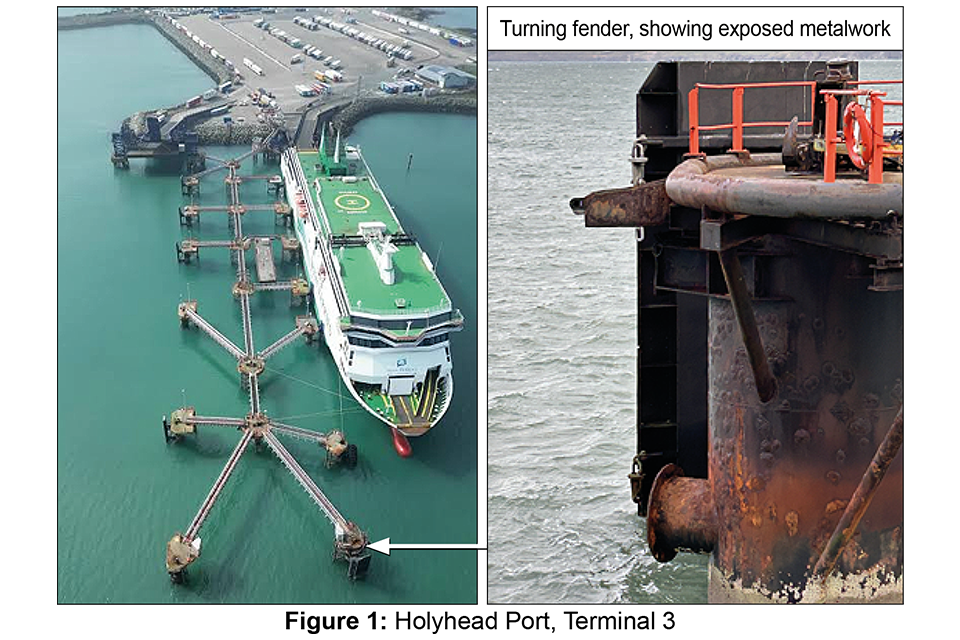
Prior to backing into the terminal berth, the Stena Estrid executed a port turn to the north of the jetty. To assist with this complex turning maneuver in the gusty conditions, a tug had been made fast on the ferry’s port aft quarter.
Despite these precautionary measures, the combination of wind forces and hydrodynamic interaction during the turn led to a miscalculation or drift. The Stena Estrid made unintended, heavy contact with an unprotected turning fender situated at the northern extent of Terminal 3.
The physical impact of the multi-thousand-tonne vessel striking the unyielding steel and concrete fender was immediate and severe. The concentrated force breached the ship’s outer plating. A hole was torn into the hull just below the waterline on the starboard engine room, while a secondary breach occurred above the waterline on the cargo deck.
Emergency Response and Damage Mitigation
Water instantly began pouring into the ship’s interior. Approximately 500 tonnes of seawater flooded the starboard engine room, while an unknown quantity accumulated in an adjacent void space. In marine engineering, the rapid flooding of a primary machinery space presents an immediate hazard to vessel stability, electrical power distribution, and propulsion.
The reaction of the ship’s crew was immediate, disciplined, and executed in accordance with advanced safety management systems:

- Isolation and Containment: Engineering teams immediately moved to isolate affected electrical circuits and prevent secondary hazards such as short circuits or fires.
- Structural Shoring: Working rapidly in hazardous conditions, crew members deployed emergency shoring equipment to reinforce the breached hull plating below the waterline, successfully slowing and eventually halting the uncontrolled ingress of water.
- Dewatering: High-capacity bilge and emergency pumps were brought online to expel the 500 tonnes of water from the starboard engine room.
- Ballast Management: Recognizing that mere pumping would not instantly restore safety margins, the crew executed a strategic ballast transfer. By shifting ballast water across the vessel, they induced a deliberate port list, which physically elevated the starboard hull damage entirely above the waterline.
Berthing and Port Operations
With the crisis on board stabilized, the master of the Stena Estrid assessed that the vessel retained sufficient maneuverability and structural safety to complete the docking procedure. The ferry proceeded to berth at Terminal 3, where the 91 passengers and 95 vehicles disembarked without significant delay, blissfully unaware of how close they had come to a major maritime disaster.
Following the successful unloading, Holyhead Port authorities temporarily closed the ferry terminal to inbound and outbound traffic. Later that evening, the Stena Estrid was carefully relocated to an alternative berth to allow structural engineers to conduct a comprehensive damage assessment of the Terminal 3 jetty. Finding no significant structural damage to the jetty itself, the port authority cleared the terminal for a return to service.
With the ship temporarily patched and deemed stable, the Stena Estrid departed Holyhead under its own power, navigating across the Irish Sea to a dry dock facility in Liverpool, England, for permanent repairs.
Supporting Context & Metrics
To fully understand the magnitude of the incident and the resilience of the vessel, it is necessary to examine the technical particulars of the Stena Estrid, the voyage data, and the nature of the marine casualty itself.
Ship Particulars: Stena Estrid
Constructed by the renowned China Merchants Jinling Shipbuilding Co. Ltd. and delivered in 2019, the Stena Estrid represents a modern generation of sustainable, highly efficient RoPax ferries. Sailing under the flag of Cyprus and classed by DNV GL, the vessel is owned by LS-CYP1 Co Ltd, managed by Stena Line Limited, and operated by Stena Line Irish Sea Ferries Limited.
- IMO Number: 9807293
- Vessel Type: Roll-on/roll-off passenger (RoPax) ferry
- Length Overall (LOA): 214.5 meters
- Gross Tonnage: 41,671 GT
- Minimum Safe Manning: 19 personnel
- Actual Manning on Date of Incident: 66 personnel
- Authorized Cargo: Passengers and commercial/private vehicles
Voyage Particulars
- Port of Departure: Dublin, Ireland
- Port of Arrival: Holyhead, Wales
- Voyage Type: International short-sea transit
- Cargo Carried: 95 vehicles (ranging from private cars to freight haulage) and 91 passengers
- Total Persons on Board (POB): 157 (including 66 crew members)
Marine Casualty Information
- Date and Time: 7 January 2026 at 0750 UTC
- Classification: Serious Marine Casualty
- Location: Terminal 3, Holyhead Port, Anglesey, Wales
- Specific Area on Board: Starboard engine room and adjacent void spaces
- Casualties/Injuries: None (0 fatalities, 0 injuries)
- Environmental Impact: Hull puncture with localized flooding (no oil spills or pollution reported)
- Operational Phase: Berthing / Maneuvering
- Weather Environment: Westerly winds, Force 6 to 7 (strong breeze to near gale)
Official Statements and Investigation Findings
The MAIB Preliminary Assessment
The Marine Accident Investigation Branch (MAIB), the independent UK government body tasked with investigating marine accidents and incidents within UK territorial waters, launched a rapid-response preliminary assessment (PA summary 3/2026).
While traditional MAIB investigations can take many months to publish full, multi-page reports, the preliminary assessment process allows for the swift closure of cases where the factual findings are clear, immediate safety lessons have been learned, and proactive measures have been implemented by the commercial stakeholders.
In this instance, the MAIB investigation focused on:
- The hydrodynamic and wind-induced forces acting on the vessel during the port-side turning maneuver.
- The adequacy and positioning of shoreside turning fenders at Terminal 3, Holyhead Port.
- The effectiveness of the ship’s damage control systems, crew emergency drills, and stability management.
Corrective Actions Taken
Following the incident, both the vessel manager and the port operator initiated swift, voluntary safety actions to prevent recurrence:
-
Stena Line Limited (Vessel Manager):
- Reviewed and updated bridge resource management (BRM) procedures regarding tug assistance during high-wind berthing operations at Holyhead.
- Conducted internal audits of the ship’s damage control inventory, ensuring enhanced readiness for rapid hull shoring.
- Issued a fleet-wide operational advisory emphasizing environmental risk thresholds for maneuvering in restricted port layouts.
-
Stena Line Ports Limited (Port Operator):
- Initiated an engineering review of the fendering arrangements at Terminal 3.
- Assessed the feasibility of upgrading or retrofitting unprotected turning fenders to absorb higher impact thresholds from modern, high-tonnage RoPax vessels.
- Enhanced communication protocols between port control, harbor pilots, and incoming vessel masters regarding localized wind shears and gusts.
Because of these proactive measures and the clear accountability demonstrated by all parties, the MAIB formally closed its investigation, satisfied that the safety risks identified during the incident have been adequately mitigated.
Future Outlook
The collision of the Stena Estrid at Holyhead Port serves as a vital case study for the contemporary ferry sector, blending a narrative of potential disaster with a masterclass in professional maritime crisis management. As the shipping industry faces increasing commercial pressures to maintain strict timetables regardless of weather, incidents like this underscore the unforgiving nature of the marine environment.
The Evolution of Port Infrastructure
As modern RoPax vessels continue to grow in length, windage area, and tonnage—typified by the 214-meter, 41,671-gross-tonne profile of the Stena Estrid—ports around the globe are facing an infrastructure mismatch. Many legacy ferry terminals were originally designed for significantly smaller ships. The presence of unprotected or rigid turning fenders in high-traffic, weather-vulnerable locations like Holyhead Port represents a structural risk that port authorities must aggressively modernize.
The review initiated by Stena Line Ports Limited to upgrade Terminal 3’s fendering system is a welcome step, but it points to a wider industry trend. European and international ports handling heavy Irish Sea and North Sea traffic must invest in energy-absorbing, modern fender technology to protect vessel hulls from catastrophic punctures during high-wind berthing.
Human Element and Training Excellence
Perhaps the most significant takeaway from the 7 January 2026 incident is the vindication of rigorous crew training. Operating a modern RoPax ferry requires not only technical navigation skills but also an elite standard of damage control proficiency. The ability of the crew aboard the Stena Estrid to calmly assess a 500-tonne flooding event in a vital machinery space, execute precise shoring, and dynamically shift ballast to lift the damage above the waterline prevented what could easily have been a sinking or a severe stability crisis.
Maritime academies, ship managers, and regulatory bodies will undoubtedly incorporate the lessons of the Stena Estrid into future simulator training and emergency response curricula. The incident proves that while advanced technology and robust hull design are essential, the ultimate safeguard at sea remains a well-trained, disciplined, and level-headed crew.
As the Stena Estrid returned to service following dry-dock repairs in Liverpool, the Irish Sea maritime community resumed its vital economic lifeline with renewed vigilance. The swift resolution of the MAIB investigation ensures that commercial confidence remains high, but the scars left on Terminal 3 and the hull of a world-class ferry will serve as a permanent reminder of the respect the sea demands.


