






Executive Overview
While Northern Ireland’s capital, Belfast, rightfully commands international attention with its bustling harbor, the world-class Titanic Belfast museum, and striking political murals, a quieter, deeply historic treasure waits just a short journey away. Situated a mere 20-minute drive northwest of the urban core, the charming town of Antrim offers travelers an idyllic counter-narrative to city life. Nestled gracefully along the banks of the Six Mile Water river—which empties into Lough Neagh, the United Kingdom’s largest freshwater lake—Antrim serves as a gateway to centuries of architectural evolution, pristine green spaces, championship-caliber golf, and a burgeoning culinary scene.
Long recognized historically as the primary market and mill hub of County Antrim, the town successfully bridges its medieval and industrial heritage with modern leisure infrastructure. At its heart lies the extensively restored Antrim Castle Gardens, a 50-plus-acre public estate that merges French-inspired formal landscaping with centuries-old ruins. Supplemented by world-class golfing facilities like the historic Massereene Golf Club and a diverse array of dining establishments ranging from modern waterfront bistros to Northern Ireland’s oldest traditional inn, Antrim has quietly emerged as an essential destination for discerning travelers seeking authenticity, natural beauty, and relaxed exploration just minutes from Belfast International Airport.
Detailed Chronology: From Ancient Foundations to Modern Restoration
The historical tapestry of Antrim is woven deeply into the geography of the Six Mile Water and the shores of Lough Neagh. Understanding the town’s evolution requires tracing a timeline that spans from early ecclesiastical and defensive settlements to the aristocratic dominance of the Plantation of Ulster and, ultimately, its rebirth as a public sanctuary.
1. The Early Strategic Era and Medieval Roots
Long before the construction of modern stone castles, the strategic confluence of the Six Mile Water and Lough Neagh drew human settlement. The region’s landscape is punctuated by earthworks, most notably the 12th-century motte—a defensive earthen mound once crowned by an ancient timber fortification designed to control local transit and water routes. As Christianity took deep root in Ireland, the area surrounding modern Antrim became an important ecclesiastical waypoint, setting the stage for a permanent community.
2. The Clotworthy Era and 17th-Century Construction
The modern architectural identity of Antrim began to take definitive shape in the early 17th century during the Plantation of Ulster. Sir Hugh Clotworthy, an English military officer and administrator, acquired lands in the area and established a fortified manor along the Six Mile Water. Constructed in the early 1600s, Antrim Castle became the seat of the Clotworthy family and their descendants, the Viscounts Massereene.
During this period, the estate’s layout was formalized with grand French-inspired design principles. Canals, straight-lined water features, and expansive parterres were introduced, transforming the river-adjacent acreage into a formal estate that mirrored the grand aristocratic landscapes of continental Europe.
3. Victorian Gothic Redesigns and the 2020s Tragedy
As centuries passed, the original 17th-century fortification underwent substantial expansions and alterations. In the 19th century, the estate was redesigned into an imposing Victorian Gothic pile, complete with ornate stonework and crenellated architectural flourishes, including a distinctive clock tower added in the late 1880s.

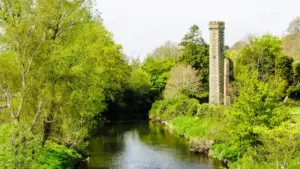
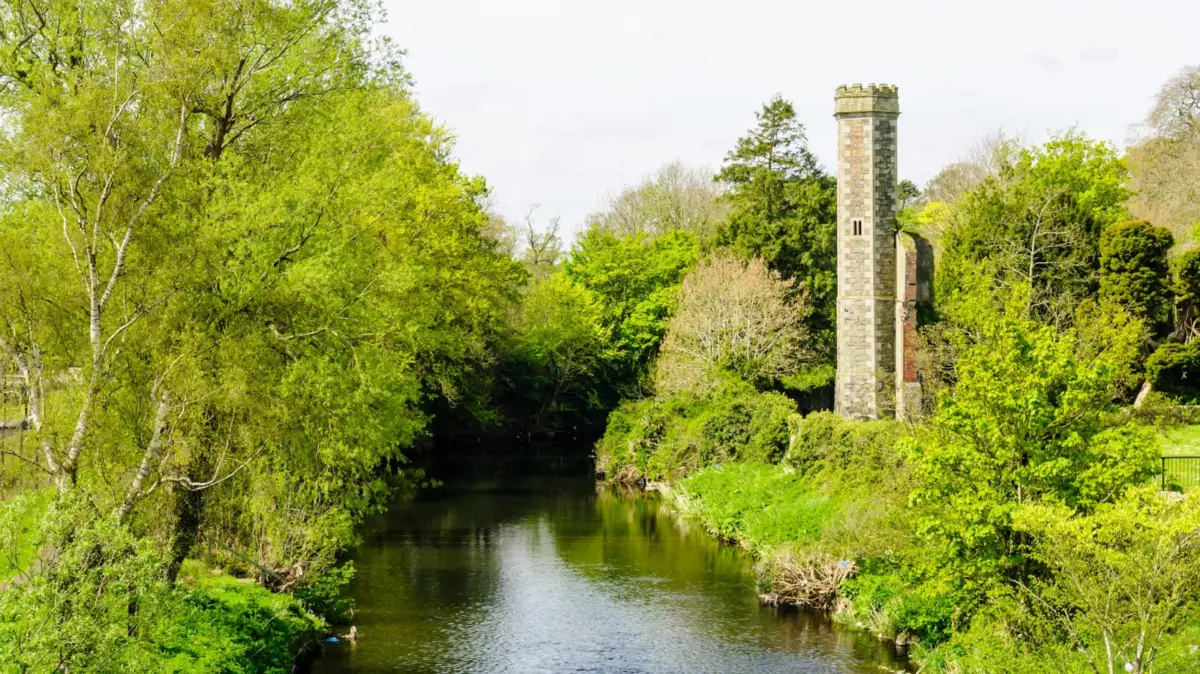
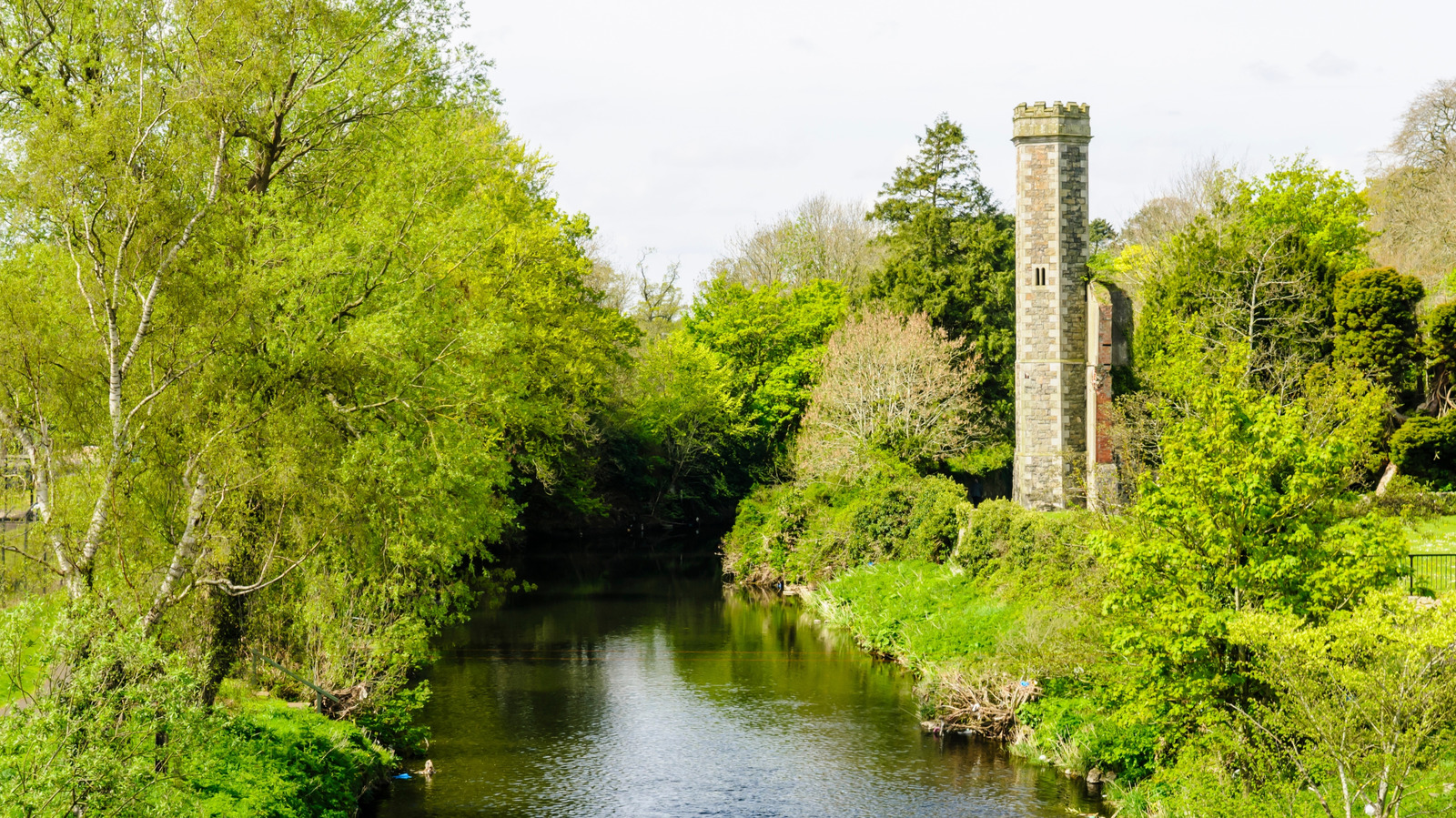
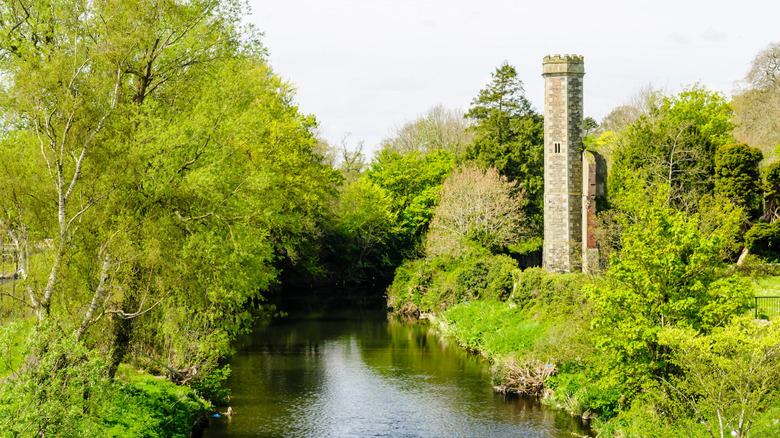
For generations, the Viscounts Massereene inhabited the grand halls of Antrim Castle. However, the estate’s domestic era came to a sudden, catastrophic end in the 1920s when a devastating fire tore through the structure. The blaze reduced the grand manor to a shell, leaving only the structural ruins and the iconic 19th-century tower standing sentinel over the Six Mile Water. For decades, the surrounding formal gardens languished in semi-obscurity, slowly reclaimed by nature behind closed gates.
4. The 2015 Renaissance and Modern Public Access
The turning point for Antrim’s premier historical asset arrived in the 21st century. Following a comprehensive, multi-million-pound restoration project backed by local authorities and heritage grants, the 50-acre Antrim Castle Gardens officially reopened to the public in 2015.
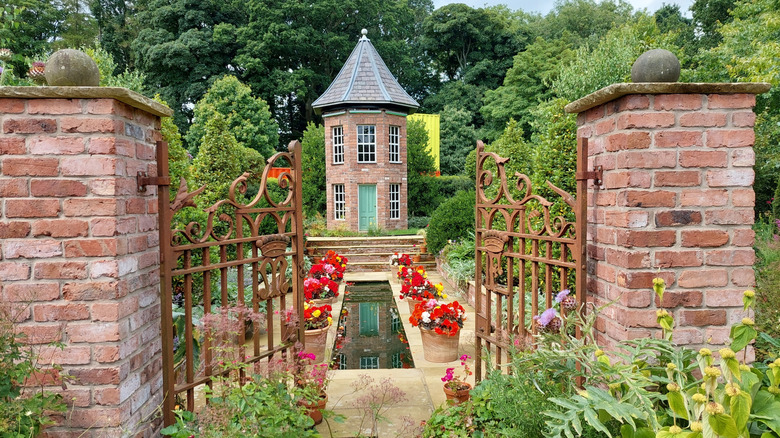
The extensive revitalization breathed new life into the historic French-inspired canals, walking paths, and geometric parterres. Clotworthy House, the estate’s original 19th-century stable block, was meticulously converted into a thriving visitor center and cultural hub. Most recently, the gardens expanded their cultural footprint with the 2022 introduction of the Platinum Jubilee Clockwork Garden, created to honor Queen Elizabeth II with intricate, timed floral displays, cementing Antrim Castle Gardens as a premier horticultural destination in the British Isles.
Supporting Context & Metrics
Evaluating Antrim’s current tourism landscape requires examining the physical, geographical, and economic metrics that define the region.
+-------------------------------------------------------------------------+
|                       ANTRIM TOURISM METRICS                            |
+------------------------------+------------------------------------------+
| Metric Category              | Data Point / Specification               |
+------------------------------+------------------------------------------+
| Distance from Belfast        | ~20–25 minutes driving time              |
| Distance to BFS Airport      | ~15 minutes (direct international access)|
| Antrim Castle Gardens Area   | 50+ acres of restored parkland           |
| Primary Waterway             | Six Mile Water (feeding Lough Neagh)     |
| Lough Neagh Significance     | U.K.'s largest freshwater lake           |
| Optimal Visitation Window    | June through August (Mid-60s °F average) |
+------------------------------+------------------------------------------+
Geographical and Ecological Context
Antrim serves as the administrative and historical anchor of County Antrim, positioning travelers perfectly between inland aquatic wonders and dramatic coastal geography. The town’s commercial spine runs parallel to the Six Mile Water along High Street, characterized by late 16th-century Gothic churches, independent retail shops, and local eateries.
Just beyond the town boundaries lies Lough Neagh. Spanning approximately 151 square miles, the lake is the largest freshwater body in the United Kingdom and a vital ecosystem. However, contemporary environmental reports note that the lake faces severe ecological challenges, notably recurring blooms of toxic blue-green algae that threaten local fisheries and water quality—an issue drawing intense scrutiny from conservationists and local authorities alike.
Accessibility and Logistics
For international and domestic travelers, Antrim’s infrastructure makes it one of the most accessible historic towns in Northern Ireland. Located a mere 15-minute drive from Belfast International Airport (BFS), which handles heavy passenger volumes and direct flights from major European hubs, visitors can transition from the tarmac to historic parklands in minutes. Furthermore, the town acts as a natural staging ground for those wishing to journey northward along the world-famous Antrim Coast toward the UNESCO-recognized Giant’s Causeway or the championship links of the Royal Portrush Golf Club.
Official Statements and Expert Perspectives
Local stakeholders, heritage authorities, and visitors consistently emphasize the unique balance Antrim strikes between historical preservation and contemporary leisure.
-
On the Restoration of the Castle Gardens:
Local heritage representatives have frequently highlighted the 2015 regeneration project as a masterclass in adaptive reuse. Municipal tourism boards note that “transforming the neglected grounds of a lost aristocratic estate into a vibrant, free-access public park has fundamentally revitalized the town’s social fabric, drawing hundreds of thousands of domestic and international visitors annually.” -
On the Sporting Heritage:
Golf enthusiasts and club officials frequently praise the unique layout of the Massereene Golf Club. A spokesperson for the club noted that maintaining an 18-hole course bordered by mature woodlands and the shifting shorelines of Lough Neagh requires rigorous ecological stewardship. Patrons on review platforms have echoed this sentiment, with one widely cited golfer observing, “The greens are some of the best I’ve played on, offering a rare combination of technical challenge and sweeping, tranquil lake views.” -
On Culinary Authenticity:
Hospitality operators in the area emphasize a commitment to blending locally sourced Irish ingredients with international culinary trends. Management at waterfront dining venues like The Boathouse point out that diners increasingly seek out locations where historic geography meets modern dining, remarking that “framing the meeting point of the Six Mile Water and Lough Neagh with floor-to-ceiling glass allows our guests to consume the natural beauty of Antrim alongside globally inspired cuisine.”
Future Outlook: Sustainable Tourism and Regional Growth
As Northern Ireland continues to refine its tourism strategies, Antrim is positioned for sustainable, community-centric growth. Rather than pursuing the mass-tourism models seen in major European capitals, local development agencies are focusing on experiential, slow-paced travel that highlights the region’s natural assets, heritage trails, and outdoor recreation.
Key Focus Areas for Future Development:
- Environmental Conservation of Lough Neagh: With the ecological health of the U.K.’s largest lake under intense spotlight due to algae proliferation, future regional planning heavily hinges on cross-agency environmental remediation. Restoring the ecological integrity of Lough Neagh is viewed as paramount for maintaining the viability of lakeside recreation, boating, and golf tourism at Massereene.
- Expansion of Greenways and Trails: Local municipal bodies are actively exploring infrastructure projects to connect Antrim Castle Gardens more seamlessly with surrounding natural reserves, creating expanded cycling and walking corridors along the Six Mile Water and the shores of Lough Neagh.
- Enhancing the Heritage Economy: Plans are underway to further leverage Clotworthy House as an incubator for local artisans, craft makers, and historical exhibitions, ensuring that the town’s cultural offerings continue to evolve year-round rather than depending solely on the peak summer season.
By carefully balancing heritage preservation with modern ecological awareness and high-end hospitality, Antrim is setting a benchmark for secondary destinations across the British Isles—proving that profound history and modern comfort can coexist just minutes off the beaten path.