







Executive Overview
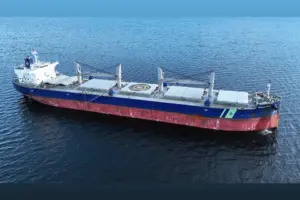
On 14 October 2025, the global maritime community was once again reminded of the unforgiving and perilous nature of commercial shipping. On that fateful day, the bosun of the Isle of Man-registered bulk carrier World Prize lost his life in a tragic accident off the coast of Rönnskär, Sweden. The seafarer plummeted from the main deck into the freezing Baltic waters while the ship’s crew was engaged in the routine, yet inherently hazardous, task of retrieving and stowing the pilot ladder following a harbour departure.
What should have been a standard navigational transition transformed rapidly into a desperate, high-stakes maritime rescue operation. Operating just a short distance away, the Swedish pilot boat Pilot 753 SE, managed by the Swedish Maritime Administration (SMA), rushed to the scene. Despite the swift response and valiant efforts of the pilot boat crew to recover the fallen seafarer from the water, the rescue attempt proved unsuccessful due to the treacherous environmental conditions, the suddenness of the fall, and the inherent difficulties of open-water recovery. Tragically, the search culminated the following day when recovery divers retrieved the bosun’s body from the seabed.
The incident has since become the subject of formal scrutiny, catalogued under Accident Investigation Report 16/2026. This comprehensive safety document provides a stark window into the vulnerabilities that persist within routine deck operations on large commercial vessels. While maritime authorities have noted that no formal recommendations were issued in the final report—attributing this to proactive safety measures already enacted or under review by the vessel operators and relevant flag state authorities—the human cost of the incident remains an indelible stain on the industry’s collective safety record.
This in-depth investigative report examines the tragic sequence of events surrounding the World Prize fatality, contextualizes the broader systemic safety challenges facing modern bulk carrier crews, analyzes the meteorological and operational factors at play during pilotage transfers, and explores the rigorous safety culture shifts required to ensure that deck operations do not continue to claim the lives of the world’s essential seafarers.
Detailed Chronology of Events
To fully understand the mechanics of the accident aboard the World Prize, maritime investigators constructed a detailed, minute-by-minute timeline of the vessel’s operations on 14 October 2025. While the final investigation report summarizes the core events, a reconstruction of the contextual timeline sheds light on the pressures and operational rhythms that characterize modern bulk carrier sailings in northern European waters.
Departure from Rönnskär
The World Prize, a substantial bulk carrier flagged in the Isle of Man, had completed its cargo-handling operations at the industrial port of Rönnskär, situated along the Gulf of Bothnia in northern Sweden. Rönnskär is widely known for its complex industrial maritime infrastructure, dealing heavily in metallurgical products, smelting byproducts, and raw minerals. Navigating out of the port requires precision seamanship, strict adherence to local pilotage protocols, and close coordination between the ship’s bridge team and regional maritime authorities.
On this particular day, the vessel successfully embarked its marine pilot during the inbound or outbound transit, navigating the intricate archipelago waters characteristic of the Swedish coastline. As the World Prize cleared the immediate hazards of the Rönnskär port approach and reached open water where the services of the pilot were no longer required, preparations commenced for the disembarkation of the pilot and the subsequent retrieval of the pilot ladder.

The Pilot Transfer Operation
Pilot transfer operations are among the most regulated, yet notoriously dangerous, routine tasks performed in the maritime industry. Governed strictly by Safety of Life at Sea (SOLAS) Chapter V, Regulation 23, and International Maritime Organization (IMO) guidelines, the rigging, tending, and retrieval of pilot ladders require absolute adherence to safety protocols, including the mandatory use of personal fall protection equipment for any crew member working outboard or near unprotected deck edges.
As the Swedish pilot boat Pilot 753 SE maneuvered alongside the World Prize to take off the departing pilot, the ship’s deck crew stood by. Once the pilot successfully transitioned from the ship’s accommodation ladder or pilot ladder safely onto the deck of Pilot 753 SE, the operational focus shifted immediately to the retrieval and stowing of the heavy, cumbersome rope-and-wooden-step ladder.
It was during this critical phase of post-departure housekeeping—often characterized by a perceived reduction in urgency once the pilot has safely cleared the vessel—that disaster struck.
The Fall and Immediate Response
For reasons investigated by maritime safety authorities, the bosun slipped or lost his footing on the main deck, tumbling over the side and into the frigid waters of the Baltic Sea. The unexpected nature of the fall meant there was no immediate visual warning to bridge personnel beyond the frantic shouts of nearby crew members.
The bridge team immediately initiated standard Man Overboard (MOB) protocols: sounding the general alarm, throwing lifebuoys equipped with self-igniting lights into the water, marking the GPS position, and bringing the massive bulk carrier around—a maneuver that takes significant sea room and time for a heavily laden or ballast-condition bulk carrier.
Fortunately, Pilot 753 SE was still in the immediate vicinity, having just disengaged from the ship’s side. Recognizing the emergency instantly, the professional crew of the Swedish Maritime Administration pilot boat pivoted their vessel back toward the World Prize, rushing to the spot where the bosun had entered the water.
The Rescue Attempt and Recovery Operations
The crew of Pilot 753 SE executed a rapid approach, scanning the choppy surface for signs of the fallen seafarer. Despite their localized positioning and immediate action, recovering a human being from open sea conditions—especially in cold northern waters where hypothermia sets in rapidly and heavy working clothes weigh down the victim—is an extraordinarily difficult feat. Initial attempts by the pilot boat crew to locate and haul the bosun aboard proved unsuccessful.
As the situation escalated, local rescue coordination centers (RCC) mobilized broader search and rescue (SAR) assets, including marine rescue vessels and aviation resources. However, the initial surface search failed to locate the missing crew member before darkness and adverse sea conditions hampered visibility.
The following day, specialized underwater search and recovery teams deployed to the coordinates provided by the initial tracking data. Tragically, the search concluded when divers located and recovered the body of the bosun from the seabed, confirming the worst fears of his colleagues, family, and the maritime community.
Supporting Context & Metrics: The Perils of Deck Operations
The fatality aboard the World Prize is not an isolated anomaly within the annals of commercial shipping; rather, it highlights a persistent, systemic occupational hazard that continues to plague the global maritime workforce. To understand the gravity of the incident, one must examine the broader metrics of maritime safety, the mechanics of pilot ladder operations, and the human factors engineering challenges inherent on modern bulk carriers.

The Statistical Reality of Maritime Fatalities
According to data compiled by international maritime labor organizations, flag state administrations, and classification societies, deck-related operations consistently rank among the most hazardous activities in merchant shipping. While catastrophic losses such as vessel sinkings or major collisions often dominate public headlines, day-to-day occupational accidents—specifically slips, trips, falls from height, and enclosed space entries—account for the vast majority of seafarer injuries and fatalities.
| Hazard Category | Primary Contributing Factors | Preventive Measures Required |
|---|---|---|
| Falls from Height | Inadequate harness use, slippery decks, absence of safety nets | 100% tie-off policies, non-slip coatings, secure anchor points |
| Pilot Ladder Operations | Heavy rigging, fatigue, poor lighting, rough sea states | Compliance with ISO 799, dedicated supervision, automated winches |
| Open Deck Transit | Unsecured cargo gear, icing, heavy rolling motions | Storm rails, mandatory PPE, continuous situational awareness training |
The International Transport Workers’ Federation (ITF) and various maritime safety groups have repeatedly emphasized that working on the main deck of a bulk carrier, particularly in northern European waters during the autumn and winter months, exposes crew members to extreme environmental stressors. Gale-force winds, sub-zero temperatures, freezing spray, and continuous vessel motion create a workplace environment that would be deemed entirely unacceptable in land-based heavy industries such as construction or manufacturing.
The Engineering and Operational Risks of Pilot Transfers
Pilot ladders are subjected to immense structural and environmental stress. A standard pilot ladder consists of wooden steps secured by side ropes, combined with spreader steps to prevent twisting. Rigging these ladders requires crew members to lean over open deck edges, often relying on temporary safety lines or, historically, no fall protection at all.
Despite strict international conventions mandating that any crew member working outboard or where there is a risk of a fall of more than two meters must wear a safety harness secured to an independent lifeline, compliance remains inconsistent across the global fleet. The pressure to maintain tight commercial schedules often creates an insidious, implicit pressure on crews to rush safety procedures. When a pilot disembarks, the psychological transition among the crew from "high alert" (during active pilotage) to "routine housekeeping" (stowing gear) frequently leads to a relaxation of vigilance precisely when hazardous physical labor is being performed.
Official Statements and Regulatory Analysis
Following the tragic events of 14 October 2025, the Swedish Accident Investigation Authority (Statens haverikommission – SHK) launched a thorough inquiry to determine the exact chain of events and identify systemic safety gaps. The resulting document, Accident Investigation Report 16/2026, represents the culmination of this rigorous investigative process.
Findings of the Investigation
The investigation focused heavily on the sequence of operations leading up to the bosun’s fall, the physical condition of the deck area at the time of the incident, the adequacy of the safety equipment utilized by the crew, and the rapid-response capabilities demonstrated by the Swedish pilot boat Pilot 753 SE.
Investigators scrutinized whether procedural shortcuts were taken, how fatigue may have influenced the crew’s performance, and whether the ship’s Safety Management System (SMS) adequately addressed the specific hazards associated with pilot ladder retrieval in the prevailing environmental conditions of the Rönnskär approach.
The Decision on Recommendations
Intriguingly, Accident Investigation Report 16/2026 notes a distinct procedural outcome: in view of the actions already taken, no recommendations have been made in this report.
This specific regulatory stance warrants careful interpretation. When an accident investigation body issues no formal recommendations, it typically indicates one of two scenarios:
- Proactive Remediation: The operating company, vessel managers, and flag state administration (in this case, the Isle of Man Ship Registry) acted swiftly and decisively in the immediate aftermath of the tragedy to overhaul their internal SMS, retrain crews, and implement stricter engineering or procedural safeguards before the formal report was finalized.
- Existing Regulatory Compliance: The investigators concluded that existing international conventions (such as SOLAS, ISM Code, and ILO maritime labor standards) were already entirely sufficient to prevent the accident, and that the tragedy stemmed from a localized deviation from established rules rather than a systemic regulatory vacuum.
Maritime safety experts point out that while the absence of formal recommendations spares the operator from mandated regulatory overhauls, it places an even greater onus on shipping companies worldwide to self-audit their safety cultures. The tragedy aboard the World Prize serves as an organic, self-contained lesson for the entire bulk carrier sector regarding the non-negotiable nature of fall protection during deck operations.
Future Outlook: Charting a Safer Course for Seafarers
The loss of the World Prize’s bosun resonates far beyond the waters of the Gulf of Bothnia. It prompts a critical examination of where the maritime industry stands today in its generational quest for "Zero Harm," and what technological and cultural transformations are required to protect the lives of seafarers in the years ahead.
Technological Innovations in Deck Safety
As shipping advances into an era dominated by automation, digitalization, and smart vessel design, the physical hazards associated with legacy seamanship tasks must be engineered out of existence. Several forward-thinking shipowners and naval architects are pioneering technologies designed to minimize or eliminate human exposure to open-deck hazards:
- Remote-Controlled and Automated Pilot Hoists: Developing mechanical handling systems that retrieve and stow pilot ladders via automated winches, removing the need for crew members to manually haul heavy wooden ladders over unprotected deck edges.
- Enhanced Wearable Safety Tech: Integrating IoT-enabled fall-detection sensors into standard workwear. These devices automatically trigger man-overboard alarms and transmit precise GPS coordinates the millisecond a crew member experiences a rapid downward acceleration or enters the water.
- Redesigned Deck Infrastructure: Retrofitting older bulk carriers and mandating for newbuilds permanent, flush-mounted anchorage grids, high-tensile safety wire systems, and collapsible safety cages around pilot transfer stations that eliminate the possibility of a catastrophic fall.
Cultural Transformation: Moving Beyond Compliance
Technology alone, however, cannot substitute for a deeply ingrained, uncompromising safety culture. The maritime industry has historically operated under a compliance-driven model—checking boxes to satisfy port state control inspectors, flag state surveyors, and classification societies.
True safety transformation requires shifting from compliance to commitment. This involves:
- Empowering the "Stop Work Authority": Ensuring that every crew member, regardless of rank, possesses the absolute, unchallengeable right to halt any operation—whether it is stowing a pilot ladder in gale-force winds or securing cargo gear in rolling seas—if they deem the safety conditions inadequate, without fear of commercial repercussion or reprimand.
- Just Culture Environments: Fostering transparent reporting channels where near-misses during deck operations are openly analyzed and shared across fleets, allowing the industry to learn from operational friction before it manifests as fatal trauma.
- Combating Fatigue: Addressing the root causes of seafarer fatigue through optimized manning levels, realistic operational schedules, and robust mental health and physical rest provisions. When crews are chronically overworked and sleep-deprived, cognitive function declines, reaction times slow, and the margin for error during high-risk physical tasks shrinks to zero.
Conclusion
The tragic incident aboard the Isle of Man-registered bulk carrier World Prize on 14 October 2025 stands as a sobering reminder of the debt the modern global economy owes to the men and women who work the decks of merchant ships in all weather conditions, day and night.
As Accident Investigation Report 16/2026 is absorbed into the archives of maritime safety literature, its true value will not be measured by whether formal recommendations were issued, but by how deeply the maritime community reflects on its contents. Honor for the fallen bosun demands more than institutional mourning; it requires a relentless, industry-wide dedication to ensuring that no other family receives the devastating news that their loved one did not return from the deck.