By Streetsblog USA Investigative Desk Published September 28, 2026
Executive Overview
Across the United States, school districts are increasingly displaying a profound and contradictory hesitation when it comes to sustainable transportation investments. On one hand, local education boards, transport directors, and municipal planners are pumping the brakes on the transition to electric school bus (ESB) fleets, citing capital costs, charging infrastructure hurdles, and range anxieties. On the other hand, these exact same institutions are silently rubber-stamping the construction of brand-new, sprawling suburban and exurban campuses in locations where walking, biking, or utilizing public transit is literally impossible.
This dual failure exposes a glaring systemic blind spot in modern educational planning. While district leadership agonizes over the tailpipe emissions of vehicles carrying children to school, they routinely ignore the foundational, structural geography that forces those very children into cars and buses in the first place. By constructing fortresses of learning isolated amid vast seas of asphalt—far from residential density, disconnected from sidewalk networks, and bounded by high-speed arterial roads—school districts are hardcoding car dependency into the next generation.
This investigative report examines the deep contradictions in contemporary school district policymaking. We analyze why officials feel comfortable delaying green transit fleets while continuing a half-century tradition of anti-pedagogical, automobile-centric real estate development, and we explore the long-term public health, financial, and environmental consequences of building schools where kids cannot safely walk or bike.
Detailed Chronology: The Evolution of Modern School Siting and Fleet Policy
To understand how school districts arrived at this paradoxical crossroads, it is necessary to examine the historical shifts in American educational infrastructure over the past seventy-five years.
1. The Post-War Consolidation Era (1950s–1980s)
For generations, American schools were deeply integrated into the urban and neighborhood fabric. Neighborhood elementary and high schools sat comfortably within walking distance of the families they served. However, beginning in the post-World War II suburban boom and accelerating through the late 20th century, federal guidelines, state funding formulas, and shifting real estate economics heavily favored consolidation.
State departments of education began pushing districts to build larger, consolidated facilities on cheap, sprawling tracts of land on the urban fringe. The logic was ostensibly economic: cheaper land acquisition costs permitted larger footprints, massive athletic fields, and centralized maintenance facilities. Little to no consideration was given to the transportation externalities that these peripheral locations created.
2. The Mandate for Auto-Centric Infrastructure (1990s–2010s)
By the turn of the millennium, state-level "minimum acreage" requirements for new schools—often demanding 10 to 50 acres plus additional space for sports complexes—effectively outlawed the construction of compact, urban, neighborhood-integrated schools. Consequently, new school builds were systematically pushed to locations flanked by state highways and lacking basic pedestrian infrastructure.
Simultaneously, the "school run" shifted dramatically. In 1969, roughly 50 percent of children walked or bicycled to school. By the late 2000s, that figure had plummeted to less than 15 percent, replaced by bumper-to-bumper parent drop-off queues and ballooning busing budgets.
3. The Green Fleet Push and the Great Hesitation (2020–Present)
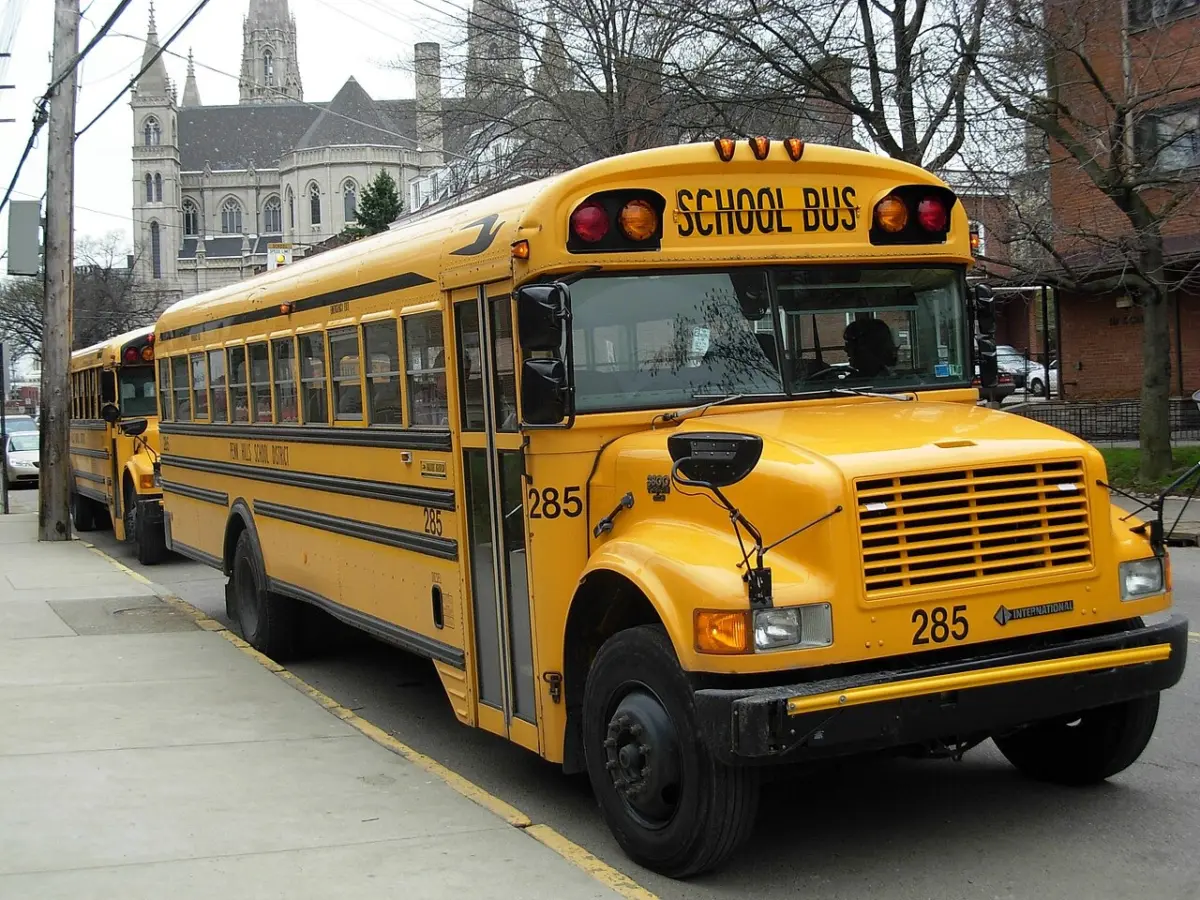
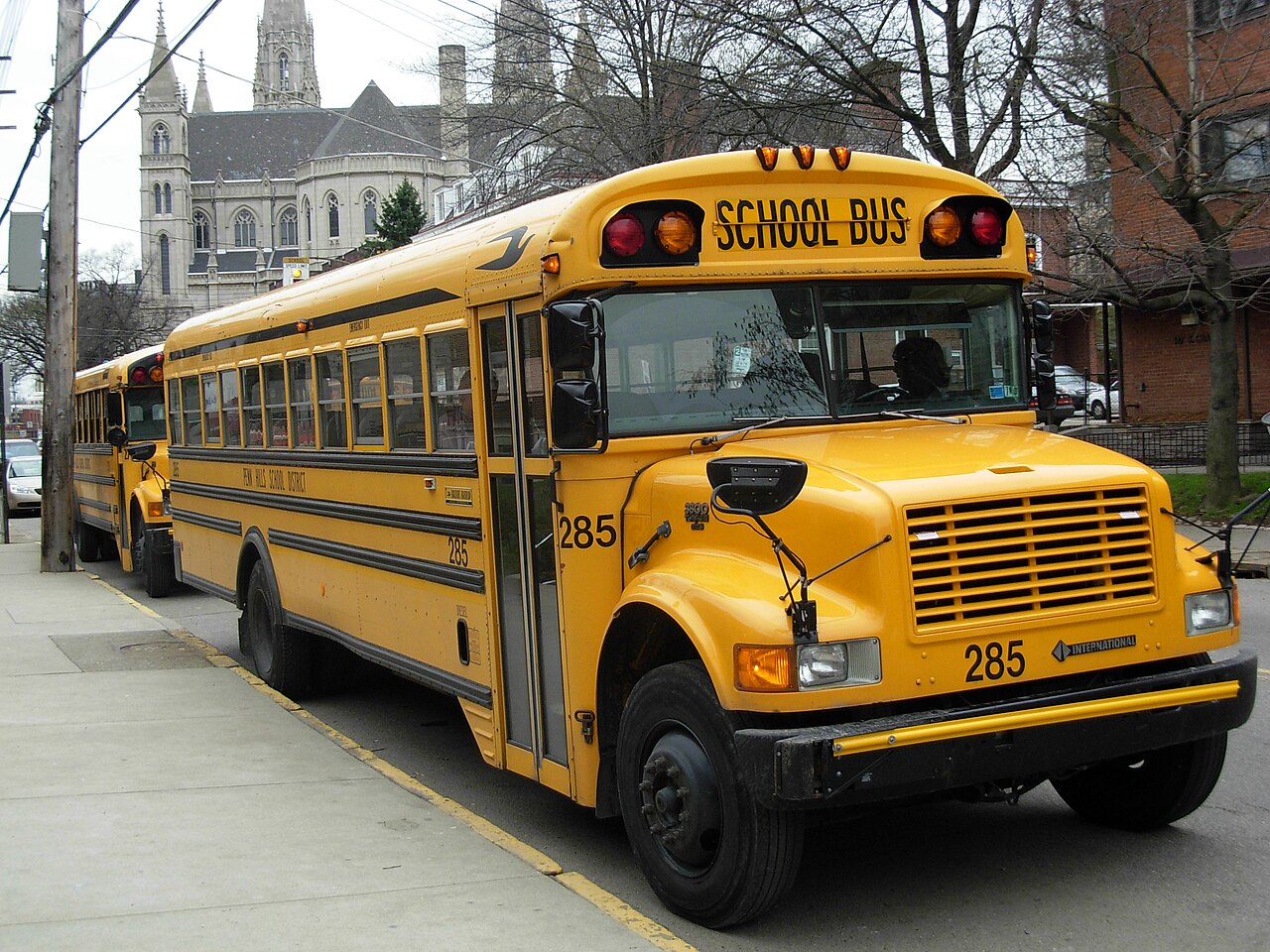
When federal funding, notably through the Environmental Protection Agency’s (EPA) Clean School Bus Program, began pouring billions of dollars into electrification initiatives starting in the early 2020s, school districts faced an unprecedented opportunity. Electric buses offered cleaner air for children’s developing lungs and a path toward municipal climate goals.
However, as districts rushed to secure grants, administrative reality set in. School transportation departments—historically underfunded and risk-averse—collided with complex electrical grid upgrades, supply chain delays, steep upfront purchase prices, and depot redesign costs. Many districts that initially championed ambitious 100% fleet electrification timelines began hitting the brakes, scaling back orders, or requesting implementation extensions.
Yet, even as districts cited fiscal prudence and logistical complexity to pause their electric bus rollouts, those same boards continued to approve capital improvement plans for remote campus constructions, revealing a persistent failure to apply systems-level thinking to student mobility.
Supporting Context & Metrics: The Cost of Isolation
The implications of building unwalkable schools extend far beyond aesthetic or urban planning preferences; they directly impact municipal budgets, public health, and environmental sustainability.
The Financial Burden of Fleet Expansion and Maintenance
When a school is built on the edge of a district boundary, the operational math changes instantly. Bus routes become longer, fuel consumption spikes, and equipment wear-and-tear accelerates.
The Mileage Trap: Peripheral schools force buses to travel exponential deadhead miles (driving empty from the depot to the start of a route), inflating labor and operational costs year after year.
The Parking Lot Footprint: To accommodate parents who cannot let their children walk along dangerous, high-speed arterials, districts must pave massive multi-lane stacking lots. These vast expanses of asphalt require ongoing stormwater management, seal-coating, and snow removal, draining tight educational budgets.
Public Health and the Pedestrian Deficit
The Centers for Disease Control and Prevention (CDC) and various pediatric associations have long warned about the epidemic of childhood sedentariness. Active transportation—walking or biking to school—is one of the most reliable ways for children to incorporate routine physical activity into their daily lives.
When schools are constructed behind highway interchanges or down rural two-lane roads devoid of sidewalks and crosswalks, active transport drops to effectively zero. The result is a self-fulfilling prophecy: districts claim that "nobody walks to school anyway," justifying the construction of more isolated campuses, which in turn ensures that no one can walk.
Environmental Hypocrisy
The irony of the current policy landscape cannot be overstated. Districts agonize over whether to spend federal grants on electric buses to eliminate tailpipe emissions, yet their very choice of school location guarantees that hundreds of passenger vehicles will idle in drop-off lines twice a day, generating massive amounts of localized carbon emissions and particulate matter right at the school gates.
Official Statements and Industry Perspectives
The cognitive dissonance within educational administration is frequently defended by bureaucrats who view transportation and real estate as completely separate silos.
"We are entirely committed to reducing our carbon footprint and exploring clean energy solutions for our students," stated a representative from a prominent national association of school business officials, speaking on condition of anonymity. "However, transitioning a fleet of heavy-duty vehicles requires predictability, robust grid partnerships, and fiscal guarantees that local taxpayers can support. Real estate decisions, conversely, are dictated by land availability, population growth projections, and immediate capital bond availability."
Urban planners and active transportation advocates, however, reject this compartmentalized thinking. Dr. Elena Vance, a senior researcher at the Institute for Sustainable Municipal Development, argues that the two issues are inextricably linked.
"You cannot separate where you put a school from how people get to it," Dr. Vance explains. "When a district builds a high school five miles outside city limits on a five-lane stroad, they are making a generational decision to mandate car and bus dependency. Pausing electric bus purchases while continuing to build unwalkable campuses is like installing energy-efficient lightbulbs in a house built entirely out of wet cardboard. It misses the fundamental structural flaw."
Transport directors echo similar frustrations from an operational standpoint. Many note that if districts prioritized central, compact, transit-accessible locations, the total fleet size needed to service the student body would drop dramatically, making the transition to electric buses far more financially manageable. Fewer miles per route means smaller battery requirements, less degradation, and lower charging infrastructure overhead.
Future Outlook: Realigning Educational Infrastructure with Mobility Goals
As American communities navigate fiscal tightening, climate imperatives, and shifting demographic patterns, the traditional playbook for school siting and fleet management must undergo a radical transformation.
1. Reforming State Siting Regulations
The root of the problem often lies at the state level. State boards of education and departments of transportation must abolish mandatory minimum acreage laws that penalize compact, urban, and neighborhood-integrated school designs. Legislation should explicitly reward districts that choose infill development, retrofitting existing commercial spaces, or building multi-story, campus-style facilities within existing residential fabrics.
2. Holistic Capital Planning
School districts must merge their facilities planning committees with their transportation departments. Before a single acre of land is purchased for a new school, multimodal access audits must be conducted. If children cannot safely walk, bike, or take municipal transit to a proposed site within five years of opening, the site should be instantly disqualified from state funding.
3. Integrating Fleets with Community Energy Goals
Rather than viewing electric buses as isolated capital expenditures, forward-thinking districts are beginning to integrate ESBs into their broader energy resilience strategies. Vehicle-to-Grid (V2G) technology allows school buses—which sit idle during peak afternoon hours and throughout the summer—to feed power back into the local grid or serve as emergency shelters during outages. When paired with compact, centrally located schools, these fleets become vital community assets rather than standalone financial liabilities.
Conclusion
The hesitation surrounding electric school buses is understandable in the face of complex municipal finance, but it serves as an expensive smokescreen. Until school districts confront the spatial reality of where they build their campuses, clean energy upgrades will remain a superficial band-aid on a deeply entrenched, car-dependent foundation. True modernization requires education leaders to look beyond the school bus bumper and rethink the entire geography of learning in America.