









Executive Overview
Long before the sprawl of multi-lane interstate highways, the hum of suburban SUVs, and the gridlock of modern metropolises, the United States was, astonishingly, the cycling capital of the world. In the late 19th century, American streets buzzed with bicycles. They served as primary modes of transportation, catalyzed the expansion of paved roads long before the advent of the automobile, and represented a profound democratization of personal mobility.
Yet, looking at the contemporary American landscape—defined by hostile stroads, perilous intersections, pedestrian-hostile suburban developments, and a pervasive cultural hostility toward vulnerable road users—one is forced to ask a fundamental question: How did the United States descend into the car-dependent purgatory it occupies today?
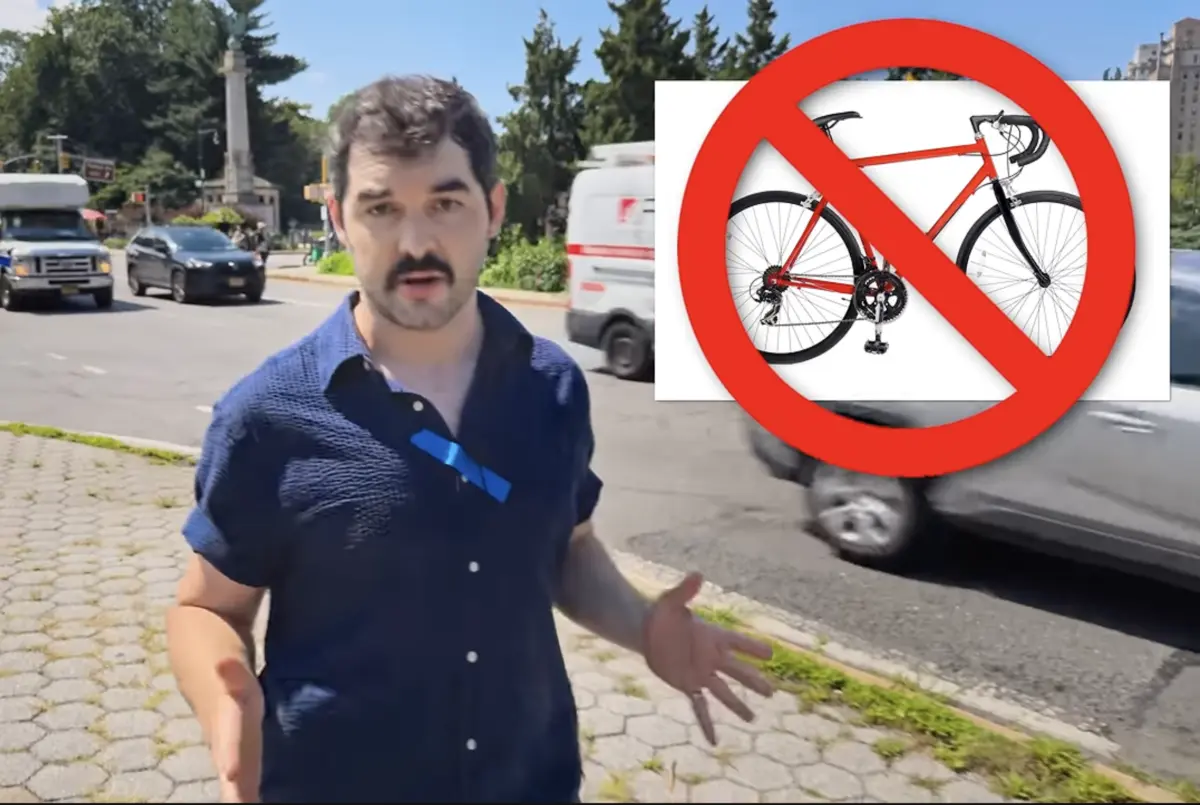
This pressing question takes center stage in a landmark collaborative video essay released by two titans of urbanist digital media: Climate Town and Not Just Bikes. In what online urban planning enthusiasts are hailing as the ultimate crossover event, host Rolland Williams (Climate Town) and Jason Slaughter (Not Just Bikes) have combined forces for a definitive 30-minute deep dive. Titled "America Hates Bikes," the mini-documentary explores how the United States transformed not merely into a nation dependent on automobiles, but into a society exhibiting active hostility toward cyclists and the infrastructure designed to protect them.
Beyond the macro-level history of automotive lobbying and mid-century urban renewal, the documentary uncovers the bizarre, complex, and often contradictory cultural undercurrents that sustain America’s anti-bike bias. From the self-sabotaging dogmas of vehicular cycling purists to hyper-local neighborhood backlash featuring absurd comparisons of bike lanes to national tragedies like 9/11, the feature provides an unflinching look at the psychological barriers blocking sustainable transportation reform. Yet, amidst the sobering historical autopsies and contemporary policy battles, the film—and this report—offers a glimmer of hope, pointing toward grassroots victories and an emerging appetite for complete, walkable, and bikeable communities.
Detailed Chronology: From the Golden Age of Cycling to the Asphalt Wasteland
To understand how the United States engineered a society entirely reliant on personal motor vehicles, we must trace a deliberate, century-long historical arc. The evolution from a nation of pedal-pushers to a kingdom of car commuters was neither accidental nor inevitable; it was the product of shifting economic priorities, aggressive industrial lobbying, and radical social engineering.
Phase 1: The Late 19th-Century Cycling Craze (1880–1900)
Few contemporary Americans realize that the modern Good Roads Movement in the United States was jumpstarted not by motorists, but by cyclists. In the late 1800s, the "safety bicycle" revolutionized personal transit. Millions of Americans took to two wheels, creating a powerful political lobby known as the League of American Wheelmen.
Cyclists demanded smooth, paved pathways out of rural mud, successfully lobbying local and state governments to upgrade American infrastructure. For a brief window in history, the bicycle was the cutting edge of personal freedom, empowering women, rural workers, and urbanites alike.

Phase 2: The Automotive Infiltration and the War on "Jaywalking" (1910s–1930s)
The dawn of the internal combustion engine changed everything. As major automotive manufacturers scaled production, cars transitioned from luxury novelties for the ultra-wealthy to mass consumer goods. However, early motorists faced a severe public relations problem: they were killing pedestrians at alarming rates on streets historically shared by children, vendors, streetcars, and cyclists.
Rather than restricting the speed and dominance of motor vehicles, the auto industry engaged in a massive psychological and legislative campaign to rebrand streets as exclusively meant for cars. They invented and popularized the derogatory term "jaywalker" to shame pedestrians off the asphalt, shifting moral and legal blame from reckless drivers onto the victims of traffic violence. Simultaneously, automakers systematically bought up and dismantled urban streetcar networks across the country, engineering a captive market for automobiles.
Phase 3: Post-WWII Suburbanization and Highway Construction (1945–1970s)
The definitive death knell for American cycling was sounded in the post-World War II era. Propelled by federal policies such as the GI Bill, the National Interstate and Defense Highways Act of 1956, and federally backed mortgage programs favoring single-family suburban sprawl, the United States completely reorganized its geography.
Cities were bulldozed to make way for urban freeways that severed historic neighborhoods. Suburbs were deliberately designed without sidewalks, multi-use paths, or transit connections, making owning a car an absolute prerequisite for basic participation in economic and social life. Cycling was effectively relegated to a recreational toy for children, wholly unsuited for adult commuting in a landscape engineered for high-speed vehicular traffic.
Phase 4: The Modern Backlash and Institutional Hostility (1980s–Present)
As contemporary urban planners attempt to rectify these mid-century planning disasters by introducing protected bike lanes, road diets, and pedestrian-friendly infrastructure, they have encountered fierce, calcified resistance. Today’s anti-bike sentiment is multi-pronged, fueled by deep-seated political polarization, institutional inertia, and vocal homeowner opposition.
Supporting Context & Metrics: Unpacking the Anatomy of Car Dependency
The Climate Town and Not Just Bikes collaboration does not merely point fingers at car manufacturers; it meticulously breaks down the structural mechanics that keep America trapped in a cycle of auto-hegemony.
The Car Country with a Country Problem
As host Rolland Williams astutely observes, the United States has morphed far beyond a simple nation of car owners into something much more insidious: a series of "car countries with a country problem."
The metrics paint a stark picture:
- Infrastructure Allocation: Over 90% of federal and state transportation budgets historically favor automobile maintenance and expansion, leaving active transportation (walking and cycling) with meager, single-digit percentages.
- Traffic Fatalities: Unlike peer nations in Europe and Asia where pedestrian and cyclist fatalities have plummeted due to the implementation of Vision Zero policies, American traffic deaths have risen sharply over the past decade. The widespread adoption of oversized, high-clearance SUVs and light trucks has exponentially increased the lethality of collisions for vulnerable road users.
- Spatial Inefficiency: American cities routinely dedicate upwards of 30% to 50% of their core downtown land area exclusively to the storage of parked cars (surface parking lots and parking garages), destroying urban density, reducing commercial tax bases, and inflating the cost of housing.
Friendly Fire: The Infighting Among Cyclists
One of the most eye-opening segments of the new video essay tackles an uncomfortable truth: hostility toward safe bike infrastructure hasn’t just come from angry motorists; it has historically been reinforced by certain factions within the cycling community itself.
The documentary highlights figures like the late John Forester, a legendary and controversial figure in American cycling advocacy. Forester championed the doctrine of "vehicular cycling"—the belief that cyclists should act exactly like cars, taking the lane and mixing directly with high-speed traffic. While this philosophy may work for elite, risk-tolerant athletes, it proved disastrously intimidating for the average citizen, children, and the elderly. Worse yet, dogmatic vehicular cyclists frequently opposed separated, protected bike lanes, arguing that segregated infrastructure was unnecessary or patronizing—thereby handing powerful ammunition to anti-bike politicians and engineers who wanted to maintain car-first status quos.
NIMBYism Run Amok: Comparing Bike Lanes to 9/11
Perhaps the most surreal aspect of modern urbanism explored in the feature is the unhinged nature of local neighborhood opposition to bike lanes.
When cities attempt to install simple, life-saving traffic calming measures—such as narrowing vehicle lanes, adding bollards, or striping bike paths—they routinely face ferocious backlash from local property owners. The documentary highlights instances where homeowners and local business owners have offered bizarre, hyperbolic objections, literally comparing the installation of a painted line and plastic bollards to national tragedies like September 11th, or claiming that a bike lane constitutes an infringement on their personal liberty akin to totalitarianism.
This hyper-local friction illustrates a profound psychological hurdle: decades of car-centric conditioning have convinced millions of Americans that free, unobstructed curbside parking and uninterrupted high-speed driving are fundamental human rights, while safe multi-modal transit is an existential threat.
Official Statements and Industry Reactions
The release of "America Hates Bikes" has sent ripples through the urban planning community, civil engineering firms, and municipal transportation departments across North America.
Urban planning advocates have praised the video for distilling decades of complex spatial economics and political history into an accessible, highly engaging format. The collaboration between Climate Town—known for its witty, data-driven deep dives into American systemic failures—and Not Just Bikes—renowned for contrasting North American auto-purgatories with human-centric European urban design—has created a definitive cultural touchstone for the pro-bike movement.
Simultaneously, transportation analysts point out that the digital essay arrives at a critical political crossroads. Recent policy debates at the federal and state levels—such as ongoing controversies surrounding the Federal Highway Administration’s (FHWA) support for road diets, speed cameras, and complete streets initiatives—demonstrate that transportation infrastructure remains a partisan ideological battleground.
While conservative critics and certain political figures continue to frame pedestrianization and bike-lane investments as elitist "culture war" intrusions, urban planners and safety advocates maintain that basic road safety should transcend politics.
"When we design roads that prioritize the uninterrupted velocity of two-ton metal boxes over the physical safety of children walking to school or workers riding bikes, we are making a policy choice," notes one prominent urban policy institute. "The Climate Town and Not Just Bikes collaboration brilliantly exposes how artificial and historically recent that choice really is."
Future Outlook: A Glimpse of Hope on the Horizon
Despite the daunting litany of historical setbacks, structural hurdles, and absurd local opposition chronicled in the documentary, the narrative purposefully steers away from unmitigated nihilism. There is, indeed, cause for cautious optimism.
Across the United States, a quiet urban renaissance is underway:
- The Rise of Complete Streets: Progressive cities from coast to coast—including Minneapolis, New York, Seattle, and Washington, D.C.—are aggressively retrofitting their street grids with protected, network-connected bicycle lanes that separate vulnerable users from high-speed motor traffic.
- The Youth Movement: Younger generations (Millennials and Gen Z) are driving significantly less than their parents did at the same age, exhibiting a strong preference for walkable, transit-oriented neighborhoods and rejecting the financial burden of mandatory car ownership.
- Grassroots Advocacy: Local coalitions of urbanists, parents, and environmentalists are increasingly organizing to demand safe streets, proving that when communities are given a taste of human-scale urban design, they overwhelmingly embrace it.
As viewers stream the 30-minute feature on YouTube—and keep their eyes peeled for the obligatory Streetsblog USA cameo—the underlying message is clear: America didn’t stumble into its car-dependent nightmare by accident, and it doesn’t have to stay trapped there forever. By understanding the historical mechanisms that erased our cycling culture, citizens and policymakers can dismantle the asphalt barriers of the past and reclaim our streets for people.